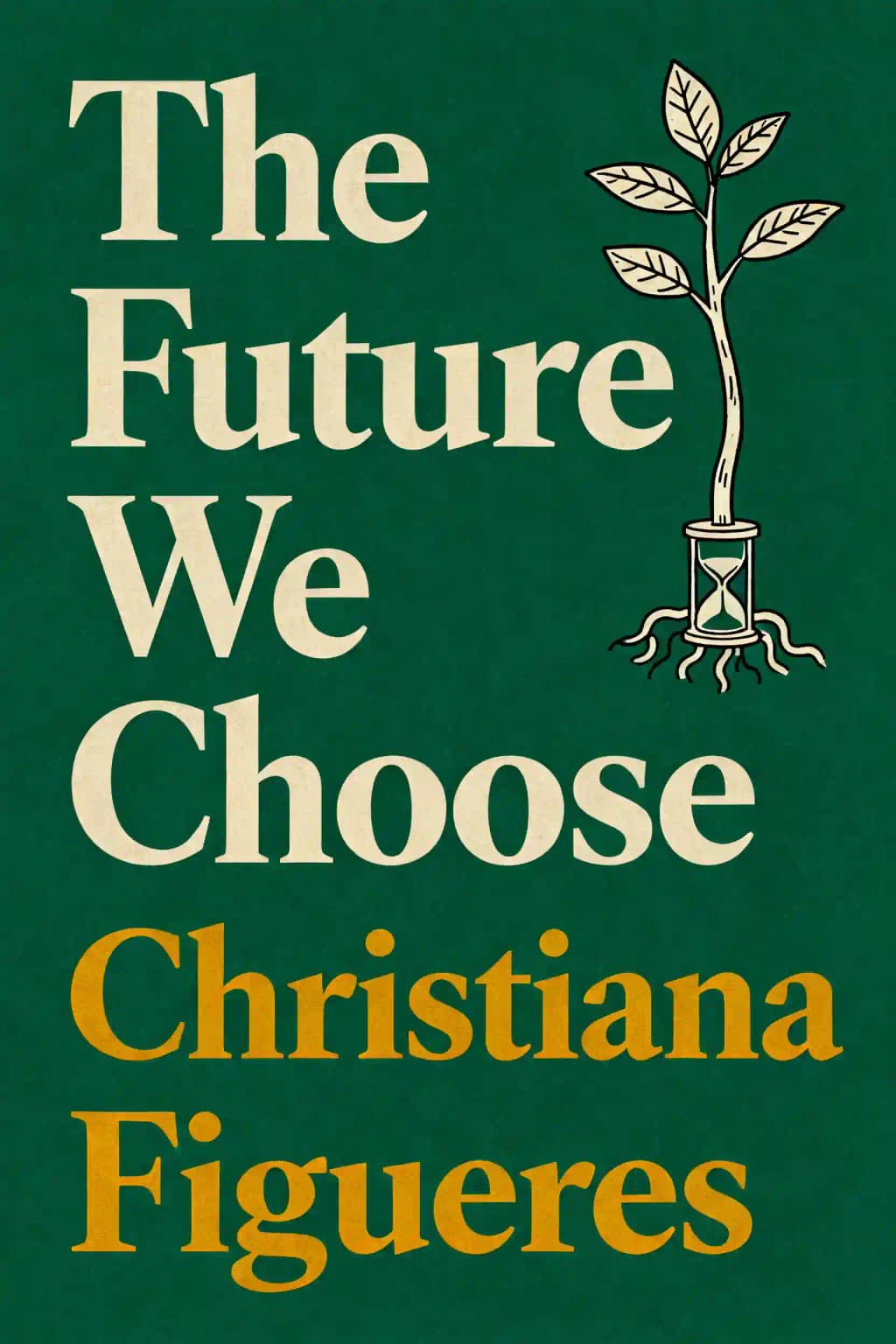
Former UN climate chief Christiana Figueres offers two futures: climate collapse or carbon-neutral prosperity. This urgent manifesto, praised by Kirkus Reviews, became a discussion cornerstone for communities worldwide. What mindset shifts - Stubborn Optimism, Endless Abundance - could transform our planet's destiny?
Christiana Figueres, co-author of The Future We Choose: The Stubborn Optimist’s Guide to the Climate Crisis, is a renowned Costa Rican diplomat and architect of the landmark 2015 Paris Climate Agreement. As Executive Secretary of the UN Framework Convention on Climate Change (2010–2016), she catalyzed unprecedented global collaboration, securing commitments from 195 nations to limit warming to 1.5°C.
Born in San José to a political legacy—her father served three terms as Costa Rica’s president—Figueres blends her background in international cooperation and renewable energy advocacy to outline actionable climate solutions in this prescriptive nonfiction work.
A founding partner of Global Optimism and convener of Mission2020, Figueres sits on boards including ClimateWorks and the World Resources Institute. Her TED Talks and keynote addresses at Davos and COP summits have shaped mainstream climate discourse. The Future We Choose distills her 25-year career in climate diplomacy into a blueprint for collective action, emphasizing renewable energy transitions and climate justice. The Paris Agreement, negotiated under her leadership, became international law in just 11 months—the fastest UN treaty ratification in history.
The Future We Choose outlines two potential scenarios for 2050: a climate-devastated world if emissions remain unchecked, and a thriving, regenerated planet if humanity rapidly transitions to renewable energy and sustainable systems. The book emphasizes three key mindsets (stubborn optimism, endless abundance, and radical regeneration) and ten actionable steps to achieve net-zero emissions by 2050.
This book is essential for climate activists, policymakers, and anyone seeking actionable strategies to combat the climate crisis. It’s particularly relevant for readers interested in systemic change, renewable energy transitions, and fostering resilience in the face of ecological challenges.
Yes—it balances stark climate warnings with pragmatic solutions, offering a roadmap for personal and collective action. The authors’ firsthand experience negotiating the Paris Agreement adds credibility, while the ten actionable steps provide clarity for readers overwhelmed by climate anxiety.
The authors advocate adopting:
Key actions include retiring fossil fuels, defending scientific truth, reforesting degraded land, and redesigning cities for walkability. A central theme is rejecting nostalgia for fossil-fuel-driven systems and embracing equitable, democratic transitions to clean energy.
The book validates climate-related grief while urging readers to channel it into purposeful action. It emphasizes “holding a vision of the future” through community engagement and political advocacy, framing emotional resilience as critical to sustaining long-term efforts.
Some critics argue the book underplays systemic barriers like corporate lobbying and political short-termism. While it acknowledges the need for economic fairness, it offers limited concrete strategies to dismantle existing power structures tied to fossil fuels.
Co-author Christiana Figueres spearheaded the 2015 Paris Agreement, and the book expands on its goals. It reframes the accord as a starting point, detailing how individuals and governments can exceed its targets through accelerated decarbonization.
Notable lines include:
Unlike technical guides like The Uninhabitable Earth, this book focuses on psychological resilience and collective agency. It aligns with Drawdown’s solutions-based approach but adds urgency through its dual 2050 scenarios.
With global emissions still rising, the book’s 2030 decarbonization deadline remains critical. Its emphasis on democratic action (vs. authoritarian climate policies) addresses contemporary debates about balancing speed and equity in transitions.
It directly challenges fossil fuel companies and industries reliant on extraction, urging rapid phaseouts. It also critiques urban planners and governments prioritizing short-term economic growth over sustainable infrastructure.
저자의 목소리로 책을 느껴보세요
지식을 흥미롭고 예시가 풍부한 인사이트로 전환
핵심 아이디어를 빠르게 캡처하여 신속하게 학습
재미있고 매력적인 방식으로 책을 즐기세요
We aren't passive recipients of attitudes but active creators of them.
Radical change begins with unwavering belief in possibility.
The evolution of humanity is a story of adaptive ingenuity.
What if the real challenge isn't managing scarcity but creating abundance?
THE FUTURE WE CHOOSE의 핵심 아이디어를 이해하기 쉬운 포인트로 분해하여 혁신적인 팀이 어떻게 창조하고, 협력하고, 성장하는지 이해합니다.
THE FUTURE WE CHOOSE을 빠른 기억 단서로 압축하여 솔직함, 팀워크, 창의적 회복력의 핵심 원칙을 강조합니다.

생생한 스토리텔링을 통해 THE FUTURE WE CHOOSE을 경험하고, 혁신 교훈을 기억에 남고 적용할 수 있는 순간으로 바꿉니다.
무엇이든 물어보고, 목소리를 선택하고, 진정으로 공감되는 인사이트를 함께 만들어보세요.

샌프란시스코에서 컬럼비아 대학교 동문들이 만들었습니다
"Instead of endless scrolling, I just hit play on BeFreed. It saves me so much time."
"I never knew where to start with nonfiction—BeFreed’s book lists turned into podcasts gave me a clear path."
"Perfect balance between learning and entertainment. Finished ‘Thinking, Fast and Slow’ on my commute this week."
"Crazy how much I learned while walking the dog. BeFreed = small habits → big gains."
"Reading used to feel like a chore. Now it’s just part of my lifestyle."
"Feels effortless compared to reading. I’ve finished 6 books this month already."
"BeFreed turned my guilty doomscrolling into something that feels productive and inspiring."
"BeFreed turned my commute into learning time. 20-min podcasts are perfect for finishing books I never had time for."
"BeFreed replaced my podcast queue. Imagine Spotify for books — that’s it. 🙌"
"It is great for me to learn something from the book without reading it."
"The themed book list podcasts help me connect ideas across authors—like a guided audio journey."
"Makes me feel smarter every time before going to work"
샌프란시스코에서 컬럼비아 대학교 동문들이 만들었습니다

THE FUTURE WE CHOOSE 요약을 무료 PDF 또는 EPUB으로 받으세요. 인쇄하거나 오프라인에서 언제든 읽을 수 있습니다.
Picture Copenhagen, 2009. The world's most powerful leaders gathered for what was supposed to be humanity's definitive moment-a global climate agreement that would save civilization. Instead, they delivered spectacular failure. Nations pointed fingers, negotiations collapsed, and hope evaporated. Taking charge of the wreckage was Christiana Figueres, tasked with the seemingly impossible: unite 195 countries behind a climate accord when trust had shattered completely. Her first press conference question cut to the bone: "Is a global agreement even possible?" Her instinctive answer-"Not in my lifetime"-revealed the real obstacle wasn't politics or economics. It was belief itself. That moment of brutal honesty became her transformation. Six years later, those same nations stood together in Paris, unanimously adopting history's first universal climate agreement. What changed wasn't the science or the stakes-it was the story people told themselves about what was achievable.




