Discover Muhammad's extraordinary journey from orphan to prophet in this meticulously researched biography. Praised by Reza Aslan and Cornel West, Hazleton's vivid narrative humanizes Islam's founder, challenging both veneration and vitriol. What hidden complexities of this world-changing figure await your discovery?
Lesley Adele Hazleton (1945–2024) was a British-American journalist and historian, acclaimed as the author of The First Muslim: The Story of Muhammad. She was renowned for her incisive explorations of religious and political narratives.
A former Middle East correspondent for Time and a contributor to The New York Times, Hazleton combined rigorous research with vivid storytelling to illuminate complex historical figures. Her expertise in Abrahamic faiths and conflicts, honed during her years in Jerusalem, shaped works like After the Prophet: The Epic Story of the Shia-Sunni Split in Islam and Jezebel: The Untold Story of the Bible’s Harlot Queen, which recontextualize scriptural narratives through modern scholarship.
Known for bridging academic depth with accessible prose, Hazleton’s The First Muslim reframes Muhammad’s life as a timeless underdog story, earning praise for its humanizing portrayal of Islamic origins. Her TEDx Talk “What’s Wrong With Dying?” and blog Accidental Theologist further cemented her reputation as a fearless commentator on mortality and belief. A Seattle resident until her death, Hazleton’s works remain essential reading for understanding cultural and religious intersections.
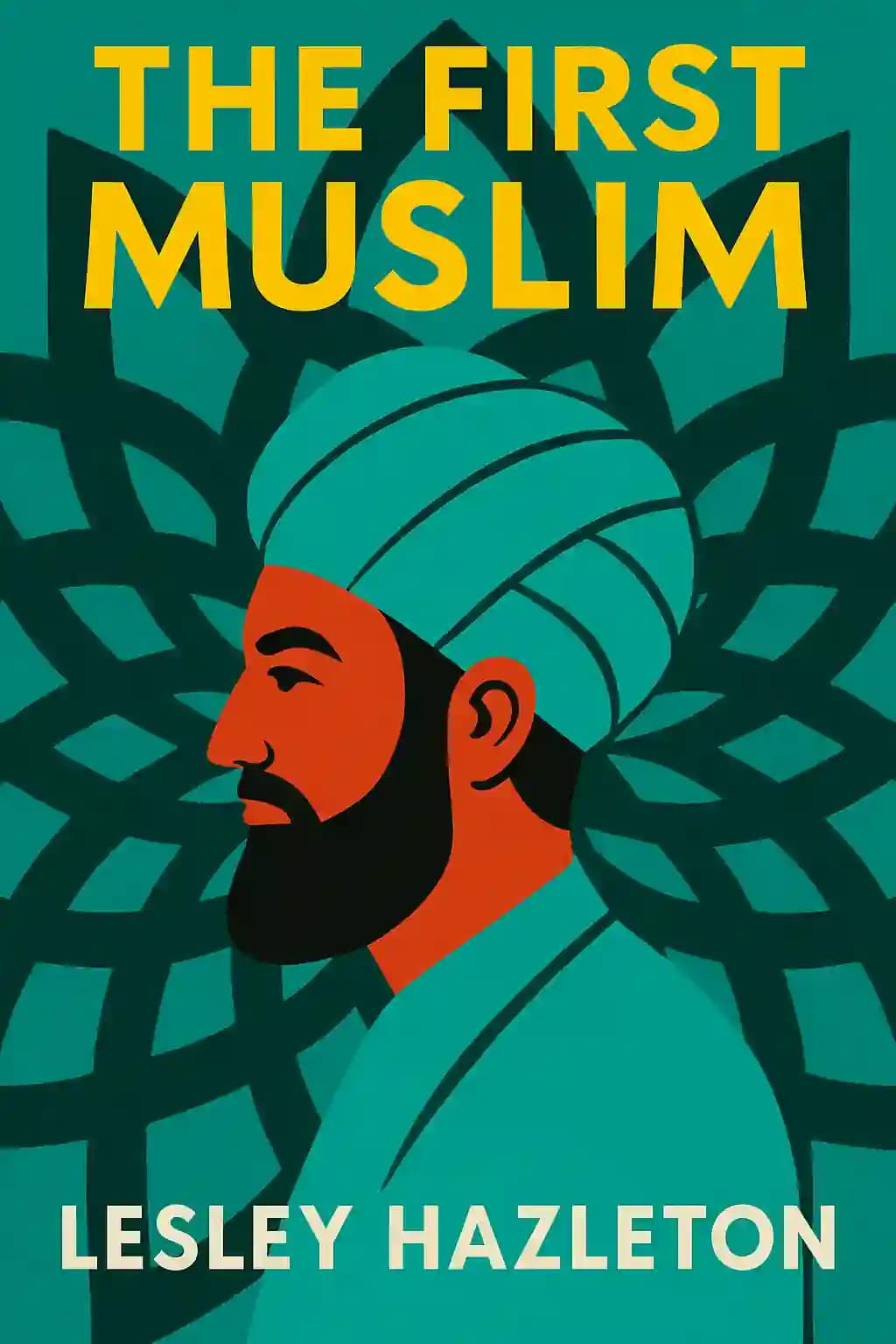
The First Muslim chronicles Prophet Muhammad’s transformative journey from orphaned outsider to visionary religious and political leader. Lesley Hazleton blends historical analysis with vivid storytelling, tracing his early struggles in Mecca, exile in Medina, military campaigns, and the Quran’s evolving teachings. The book emphasizes Muhammad’s humanity, balancing his spiritual insights with his flaws, while debunking myths about early Islam’s treatment of women.
This book suits readers seeking a nuanced, secular biography of Muhammad or an accessible introduction to Islam’s origins. Historians, religious studies students, and curious general audiences will appreciate Hazleton’s novelistic prose and her focus on Muhammad’s psychological growth. It’s particularly valuable for those questioning stereotypes about Islamic history.
Yes. Hazleton’s balanced approach, combining rigorous scholarship with engaging narrative, makes this a standout biography. Nominated for the PEN nonfiction award, it humanizes Muhammad without idolizing him, offering fresh perspectives on his leadership and the Quran’s societal impact. Critics praise its relevance for understanding modern Islamic dynamics.
The book details Muhammad’s orphaned childhood in Mecca, his work as a caravan manager, and his marriage to Khadija, who supported his spiritual awakening. Hazleton highlights formative experiences, like a mystic’s prophecy about his destiny and his initial self-doubt after receiving revelations on Mount Hira.
Exiled to Medina, Muhammad transitioned from spiritual teacher to political leader. Hazleton attributes this shift to losing Khadija’s stabilizing influence, pressure to unify tribes, and conflicts with Meccan elites. The Quran’s focus shifted from moral guidance to legal codes, reflecting his new role as a statesman.
The book contextualizes Muhammad’s raids on Meccan caravans and clashes with Jewish tribes as strategic moves to ensure his community’s survival. While noting his eventual forgiveness of enemies, Hazleton doesn’t shy from the paradox of a spiritual leader wielding violence for consolidation.
Hazleton disputes posthumous patriarchal distortions of Muhammad’s teachings, emphasizing women’s active roles in early Islam. She also counters the notion of Islam’s sudden rise, showing its gradual integration into Arabian tribal politics.
Unlike hagiographies or polemical works, Hazleton’s account prioritizes psychological depth over theological debate. It rivals Karen Armstrong’s Muhammad: A Prophet for Our Time in accessibility but offers sharper analysis of his political evolution.
The narrative tracks the Quran’s shift from poetic moral exhortations in Mecca to legalistic directives in Medina. Central themes include social justice, monotheism’s triumph over paganism, and the tension between forgiveness and retribution.
A former Middle East correspondent and psychology scholar, Hazleton brings secular objectivity shaped by her agnostic Jewish upbringing. Her acclaimed works on religious figures (After the Prophet, Mary) demonstrate expertise in faith’s socio-political dimensions.
Some scholars argue Hazleton overemphasizes Muhammad’s ambition while downplaying divine revelation’s role. Others note limited discussion of Islam’s theological debates post-632 CE, focusing narrowly on his lifetime.
By demystifying Islam’s origins, the book aids understanding of modern Muslim identity and sectarian divides. Its exploration of leadership under pressure resonates in discussions about religion’s political role.
Key insights include:
Hazleton’s After the Prophet examines the Sunni-Shia split post-Muhammad, while Reza Aslan’s No god but God offers broader Islamic history. Combined, they provide a multifaceted view of the faith’s evolution.
저자의 목소리로 책을 느껴보세요
지식을 흥미롭고 예시가 풍부한 인사이트로 전환
핵심 아이디어를 빠르게 캡처하여 신속하게 학습
재미있고 매력적인 방식으로 책을 즐기세요
How might understanding the very human origins of Islam transform our perspective?
His early marginalization provided the very vantage point from which he would challenge inequities.
The Kaaba became for him a symbol of mystery and monotheistic potential.
Muhammad's orphanhood wasn't merely a biographical detail.
The authenticity of Muhammad's experience is underscored by his initial reaction.
First Muslim의 핵심 아이디어를 이해하기 쉬운 포인트로 분해하여 혁신적인 팀이 어떻게 창조하고, 협력하고, 성장하는지 이해합니다.
First Muslim을 빠른 기억 단서로 압축하여 솔직함, 팀워크, 창의적 회복력의 핵심 원칙을 강조합니다.

생생한 스토리텔링을 통해 First Muslim을 경험하고, 혁신 교훈을 기억에 남고 적용할 수 있는 순간으로 바꿉니다.
무엇이든 물어보고, 목소리를 선택하고, 진정으로 공감되는 인사이트를 함께 만들어보세요.

샌프란시스코에서 컬럼비아 대학교 동문들이 만들었습니다
"Instead of endless scrolling, I just hit play on BeFreed. It saves me so much time."
"I never knew where to start with nonfiction—BeFreed’s book lists turned into podcasts gave me a clear path."
"Perfect balance between learning and entertainment. Finished ‘Thinking, Fast and Slow’ on my commute this week."
"Crazy how much I learned while walking the dog. BeFreed = small habits → big gains."
"Reading used to feel like a chore. Now it’s just part of my lifestyle."
"Feels effortless compared to reading. I’ve finished 6 books this month already."
"BeFreed turned my guilty doomscrolling into something that feels productive and inspiring."
"BeFreed turned my commute into learning time. 20-min podcasts are perfect for finishing books I never had time for."
"BeFreed replaced my podcast queue. Imagine Spotify for books — that’s it. 🙌"
"It is great for me to learn something from the book without reading it."
"The themed book list podcasts help me connect ideas across authors—like a guided audio journey."
"Makes me feel smarter every time before going to work"
샌프란시스코에서 컬럼비아 대학교 동문들이 만들었습니다

First Muslim 요약을 무료 PDF 또는 EPUB으로 받으세요. 인쇄하거나 오프라인에서 언제든 읽을 수 있습니다.
In the harsh landscape of seventh-century Arabia, a solitary figure stood on Mount Hira - physically unremarkable yet destined to transform human history. Muhammad's journey from marginalized orphan to spiritual leader continues to shape our world, yet we rarely see beyond the polarized portrayals of saint or villain. What if we stripped away these layers of idealization and demonization to discover the profoundly human story beneath? The transformation of this desert merchant into a revolutionary prophet offers insights that transcend religious boundaries. His story resonates deeply in our polarized times precisely because it reveals how extraordinary change can emerge from ordinary human struggles. What makes Muhammad's journey so compelling isn't just its historical significance but its psychological depth - here was a man wrestling with divine calling while experiencing very human doubt, fear, and determination. By understanding the person behind the prophecy, we gain perspective on one of history's most misunderstood figures and the faith that grew from his vision.