1장
Breaking Free from the Dream of Symbols
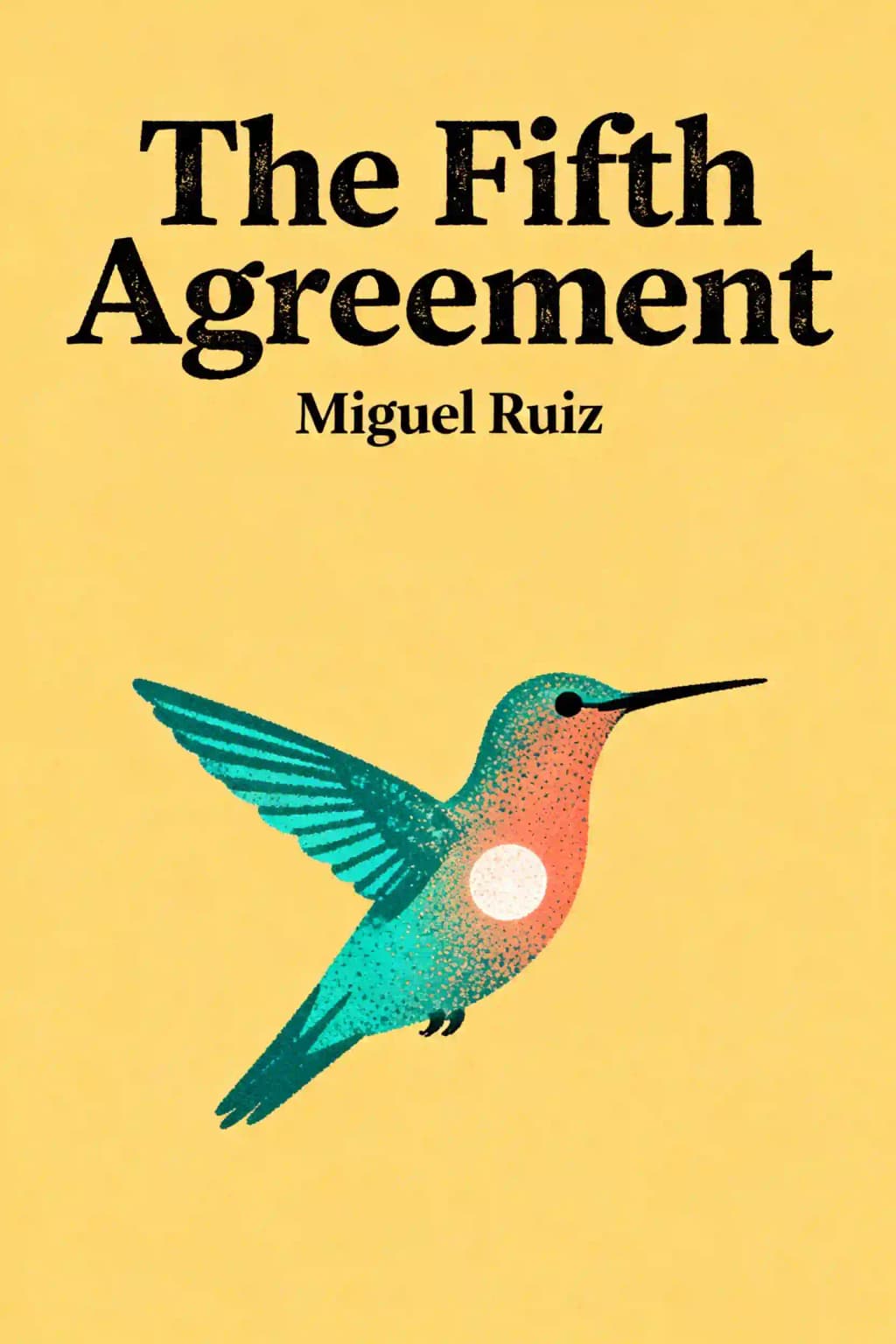
The Fifth Agreement has become a cultural touchstone that extends far beyond its pages. This spiritual guidebook, embraced by celebrities like Oprah Winfrey and Ellen DeGeneres, has transformed countless lives with its accessible wisdom. The United States Air Force even recognized its value by featuring The Four Agreements on their challenge coin. What makes this book so powerful? It taps into universal truths that transcend cultural and religious boundaries, offering a path to personal freedom that feels both revolutionary and strangely familiar-as if it's awakening knowledge we've always possessed but somehow forgotten. The Ruiz family's Toltec wisdom speaks directly to our modern condition, showing us how to break free from self-limiting beliefs and reclaim our authentic selves in a world full of noise and distortion.
2장
The Messenger and the Message: Understanding Human Communication
From the moment of birth, each of us delivers a message to the world-ourselves. We arrive as unique messengers from the infinite, programmed through our DNA to be distinctly who we are. Young children instinctively follow this programming, naturally gravitating toward what brings them joy and away from what doesn't. They exist in a state of authenticity, unburdened by self-doubt or pretense.
This natural state begins to change as our minds develop and we learn to use symbols to communicate. Humans are uniquely programmed to create language-complex systems of symbols that allow us to share our internal experiences with others. Those who raise us teach us names for everything we encounter, both tangible and abstract. Through repetition and practice, we gradually master thousands of words, each representing something in our reality.
But these symbols aren't merely tools-they become the building blocks of our entire perception. Once we master language enough to talk to ourselves in our heads, we learn to think in symbols. Before this development, life is remarkably simple. Afterward, everything changes.
The symbols we learn aren't neutral-they come loaded with meanings, judgments, and beliefs. Our caregivers and society program us with knowledge through a process remarkably similar to animal domestication. We learn social rules, religious beliefs, and moral codes through systems of punishment and reward. We discover that being "good" brings approval and privileges, while being "bad" results in disapproval and penalties. Gradually, we shift from following our authentic instincts to seeking external validation.
This programming works because information enters our mind through agreement and attention. Our attention acts as a bridge between minds, allowing the transfer of symbolic knowledge. We agree to accept what we're taught, investing our belief in these symbols until they become our reality.
What we often fail to recognize is that this entire system-the foundation of human understanding-is fundamentally artistic rather than scientific. Languages are merely systems of symbols with collectively agreed-upon meanings. The word "tree" isn't actually a tree-it's a sound or marking that we've agreed represents that living organism. Every word in our mind represents our interpretation of truth, not truth itself.
Have you ever considered that what you call "reality" is largely a creative construction? The Toltec understood this distinction between objective truth (science) and subjective interpretation (art). They recognized humans as natural artists who create virtual realities in our minds using language, and developed three masteries to guide us back to our true nature: awareness, transformation, and love/intent/faith.
3장
The Story We Tell Ourselves: Identity and Belief
We humans are constantly creating stories with the words we've learned. These stories form our opinions and express our unique point of view about everything-ourselves, our families, our communities, and the world. The message we deliver through our life becomes our greatest artistic creation.
Within our minds, we construct entire virtual realities and then live within them, mistaking our thoughts for truth itself. While the physical human being is real, our knowledge-based identity exists only through agreements we've made with ourselves and others. Before learning language and symbols, we were completely authentic-we trusted and loved ourselves without pretense or self-judgment.
The judgments we hold about ourselves aren't truth but learned opinions absorbed from parents, siblings, teachers, religious leaders, and society. These opinions become the foundation of our self-image, often leading us to reject our authentic selves in favor of a constructed identity designed to please others.
This is where the First Agreement becomes crucial: Be Impeccable with Your Word. The word is our power of creation, and it can be used in two directions-toward impeccability, which creates personal heaven, or toward misuse, which creates personal hell.
Words possess a magical quality to reproduce entire images and stories in our imagination. As messengers or "angels," we deliver messages through words that can either heal or poison. Our happiness depends entirely on how we use this power.
Being impeccable means never using the power of the word against yourself-never betraying yourself through self-judgment, self-rejection, or gossiping about yourself or others. When we use the word impeccably, expressing truth and love in every thought and action, we create an extraordinarily beautiful life.
Imagine speaking to yourself with the same kindness and encouragement you'd offer a beloved friend. What if you stopped the internal criticism that runs like background noise through your mind? This single agreement can transform your life into a personal heaven, bringing peace, freedom, and fulfillment.
But to fully implement this agreement, we must understand a fundamental truth about human perception: every mind is a world unto itself.
4장
The Theater of Life: Why We Shouldn't Take Things Personally
From the Toltec perspective, our entire life is a dream because our brain dreams twenty-four hours a day. What we perceive is like looking into a mirror-we see images that appear real but are merely reflections of light interpreted by our brain. Each person perceives reality uniquely through their belief system, creating a personal virtual reality.
To understand this concept, imagine a shopping mall with movie theaters showing everyone's life story. In your theater, you're the star of your own movie. But if you visit your mother's theater, you might be shocked to discover she sees you completely differently than you see yourself. In your beloved's theater, you're portrayed differently again. In your boss's theater, yet another version of you exists.
Everyone lives in their own world, investing all their faith in their personal story, barely noticing others around them. This awareness reveals something profound: people's opinions about you are actually about the character they've created in their movie, not the real you. The people closest to you don't truly know you, and you don't know them either. You don't even fully know yourself.
This explains the root of human conflict-we take everything personally when others don't match our expectations. We forget that everyone is living in their own dream, seeing the world through their unique filters and distortions.
The solution is beautifully simple: Don't Take Anything Personally. This Second Agreement gives you immunity from others' opinions, gossip, blame, and rejection. You're free to live without ruling your life by others' perspectives.
Think about a recent time when someone's comment hurt your feelings. What if you could truly understand that their words were entirely about them-their fears, judgments, and beliefs-rather than about you? What if nothing others say or do is because of you? Once you understand everyone lives in their own dream, taking things personally becomes impossible.
This agreement doesn't mean ignoring valuable feedback or refusing to examine your behavior. Rather, it means recognizing that others' reactions are filtered through their own distorted perceptions. Their opinions tell you more about them than about you.
5장
Breaking Through Illusions: The Danger of Assumptions
The real conflict in the human mind isn't between good and evil, but between truth and lies. Truth exists whether we believe it or not, while lies only exist if we create and believe them. Lies are distortions of meaning that we make real in our virtual reality.
Consider the widely accepted lie that "nobody's perfect." From the perspective of truth, everything in creation is perfect, including humans with disabilities or diseases. We live in a world of superstition, just as people in the 14th century did, though we can't see our own superstitions. We judge our bodies harshly and let media manipulate us like puppets.
One of the most damaging habits we develop is making assumptions. We imagine scenarios without evidence, torture ourselves with "what ifs," and take these assumptions personally. We assume we know what others think, feel, and want-and act as if our assumptions are true.
Think about how many arguments begin with assumptions. Your partner comes home late, and you assume they don't respect your time. Your friend doesn't return your call, and you assume they're upset with you. Your boss gives a project to someone else, and you assume they don't value your work.
The Third Agreement-Don't Make Assumptions-liberates us from this unnecessary suffering. When we stop making assumptions, we gain immunity from our own thinking. Instead of assuming, we should ask questions to be clear. By not believing our assumptions, we recover energy that can create our personal heaven.
Imagine the freedom of releasing all the stories you tell yourself about what others think of you. Imagine the peace of not needing to fill in information gaps with worst-case scenarios. When we replace assumptions with curiosity and direct communication, we transform our relationships and inner experience.
This agreement requires courage-the courage to ask questions, to risk appearing ignorant, to face potential rejection. But the reward is authentic connection and clear understanding rather than the drama and suffering that assumptions inevitably create.
6장
The Prison of Belief: How We Become Slaves to Our Own Mind
The belief system rules our lives like a tyrant, taking away our freedom and making us its slave. Though the mind isn't physically real, it wields total power through our life force. If we could see our minds in action, we'd witness millions of thought-forms sustained by our faith and attention.
Our personal mythology forms when we invest our faith in concepts that often contradict each other, diminishing the power of our word. By adulthood, our faith is invested in so many lies that we have almost no power left to create the life we want.
Consider how beliefs limit your experience. Perhaps you believe you're not creative, so you never try artistic pursuits. Maybe you believe you're bad with numbers, so you avoid financial responsibilities. You might believe you're unlovable, so you sabotage relationships before others can reject you.
These beliefs aren't truth-they're agreements you've made with yourself, often unconsciously and at a young age. The key to freedom lies in awareness-recognizing that you invest your personal power in everything you believe.
Think of it like the story of Santa Claus. As children, we invest our faith in this symbol completely. The excitement, anticipation, and magic are real because our belief makes it so. Then one day, we discover the truth-Santa isn't real in the way we thought. What happens? We take our faith back from that symbol. The power returns to us.
When we recover this awareness about all our limiting beliefs, we can take back power from every false symbol, seeing that we were the ones who agreed to believe in the entire symbology. With this awareness, we can recover faith in ourselves instead of the belief system, dismantling its structure to become flexible creators who can invest our faith in anything we choose.
This transformation doesn't require thinking-it requires action. We must practice breaking agreements and reclaiming our power through the Fourth Agreement: Always Do Your Best.
7장
The Path to Mastery: Consistent Practice and Self-Acceptance
When you're ready to change your life and agreements, awareness is essential but insufficient-practice makes the real difference. Everything you've learned came through repetition, and your current life is the result of years of practice.
The Fourth Agreement-Always Do Your Best-makes the other three agreements possible through action. Your best isn't sometimes giving 80% and other times 20%-it's always giving 100% of whatever you're capable of in that moment, which changes based on physical energy and emotional state.
This agreement allows the first three to become deeply ingrained habits through repetition. Don't expect immediate mastery-when you fail, simply begin again. Eventually, these agreements become automatic and effortless, transforming your life from struggle to ease.
By doing your best, you challenge the beliefs that make life difficult. You discover you've spent your life trying to be good enough for others while neglecting yourself. The solution is self-love-putting yourself first and accepting yourself unconditionally.
Imagine approaching each day with the intention to do your best without self-judgment when you fall short. What would change if you replaced perfectionism with self-compassion? How might your relationships transform if you consistently practiced not taking things personally?
Always doing your best helps you become a master artist through transformation-the second mastery of the Toltec tradition. This mastery involves facing and changing your beliefs, reprogramming your mind to live your own life rather than following the belief system.
As you break agreements, the power you invested in them returns, increasing your personal power and allowing you to make new agreements that lead to happiness and love. This is how you become the artist of your own life, creating a masterpiece of joy and authenticity rather than a reproduction of others' expectations.
8장
The Power of Skepticism: Questioning Everything We've Been Taught
The Fifth Agreement teaches us not to invest faith in untrue messages. By being skeptical, you place your faith in yourself rather than symbols. Don't believe the stories humans create with knowledge-not mine, not yours, not anyone's. Truth exists whether you believe it or not, while lies need your belief to survive.
True skepticism isn't about pretending to be too smart to believe anything. It's recognizing that humans distort truth through dreaming. When others share their stories, listen without judgment, knowing their words come from their virtual world, not yours. The truth for you is only what you perceive in your world.
Listening demonstrates respect for other artists. People have the right to create whatever art they want, but understanding requires listening. You can choose what to do with information once you understand it.
Don't believe yourself either-most of what you've learned isn't truth but symbols. Your self-judgments ("I'm ugly," "I'm not good enough") are lies creating your personal hell. When you recover awareness by unlearning these lies, you become responsible for your choices and invincible against your own defeating thoughts.
Consider how this agreement might transform your relationship with media, advertising, political rhetoric, and even your own internal dialogue. What if you approached all information with healthy skepticism, neither rejecting nor accepting it automatically, but testing it against your direct experience?
Be skeptical but learn to listen, then make your own choices. This wisdom isn't new-centuries ago, a great master warned about false prophets, saying: "Don't believe." This agreement helps us navigate the overwhelming information age by teaching us to be discerning without becoming cynical or closed-minded.
9장
From Victim to Master: The Three Dreams of Human Awareness
The Toltec tradition describes three levels of human awareness, or "dreams," that represent our evolutionary journey toward authenticity and freedom.
The dream of the first attention is where most humans live-as victims of the symbols they create. Using the story of Adam and Eve, we can understand how humans "died" by eating from the Tree of Knowledge (the Tree of Death), becoming trapped in a virtual reality of symbols rather than truth.
In this dream, billions walk around dead without knowing it, victimized by religion, government, and beliefs. Children cannot defend against the lies of society as adults prepare them to live in the same dream, a world ruled by fear and lies. This creates a "mitote" (extreme gossip) where humans cast spells on each other through misused words, creating a reality show hosted by the voice of knowledge.
The dream of the second attention begins when we become aware that we don't like our current dream and try to create a new one. This is the dream of the warriors, where we declare war against the lies in our knowledge. We begin to doubt whether everything we learned is true and challenge our beliefs.
This rebellion is an attempt to recover our authenticity and personal freedom-the freedom to be who we really are. Unlike the dream of the first attention where we're complete victims, warriors actively try to change their world. This war isn't against other people but happens inside our mind-a battle between our authentic self and the belief system.
By the end of the dream of the second attention, the human form starts breaking apart as we no longer perceive the world through rigid beliefs. The war ends when our faith is no longer invested in lies. We stop believing in anything, but we can see the truth.
The dream of the third attention is the mastery of faith-trusting in yourself and realizing your true power: the power of intent, life, belief, faith, and love. When you master faith, you live in love because that's what you are. You accept your body, emotions, and life completely. You respect yourself, all artists, and all creation.
In this dream, you love unconditionally, expressing love freely without fear. Your relationships transform as you become completely impersonal. You don't need reasons to love-it's simply your nature, radiating like light from the sun without expectations or stories.
Throughout history, these three worlds have been described in different traditions: the dream of the first, second, and third attention (Toltec); the underworld, world, and upper world (Greece/Egypt); hell, purgatory, and paradise (Christianity).
10장
Becoming a Seer: The Ultimate Transformation
When truth arrives in your story, everything you believe feels threatened as your life's structure seems to collapse. People worry about surviving without their foundation of knowledge, but you can communicate without words by recovering your authenticity from before you learned to speak.
The highest point of your journey is seeing yourself through truth's eyes-recognizing your magnificence, perfection, and divine nature. You're here to be a dreamer, artist, and seer-not to suffer over personal drama. A seer perceives what's behind others' pretending, seeing the real person who comes from the infinite, beyond any story.
As a seer, you understand others who don't understand themselves. You recognize they're surrounded by knowledge like fog, similar to being the only sober person among a thousand drunk people. With awareness comes humility-you're not superior or more intelligent, just aware.
Seers see humans as predictable, possessed by their story's main character with a narrow perspective that only reflects their beliefs. You perceive their projections without taking them personally, knowing they're projecting their self-beliefs. The un-learning process eliminates the judge and victim from your story, making everything impersonal while maintaining complete respect for others' dreams.
Respect means accepting yourself and everything exactly as it is. This creates peace by eliminating judgment and conflict. Your life becomes heaven when you respect your kingdom and others', refusing to control or be controlled. You become the sovereign of your realm, intensely happy without judgment, paying minimally for mistakes with self-kindness.
The fifth agreement prepares us to be messengers of truth. As messengers or "angels," we deliver messages with every interaction. Most people don't realize they're messengers or that symbols are their creation, allowing these symbols to control them.
From the Toltec perspective, humans speak three languages: gossip (the language of victims and lies), warrior (alternating between truth and lies), and truth (the language of masters who speak minimally and with impeccability).
The key question becomes: "What kind of messenger are you?" Do you deliver truth or lies? Your message affects everyone around you, including yourself. With awareness, you can choose which message to deliver rather than unconsciously perpetuating patterns of hurt and distortion.
11장
Creating Heaven on Earth: The Invitation to Change the World
The invitation is simple yet profound: join a new dream for humanity where all religions and philosophies are respected. You don't need to believe these stories, but if they resonate with your truth, help change the world.
This isn't about changing planet Earth, but transforming the virtual world in your head. Change begins with loving yourself and making your personal world a dream of heaven. The Five Agreements are your tools-be impeccable with your word, don't take anything personally, don't make assumptions, always do your best, and be skeptical while listening.
When you change yourself-the main character of your story-all secondary characters in your life naturally transform too. Your happiness becomes contagious. Our true legacy as humans is love, joy and happiness. Let's stop believing the lies that our differences make us superior or inferior to one another.
We can live in harmony while respecting each other's dreams. We aren't here to suffer-Earth isn't a valley of tears. Our mission is simple: to make ourselves happy. With limited time on this planet, we should enjoy every moment. As technology advances rapidly, our psychology must catch up. By changing ourselves first, we begin changing humanity.
The truth is simply "I am"-like Popeye's wisdom: "I am what I am, and that's all that I am." Complete acceptance brings freedom from judgment, guilt, shame, and remorse. When you leave symbols aside, what remains is bare truth. Your presence becomes your message, like a newborn baby whose mere existence awakens love and generosity.
Eventually, you realize knowledge is just a description of a dream. You are the unknowable, here just to be in this moment. As Socrates concluded after a lifetime: "All I know is that I know nothing." And in that not-knowing lies the greatest wisdom of all-the freedom to experience life directly, without the distorting lens of belief.