Warren Buffett's timeless wisdom, curated from decades of shareholder letters, offers a masterclass in value investing. The most autographed book by Buffett himself reveals counterintuitive strategies that transformed how Wall Street thinks about markets. What investment truth is hiding in plain sight?
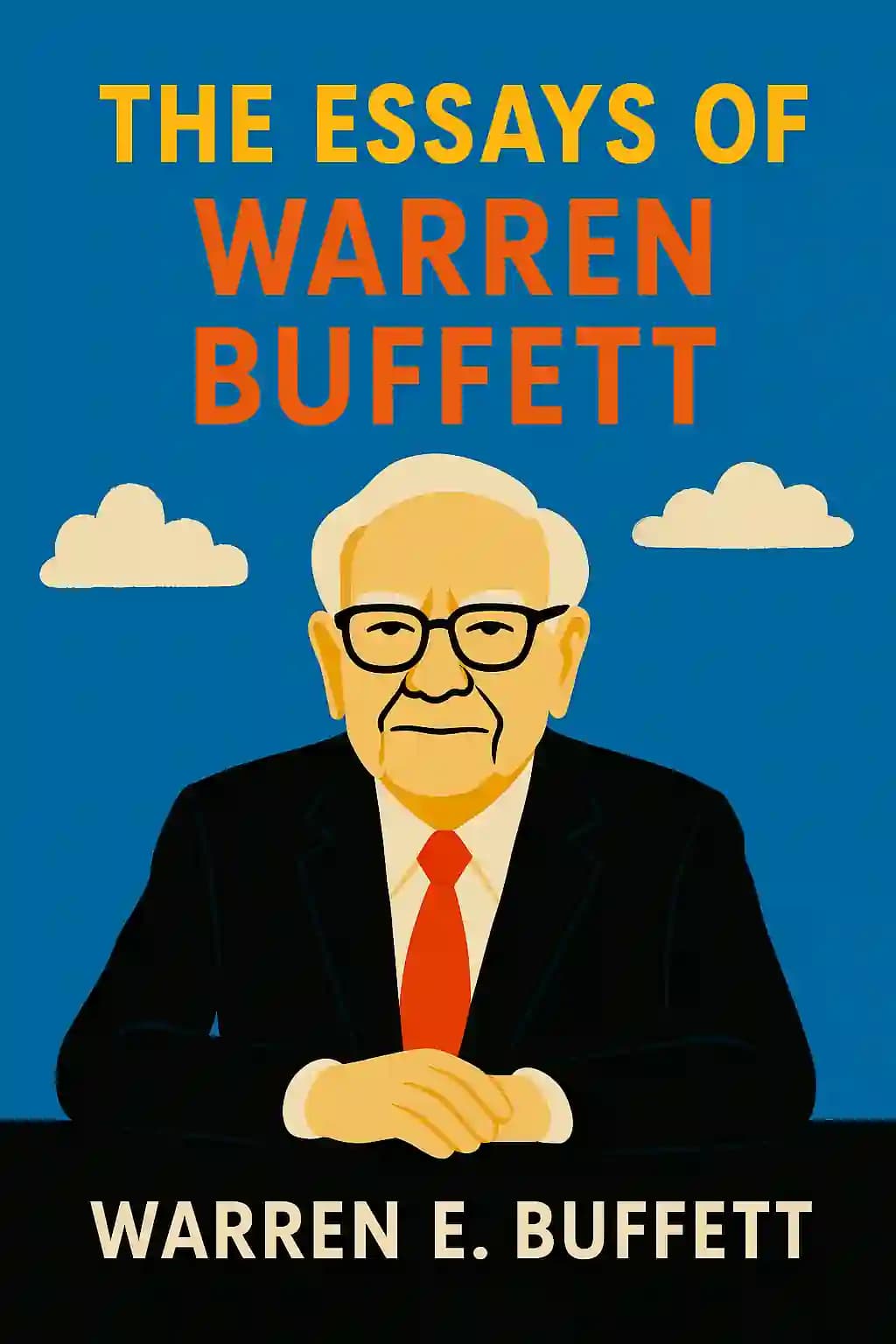
Warren E. Buffett, author of The Essays of Warren Buffett: Lessons for Corporate America, is the legendary investor, billionaire philanthropist, and long-time CEO of Berkshire Hathaway. He is renowned as the "Oracle of Omaha" for his unparalleled success in value investing.
The book compiles decades of his shareholder letters, offering insights into corporate governance, financial ethics, and timeless investment principles. These themes are rooted in Buffett’s Columbia University education under Benjamin Graham and his transformative leadership of Berkshire Hathaway since 1970.
A pioneer of value investing, Buffett co-founded the Giving Pledge with Bill Gates, committing to donate 99% of his wealth to philanthropy. His annual letters are foundational texts in finance, studied in MBA programs worldwide, and complemented by his earlier contributions to Graham’s The Intelligent Investor, a classic text on defensive investing.
The Essays of Warren Buffett has been translated into over 20 languages and remains a cornerstone of modern financial literature, reflecting strategies that grew Berkshire Hathaway’s per-share value by 20% annually for six decades.
The Essays of Warren Buffett compiles wisdom from Warren Buffett’s annual letters to Berkshire Hathaway shareholders (1979–2006). It distills core principles of value investing, corporate governance, and long-term wealth creation, emphasizing fundamental analysis, rational decision-making, and ethical stewardship of capital. Key themes include avoiding market speculation, evaluating intrinsic business value, and maintaining a margin of safety.
This book is essential for investors, corporate leaders, and finance students seeking timeless insights into value investing and business management. Buffett’s clarity on topics like mergers, accounting practices, and shareholder accountability makes it equally valuable for entrepreneurs and anyone interested in principled wealth-building strategies.
Yes—it’s widely regarded as the definitive guide to Buffett’s philosophy, praised for its practical advice on avoiding common investing mistakes (e.g., emotional decisions, high fees). Readers gain actionable frameworks like focusing on "circles of competence" and prioritizing durable competitive advantages over short-term trends.
Buffett describes intrinsic value as the discounted future cash flows a business can generate. He contrasts this with market price, arguing that successful investing requires patience to buy when price < value. The book references Aesop’s adage—"A bird in the hand is worth two in the bush"—to underscore this time-tested valuation approach.
Buffett dismisses predictions about markets or economies as distractions. He advises investors to focus on business fundamentals, stating, “Fear is the foe of the faddist, but the friend of the fundamentalist.” Historical examples show Berkshire’s best acquisitions occurred during periods of widespread pessimism.
Buffett emphasizes that managers must act as “stewards of capital,” aligning with shareholder interests. He critiques short-term profit motives, excessive executive compensation, and complex accounting practices that obscure true economic performance. The book advocates for transparency, rational capital allocation, and ethical leadership.
While Graham’s work lays the foundation for value investing, Buffett’s essays adapt these principles to modern markets. The Essays adds practical nuances—like prioritizing durable competitive advantages (“moats”) and the importance of managerial integrity—making it a bridge between Graham’s theory and real-world application.
Some note the book’s focus on pre-2006 letters excludes insights from recent market shifts (e.g., tech dominance, climate risks). Additionally, Buffett’s aversion to debt and preference for “old economy” industries may feel outdated to readers prioritizing innovation-driven sectors.
Buffett’s lessons on navigating uncertainty remain critical amid volatile markets, inflation, and AI disruption. His emphasis on ethical leadership and long-term thinking resonates in debates over stakeholder capitalism and ESG investing. The book’s warnings against speculative bubbles also apply to trends like cryptocurrency and meme stocks.
The text references Buffett’s essays like The Superinvestors of Graham-and-Doddsville and How Inflation Swindles the Equity Investor. Complementary materials include videos from The Motley Fool and books like Quality Investing by Lawrence Cunningham (the book’s editor).
저자의 목소리로 책을 느껴보세요
지식을 흥미롭고 예시가 풍부한 인사이트로 전환
핵심 아이디어를 빠르게 캡처하여 신속하게 학습
재미있고 매력적인 방식으로 책을 즐기세요
"Value investing" is redundant since all true investing must assess price-value relationships; anything else is speculation.
"Most of those who lose money in the stock market are not beating the system; they are just beating themselves,"
"We believe that telling the truth is not only morally right but commercially sensible,"
"Any string of positive numbers, no matter how impressive, is reduced to zero when multiplied by a single zero."
Compensation committees too often are tail-wagging puppy dogs meekly following recommendations by consultants
The essays of Warren Buffett의 핵심 아이디어를 이해하기 쉬운 포인트로 분해하여 혁신적인 팀이 어떻게 창조하고, 협력하고, 성장하는지 이해합니다.
The essays of Warren Buffett을 빠른 기억 단서로 압축하여 솔직함, 팀워크, 창의적 회복력의 핵심 원칙을 강조합니다.

생생한 스토리텔링을 통해 The essays of Warren Buffett을 경험하고, 혁신 교훈을 기억에 남고 적용할 수 있는 순간으로 바꿉니다.
무엇이든 물어보고, 목소리를 선택하고, 진정으로 공감되는 인사이트를 함께 만들어보세요.

샌프란시스코에서 컬럼비아 대학교 동문들이 만들었습니다
"Instead of endless scrolling, I just hit play on BeFreed. It saves me so much time."
"I never knew where to start with nonfiction—BeFreed’s book lists turned into podcasts gave me a clear path."
"Perfect balance between learning and entertainment. Finished ‘Thinking, Fast and Slow’ on my commute this week."
"Crazy how much I learned while walking the dog. BeFreed = small habits → big gains."
"Reading used to feel like a chore. Now it’s just part of my lifestyle."
"Feels effortless compared to reading. I’ve finished 6 books this month already."
"BeFreed turned my guilty doomscrolling into something that feels productive and inspiring."
"BeFreed turned my commute into learning time. 20-min podcasts are perfect for finishing books I never had time for."
"BeFreed replaced my podcast queue. Imagine Spotify for books — that’s it. 🙌"
"It is great for me to learn something from the book without reading it."
"The themed book list podcasts help me connect ideas across authors—like a guided audio journey."
"Makes me feel smarter every time before going to work"
샌프란시스코에서 컬럼비아 대학교 동문들이 만들었습니다

The essays of Warren Buffett 요약을 무료 PDF 또는 EPUB으로 받으세요. 인쇄하거나 오프라인에서 언제든 읽을 수 있습니다.
What began as routine corporate communications has evolved into America's most sought-after business education. Warren Buffett's letters to Berkshire Hathaway shareholders-collected in The Essays of Warren Buffett-offer a front-row seat to one of history's greatest wealth-creation stories. These essays transformed a struggling textile company into a half-trillion-dollar conglomerate through timeless principles applied with remarkable consistency. Even Bill Gates calls them "the best business writing ever," noting how they transformed his understanding of business and investing. What makes Buffett's approach so powerful? Unlike most investors who chase short-term gains or follow market trends, Buffett focuses on fundamental business analysis, understanding that price and value are entirely different concepts. This distinction has allowed him to capitalize on opportunities others miss-like purchasing American Express during its salad oil scandal or GEICO during near-bankruptcy-transforming market panic into long-term prosperity.