1장
A House That Holds More Than Memories
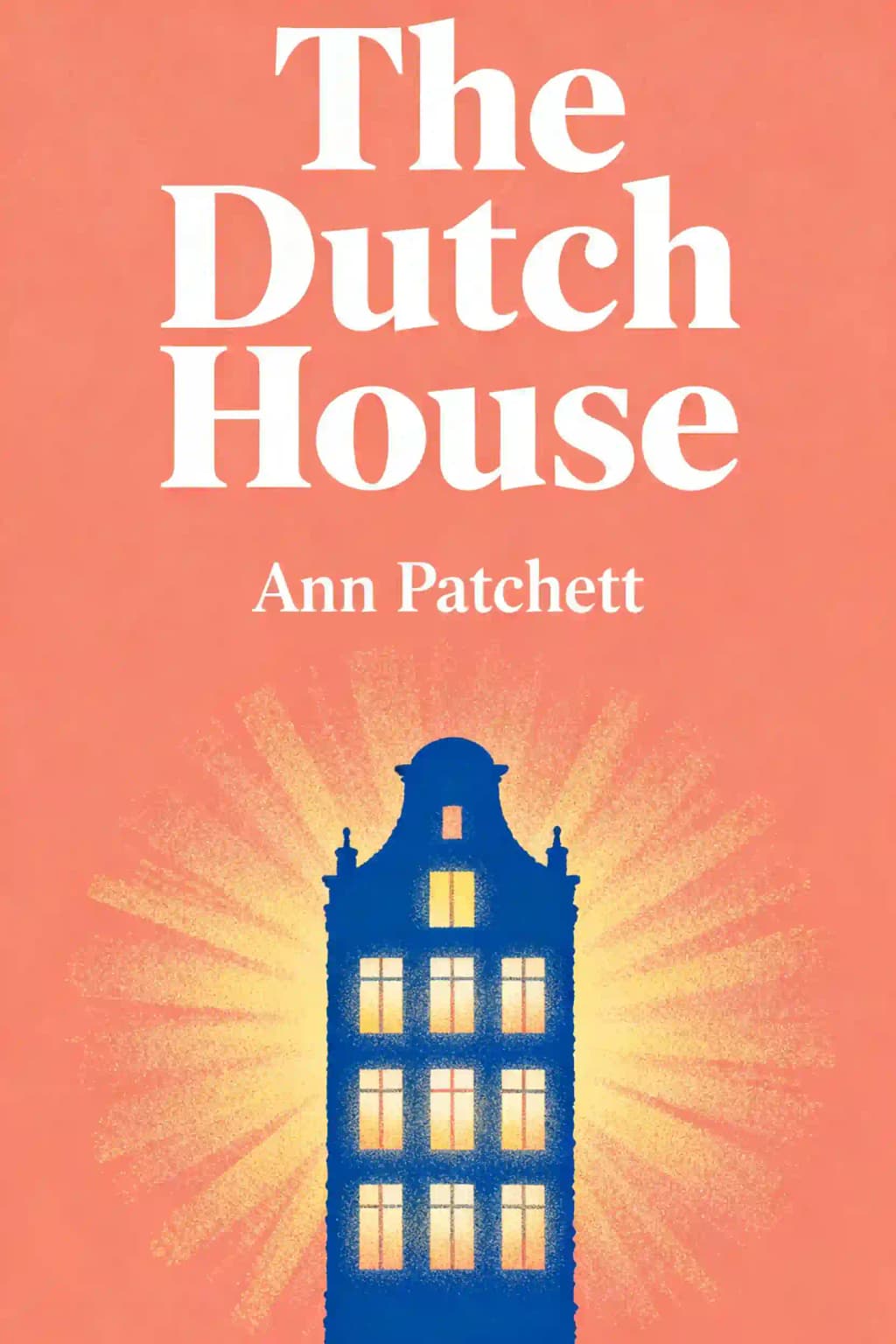
Ann Patchett's "The Dutch House" became an instant New York Times bestseller upon its 2019 release, captivating readers with its intricate exploration of family bonds, abandonment, and the physical spaces that shape our lives. The novel was a finalist for the Pulitzer Prize and became one of Tom Hanks' favorite books-he later narrated the audiobook version to critical acclaim. What makes this story so compelling is how it transforms a house into a character itself, examining how the spaces we inhabit can both nurture and haunt us across generations. In a literary landscape filled with family sagas, Patchett's novel stands apart through its emotional precision and its meditation on what we inherit beyond material possessions-the psychological legacies that shape us long after childhood ends.
2장
The House That Changed Everything
The Dutch House stands as a magnificent testament to wealth and ambition - built in 1922 for the VanHoebeeks, cigarette magnates who spared no expense on its grandeur. The limestone mansion, with its ornate turrets and distinctive blue windows, dominated the suburb of Elkins Park, Pennsylvania, an architectural marvel that seemed almost otherworldly among its more modest neighbors. When Cyril Conroy purchases this architectural masterpiece in 1946, he believes he's securing his family's place in society and giving his wife Elna the ultimate gift. Instead, he sets in motion the unraveling of everything he holds dear, failing to recognize that a house can be both a blessing and a curse.
For young Danny and his sister Maeve, the house becomes both playground and prison, its vast spaces holding endless possibilities for adventure and discovery. They explore its countless rooms, from the formal dining room with its hand-painted ceiling to the basement kitchen where the staff prepares their meals. They marvel at the portraits of the stern VanHoebeeks hanging in the drawing room - their eyes following visitors across the room - and discover secret spaces like the third-floor window seat where Danny loves to read while watching the changing seasons outside. The children memorize every detail: the intricate parquet floors, the crystal doorknobs that scatter rainbows across the walls, and the mahogany banisters they're forbidden to slide down.
But the house represents something entirely different to their mother Elna - a painful reminder of inequality in a world where others have so little. The extravagance suffocates her charitable spirit: the dozen unused bedrooms haunt her while homeless people sleep on Philadelphia's streets; the formal gardens seem wasteful when others can't afford food. The opulence becomes unbearable, each gilded mirror and crystal chandelier a reproach to her social conscience. She eventually abandons the family, leaving Maeve to become Danny's surrogate parent, cooking his meals and checking his homework in the vast kitchen that once hosted a full staff.
The true turning point comes when Cyril brings Andrea to the house. From her first visit, Andrea's fascination is palpable - not with Cyril, but with the Dutch House itself. She studies the portraits with an appraiser's eye, questions the exposed windows like an architect, and mentally catalogs every luxurious detail from the silver service to the original silk wallpaper. When she eventually marries Cyril, her true motivation becomes clear: "Andrea loved the house," as the family housekeeper Jocelyn later explains, "The rest of us were just furniture she hadn't picked out herself."
Years later, after Cyril's sudden death, Andrea's true nature emerges with swift brutality. She expels Danny from the only home he's known with chilling words: "This is my house." In that moment, the Dutch House transforms from home to obsession, as Danny and Maeve begin their decades-long ritual of parking across the street in Maeve's car, watching their former lives unfold without them. They sit for hours, sharing cigarettes and memories, unable to move forward yet unwilling to look away from the house that shaped their lives so profoundly. The house becomes a symbol of everything they've lost and everything they can't forget - a beautiful prison that holds them captive long after they've left its grounds.
3장
Siblings United by Loss
The heart of "The Dutch House" lies in the extraordinary relationship between Danny and Maeve Conroy. Their bond, forged in childhood abandonment and strengthened through subsequent losses, becomes the emotional anchor of the narrative. After their mother leaves, fifteen-year-old Maeve steps into the parental void for eight-year-old Danny, teaching him manners, attending his games, and overseeing his homework. Their relationship transcends typical sibling dynamics, becoming something more profound-a lifeline they both cling to amid the chaos of their disrupted childhood.
When their father dies and Andrea expels them from the Dutch House, their bond intensifies. They develop rituals that outsiders find baffling-most notably their habit of parking across from their former home to smoke cigarettes and reminisce. As Danny observes, "We were a Hansel and Gretel of the soul, forever walking back into the forest to find the trail of bread crumbs we'd left behind." This ritual becomes both their comfort and their prison, keeping them tethered to the past when they should be building futures.
Their relationship is complicated by Maeve's diabetes, which manifests after their mother's departure. The disease becomes another bond between them-Danny learns to recognize the signs of her low blood sugar and carries her glucose tablets. "It's me first, then you. Do you understand? Me first," Maeve insists from his hospital bedside after his appendectomy, establishing the hierarchy of care between them. Yet this devotion has its costs, as Danny's wife Celeste later points out: "It's like you're Hansel and Gretel. You just keep walking through the dark woods holding hands no matter how old you get."
The educational trust their father established becomes another expression of their bond. When they discover that the trust will pay for unlimited education but nothing else, Maeve devises a plan: Danny will attend the most expensive schools possible, draining the fund before Andrea's daughters can access it. This scheme leads Danny through medical school despite his lack of interest in becoming a doctor, as Maeve insists, "You don't have to be a doctor, you only have to study to be one." Their revenge plot becomes another way they remain connected to each other and to the past they cannot escape.
Only Maeve's death finally breaks this pattern, forcing Danny to confront his life without his sister's guiding presence. In her absence, he realizes how much of his identity was defined by their relationship, and how little of himself remained for others, including his wife and children.
4장
The Mothers We Choose to Remember
Motherhood in "The Dutch House" is complex and contradictory, revealing how children construct narratives about absent parents to make sense of abandonment. Elna Conroy's departure when Danny is just three leaves him with almost no memories of his mother. Instead, he relies on fragments gathered from others-Sandy and Jocelyn's vague references to her "working for the poor," Fluffy's insistence that she was "too good" for the Dutch House, and his father's dismissive explanation that "she was crazy."
Danny constructs a mother who is selfish and unfeeling, someone who could abandon her children without a backward glance. This narrative serves as emotional protection, allowing him to dismiss her rather than confront the pain of her absence. Maeve, however, remembers their mother differently. Having spent ten years with Elna before her departure, Maeve recalls intimate details-sharing oranges, making cakes, the "pioneer days" in their small house before the Dutch House. These memories sustain her through decades of longing.
When Elna unexpectedly returns after Maeve's heart attack, these divergent perspectives collide. Maeve embraces their mother without hesitation, declaring, "I love her. Don't mess this up for me." But Danny remains coldly furious, refusing to accept that abandonment could ever be forgiven. When he demands to know why she left, Elna explains she wanted to help people. Danny's bitter response-that she wanted to help "people other than her family"-reveals the wound that has never healed.
Maeve challenges his perspective with a devastating observation: "Men leave their children all the time and the world celebrates them for it. The Buddha left and Odysseus left and no one gave a shit about their sons... Our mother left and she came back and we're fine." This moment forces Danny to confront his double standard-his willingness to forgive his emotionally distant father while continuing to punish his mother.
The novel also explores surrogate motherhood through Maeve's relationship with Danny. Despite being a child herself when their mother leaves, Maeve steps into the maternal void, becoming Danny's primary caretaker and fiercest advocate. "Maeve was the warmest place in the world," Danny reflects, acknowledging how completely she filled the role their mother abandoned. This dynamic shapes their entire lives, as Maeve sacrifices her own opportunities to ensure Danny receives everything she believes he deserves.
5장
The Inheritance of Ambition
Throughout "The Dutch House," Patchett explores how parents' ambitions shape their children's lives-sometimes in ways they never intended. Cyril Conroy's rise from poverty to wealth through real estate becomes the blueprint for Danny's life, though neither father nor son recognizes this inheritance until it's too late.
Danny's moment of clarity comes during his junior year at Columbia when he spots a tax foreclosure sign on a boarded-up brownstone in Harlem. "That moment on 120th Street became my spiritual awakening," he recalls. Despite Maeve's medical school dreams for him and Celeste's romantic ones, Danny suddenly sees his future with perfect clarity-he will buy buildings, fix them himself, and collect rent on Saturdays, just as his father had done.
This realization creates the central tension in Danny's life: he excels at medicine despite having no passion for it, while his true calling in real estate remains unfulfilled until after he completes his residency. His surgical instructor recognizes this disconnect, asking, "So what are you doing here?" when Danny admits he has no plans to use his medical talent. "Surgeons are the kings," the doctor insists. "If you can be a king there's no point being a jack." Danny's simple response-"I'm a jack"-acknowledges his acceptance of his true nature.
The irony is that Danny inherits his father's business acumen but not his wealth. After being disinherited by Andrea, he must build his real estate empire from scratch, purchasing his first buildings in foreclosure and renovating them himself. Yet this struggle ultimately proves more satisfying than the easy inheritance would have been. When he finally buys his first building on West 116th Street, Danny declares, "I was finally myself-not a doctor but a real estate investor."
Maeve's inheritance is more complex. Though she inherits her mother's mathematical mind and compassionate nature, her life becomes defined by what she loses rather than what she gains. The diabetes that manifests after her mother's departure becomes a physical manifestation of her emotional wound, ultimately leading to her premature death from heart disease. Yet she also inherits her mother's capacity for forgiveness, embracing Elna's return with an openness Danny cannot match.
6장
The Power of Place in Shaping Identity
Few novels explore the relationship between people and places as profoundly as "The Dutch House." The mansion itself becomes a character-one that inspires devotion, resentment, and obsession in equal measure. For Cyril, the house represents his triumph over poverty, a tangible symbol of how far he has come from his Brooklyn roots. For Elna, it embodies everything she despises about wealth inequality-"I was so ashamed of myself," she later confesses. "We were poor people. I had no business in a place like that."
For Andrea, the house becomes an obsession, something to possess regardless of the human cost. She marries Cyril primarily to gain access to the Dutch House, then systematically removes everyone who threatens her ownership, including her stepchildren. Even as her mind deteriorates decades later, her connection to the house remains intact-she refuses to leave it despite her daughter's pleas.
The children's relationships with the house are equally complex. Maeve's bedroom with its beloved window seat becomes the site of her first displacement when Andrea moves her to the third floor to make room for Norma. Years later, when she retrieves her portrait from the drawing room, Maeve declares, "I don't want anything that was in that house. It will only make me crazier than I already am." Yet she cannot stop returning to sit outside it, drawn back by forces she cannot fully articulate.
Danny's connection to the house evolves throughout his life. After being expelled, he becomes fixated on real estate, seeking to recreate the security the Dutch House once provided. When he purchases his first brownstone near the Museum of Natural History, he works on it himself on weekends, physically rebuilding what was taken from him. Yet he refuses to enter the Dutch House when given the opportunity, telling Maeve, "Not for anything."
The novel suggests that places hold emotional resonance beyond their physical structures-they become repositories for memories, both painful and precious. This is why the Dutch House remains unchanged for decades, preserved like a museum by Andrea and later Norma. When Danny finally returns after Andrea's death, he finds "not the shabby remains of grandeur I'd imagined in my dreams, but perfectly preserved: the silk drapes, yellow chairs, Dutch books in the glass-fronted secretary, even the silver cigarette boxes still polished and waiting."
7장
The Complexity of Forgiveness
At its core, "The Dutch House" examines whether forgiveness is possible after profound betrayal, and whether holding onto grievances serves any purpose beyond self-punishment. Each character faces this question differently, revealing the spectrum of human responses to hurt.
Maeve demonstrates the most capacity for forgiveness, embracing their mother's return without hesitation despite forty years of abandonment. "I've wanted my mother back since I was ten years old, and now she's here," she tells Danny. "I can use the time I've got to be furious, or I can feel like the luckiest person in the world." This choice reflects Maeve's understanding that forgiveness often benefits the forgiver more than the forgiven.
Danny, conversely, clings to his resentment, believing that forgiveness would somehow invalidate the suffering their mother caused. When Maeve challenges him-"When is it over? The petulance, the punishment"-he cannot answer, having defined himself through his grievances for so long. Only after Maeve's death does Danny begin to release his anger, acknowledging that "the rage I carried for my mother had finally died. What remained wasn't love exactly, but familiarity and a certain comfort."
The novel presents forgiveness not as a single act but as a process that unfolds over time. When Danny's mother explains why she left-"I thought it was a wonderful place for you... I knew you were going to be fine"-her justification remains inadequate. Yet Danny finds himself returning to Elkins Park regularly, drawn by something stronger than logic. This suggests that forgiveness doesn't require understanding or even agreement-sometimes it simply requires exhaustion with carrying the weight of anger.
Perhaps most surprisingly, the novel explores forgiveness between Andrea and her former stepchildren. When Andrea, suffering from dementia, mistakes Danny for his father and embraces him with desperate grief, the moment transforms their relationship. Her vulnerability reveals the humanity beneath her cruelty, allowing Danny to see her as something more complex than a villain. Similarly, when Maeve discovers that Andrea kept her childhood portrait hanging prominently in the drawing room, she must confront the possibility that their relationship contained more nuance than she acknowledged.
8장
Time's Transformative Power
Time emerges as a powerful force in "The Dutch House," capable of both healing wounds and deepening them. The novel spans five decades, allowing readers to witness how initial traumas reverberate through characters' lives, sometimes diminishing and sometimes intensifying with passing years.
The narrative structure reinforces this theme, moving fluidly between time periods rather than progressing chronologically. Danny's present-day reflections are constantly interrupted by memories, creating a sense that the past is never truly past but exists alongside the present in the characters' consciousness. "We can never see the past as it actually was," Danny observes. "We see it through the lens of who we are now."
This perspective explains why Danny and Maeve remain fixated on the Dutch House decades after their expulsion. Their ritual of sitting in Maeve's car across from their former home isn't merely nostalgia-it's an attempt to process trauma that continues to shape their present lives. "We'd made a fetish out of our misfortune, fallen in love with it," Danny realizes after seeing Andrea again. "What sickened me was not that we were stopping but that we'd kept it going for so long."
Time also reveals unexpected connections between characters who initially seem opposed. Norma, once the beneficiary of Maeve's displacement, eventually experiences her own version of loss when forced to return home to care for her declining mother. "Our childhood was a fire," Danny reflects. "There had been four children in the house and only two of them had gotten out." This realization transforms Norma from rival to fellow survivor in Danny's eyes.
Perhaps most poignantly, time reveals how patterns repeat across generations. May, Danny's daughter, develops an inexplicable attachment to the Dutch House despite never having lived there. "She explored it like a detective," Danny observes, noting how she discovers the same hidden spaces he once found as a child. When she throws lavish parties in the ballroom where raccoons once nested, the house completes its cycle of decay and renewal, becoming once again a place of celebration rather than loss.
9장
The Legacy We Choose
In the novel's final chapters, Patchett explores how we determine what to carry forward from our past and what to leave behind. After decades of defining themselves through loss and grievance, the characters must decide what legacy they wish to create from the wreckage of their childhood.
For Danny, this means recognizing that his father's path was ultimately his own, despite his resistance. "I was finally myself-not a doctor but a real estate investor," he declares after purchasing his first building. This acceptance allows him to find fulfillment in work that suits his natural talents rather than pursuing the medical career Maeve envisioned for him.
Maeve's legacy proves more complicated. Though she dies prematurely, her influence continues through May, who not only inherits her name (shortened from "Maeve" to "May" as a compromise with Celeste) but also receives her portrait from the Dutch House. "I'm going to give this to May," Maeve declares as she removes the painting from the wall. "It looks like May." This gesture suggests that what survives of us may not be our possessions or even our physical presence, but the qualities we pass to those who come after us.
Perhaps most surprisingly, the Dutch House itself becomes a legacy worth preserving rather than escaping. When Norma and Bright discuss selling it after Andrea's death, they acknowledge that "the land would be valuable, and the architectural elements could be sold separately for a fortune. But then we'd have to kill the house." Their reluctance to destroy something that caused so much pain reveals how places accumulate meaning beyond their material value.
The novel concludes with May claiming the Dutch House as her own, transforming it from a symbol of loss to one of possibility. As she stands with her father watching young people dance in the ballroom where raccoons once nested, she declares, "My god, I love this so much." Danny's response-"It's your house"-acknowledges that each generation must redefine its relationship to the past, choosing which legacies to embrace and which to transcend.
When May replies simply, "Good. Take me inside," the novel comes full circle. The house that once expelled Danny now welcomes him back, not as an owner but as a guest in his daughter's life. This subtle shift suggests that true healing comes not from erasing painful histories but from transforming them into foundations for a different future-one where the past informs but no longer imprisons those who inherit it.
10장
Reconciling With What Cannot Be Changed
"The Dutch House" ultimately explores how we make peace with the unalterable past. Each character must confront what cannot be undone-Elna's abandonment, Cyril's death, Andrea's cruelty, Maeve's illness-and find a way to continue living despite these immutable facts.
Danny's journey toward acceptance begins with rage and progresses through decades of ritualized remembering before culminating in a quiet resignation. After Maeve's death, he finally understands that his sister had been right all along: "There is a finite amount of time... I can use the time I've got to be furious, or I can feel like the luckiest person in the world." Though he chooses fury initially, he eventually exhausts his anger, finding that "what remained wasn't love exactly, but familiarity and a certain comfort."
Elna's return offers a different perspective on reconciliation. Rather than seeking forgiveness through apology, she demonstrates atonement through action-caring for Andrea in her decline becomes "penance for past mistakes." When Danny asks why she stays in the house she once fled, she explains, "You have to serve those who need to be served, not just the ones who make you feel good about yourself." This philosophy suggests that reconciliation sometimes requires embracing rather than escaping the source of our pain.
Perhaps the most profound reconciliation occurs between the past and present incarnations of the Dutch House itself. The mansion transitions from family home to museum-like shrine under Andrea's care, then transforms again into a place of celebration when May hosts parties in the ballroom. These evolutions suggest that places, like people, can be redeemed not by erasing their histories but by incorporating them into new narratives.
In the novel's final scene, as May leads her father back into the house that once expelled him, Patchett suggests that reconciliation requires both acknowledgment of what was lost and openness to what might still be gained. The Dutch House, once the site of so much pain, becomes a place where new memories can be created alongside the old-not replacing them but existing in conversation with them, creating a richer, more complex legacy than either past or present could achieve alone.