1장
The Timeless Art of Worldly Wisdom: Navigating Life with Strategic Brilliance
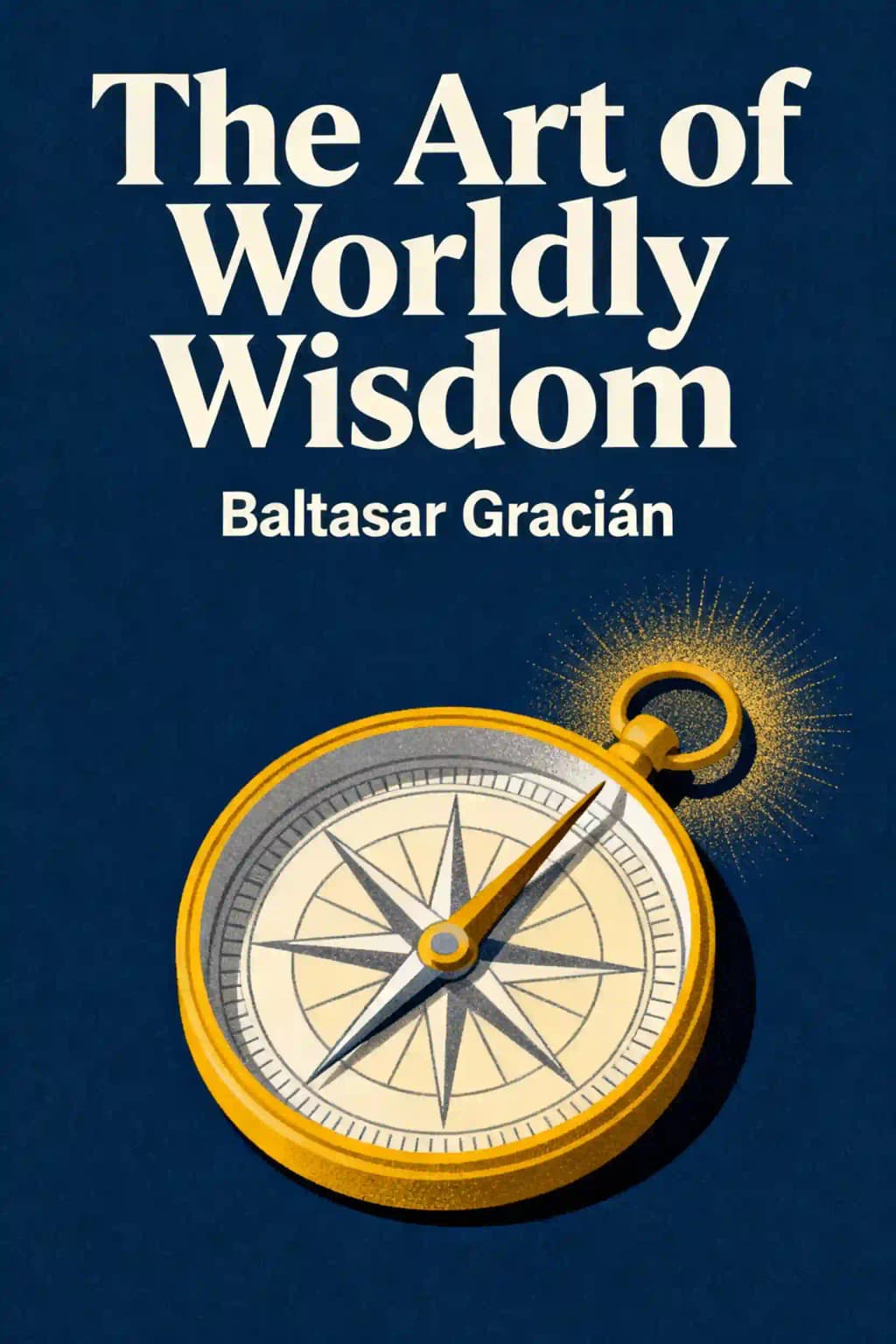
In a world obsessed with quick fixes and shallow life hacks, Baltasar Gracian's "The Art of Worldly Wisdom" stands as a monumental exception. This collection of 300 razor-sharp aphorisms has captivated some of history's greatest minds-from Schopenhauer, who lovingly translated it and called it "a companion for life," to Nietzsche, who found in it a kindred philosophical spirit. Even today, tech titans and cultural leaders quietly keep dog-eared copies on their nightstands, drawing from its timeless insights on human nature, strategy, and self-mastery.
Written in 1647 by a Jesuit priest who repeatedly clashed with his superiors for his worldly observations, this pocket oracle offers something rare: practical wisdom that feels simultaneously ancient and startlingly modern. Gracian's genius lies in his understanding that success requires both moral virtue and strategic cunning-a balance that remains elusive for many even today. His work teaches us not just how to be good, but how to be effective in a world that doesn't always reward goodness alone.
2장
The Dance Between Being and Seeming: Reality and Appearance
"Do, but also seem," Gracian advises, acknowledging the perpetual tension between substance and image that defines human interaction. In today's social media landscape, this insight feels prophetic. While some dismiss appearance as superficial, Gracian recognized that perception shapes reality in profound ways. From LinkedIn profiles to Instagram personas, we constantly navigate the delicate balance between authenticity and presentation.
Things pass for what they seem, not what they are. Rarely do people look beneath the surface, as most are satisfied with appearances. Even being right isn't enough if your manner suggests otherwise. A brilliant idea poorly presented in a board meeting may be dismissed, while a mediocre concept delivered with confidence often gains traction. This isn't an invitation to deception but a recognition that presentation matters. "The person who is invisible might as well not exist," Gracian notes, understanding that unrecognized excellence serves little purpose.
This duality requires mastering both substance and form. Cultivate genuine excellence while learning to present it effectively. Consider a skilled artisan who creates masterful work but struggles to market it, or a talented professional whose contributions go unnoticed due to poor communication. As Gracian puts it, "A fine exterior is the best recommendation of inner perfection." Think of how we instinctively judge books by covers, people by first impressions, and ideas by their packaging. These initial judgments, while sometimes misleading, create powerful frameworks through which all subsequent information is filtered.
The wise person develops both inner virtue and outer grace-not to deceive but to ensure their substance isn't overlooked. In professional settings, this might mean ensuring your contributions are properly framed and acknowledged - documenting achievements, articulating value propositions, or mastering the art of confident public speaking. In personal relationships, it means understanding that how you deliver a message often matters as much as the message itself. The same advice delivered with empathy versus judgment can yield dramatically different results.
Yet Gracian warns against becoming all facade: "Some people are all entrance-palace entrances with cottage interiors." True mastery lies in ensuring your substance exceeds your appearance, making your depths more impressive than your surface. This requires continuous self-development alongside reputation management. Consider successful leaders who maintain both strong personal development practices and effective public personas, or artists who balance creative integrity with market awareness.
The modern world, with its emphasis on personal branding and digital presence, makes Gracian's insights particularly relevant. Social media influencers who maintain authenticity while crafting engaging content, or business professionals who balance technical expertise with interpersonal skills, exemplify this delicate dance between being and seeming. The key lies in viewing appearance not as a mask but as a window through which your true value can be more clearly seen and appreciated.
3장
Strategic Self-Knowledge: Understanding Your Strengths and Limitations
"Know your best quality," Gracian counsels, making self-knowledge the foundation of all worldly success. Before you can navigate the world effectively, you must first understand your own terrain-your talents, weaknesses, and defining characteristics. This understanding becomes the compass by which all other decisions are guided and the lens through which opportunities are evaluated.
This isn't merely about listing strengths and weaknesses in a perfunctory manner. It requires ruthless honesty about your nature and a willingness to confront uncomfortable truths. "You are as much a real person as you are deep," Gracian observes, suggesting that superficial self-understanding produces superficial results. True self-knowledge involves recognizing your "major defect"-the central flaw that, if uncorrected, will undermine all your other qualities. This might be impetuousness, pride, or an inability to follow through on commitments.
Gracian advises identifying your outstanding gift and cultivating it doubly. Some excel at judgment, others at courage, while some possess remarkable creativity or analytical prowess. The tragedy lies in those who force their intelligence in the wrong direction, achieving superiority in nothing. Their passions or societal expectations blind them to their true talents until time reveals the truth-too late! This misalignment often results in mediocre performance where excellence might have been possible.
Consider how many people pursue careers misaligned with their natural abilities, or adopt strategies ill-suited to their temperaments. The corporate executive with brilliant analytical skills but poor people management might be better served as a strategist or consultant. The naturally empathetic person might find greater success in roles requiring emotional intelligence than in purely technical positions. A gifted teacher might languish in administrative work, while a natural entrepreneur might waste years in conventional employment.
Self-knowledge extends to understanding your limitations with equal clarity. "Don't have a single imperfection," Gracian advises, not expecting perfection but urging awareness of your flaws so they can be addressed or compensated for. The wise person transforms weaknesses into strengths-"Caesar covered his baldness with laurels." This might mean delegating tasks that expose your weaknesses, developing systems to compensate for shortcomings, or partnering with others whose strengths complement your limitations.
This principle applies equally to organizations and institutions. Companies that honestly assess their core competencies and limitations make better strategic decisions than those operating under delusions about their capabilities. Consider how Nokia's failure to recognize its limitations in software development contributed to its decline in the smartphone era, while Apple's clear understanding of its strengths in design and user experience led to unprecedented success.
The path to mastery begins with this fundamental step: know thyself completely, without illusion or evasion. This knowledge becomes the foundation upon which all other success is built, allowing you to choose battles you can win and avoid situations where failure is predetermined by your nature.
4장
The Art of Strategic Interaction: Reading and Influencing Others
While self-knowledge forms the foundation, success in the world requires understanding others. Gracian provides a masterclass in human psychology, offering insights that anticipate modern behavioral science by centuries, demonstrating an acute understanding of human nature that remains remarkably relevant today.
"Find each person's 'handle,' his weak point," Gracian advises. Everyone has particular motivations-respect, profit, pleasure, recognition, or security. The skillful person identifies these drivers and uses them ethically to influence others. "It's like having the key to someone's desires," he notes. This isn't manipulation but recognition that effective persuasion requires understanding what matters to others. For instance, some people are driven by public recognition, others by private achievement, and still others by the desire for security or innovation.
Consider how differently you might approach convincing a status-conscious colleague versus one motivated primarily by intellectual curiosity or family considerations. The message remains the same, but the framing changes dramatically. A proposal to a status-oriented person might emphasize visibility and prestige, while the same idea presented to someone family-focused would highlight stability and long-term benefits for their loved ones.
Gracian also warns about the dangers of misreading others: "Act on the intentions of others: their ulterior and superior motives." People rarely reveal their true objectives directly. The shrewd observer learns to discern the difference between stated and actual intentions, especially when dealing with cunning individuals who "aim deceptively, feint nonchalantly, then deliver their blow through attentive dissimulation." This requires paying attention to subtle inconsistencies between words and actions, noting patterns over time, and understanding the broader context of situations.
This skill proves particularly valuable in negotiations, where understanding the other party's true priorities often matters more than their opening positions. For example, a party might adamantly demand a specific price point when their real concern is payment terms or delivery schedule. It also helps in identifying authentic allies versus fair-weather friends - those who stand by you in difficult times versus those who appear only when circumstances are favorable.
Gracian's advice extends to managing how others perceive you: "Keep matters in suspense." By withholding immediate self-declaration, you maintain others' interest and respect. "Mystery commands veneration through its very obscurity," he observes. This principle explains why those who reveal everything immediately often command less respect than those who maintain some reserve. This doesn't mean being deliberately obscure, but rather understanding the power of selective disclosure and timing in human relations.
The art of strategic interaction also involves recognizing the cyclical nature of human favor and fortune. Gracian advises maintaining a balanced approach - neither too distant nor too familiar, neither too mysterious nor too transparent. This balance allows one to maintain influence while building genuine connections, creating a sustainable foundation for long-term success in both personal and professional relationships.
5장
Mastering Your Emotions: The Foundation of Personal Power
"Not to be swayed by passions: the highest spiritual quality of all," Gracian declares. In his view, emotional self-mastery represents the pinnacle of personal development and the foundation of all other virtues. This mastery becomes particularly crucial in positions of leadership and influence, where emotional stability can mean the difference between wisdom and folly.
This isn't stoic detachment but strategic control. Emotions themselves aren't problematic-it's being governed by them that creates vulnerability. "Even when passion affects your person, don't let it compromise your position," he advises. The person ruled by emotions becomes predictable and manipulable, easily provoked into errors of judgment. Like a chess player revealing their strategy through impulsive moves, the emotionally reactive person becomes transparent to more composed opponents.
Gracian's advice feels particularly relevant in our era of outrage and reactivity, where social media amplifies emotional responses and rewards inflammatory behavior. "Don't act when moved by passion," he warns. "You will get everything wrong. You cannot act for yourself if you are beside yourself, and passion always sends reason into exile." How many career-damaging emails have been sent in anger? How many relationships damaged by words spoken in emotional heat? How many business decisions compromised by fear or overconfidence?
The strategic approach involves recognizing emotional triggers and developing response patterns that serve rather than undermine your interests. "Master your passions with skill," Gracian recommends. "When upset, first notice that you are." This simple practice of emotional awareness creates space between stimulus and response-the foundation of emotional intelligence. He suggests specific techniques: counting to ten before responding, physically removing oneself from triggering situations, and developing ritual practices for emotional regulation.
Self-control extends beyond avoiding negative emotions to managing positive ones. Excessive enthusiasm can blind judgment as effectively as anger. The wise person maintains perspective even in moments of triumph, knowing that fortune's wheel continues turning. Success can breed complacency, just as fear can paralyze action. Gracian advocates for a balanced approach where neither success nor failure significantly disturbs one's equilibrium.
This mastery isn't achieved through suppression but through cultivation of inner strength and perspective. "A weak spirit harms more than a weak body," Gracian notes, emphasizing that emotional resilience comes from developing inner resources rather than controlling external circumstances. He recommends daily practices of self-reflection, cultivation of wisdom through study, and regular examination of one's emotional patterns and triggers.
The ultimate goal is not emotional absence but emotional wisdom - knowing when to express and when to contain, when to act and when to observe. This mastery becomes the foundation for strategic thinking, effective leadership, and lasting influence in both personal and professional spheres. Through careful cultivation of emotional intelligence, one develops the capacity to respond rather than react, to influence rather than be influenced, and to maintain composure in the face of both challenge and opportunity.
6장
The Prudent Management of Information: Secrets, Timing and Delivery
"Reserve is the seal of talent," Gracian declares, recognizing information as currency in the marketplace of human affairs. How and when you share information often matters more than the information itself.
The strategic person understands when to reveal and when to conceal. "A breast without reserve is an open letter," Gracian warns, noting that excessive transparency creates vulnerability. Yet complete opacity prevents necessary connection and trust. The art lies in judicious sharing-knowing what to reveal to whom and when.
This principle extends to sharing your plans and intentions. "Never reveal the final stratagems of your art," Gracian advises. By maintaining some mystery about your methods and capabilities, you preserve advantage and keep others dependent on your expertise. Consider how magicians guard their secrets, or how companies protect proprietary processes while showcasing their results.
Timing proves equally crucial. "Keep things in suspense," Gracian suggests. By withholding immediate self-declaration, you maintain others' interest and respect. This explains why those who immediately reveal everything often command less respect than those who maintain some reserve.
The delivery of information requires equal attention. "Express yourself clearly," Gracian advises-"not only easily but lucidly." Clear communication demonstrates respect for your audience while ensuring your message achieves its intended effect. "How will others understand what they hear if we have no clear idea what we're saying?"
Yet clarity doesn't mean revealing everything. "Don't give in to every common impulse," Gracian warns, advising against the modern tendency toward unfiltered expression. Strategic communication involves considering the effect of your words, not just their factual content.
Perhaps most importantly, Gracian emphasizes discretion with others' information: "If you trust your honor to someone else, keep his in pledge." Maintaining confidences builds reputation and trust, creating the foundation for deeper relationships and influence.
7장
Navigating Adversity: Turning Obstacles into Advantages
"Know how to use your enemies," Gracian advises, embodying his philosophy that every circumstance, even adversity, contains potential advantage for the strategically minded.
Rather than merely enduring difficulties, Gracian suggests transforming them into opportunities. "Malevolence often levels mountains of difficulty that favor made fearful," he observes. Many owe their greatness to enemies who forced them to develop strengths they wouldn't have discovered otherwise.
This approach requires reframing how we view challenges. "Go straight to the good in everything," Gracian recommends. "The bee seeks sweetness while the viper seeks bitterness for its poison." When facing setbacks, the strategic person looks for the hidden benefit or lesson rather than dwelling on misfortune.
Consider how criticism, though painful, often provides more valuable feedback than praise. "Flattery exceeds hatred in fierceness, for hatred corrects faults flattery disguised," Gracian notes. The wise person makes "mirrors from others' evil eyes, truer than affection's, helping reduce defects."
Even competition and rivalry can be transformed into advantage. "One grows cautious living near malevolent rivals," forcing improvement that comfort never would have prompted. Think of how business competitors drive innovation, or how athletic rivals push each other to new heights of performance.
Gracian's approach to adversity extends to managing risk. "Avoid committing yourself to risky enterprises," he advises, distinguishing between necessary courage and foolish recklessness. "The truly courageous person recognizes more valor in avoiding danger than conquering it."
This balanced approach acknowledges both the need for boldness and the wisdom of caution. "Act boldly but prudently," Gracian recommends. "The mind must be bolder than the body, the sword sheathed in prudence but ready when needed."
8장
Cultivating Reputation: The Strategic Management of Perception
"Make your reputation and keep it," Gracian advises, recognizing reputation as perhaps the most valuable social asset. Reputation functions as a form of social capital that opens doors, creates opportunities, and shapes how others interpret your actions.
Building reputation requires consistent excellence. "Reach perfection," Gracian urges. "No one is born perfect. Perfect yourself daily, both personally and professionally, until you become a consummate being with rounded gifts and achieved eminence." This isn't about superficial image management but developing genuine quality that others recognize and respect.
Strategic reputation management involves understanding how different audiences perceive you. "Be known for pleasing others," Gracian suggests, particularly for those in leadership positions. This doesn't mean becoming a people-pleaser but recognizing that your effectiveness depends partly on how willingly others follow your lead.
Reputation also requires careful protection. "Better to avoid missing once than to hit the mark a hundred times," Gracian observes, noting our human tendency to remember failures more vividly than successes. "No one looks directly at the sun, but everyone notices its eclipse." This explains why companies invest so heavily in crisis management-a single misstep can undo years of careful reputation building.
The wise person also understands reputation's contextual nature. "Avoid the defects of your country," Gracian advises, recognizing that what's acceptable in one environment may be detrimental in another. Today's global professionals must similarly navigate different cultural expectations and norms.
Perhaps most importantly, reputation management requires long-term thinking. "End well," Gracian counsels. "Being missed when you leave matters more than being applauded when you arrive." This principle applies equally to careers, relationships, and projects-how you conclude often determines how you'll be remembered.
9장
The Ultimate Wisdom: Virtue as Practical Strategy
"In a word, be a saint; that says everything," Gracian concludes, revealing that all his strategic advice ultimately serves a higher purpose. While his counsel might sometimes appear Machiavellian, his final maxim clarifies that virtue represents not just moral excellence but practical wisdom.
"Virtue is a chain of all perfections, the center of all happiness," he explains. "She makes you prudent, discreet, shrewd, sensible, wise, brave, cautious, honest, happy, praiseworthy, true-a universal hero." This isn't moralistic preaching but recognition that genuine virtue creates practical advantage.
Consider how integrity builds trust, which reduces transaction costs in relationships and business. How temperance preserves judgment that passion would cloud. How courage enables decisive action while prudence ensures that action is well-directed.
Gracian's genius lies in recognizing that the moral and the practical aren't separate domains but complementary aspects of wisdom. "Speak what is very good, do what is very honorable," he advises. "The first shows a perfect head, the second a perfect heart, both arising from a superior spirit."
This integration of virtue and strategy appears throughout his maxims. "Be righteous and firm," he counsels, noting that true righteousness doesn't waver with circumstances. Yet this steadfastness isn't rigid dogmatism but principled flexibility-"the truly faithful consider deceit treason, prize steadfastness over cleverness, and always stand with truth."
Gracian's ultimate insight may be that virtue itself represents the highest form of practical wisdom. "Virtue alone is sufficient unto herself," he observes. While fortune, reputation, and even intelligence depend partly on circumstances beyond our control, virtue remains accessible regardless of external conditions.
This perspective transforms how we approach both success and adversity. Rather than seeing ethics as constraints on effectiveness, Gracian recognizes them as the foundation of sustainable success. "There is nothing as lovable as virtue, nor as hateful as vice," he concludes. "Talent and greatness depend on virtue, not on fortune."
10장
Living with Strategic Brilliance: The Art of Practical Wisdom
Gracian's "The Art of Worldly Wisdom" offers more than isolated tactics-it presents a comprehensive approach to living with strategic brilliance. His maxims weave together to form a philosophy that balances pragmatism with principle, ambition with integrity.
The core of this philosophy lies in developing practical wisdom-what Gracian calls prudencia. This isn't abstract theorizing but the ability to discern the right action in specific circumstances. "Good judgment," he notes, "is the throne of prudence, its foundation." This judgment comes not from rigid rules but from understanding principles and applying them appropriately to each situation.
Practical wisdom requires continuous learning. "Associate with those you can learn from," Gracian advises. "Make friendly relations a school of erudition and conversation refined teaching." The wise person transforms every interaction into an opportunity for growth, "blending learning's usefulness with conversation's pleasure."
It also demands adaptability. "Adapt yourself to circumstance," Gracian counsels. "Governing, reasoning, and everything else must be done at the right moment." This flexibility doesn't mean abandoning principles but recognizing that their application varies with context. "The polestar of prudence lies in adapting to the occasion."
Perhaps most importantly, practical wisdom requires balancing opposing virtues. "Neither all bad nor all good," Gracian observes. "Carry right too far and it becomes wrong. An orange squeezed completely yields only bitterness." The art lies in finding the golden mean-courage without rashness, confidence without arrogance, caution without timidity.
This balanced approach extends to how we view others. "Neither love nor hate forever," Gracian advises, recognizing that human relationships evolve. "Treat friends as though they could become worst enemies... With enemies, leave the door open to reconciliation."
Ultimately, Gracian's wisdom teaches us to navigate life's complexities with both strategic mind and virtuous heart. His final maxim reminds us that true success isn't measured by external achievements alone but by the quality of character we develop: "Three things make one blessed: saintliness, wisdom, and prudence."
In our modern world of complexity and change, Gracian's timeless insights offer not just strategies for success but a path to living with genuine wisdom and integrity. His art of worldly wisdom remains as relevant today as when he first penned it nearly four centuries ago.