Unleash your secret weapon: Bo Jackson dominated sports by channeling Jason Voorhees, and you can harness the same psychological edge. Todd Herman's transformative guide reveals how elite performers use alter egos to overcome self-doubt. Ready to become the person you've always needed to be?
Todd Herman is the Wall Street Journal bestselling author of The Alter Ego Effect and a globally recognized performance coach specializing in mindset strategies and peak performance. Blending psychology and practical frameworks, his work in the self-help and personal development space focuses on unlocking human potential through identity-shifting techniques.
A Canadian native raised on an Alberta farm, Herman’s expertise stems from over two decades coaching elite athletes, including the New York Yankees and Danish Olympic teams, and CEOs through his award-winning 90 Day Year leadership program.
Herman’s insights have been featured on The Today Show, CBS News, and in Inc. magazine, while his transformative methods reach 200,000+ professionals annually across 73 countries. He co-founded Upcoach, a pioneering human transformation platform, and authored the children’s book My Super Me to help young readers build courage. The Alter Ego Effect debuted on multiple bestseller lists, including The Wall Street Journal, and remains a cornerstone resource for high achievers seeking to harness their “secret identity” for breakthrough results.
The Alter Ego Effect explores how adopting a secret identity—such as a superhero, historical figure, or empowered persona—can help individuals overcome mental barriers and unlock peak performance. Todd Herman provides a step-by-step system to craft an alter ego, enabling readers to tackle high-stakes moments with confidence in careers, sports, or personal growth.
This book is ideal for athletes, entrepreneurs, professionals, and anyone facing challenges requiring mental resilience. It’s particularly useful for those struggling with self-doubt, fear of failure, or imposter syndrome, as the alter ego method helps separate personal insecurities from actionable performance.
Yes—The Alter Ego Effect is a Wall Street Journal bestseller praised for its actionable framework and real-world examples from Olympic athletes and business leaders. Herman’s system combines psychological principles with practical steps, making it valuable for anyone seeking to thrive under pressure.
Herman’s method involves:
While Atomic Habits focuses on incremental behavior change, The Alter Ego Effect emphasizes identity shifts through role-playing. Herman’s approach is more situational, targeting specific high-pressure moments, whereas James Clear’s method builds systemic routines. Both books complement each other for holistic personal growth.
Athletes use alter egos to enter “game mode,” while professionals adopt them for presentations, negotiations, or leadership roles. Entrepreneurs channel alter egos to make bold decisions, separating emotions from strategic actions. Herman’s clients include Olympic medalists and Fortune 500 executives.
Regular use builds mental resilience, reduces anxiety in high-stakes scenarios, and reinforces positive self-perception. Over time, the alter ego’s traits integrate into your identity, enabling sustained confidence and decision-making clarity.
Herman’s 20+ years coaching elite athletes and CEOs inform the book’s practicality. His award-winning 90 Day Year program and work with Olympians provided case studies for testing the alter ego framework.
Some argue the method requires consistent practice to avoid feeling contrived. Critics note it may not address deep-seated psychological issues, focusing instead on situational performance. However, most praise its actionable steps and empirical success stories.
In an era of remote work and AI-driven competition, the book’s emphasis on mindset agility helps professionals adapt to rapid change. Its tools for overcoming imposter syndrome align with rising mental health awareness in high-pressure industries.
For deeper mindset shifts, pair with Carol Dweck’s Mindset. For habit-building alongside identity work, combine with James Clear’s Atomic Habits. Herman’s My Super Me extends the concepts to children’s confidence-building.
저자의 목소리로 책을 느껴보세요
지식을 흥미롭고 예시가 풍부한 인사이트로 전환
핵심 아이디어를 빠르게 캡처하여 신속하게 학습
재미있고 매력적인 방식으로 책을 즐기세요
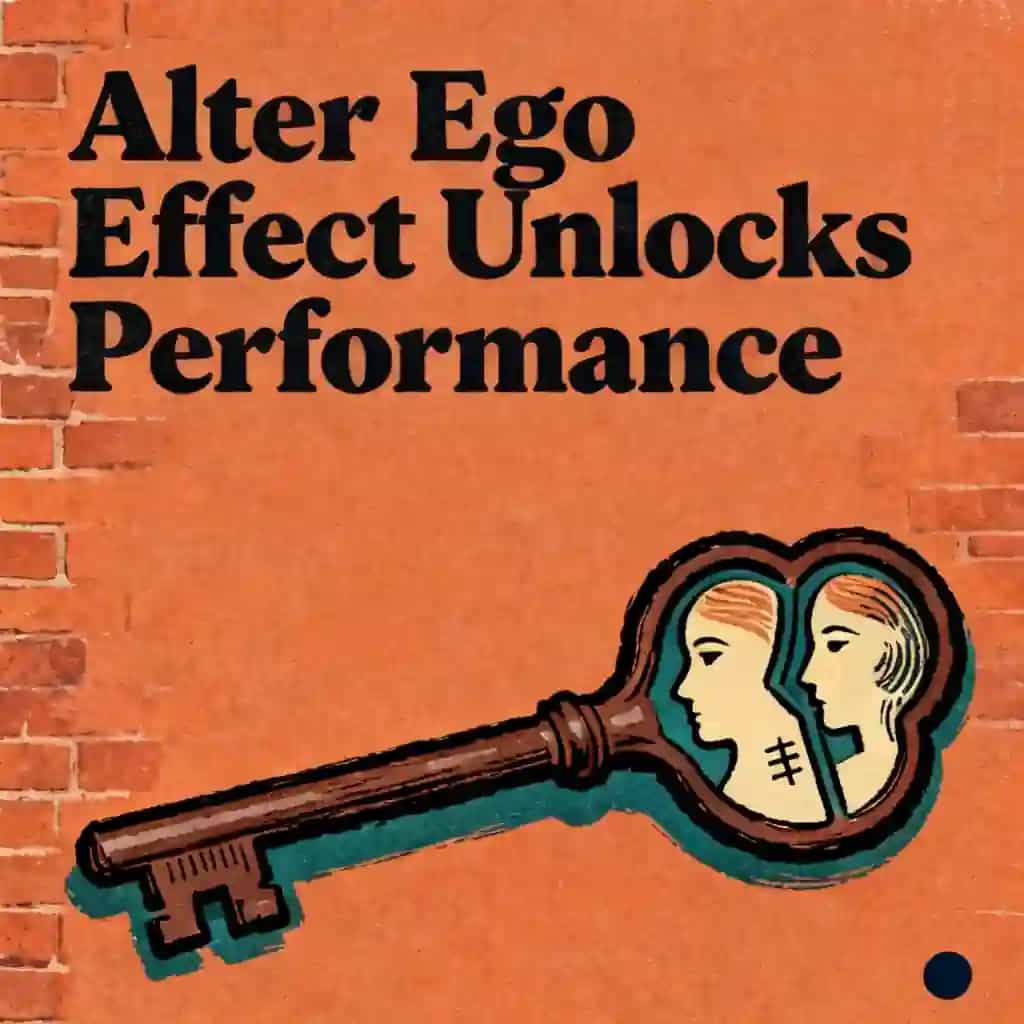
The Alter Ego Effect is the conscious construction of a separate identity.
When you adopt an Alter Ego, you’re not trying to become someone else; you’re revealing a latent side of your personality.
By creating an Alter Ego, you consciously tap into the superpowers you already possess.
The key to activating your Alter Ego is to create a separation between your true self and the persona you want to embody.
Your Alter Ego is not about escaping reality; it’s about enhancing it.
The Alter Ego Effect의 핵심 아이디어를 이해하기 쉬운 포인트로 분해하여 혁신적인 팀이 어떻게 창조하고, 협력하고, 성장하는지 이해합니다.
생생한 스토리텔링을 통해 The Alter Ego Effect을 경험하고, 혁신 교훈을 기억에 남고 적용할 수 있는 순간으로 바꿉니다.
무엇이든 묻고, 학습 스타일을 선택하고, 나에게 맞는 인사이트를 함께 만들어보세요.

샌프란시스코에서 컬럼비아 대학교 동문들이 만들었습니다
"Instead of endless scrolling, I just hit play on BeFreed. It saves me so much time."
"I never knew where to start with nonfiction—BeFreed’s book lists turned into podcasts gave me a clear path."
"Perfect balance between learning and entertainment. Finished ‘Thinking, Fast and Slow’ on my commute this week."
"Crazy how much I learned while walking the dog. BeFreed = small habits → big gains."
"Reading used to feel like a chore. Now it’s just part of my lifestyle."
"Feels effortless compared to reading. I’ve finished 6 books this month already."
"BeFreed turned my guilty doomscrolling into something that feels productive and inspiring."
"BeFreed turned my commute into learning time. 20-min podcasts are perfect for finishing books I never had time for."
"BeFreed replaced my podcast queue. Imagine Spotify for books — that’s it. 🙌"
"It is great for me to learn something from the book without reading it."
"The themed book list podcasts help me connect ideas across authors—like a guided audio journey."
"Makes me feel smarter every time before going to work"
샌프란시스코에서 컬럼비아 대학교 동문들이 만들었습니다

The Alter Ego Effect 요약을 무료 PDF 또는 EPUB으로 받으세요. 인쇄하거나 오프라인에서 언제든 읽을 수 있습니다.
What if the key to unlocking your potential wasn't about becoming a better version of yourself, but about becoming someone else entirely? Consider this: Beyonce couldn't step onto the world's biggest stages as Beyonce Knowles. She needed Sasha Fierce. Kobe Bryant didn't dominate basketball courts as Kobe-he became the Black Mamba. And here's the real twist: Bo Jackson once revealed that "Bo Jackson never played a down of football in his entire life." These aren't just celebrity quirks or branding exercises. They're strategic psychological tools that helped these icons access capabilities that felt unreachable when they tried to be themselves. The technique is so powerful that Olympic athletes, Fortune 500 CEOs, and Hollywood stars use it regularly-though most keep their alter egos hidden from public view, like a magician protecting their best trick. The idea of an alter ego isn't some New Age invention. It traces back to Cicero in the first century BC, who described it as "a second self, a trusted friend"-the other I. Far from being a sign of instability, this psychological separation reflects a healthy understanding of human nature. Hollywood superagent Shep Gordon captured the wisdom perfectly: "If you allow the public figure to actually be you, you're never going to be happy." This separation creates both confidence and emotional protection. When criticism comes, it hits the character, not your core.
Growing up on a six-thousand-acre Alberta ranch, Todd Herman was outwardly competitive but inwardly insecure. After punching an opponent during a volleyball tournament, his coach pushed him toward mental toughness. His breakthrough came when he visualized warriors joining him on the football field, then placed trading cards of admired players - Walter Payton and Ronnie Lott - strategically in his uniform, creating a "Frankenstein-like Alter Ego." Years later, when insecurity about his age threatened his sports training business, he bought prescription-free glasses to become "Richard" during client meetings. Studies confirm glasses make people appear smarter and more trustworthy - even defense lawyers use this tactic. "There's no way to describe it other than, I felt trapped. Every morning I had the intention of sitting down at my kitchen table to write, but it was like the chair and my butt were magnets that repelled each other." This confession from a well-known author captures what countless people experience - some invisible force stopping them from moving toward their goals. The core issue is mistaking performance for identity. Your Core Self is where possibility exists - where deep desires and dreams live. But the Enemy deploys Hidden Forces that whisper "You're not meant for that," creating a Trapped Self that keeps you stuck in the Ordinary World.
Moments of Impact are critical actions where you face the most resistance and vulnerability - asking for a sale, public speaking, or any situation where you might be judged. These pivotal moments determine your trajectory. Shaun, a cloud storage executive, excelled at lunch-and-learn presentations to financial clients but avoided them due to administrative hassles. By delegating logistics, he broke sales records within months. Common Moments of Impact include delivering presentations where nervousness undermines you, networking events where you become either a wallflower or over-aggressive, and closing sales where you miss buying signals. Julia, a creative agency owner, struggled during client negotiations, falling into people-pleasing and over-promising. Despite her internal ambition, she couldn't project strength externally - a gap that cost her business. Identifying these high-leverage situations where your Heroic Self occasionally appears but not consistently is the first step toward transformation.
Unnamed threats feel overwhelming - like the hidden shark in Jaws. Naming your Enemy transforms an amorphous force into something tangible your Alter Ego can defeat. Names evoke immediate images and emotions: think Joker or Darth Vader. The Enemy wields Common Forces: uncontrolled emotions, lack of confidence, worry about others' opinions, self-doubt, risk aversion, and lack of intentionality. Imposter syndrome afflicts even accomplished people - Einstein, Maya Angelou, and Tina Fey all felt like frauds. Personal trauma - war, death, poverty, abuse, discrimination, childhood teasing - forms another hidden force. Tribal narratives are especially powerful: unconscious beliefs about what certain groups can or cannot do, like "We're not entrepreneurs" or "We don't have money." Ukrainian tennis star Valeria Kuznetsova was teased by village boys. Her anger fueled her rise but became destructive during matches. By naming her negative self-talk "Igor" after her childhood bully, she transformed an emotional storm into a specific adversary her Alter Ego could defeat on court.
The Extraordinary World isn't fantasy-it's about meaningful challenges and dragons to slay. An Alter Ego builds intention, promotes belief, and creates trust, essential for reaching flow state where capabilities emerge without conscious thought. As Jim Carrey says: "You can fail at what you don't want, so you might as well take a chance on doing what you love." Identify traits needed during your Moment of Impact-decisive, adaptable, calm, tough. Then find someone or something embodying these qualities. Heidi combined MacGyver and Marie Forleo. Julia chose a stag-gentle yet strong and determined. You can even use objects: NFL running back Jerome "the Bus" Bettis embodied an unstoppable vehicle. Ted, a business owner who lost confidence, created "Catracho Spearo"-combining his Honduran heritage with spearfishing experience. When seeking opportunities, Ted imagines himself in deep waters with sharks, focused and fearless. Your Alter Ego needs an Origin Story-emotional context explaining their superpowers and drive. Connect this to Core Drivers like family, community, or causes bigger than yourself. This narrative becomes your transformation's foundation, explaining why your Alter Ego exists and what mission propels them forward.
Physical totems trigger your Alter Ego. Winston Churchill wore different hats for different personalities. Martin Luther King used non-prescription glasses to appear distinguished. Research on "enclothed cognition" shows symbolic items change performance-participants wearing a "doctor's coat" showed increased attention and accuracy, while those in a "painter's coat" didn't. The effect requires understanding the symbolic meaning and physically wearing it. Choose totems that symbolize something meaningful, can always be used on your Field of Play, and allow quick transitions. This physical anchor signals your brain to become someone extraordinary. When doubt strikes, deploy Ground Punches. The Curb Kick forcefully dismisses your Enemy: "Hey, Suzie, this is my fucking court. Get to the sidelines." The Response Proclamation answers "Who do you think you are?" with prepared conviction: "I'm the one who's woken up at 4:18 a.m. every day for 1,123 straight days." These strategies protect your Alter Ego when stepping into your power.
Like Marilyn Monroe transforming from Norma Jean with a simple posture shift, you can activate your superpowers now. Start small: visit a coffee shop as your alter ego, noticing how they hold their cup and interact. Test your focus by visualizing a number on an object for three minutes, then repeat while embodying your heroic self. At life's end, you'll remember actions, not intentions. Whether running a marathon, changing careers, or mastering sales, start today. The world needs your Alter Ego - that part waiting in the wings, ready to perform. Create your secret identity and step into adventure. The person you're capable of becoming isn't hiding within - they're waiting to be invented.