1장
Bridging the Unbridgeable: How to Talk When No One's Listening
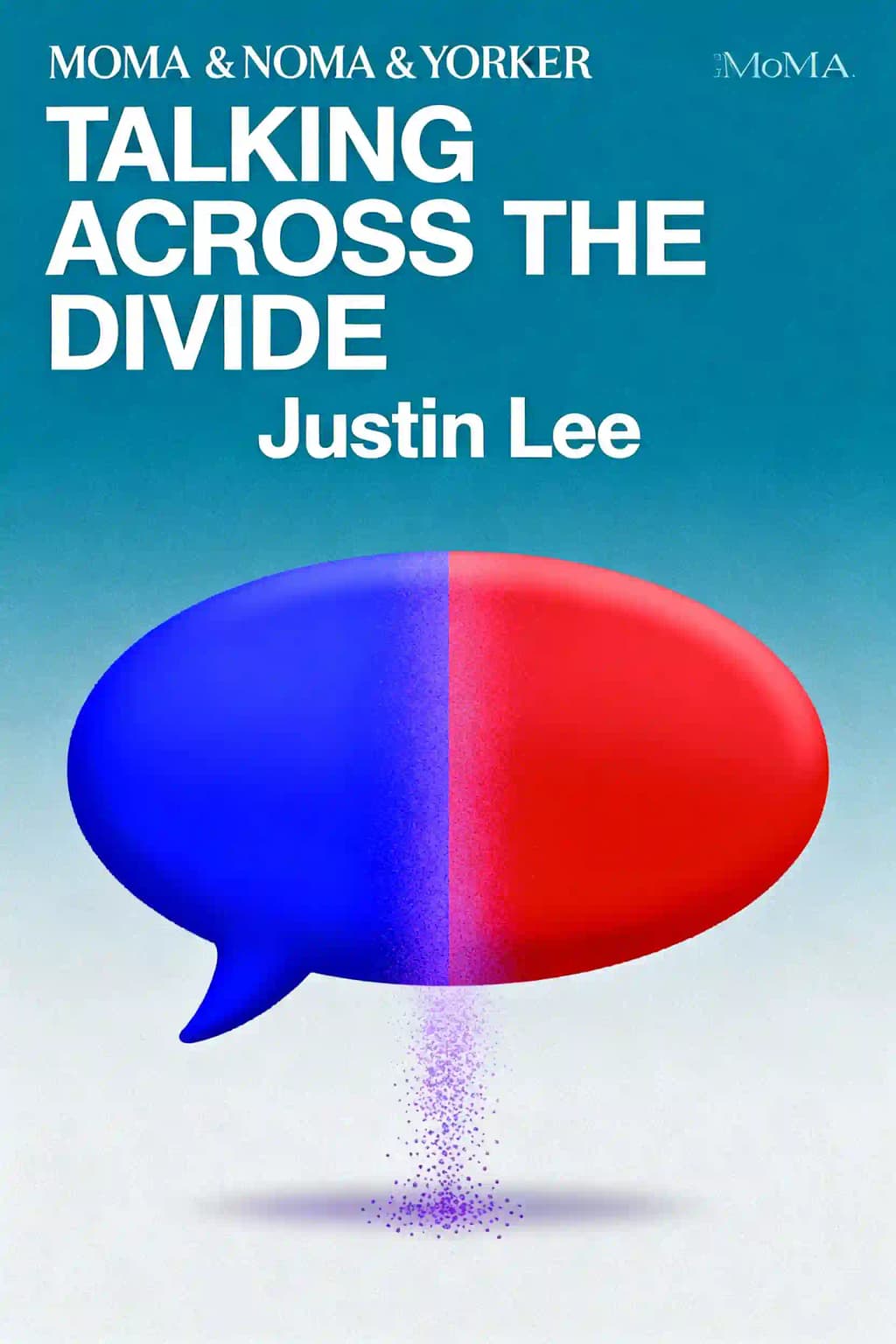
In a world where political debates turn family dinners into battlegrounds and social media has become a cesspool of tribal warfare, Justin Lee's "Talking Across the Divide" arrives as a much-needed peace treaty. The book has earned praise from conflict resolution experts and has been adopted by university courses on communication and social psychology. What makes this work particularly compelling is Lee's unique position straddling one of America's most contentious divides-as a gay man raised in an evangelical Christian household, he's spent his life as a cultural translator between worlds that often can't comprehend each other. Oprah once described the book as "the conversation manual America desperately needs," while The New York Times praised it for offering "practical wisdom without partisan posturing." In our era of deepening polarization, Lee's approach offers something increasingly rare: genuine hope for meaningful dialogue.
2장
Echo Chambers and the Death of Dialogue
We live in a nation divided, where people point to different "facts" and make wildly different assumptions about reality. As one of Lee's friends described it, "It's like we live on different planets." This polarization manifests in gridlocked government, stalled scientific progress, and fractured families where relatives can barely speak to each other about anything meaningful.
Ironically, the internet that should connect us may be driving us apart. In pre-internet times, smaller social circles necessitated resolving disputes with neighbors and coworkers. Today, social media allows us to instantly drop people who disagree with us while receiving validation from like-minded individuals worldwide. This makes it easy to abandon difficult conversations and retreat into echo chambers where our views are constantly reinforced.
Beyond our conscious choices, technology creates personalized "filter bubbles" that show us altered versions of reality. Google searches and Facebook feeds deliver results based on algorithms that predict what we want to see. Two people searching for the same term receive entirely different information, reinforcing existing beliefs. This matters because search engines are where most people turn for answers about what's true.
The news landscape has splintered as well-instead of communities sharing common information sources, we now consume partisan news targeting specific viewpoints. Projects like "Blue Feed, Red Feed" demonstrate how liberals and conservatives see radically different headlines on the same topics, making meaningful national conversation virtually impossible.
These echo chambers don't just nurture conformity-they breed extremism. Solomon Asch's famous 1951 study demonstrated how group pressure can make people accept obviously wrong answers when everyone around them agrees on the falsehood. Research shows that when like-minded people discuss issues, they tend to become more extreme in their views through mutual reinforcement.
The good news? Echo chambers aren't absolute. Asch found that just one dissenting voice significantly increased subjects' willingness to give correct answers despite group pressure. This gives us hope that breaking through these bubbles is possible-if we learn the right approach.
3장
Beyond Fighting, Avoiding, and Compromising
Most people have only three tools for handling disagreements: fighting, avoiding, or compromising. When compromise isn't possible on important issues, people typically resort to fighting or avoidance, leading to increased polarization. Lee introduces a fourth tool-strategic dialogue-as a powerful alternative for breaking through barriers and changing minds even on deeply divisive issues.
Consider a common scenario: Thanksgiving dinner with family where "Uncle John" brings up a contentious issue you deeply care about but disagree with. Most people either fight (ruining dinner), avoid the topic (letting harmful views go unchallenged), or compromise (pretending to agree when you don't). When compromise isn't possible on important issues, we often end up either arguing fruitlessly or cutting people out of our lives, retreating to our own echo chambers while knowing "those people" are still out there potentially causing harm.
Many people dismiss "dialogue" as ineffective and idealistic, especially when facing serious issues where real harm is occurring. However, strategic dialogue is something more powerful than just friendly conversation. It's a specific communication technique designed to reduce tension, change attitudes, and remove obstacles to truth. It acknowledges that when people aren't listening to logical arguments, there's a reason-psychological barriers prevent them from seeing truth clearly.
Strategic dialogue is built on four fundamental principles: 1) Everyone thinks they're right; 2) We want to change each other's minds; 3) Dialogue is more effective than debate at changing minds; and 4) On important issues with real consequences, people care deeply about getting to the truth because lives or wellbeing may be at stake.
Arguments and debates fail because they create defensiveness and focus on winning rather than listening. Strategic dialogue breaks down barriers and encourages listening. It isn't a substitute for action-sometimes protests, legal pressure, or other actions are necessary-but diplomacy through dialogue creates lasting attitude change rather than temporary compliance.
4장
Preparation: The Foundation of Effective Dialogue
Just as poorly planned meetings waste time, unprepared dialogue rarely changes minds or creates impact. Effective dialogue requires thorough preparation of yourself, your audience, and the space where conversation will happen.
First, prepare yourself by researching all sides of an issue to understand opposing viewpoints before conversations begin. Clearly define your goals-whether building understanding between groups, restoring relationships, or achieving specific policy changes. Getting to know your audience through their writings or social media helps you speak to their values. For beginners, one-on-one dialogues are recommended over group settings. Finally, emotional preparation is crucial-visualizing yourself responding calmly to frustrating comments and viewing the other person as a potential ally rather than an enemy.
How you invite someone to dialogue sets the tone for your conversation. The invitation should be appropriate to your relationship-formal for authority figures, casual for friends and family. Most importantly, set clear expectations about what dialogue means. Clarify that you're not looking to lecture them but to hear their perspective and work together. Explain that dialogue isn't about claiming everyone is equally right, nor is it debate or argument-it's about building understanding while acknowledging disagreements.
Creating the right environment is crucial for productive dialogue. Find a relaxing, interruption-free space-perhaps over coffee or during a pleasant activity like walking. When you meet, establish ground rules: agree to listen without interrupting and genuinely try to understand each other's perspectives. While you don't need formal written rules for one-on-one conversations, take a moment to acknowledge your disagreements and clarify your hopes for the dialogue.
Lee acknowledges that sometimes opportunities for dialogue arise unexpectedly without preparation time, and encourages adapting the techniques as needed-strategic dialogue is "an art form, not a magic formula."
5장
The Power of Strategic Listening
Drawing from his experience as an electronics salesperson, Lee divides approaches into three types: passive salespeople who simply fulfill requests, aggressive salespeople who pressure customers regardless of needs, and effective salespeople who listen carefully and tailor solutions to individual customers. The latter created win-win situations by understanding customer needs first. This same principle applies to changing minds-listening strategically creates better outcomes than pushing an agenda.
Strategic listening is an information-gathering process to identify effective ways to reach someone with new ideas. When listening, pay attention to what they want, what they believe, how they perceive your position, their information sources, their unique language, their fears, and potential common ground. Lee emphasizes always listening to others before asking them to listen to you, and approaching conversations with an inquisitive, sensitive, and sincere attitude.
Despite its power, we often avoid listening because it feels passive when we want to take action. Listening can be emotionally challenging when we disagree with what's being said, especially if we feel our side isn't being heard. Some worry that listening delays necessary action, but strategic dialogue complements rather than replaces other forms of action. Understanding opponents' motivations helps fine-tune action plans for lasting change.
Importantly, listening doesn't legitimize harmful viewpoints-in fact, the more urgent it is to change someone's mind, the more critical listening becomes. Lee compares strategic listening to his mother's secret for making fluffy meringue: using room-temperature eggs. Just as many cooks try to save time by skipping this crucial step, people often want to skip listening and jump straight to making their arguments. But listening isn't just about gathering information-it sets a cooperative tone, gives the other person a chance to be heard, and helps calm angry people.
6장
Understanding the Villain's Perspective
When attempting dialogue with someone you disagree with, conversations often derail because of the ego-protection barrier. This fundamental human defense mechanism can be summed up simply: nobody wants to look foolish, be wrong, or feel manipulated. When you try to change someone's mind, they hear an implicit message that they're wrong and foolish, which triggers defensiveness.
Popular media typically portrays villains with obvious tropes-maniacal laughter, mustache-twirling, or elaborate evil plots-that signal to audiences who to root against. In real life, villains rarely see themselves that way. We accept simplistic explanations like "she's greedy" without questioning deeper motivations. Stories like Broadway's "Wicked" show how villains can be complex, sympathetic characters when we understand their perspective.
To effectively engage with those we disagree with, we must resist the urge to villainize them. Strategic dialogue requires humanizing our opponents, even when it feels unfair. Through strategic listening, we should focus on understanding their underlying motivations rather than just their positions. Lee warns against settling for "straw men" explanations that make opponents look bad, as these rarely reflect how they see themselves.
Understanding someone's motivations doesn't mean excusing harmful behavior. Like experts investigating a train derailment, explaining why something happened is vital for preventing future occurrences without legitimizing the tragedy. We can seek to understand and explain why people do what they do-what they believe motivates their behavior-without agreeing with or excusing their rationale.
Once you understand someone's motivations, tell their story the way they would tell it. This approach makes people feel heard and understood. Lee suggests saying, "I want to make sure I really understand where you're coming from" before recounting their perspective as if they were the hero of a story. If you get details wrong, apologize and try again until they confirm you've understood. This transforms you from an accuser into someone who understands them, breaking down walls to communication.
7장
Breaking Through Team Loyalty
When people identify strongly with a "team"-whether political, religious, or social-they often automatically dismiss opposing viewpoints regardless of merit. This tribalism manifests in everyday conflicts, like when a coworker hopes for a bill's failure simply because the other political party proposed it, even if she previously supported similar legislation.
Research from Yale demonstrates how powerfully team loyalty influences our thinking. In experiments, both conservatives and liberals supported welfare policies their party supposedly endorsed-even when those policies contradicted their typical positions. Participants believed their decisions were based on rational analysis, while assuming others were influenced by group loyalty.
This blind spot affects everyone; we recognize others' echo chambers while remaining oblivious to our own. Even arbitrary team assignments in classroom experiments quickly lead to us-vs-them thinking, with participants viewing their own group positively and the other negatively. Team loyalty even distorts perception of objective facts, as shown when Princeton and Dartmouth students counted different numbers of infractions while watching the same football game.
Before addressing team loyalty in others, we must recognize and combat it in ourselves. Lee recommends: spending time with people you disagree with; maintaining diverse social media connections; following bloggers and authors with different perspectives; asking friends for resources to understand their viewpoints; and deliberately seeking out opposing arguments on controversial issues.
When facing someone with an us-vs.-them mindset, emphasize your individual identities rather than group affiliations. Avoid team references or highlight how you differ from stereotypes about your group. Encourage them to discuss times they've disagreed with their own team, reinforcing that independent thinking is sometimes necessary.
Rather than distancing yourself from teams entirely, redefine boundaries so you're both on the same team. Find common ground through shared identities, experiences, or interests-whether faith, nationality, shared hardships, hobbies, or family connections. Use these commonalities to combat us-vs.-them thinking. Eventually, you can leverage this shared identity to explain your position based on mutual values: "As Americans, we value liberty..." or "As fellow teachers, I've seen..."
Another way to build team identity is finding shared "enemies"-not other people (which would be immoral), but common problems you both want to solve. Unite against non-human challenges like poverty, ignorance, or prejudice. During strategic listening, identify causes the other person cares about that you can genuinely support. By focusing on working together against shared problems, you shift from opposition to collaboration.
8장
The Cultural Bilingualism Challenge
Milton Bennett's Developmental Model of Intercultural Sensitivity (DMIS) provides a framework for understanding how we interact with different cultures or "teams." The first three stages represent significant problems that worsen team-loyalty barriers, while the more advanced stages enable genuine cross-cultural engagement.
In the initial "Denial of Difference" stage, we're simply unaware that other cultures exist beyond our own experience. Like a child assuming everyone eats spaghetti exactly as their family does, we believe our cultural experience is universal. Though readers likely recognize different "teams" exist, elements of this stage may still emerge when encountering unfamiliar worldviews.
The "Defense Against Difference" stage represents the classic us-vs-them mentality where polarization thrives. We view our team as good and their team as bad, painting the other side as villains while seeing our own group as superior. Even if we don't verbalize these attitudes, others perceive them, leading to more defensive behavior.
The trickiest stage is "Minimization of Difference," where we focus exclusively on commonalities while downplaying meaningful differences. We say things like "We're all human with the same basic needs" and focus only on superficial cultural differences like food or music. While recognizing our shared humanity is important, especially when combating racism or prejudice, stopping here misses something crucial: our differences matter and shape our identities.
When we minimize differences that matter deeply to others, we make them feel misunderstood and erased, sabotaging dialogue. Rather than saying "I just see you as a person, not as a gay person," which can feel dismissive, give people opportunities to explain why certain aspects of their identity matter to them.
Dialogue often breaks down over simple misunderstandings about terminology. When we minimize differences, we fail to recognize that terms may have different meanings outside our bubbles. Experts use jargon that goes over others' heads, and heated arguments can occur when people don't define their terms.
In strategic dialogue, recognizing values differences is crucial. What one culture considers ideal parenting might seem smothering or neglectful to another. Some cultures emphasize independence while others value interdependence. Walking blindly into these differences creates confusion and frustration.
9장
The Storytelling Solution
We all have mental lists of things we "really should" get around to someday-exercise regimens, books to read, digital clutter to organize. But comfort and inertia keep us from acting. Like Newton's first law of motion, humans tend to keep moving in the same direction unless acted upon by a force. Echo chambers insulate us from those outside forces.
When you ask someone to change their position, you're asking them to do the hard mental work of reconsidering things and fighting inertia. If they're comfortable with their current views, and their echo chamber reinforces those views, why would they voluntarily take on that challenge? Comfort with the status quo creates a powerful barrier to change-psychologists call this "status quo bias." Change is scary and requires effort, making existing views more appealing.
Stories can change hearts and minds in ways logical arguments cannot. Consider how differently you'd react to news of aliens arriving on Earth if you'd seen E.T. versus Independence Day. The stories we consume create scripts in our minds that shape our expectations and responses.
If your neighbor wants to "bring out the big guns" against arriving aliens because he's only seen invasion movies, no amount of logical, religious, or ethical arguments will overcome his fear. But watching E.T. with him might give him a new perspective by allowing him to identify with an alien character.
People resist change when scary stories play in their minds. You can't fight these emotional scripts with logic alone-you need to offer alternative stories that show another side of the issue. Personal stories about specific individuals affected by an issue are far more powerful than statistics. When people can connect emotionally with one person's experience, they become more open to reconsidering their positions.
When crafting your story, examine the source of your emotions about an issue. Reflect on specific experiences that shaped your feelings and be willing to share painful obstacles you've faced-these elements make your story authentic and powerful. Include hope in your narrative. While acknowledging difficulties, show how you overcame struggles or how working together can lead to positive change. Stories without hope don't motivate action.
Your story must show what's at stake-why this issue matters and the consequences of getting it wrong. Rather than telling people about consequences, show them through personal experiences. The closer to home your example is, the more powerful its impact.
10장
Combating Misinformation
Misinformation represents a significant obstacle to productive dialogue, whether spread deliberately or through misunderstanding. In our polarized world, people can become absolutely convinced of incorrect facts, preventing them from accepting anything you have to say.
After the 9/11 attacks, Dr Pepper released a patriotic can featuring "One Nation... Indivisible" with the Statue of Liberty. This sparked controversy when some believed the ellipsis deliberately excluded "under God" from the Pledge of Allegiance. Misinformation spread through emails that wrongly claimed Pepsi had produced the can and removed "under God" from the complete pledge.
This illustrates how difficult it is to combat misinformation. Even when presented with facts, people often cling to false beliefs. While this might seem trivial for soft drink preferences, misinformation becomes dangerous when it affects important decisions about health, safety, or policy.
Many cultural debates fundamentally come down to disagreements about facts themselves. Whether discussing vaccines, climate change, or other issues, the question becomes: What is true? Do we know? And if we do know, why aren't we all in agreement?
Several barriers make misinformation particularly persistent. First, simple lies spread faster than complex truths. In our world of sound bites and clickbait, simple falsehoods have a significant advantage. People rarely read full articles or verify information before sharing.
Second, many people overestimate their knowledge due to the "illusion of explanatory depth." Research demonstrated this by asking people to rate their understanding of everyday objects like zippers, then asking them to explain in detail how these objects work. Most people discovered significant gaps in their understanding once forced to provide details.
Third, confirmation bias affects everyone, causing us to readily accept evidence supporting our existing views while scrutinizing contradictory information. A 1979 Stanford study on death penalty opinions demonstrated this dramatically: when presented with identical sets of data, supporters became more supportive and opponents more opposed.
To combat misinformation, distill facts into short, memorable sound bites or images while maintaining accuracy. Help others recognize knowledge gaps by asking questions that prompt self-discovery without causing embarrassment. Use stories to make facts feel more real and help the other person take your evidence seriously. And remember that repetition is crucial-just as advertisers run the same commercials repeatedly, you must consistently repeat the truth in multiple formats to counter falsehoods.
11장
Crafting a Path Forward
When trying to change someone's mind about a deeply personal issue, emotions often get in the way of effective dialogue. Even after successfully using strategic listening to break through initial defensiveness, asking someone to abandon a long-held position can trigger renewed resistance.
Strategic listening helps break through initial defensiveness, but asking someone to stop supporting a cause they've invested in essentially asks them to admit being wrong-triggering ego protection again. This creates cognitive dissonance: the brain struggles to reconcile contradictory ideas like "I'm a good person" and "I've devoted years to something bad." To resolve this discomfort, people typically reinterpret reality to maintain their self-image rather than admit error.
The solution is offering a new narrative that doesn't make them feel foolish. When trying to change someone's mind, you're offering them a new story about themselves-suggesting "this is who you are, this is what you care about, and therefore this is what you should do." The key to bypassing ego protection is presenting information within a narrative the person can accept as their own, one they identify with or aspire to.
When discussing someone's past beliefs or actions, frame them as completely reasonable given what they knew at the time: "Of course you supported that cause. So many of us did!" This prevents defensiveness and allows them to change position without feeling foolish.
People struggle to abandon beliefs they've invested in-a manifestation of the sunk cost fallacy that keeps gamblers at tables long after they should quit. To overcome this, demonstrate how changing course actually aligns with their original motivating interests. If someone was driven by patriotism, economic concerns, or protecting children, show how your proposed position better serves those same values.
The most compelling narratives don't just accommodate someone's self-image-they offer solutions to problems they're facing. Like effective advertisements that follow classic story structure (protagonist faces obstacle, product resolves it), position your perspective as the answer to their challenges.
As human beings, we're driven by hope and possibility. While many discussions about divisive issues focus on what's wrong with the world, take time to paint an optimistic picture of what could be. Describe the better future you're working toward and help them envision their role in creating it.
12장
Hope in a Divided World
We live in a polarized world surrounded by polarized thinking. Dialogue is powerful but not always fun-it requires discipline and commitment. This work is hard. Sometimes it means listening attentively to wrong and damaging ideas. Sometimes it means standing in the middle of conflict, receiving hate from both sides. It can wear you out, sadden you, anger you. It's far easier to talk only with those who agree with you and post snarky comments about others online.
But when you feel like quitting, don't give up. Keep going even when results aren't immediate or visible. Our culture's polarization is killing us. The only way out is for people to do the difficult, thankless work of talking to opponents, listening to them, understanding their worldview, and becoming a voice they'll listen to.
Despite years of experience, Lee admits he still makes frequent mistakes-letting his temper flare, interrupting others, and taking things personally. Yet he's still helped many people change their minds through dialogue. You'll make mistakes too, but don't let that discourage you. Learn from these experiences without excessive self-criticism. Remember that any attempt at dialogue, however imperfect, is better than no attempt.
If everyone made this effort daily, it would transform our world. You'll never achieve perfection, but with practice, you'll improve, and every outreach makes a positive impact. At the same time, remember this isn't all on you-you're one person who can't carry the entire weight alone. Some won't listen regardless of your approach, while others might change their minds even with flawed dialogue.
Our society faces a choice: build isolated communities that reinforce our superiority, or do the difficult work of reaching across divides. The easy path leads to a fractured society of power struggles; the hard path opens unprecedented opportunities. The next step starts with you.