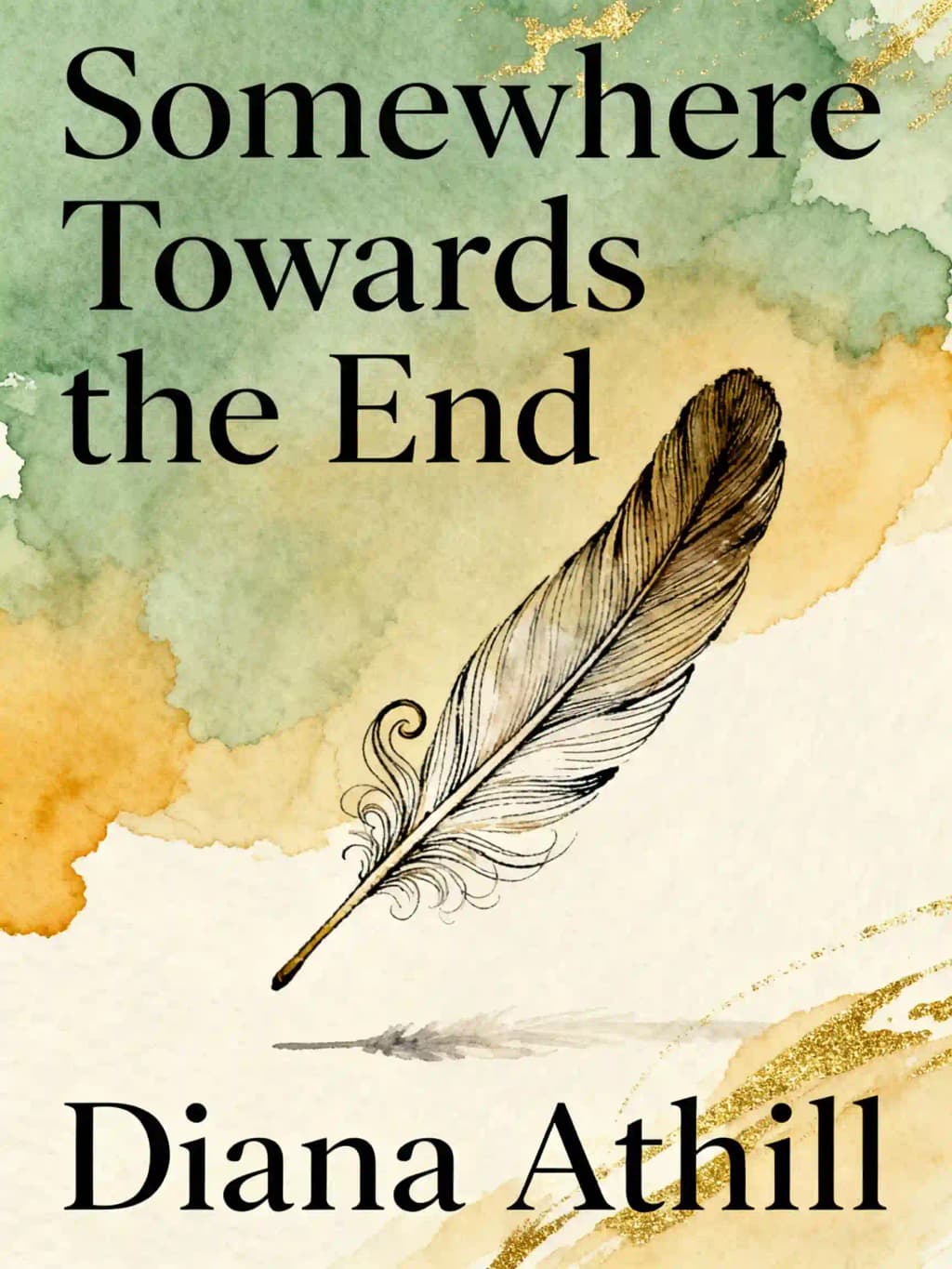
At 90, Diana Athill confronts mortality with shameless honesty in this award-winning memoir. What makes aging bearable? National Book Critics Circle winner reveals gardening, painting, and social connections as her antidotes - offering readers both wisdom and unexpected comfort in life's final chapters.
Diana Athill (1917–2019) was an acclaimed literary editor and memoirist, celebrated for her insightful explorations of aging in her Costa Biography Award-winning memoir, Somewhere Towards the End.
As a founding editor at André Deutsch Ltd., Athill played a pivotal role in shaping the careers of literary luminaries such as Jean Rhys and Philip Roth. Her editorial approach was characterized by a commitment to raw honesty and a collaborative spirit.
Athill's own memoirs, including Stet and Instead of a Letter, are renowned for their blend of candid self-reflection and sharp observational wit. These works established her as a pioneering voice in autobiographical writing.
Her writing often confronts universal themes of love, loss, and resilience, drawing upon her extensive experience in the publishing world and her unflinching self-awareness. Athill was awarded an OBE for her services to literature.
Remarkably, she continued writing into her nineties, achieving international recognition with Somewhere Towards the End, which became a bestseller translated into 15 languages.
Somewhere Towards the End is a candid memoir exploring aging, mortality, and the complexities of life’s final chapters. Diana Athill reflects on physical decline, lost relationships, and the paradox of confronting death while finding joy in small moments. With unflinching honesty, she discusses topics like sexuality, independence, and the emotional shifts that accompany old age, blending personal anecdotes with philosophical musings.
This book appeals to older adults navigating aging, caregivers seeking insight into late-life experiences, and readers of introspective memoirs. Fans of Joan Didion or Oliver Sacks will appreciate Athill’s sharp wit and lyrical prose. It’s also valuable for those interested in existential reflection or British literary figures.
Yes—it won the 2009 Costa Book Award and National Book Critics Circle Award for its groundbreaking perspective on aging. Athill’s candidness about regrets, declining health, and unexpected satisfactions (like gardening) offers a refreshing counterpoint to sanitized portrayals of old age. The concise, eloquent writing makes it accessible despite its heavy themes.
Key themes include:
“The difference between being and non-being is both so abrupt and so vast that it remains shocking even though it happens to every living thing.” “I was right in thinking that I will never see it being a tree, but I underestimated the pleasure of watching it being a fern.” These passages encapsulate Athill’s ability to merge existential gravity with everyday beauty.
As a legendary literary editor who worked with Jean Rhys and V.S. Naipaul, Athill brings a writer’s precision to her observations. Her career analyzing narratives shines through in the memoir’s structured yet conversational tone. The book also subtly critiques publishing’s gender dynamics, informed by her 50-year tenure at André Deutsch Ltd.
Some readers find Athill’s bluntness about rejecting maternal roles or romantic relationships polarizing. Her privileged upbringing (growing up in Norfolk’s Ditchingham Hall) occasionally surfaces in class-conscious reflections that may feel dated. However, most critics praise her willingness to expose uncomfortable truths about aging.
Unlike saccharine self-help guides, Athill avoids platitudes, offering clear-eyed observations akin to Susan Sontag’s Illness as Metaphor. Its mix of vulnerability and dark humor aligns with Maggie O’Farrell’s autobiographical works. The focus on late-life sexuality distinguishes it from similar memoirs.
The tree fern she plants late in life symbolizes finding meaning in transient phases. Though she’ll never see it mature, tending it becomes a metaphor for valuing present-moment engagement over legacy. This contrasts with societal obsessions with productivity.
Her prose combines British dry humor (“Old age is not for sissies”) with poetic clarity. Short, impactful chapters mirror the fragmented nature of memory, while candid admissions (“I was a bad lover”) create intimacy. The narrative voice balances intellectual rigor with emotional accessibility.
It challenged taboos about discussing aging and death when published in 2008, predating mainstream “death positivity” movements. Athill’s willingness to describe incontinence, waning libido, and caregiver dynamics paved the way for authors like Kathryn Mannix (With the End in Mind).
저자의 목소리로 책을 느껴보세요
지식을 흥미롭고 예시가 풍부한 인사이트로 전환
핵심 아이디어를 빠르게 캡처하여 신속하게 학습
재미있고 매력적인 방식으로 책을 즐기세요
Sexual exclusivity is overvalued.
Death tells nothing because it has nothing to tell.
We reap what we've sown.
Somewhere Towards the End의 핵심 아이디어를 이해하기 쉬운 포인트로 분해하여 혁신적인 팀이 어떻게 창조하고, 협력하고, 성장하는지 이해합니다.
Somewhere Towards the End을 빠른 기억 단서로 압축하여 솔직함, 팀워크, 창의적 회복력의 핵심 원칙을 강조합니다.

생생한 스토리텔링을 통해 Somewhere Towards the End을 경험하고, 혁신 교훈을 기억에 남고 적용할 수 있는 순간으로 바꿉니다.
무엇이든 물어보고, 목소리를 선택하고, 진정으로 공감되는 인사이트를 함께 만들어보세요.

샌프란시스코에서 컬럼비아 대학교 동문들이 만들었습니다
"Instead of endless scrolling, I just hit play on BeFreed. It saves me so much time."
"I never knew where to start with nonfiction—BeFreed’s book lists turned into podcasts gave me a clear path."
"Perfect balance between learning and entertainment. Finished ‘Thinking, Fast and Slow’ on my commute this week."
"Crazy how much I learned while walking the dog. BeFreed = small habits → big gains."
"Reading used to feel like a chore. Now it’s just part of my lifestyle."
"Feels effortless compared to reading. I’ve finished 6 books this month already."
"BeFreed turned my guilty doomscrolling into something that feels productive and inspiring."
"BeFreed turned my commute into learning time. 20-min podcasts are perfect for finishing books I never had time for."
"BeFreed replaced my podcast queue. Imagine Spotify for books — that’s it. 🙌"
"It is great for me to learn something from the book without reading it."
"The themed book list podcasts help me connect ideas across authors—like a guided audio journey."
"Makes me feel smarter every time before going to work"
샌프란시스코에서 컬럼비아 대학교 동문들이 만들었습니다

Somewhere Towards the End 요약을 무료 PDF 또는 EPUB으로 받으세요. 인쇄하거나 오프라인에서 언제든 읽을 수 있습니다.
At eighty-nine, something shifts. Not gradually, but with startling clarity-you realize you've crossed an invisible border. You're no longer aging; you've arrived. Diana Athill, the legendary editor who shaped some of the twentieth century's greatest writers, turned her unflinching gaze inward and discovered something unexpected: old age, for all its losses, carries its own strange gifts. While most memoirs about aging either rage against the dying of the light or retreat into sentimental nostalgia, Athill does neither. She simply looks-really looks-at what remains when so much has fallen away. What she finds isn't despair or resignation, but something more surprising: a kind of lightness, even joy. The most startling loss? The end of her identity as a sexual being, something that had defined her for seven decades.