In "Sh*t I Say to Myself," psychotherapist Katie Krimer delivers a snarky yet hopeful guide to ghosting your negative thoughts. Using CBT and mindfulness techniques, this irreverent mental health handbook helps you transform toxic self-talk into confidence - one brutal inner monologue at a time.
Katie Krimer, licensed clinical social worker and author of Sht I Say to Myself: 40 Ways to Ditch the Negative Self-Talk That’s Dragging You Down*, is a therapist specializing in mindfulness-based therapies and cognitive behavioral techniques. A recovered negative thinker and former perfectionist, she draws from her clinical experience at New York City’s Union Square Practice and founder role at Growspace, her wellness coaching platform, to address self-critical thought patterns.
Her work blends blunt humor with actionable strategies, reflecting her background in adolescent mental health and trauma-informed care.
Krimer’s expertise extends to her other books, including The Essential Self Compassion Workbook for Teens and The Self-Care Plan for Empaths, which have been embraced by therapists and educators for their interactive exercises and science-backed frameworks. A graduate of NYU’s Silver School of Social Work and Boston University’s psychology program, she holds certifications in mindful self-compassion and acceptance and commitment therapy.
Her relatable voice—honed through therapeutic work with millennials and Gen Z—has solidified her reputation for transforming complex psychological concepts into accessible tools. Sht I Say to Myself* has been featured on mental health platforms and praised for its practical approach to breaking cycles of self-doubt.
Sht I Say to Myself* is a self-help guide by therapist Katie Krimer that tackles negative self-talk using cognitive behavioral therapy (CBT) and mindfulness. It provides 40 actionable strategies to challenge toxic thoughts, reframe perfectionism, and break cycles of anxiety. The book blends humor with clinical expertise, focusing on common phrases like “I’m not good enough” and offering tools to replace them with empowering mantras.
This book suits millennials and Gen Z readers struggling with self-doubt, overthinking, or anxiety. It’s ideal for those seeking practical, no-nonsense advice on silencing their inner critic. Therapists may also recommend it to clients as a supplemental resource for managing cognitive distortions.
Yes, for its concise, relatable approach to mental health. Krimer combines clinical methods with witty anecdotes, making complex psychology accessible. Readers praise its actionable exercises, though some Gen X users note the slang-heavy tone leans millennial.
Krimer targets:
The guide teaches readers to observe thoughts nonjudgmentally, label them as passing mental events, and redirect focus to the present. Techniques include breathwork, body scans, and grounding exercises to disrupt rumination cycles.
Notable lines include:
Yes, she dedicates a chapter to dismantling perfectionism, framing it as a fear-based trap. Strategies include embracing “good enough” outcomes, setting realistic standards, and celebrating minor progress.
Krimer’s approach stands out for its Gen Y/Millennial voice, blending clinical rigor with humor (e.g., comparing negative thoughts to “a drunk text from your ex”). It avoids vague affirmations in favor of step-by-step cognitive rewiring.
Some older readers find the slang excessive (e.g., “dope,” “ghosting”), and critics note it focuses more on awareness than deep trauma work. However, most praise its accessibility for those new to CBT.
Yes, the CBT-based tools target symptoms like rumination and low self-worth. Krimer includes crisis interventions for panic attacks and actionable steps to build emotional resilience over time.
As a licensed clinical social worker, she integrates evidence-based frameworks like ACT (Acceptance and Commitment Therapy) and DBT (Dialectical Behavior Therapy). Case studies from her practice illustrate real-world applications.
Yes, each chapter includes:
Pair with:
저자의 목소리로 책을 느껴보세요
지식을 흥미롭고 예시가 풍부한 인사이트로 전환
핵심 아이디어를 빠르게 캡처하여 신속하게 학습
재미있고 매력적인 방식으로 책을 즐기세요
We remain certain of our own ineptitude.
Change happens naturally with age.
Curiosity doesn't come naturally when judging ourselves.
You are not your thoughts—you are the awareness observing them.
Sh*t I Say to Myself의 핵심 아이디어를 이해하기 쉬운 포인트로 분해하여 혁신적인 팀이 어떻게 창조하고, 협력하고, 성장하는지 이해합니다.
생생한 스토리텔링을 통해 Sh*t I Say to Myself을 경험하고, 혁신 교훈을 기억에 남고 적용할 수 있는 순간으로 바꿉니다.
무엇이든 묻고, 학습 스타일을 선택하고, 나에게 맞는 인사이트를 함께 만들어보세요.

샌프란시스코에서 컬럼비아 대학교 동문들이 만들었습니다
"Instead of endless scrolling, I just hit play on BeFreed. It saves me so much time."
"I never knew where to start with nonfiction—BeFreed’s book lists turned into podcasts gave me a clear path."
"Perfect balance between learning and entertainment. Finished ‘Thinking, Fast and Slow’ on my commute this week."
"Crazy how much I learned while walking the dog. BeFreed = small habits → big gains."
"Reading used to feel like a chore. Now it’s just part of my lifestyle."
"Feels effortless compared to reading. I’ve finished 6 books this month already."
"BeFreed turned my guilty doomscrolling into something that feels productive and inspiring."
"BeFreed turned my commute into learning time. 20-min podcasts are perfect for finishing books I never had time for."
"BeFreed replaced my podcast queue. Imagine Spotify for books — that’s it. 🙌"
"It is great for me to learn something from the book without reading it."
"The themed book list podcasts help me connect ideas across authors—like a guided audio journey."
"Makes me feel smarter every time before going to work"
샌프란시스코에서 컬럼비아 대학교 동문들이 만들었습니다

Sh*t I Say to Myself 요약을 무료 PDF 또는 EPUB으로 받으세요. 인쇄하거나 오프라인에서 언제든 읽을 수 있습니다.
Ever caught yourself saying something so cruel to yourself that you'd never dare say it to another person? You're far from alone. For thousands of people, the harshest critic they'll ever face lives inside their own mind. This internal dialogue shapes everything-from how we see ourselves to the opportunities we pursue or avoid. The constant stream of thoughts flowing through our consciousness-upwards of 60,000 daily-creates the backdrop against which we live our lives. While some of these thoughts uplift and encourage us, many tear us down with remarkable precision, targeting our deepest insecurities with laser-like accuracy. What makes this pattern particularly troubling is how natural it feels-these thoughts seem less like choices and more like facts about who we truly are.
Evolution designed our brains for survival, not happiness. This explains why negative experiences stick like velcro while positive ones slide off like teflon. Our ancestors who quickly spotted threats survived longer than those who paused to admire sunsets, passing down this negativity bias. Research shows we process negative information more intensely than positive, requiring about five positive experiences to offset one negative. This bias surfaces through cognitive distortions - irrational thought patterns that feel real. Common examples include all-or-nothing thinking ("If I'm not perfect, I'm a failure"), catastrophizing ("This minor mistake will ruin my career"), and overgeneralizing ("One rejection means I'll always be alone"). These aren't random but predictable patterns our minds follow. These thoughts operate beneath conscious awareness, feeling so natural we rarely question them. It's like having a critical therapist constantly pointing out flaws and predicting disaster - yet once recognized, these patterns can be changed.
"I've tried everything." "I'm just wired this way." "Others can change, but I can't." These beliefs create a self-fulfilling prophecy. When we believe change is impossible, we quit at the first difficulty and use that failure as proof that we were right - we can't change. This mindset ignores our brain's neuroplasticity - its ability to form new connections throughout life. Your brain isn't fixed hardware but adaptable software that responds to use. Each time you practice a new thought pattern, you strengthen neural pathways that make that pattern more natural. The choice is clear: either let fear prevent growth and guarantee stagnation, or embrace courage and experience positive change. Avoiding your comfort zone means forfeiting the right to complain about what displeases you. Developing a growth mindset - believing your abilities can improve through effort - creates resilience. Instead of seeing challenges as proof of limitations, you view them as opportunities to develop. The question shifts from "Can I change?" to "How will I approach change?"
Meta-criticism of our negative self-talk only creates additional suffering. When we judge our thoughts with "I shouldn't think this" or "I'm weak for feeling this way," we're fighting against our brain's natural functioning - as futile as resisting gravity. Instead of meeting thoughts with judgment ("ugh"), approach them with curiosity ("huh"). When anxiety appears, ask yourself: "I wonder why I'm having this thought?" or "What might this feeling be telling me?" This transforms criticism into wonder. Curiosity creates distance between you and your thoughts, revealing that you're not your thoughts but the awareness observing them. When caught in negative thinking, pause to notice the physical sensations and mental patterns at play. While curiosity won't eliminate difficult thoughts, it changes your relationship with them. You become like a riverbank watching thoughts flow by rather than being swept away in their current. This shift from judgment to wonder forms the foundation for all mental transformation.
When thoughts like "I'm the worst friend ever" arise after mistakes, we often accept them unquestioningly and act accordingly. This damages relationships not because of our actual mistakes, but because we let a single error define our worth. Our thoughts aren't facts - they're interpretations our mind creates based on mood, events, and experiences. Many are simply unexamined opinions formed through years of conditioning. Taking these negative interpretations as truth damages our self-worth and limits our perceived possibilities. To evaluate a thought's validity, ask if it's 100% true, all the time. Would others unanimously agree with your perception? During emotional times, our thoughts tend to mirror our feelings rather than reality. Remember that thoughts are just electrical brain activity - worth considering but not automatically accepting. Create distance by saying "I'm having the thought that I'll fail" instead of "I know I'll fail." When negative thoughts occur, write them down with three counterpoints. If you think "I'm never going to meet someone," counter with "I cannot predict the future." This questioning process isn't about forced positivity - it's about developing a more balanced view of yourself and your circumstances. By challenging accepted "truths," you open yourself to new possibilities.
Research reveals we spend nearly half our waking hours thinking about something other than our current activity. This mental time-travel - dwelling on past conversations or future worries - disconnects us from life as it unfolds, causing us to miss subtle details and fall into negative thinking patterns. Mindfulness - paying attention purposefully and without judgment - helps us observe thoughts without being controlled by them. This practice enables us to catch negative self-talk, whether we're catastrophizing about the future or criticizing past actions. The practice offers broad benefits: it helps us acknowledge discomfort without judgment, accept present circumstances, and improve emotional regulation. Regular practitioners experience less stress, better focus, improved sleep, and greater emotional resilience. Implement mindfulness through simple practices: redirect wandering thoughts to the present using breath or physical sensations as anchors; take digital breaks to connect with your environment; fully engage your senses in enjoyable moments; and meditate briefly each day. By anchoring ourselves in present-moment awareness, mindfulness counteracts our brain's tendency to time-travel, allowing us to fully engage with life rather than just think about it.
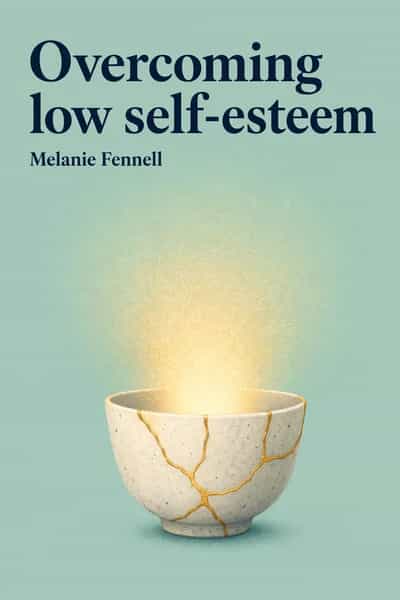
Perfectionism often stems from childhood experiences where being "exactly right" meant acceptance. Our desire to feel valued creates persistent inadequacy, driving us to constantly prove our worth, yet perfection remains unattainable. The belief we're fundamentally broken assumes our value is conditional - defined by others' standards. We learned that love must be earned through achievement, creating an exhausting cycle of trying to prove our intrinsic worth. Your essential value doesn't depend on achievements, appearance, or others' approval. Like a newborn, you matter simply because you exist. This doesn't mean you shouldn't grow - it means your worth remains constant regardless of external validation. Replace thoughts of brokenness with "I am a human who has suffered" or "I am whole, even though I struggle." Consider kintsugi, the Japanese art of repairing pottery with gold - showing how brokenness can become more beautiful through healing. Your imperfections aren't flaws to fix but aspects of your humanity to embrace. The parts you've been fighting need understanding and integration, not elimination. You're not a problem to solve but a person worthy of kindness, especially from yourself.