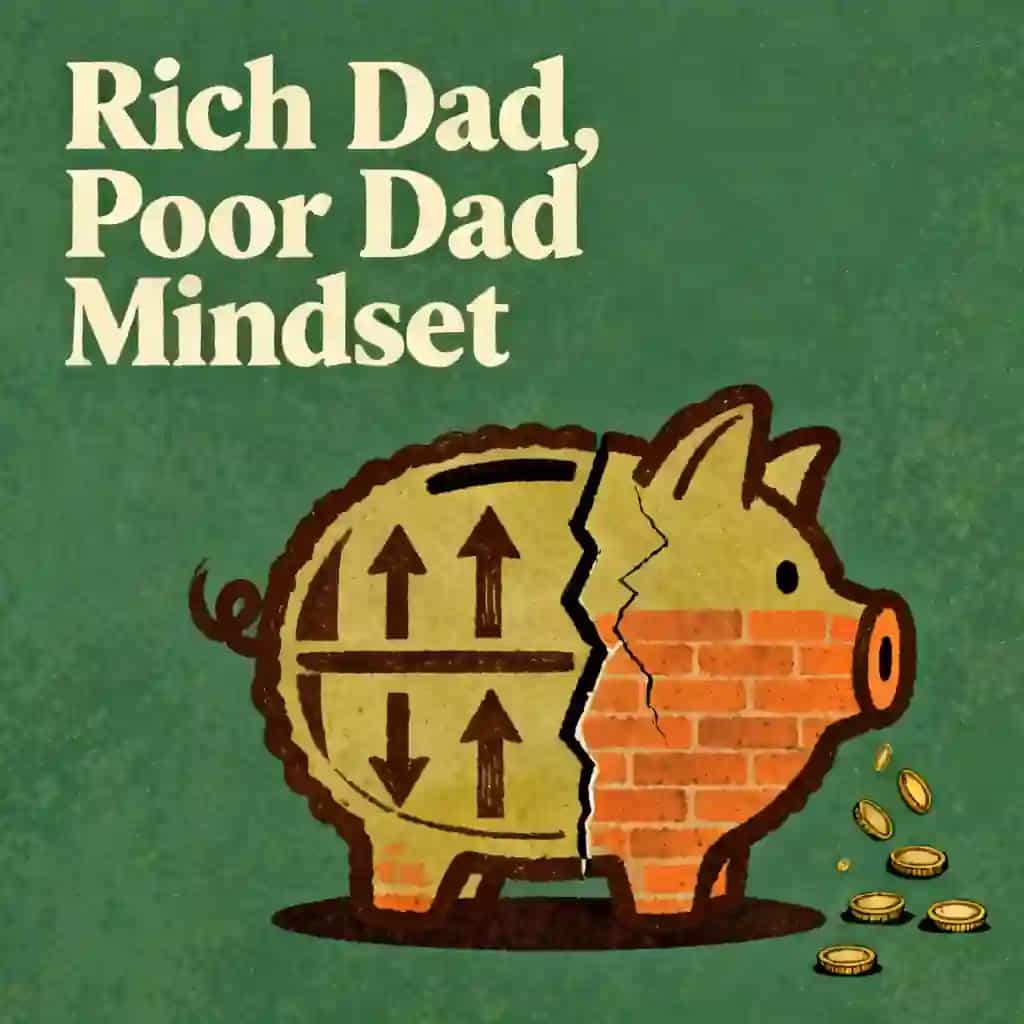
Discover why 44 million readers worldwide - including Will Smith and Daymond John - have embraced Kiyosaki's counterintuitive financial wisdom. This bestseller challenges everything you thought about money, revealing what the rich teach their kids that others don't.
Robert Toru Kiyosaki, bestselling author of Rich Dad Poor Dad and a pioneering voice in financial literacy, reshaped global perspectives on money management through his contrarian approach to wealth-building. Born in 1947 in Hawaii, this former U.S. Marine Corps helicopter pilot and Xerox sales executive turned entrepreneur channels his experiences with business failures and real estate successes into actionable frameworks for financial freedom. His seminal work—a personal finance classic blending memoir and practical advice—challenges conventional education systems while advocating for passive income streams, asset accumulation, and entrepreneurial thinking.
Kiyosaki expanded his philosophy through companion works like Cashflow Quadrant and Why "A" Students Work for "C" Students, all published under his Rich Dad brand via Cashflow Technologies, Inc.
A viral speaker and financial education advocate, his teachings emphasize real estate investing, tax optimization, and breaking free from paycheck dependency. Rich Dad Poor Dad has sold over 26 million copies worldwide, remaining a cornerstone of modern financial literature since its 1997 release.
Rich Dad Poor Dad contrasts two financial philosophies through Robert Kiyosaki’s "poor dad" (his biological father, who prioritized academic success and job security) and his "rich dad" (a mentor who taught wealth-building through assets, entrepreneurship, and financial literacy). The book challenges traditional views on money, emphasizing passive income, tax strategies, and breaking free from the "rat race".
This book targets beginners seeking financial independence, aspiring entrepreneurs, and anyone reevaluating their relationship with money. Its mindset-focused approach appeals to readers open to unconventional strategies like real estate investing, business ownership, and asset acquisition over traditional career paths.
Key lessons include:
Financial freedom means covering living expenses through passive income (e.g., rental properties, dividends) rather than a salary. Kiyosaki argues this requires building asset columns that outpace liabilities, allowing individuals to "make money work for them" instead of the reverse.
The quadrant categorizes earners:
| Quadrant | Description | |--------------|------------------| | E (Employee) | Trades time for salary | | S (Self-Employed) | Owns job, not a system | | B (Business Owner) | Owns income-generating systems | | I (Investor) | Earns via investments |
Kiyosaki advocates transitioning to B/I quadrants for wealth.
Critics argue the book oversimplifies wealth-building, lacks actionable steps, and promotes risky strategies (e.g., speculative real estate). Some question Kiyosaki’s anecdotal advice and emphasis on entrepreneurship over stable careers.
While The Intelligent Investor (Benjamin Graham) focuses on conservative stock market strategies, Rich Dad Poor Dad prioritizes entrepreneurship and tangible assets like real estate. Kiyosaki’s approach is more aggressive, whereas Graham emphasizes risk management and long-term value investing.
Notable quotes include:
The book encourages readers to view careers through a wealth-building lens, suggesting side hustles, real estate investments, or business ventures as alternatives to traditional employment. It emphasizes skills like negotiation and financial analysis.
Its core themes—automation reshaping jobs, gig economy growth, and increasing wealth inequality—align with modern economic shifts. The focus on financial education and passive income remains critical in an era of inflationary pressures and AI disruption.
Actionable steps include:
Kiyosaki expanded his ideas in books like Cashflow Quadrant and Rich Dad’s Guide to Investing, which delve deeper into entrepreneurship, debt management, and advanced real estate strategies.
저자의 목소리로 책을 느껴보세요
지식을 흥미롭고 예시가 풍부한 인사이트로 전환
핵심 아이디어를 빠르게 캡처하여 신속하게 학습
재미있고 매력적인 방식으로 책을 즐기세요
The love of money is the root of all evil.
An important distinction is that rich people buy assets. The poor and middle class buy liabilities that they think are assets.
Often in the real world, it's not the smart who get ahead but the bold.
Financial intelligence is simply having more options.
Rich Dad Poor Dad의 핵심 아이디어를 이해하기 쉬운 포인트로 분해하여 혁신적인 팀이 어떻게 창조하고, 협력하고, 성장하는지 이해합니다.
Rich Dad Poor Dad을 빠른 기억 단서로 압축하여 솔직함, 팀워크, 창의적 회복력의 핵심 원칙을 강조합니다.

생생한 스토리텔링을 통해 Rich Dad Poor Dad을 경험하고, 혁신 교훈을 기억에 남고 적용할 수 있는 순간으로 바꿉니다.
무엇이든 물어보고, 목소리를 선택하고, 진정으로 공감되는 인사이트를 함께 만들어보세요.

샌프란시스코에서 컬럼비아 대학교 동문들이 만들었습니다
"Instead of endless scrolling, I just hit play on BeFreed. It saves me so much time."
"I never knew where to start with nonfiction—BeFreed’s book lists turned into podcasts gave me a clear path."
"Perfect balance between learning and entertainment. Finished ‘Thinking, Fast and Slow’ on my commute this week."
"Crazy how much I learned while walking the dog. BeFreed = small habits → big gains."
"Reading used to feel like a chore. Now it’s just part of my lifestyle."
"Feels effortless compared to reading. I’ve finished 6 books this month already."
"BeFreed turned my guilty doomscrolling into something that feels productive and inspiring."
"BeFreed turned my commute into learning time. 20-min podcasts are perfect for finishing books I never had time for."
"BeFreed replaced my podcast queue. Imagine Spotify for books — that’s it. 🙌"
"It is great for me to learn something from the book without reading it."
"The themed book list podcasts help me connect ideas across authors—like a guided audio journey."
"Makes me feel smarter every time before going to work"
샌프란시스코에서 컬럼비아 대학교 동문들이 만들었습니다

Rich Dad Poor Dad 요약을 무료 PDF 또는 EPUB으로 받으세요. 인쇄하거나 오프라인에서 언제든 읽을 수 있습니다.
Imagine having two father figures in your life - one highly educated with a PhD but struggling financially, and another who never finished eighth grade yet became incredibly wealthy. This was Robert Kiyosaki's reality growing up in Hawaii. His biological father (Poor Dad) believed in traditional education and job security, constantly saying phrases like "I can't afford it" and "Money doesn't grow on trees." Meanwhile, his friend's father (Rich Dad) focused on financial education, assets, and making money work for him rather than working for money. At just nine years old, Kiyosaki made a pivotal decision to learn about money from Rich Dad after noticing that despite Poor Dad's impressive academic credentials, his financial struggles suggested there might be better approaches to building wealth. This unique childhood experience formed the foundation for a revolutionary perspective on money that challenges conventional wisdom. The contrast wasn't just about bank accounts but about fundamental relationships with money - Poor Dad worked for money while Rich Dad made money work for him.