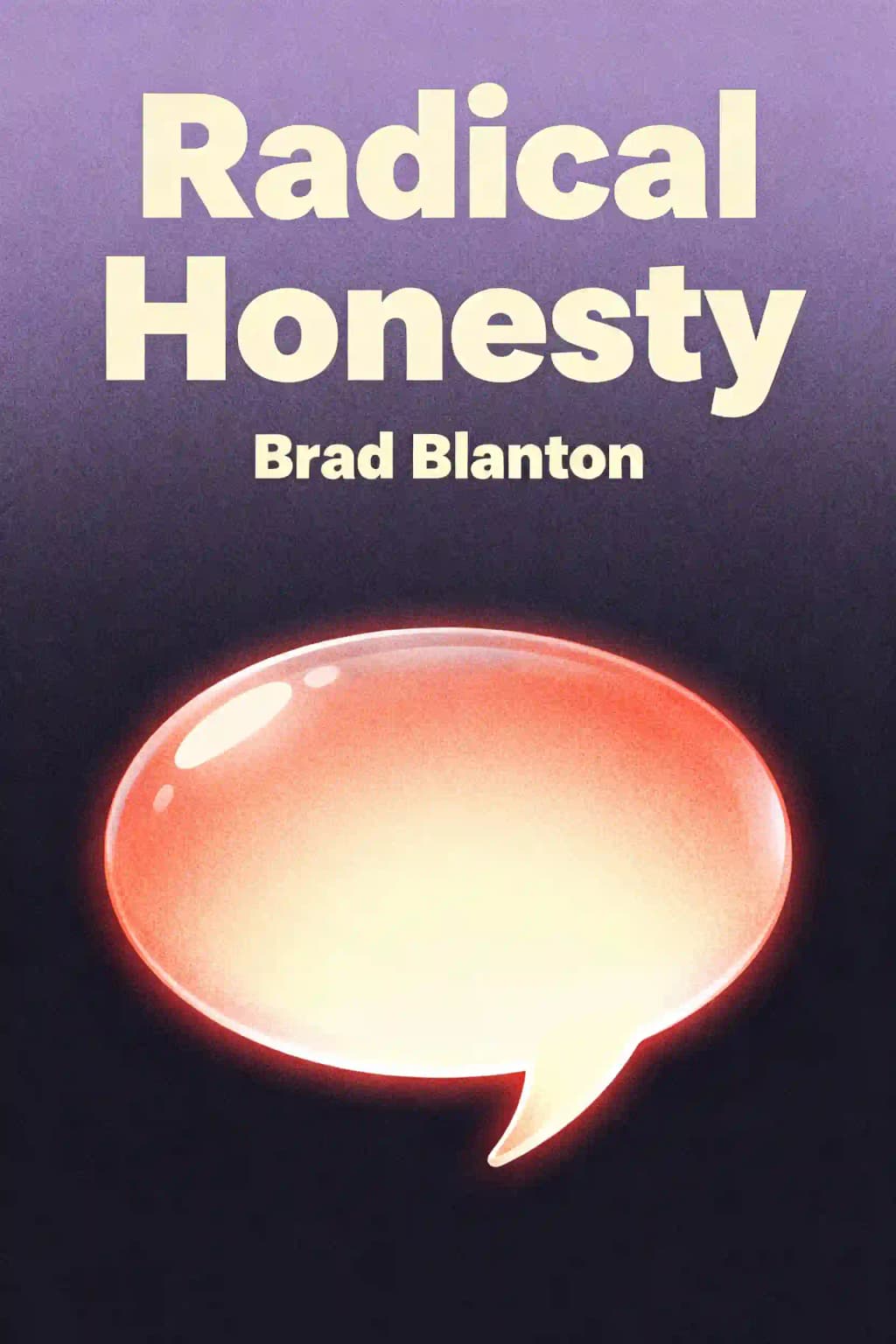
"Radical Honesty" challenges you to strip away deception in every interaction. Featured in "Silicon Valley" and "Bones," this controversial self-help phenomenon asks: what if lying - even small white lies - is what's truly making you miserable? A.J. Jacobs tried it. Could you?
W. Brad Blanton, author of the bestselling self-help classic Radical Honesty: How To Transform Your Life By Telling The Truth, is a pioneering psychotherapist and founder of the Radical Honesty movement. A clinical psychologist with decades of experience, Blanton specializes in interpersonal communication, stress reduction, and authentic living through radical truth-telling. His work bridges psychology and social philosophy, rooted in his civil rights activism and transformative group therapy sessions in 1970s Washington, D.C.
Blanton’s expertise extends to multiple bestselling books, including Practicing Radical Honesty, Honest to God (co-authored with Neale Donald Walsch), and Radical Parenting. His TEDx Talk in Romania and frequent podcast appearances amplify his contrarian approach to relationships and emotional freedom. A former U.S. congressional candidate, Blanton’s methods are taught globally through workshops and his Radical Honesty Online Course.
Radical Honesty has sold over one million copies worldwide and been translated into twelve languages, cementing its status as a landmark in personal development literature.
Radical Honesty advocates for complete truthfulness in all interactions to reduce stress, build authentic relationships, and overcome emotional burdens caused by lies. Brad Blanton, a psychotherapist, argues that honesty about feelings, thoughts, and past actions fosters clarity and connection. The book outlines practical steps to practice truth-telling, including confronting hidden emotions and dismantling societal norms of politeness.
This book suits individuals seeking deeper relationships, improved communication, or relief from anxiety caused by dishonesty. It’s valuable for those tired of superficial interactions, therapists exploring client communication tools, or anyone interested in personal growth through vulnerability. Critics note its confrontational approach may challenge readers uncomfortable with direct feedback.
Yes, for its provocative insights into how dishonesty harms mental health and relationships. Blanton’s methods, like expressing anger directly and admitting past lies, offer tangible steps toward authenticity. However, some find its extreme stance impractical or socially risky, citing critiques of Blanton’s seminar tactics as overly abrasive.
Blanton views anger as natural and advocates direct expression to prevent resentment. Instead of suppressing it, he encourages phrases like “I’m angry because…” to foster resolution. Critics argue this risks harming relationships if not paired with empathy.
Critics call it socially irresponsible, arguing unchecked truth-telling can damage relationships or careers. Others label Blanton’s seminars cult-like, citing accounts of aggressive coaching. Despite this, supporters praise its mental health benefits and focus on accountability.
Unlike nonviolent communication (NVC), which prioritizes empathy, Blanton’s approach values unfiltered expression. While NVC avoids blame, Radical Honesty encourages admitting judgments openly. Both aim for authenticity but differ in balancing honesty with social harmony.
In an era of curated social media personas, the book’s call for vulnerability resonates. Its principles align with trends toward mental health transparency and workplace authenticity, though modern readers often adapt its extremes to softer, context-sensitive honesty.
He argues self-deception (e.g., “I’m fine”) perpetuates loneliness and stress. By contrast, admitting flaws or unmet desires fosters self-acceptance. Blanton shares personal examples, like confessing his vanity in writing the book.
Blanton acknowledges risks but suggests honesty builds trust long-term. For example, admitting errors upfront can prevent larger crises. However, he advises pairing truths with accountability (e.g., “I missed the deadline—here’s my plan to fix it”).
저자의 목소리로 책을 느껴보세요
지식을 흥미롭고 예시가 풍부한 인사이트로 전환
핵심 아이디어를 빠르게 캡처하여 신속하게 학습
재미있고 매력적인 방식으로 책을 즐기세요
We all lie like hell.
Life transforms into a story with moral lessons to follow.
Lawyers exemplify this disease.
We are the experience itself happening.
Truth-telling is the path to freedom from the roles we hide behind.
Radical honesty의 핵심 아이디어를 이해하기 쉬운 포인트로 분해하여 혁신적인 팀이 어떻게 창조하고, 협력하고, 성장하는지 이해합니다.
Radical honesty을 빠른 기억 단서로 압축하여 솔직함, 팀워크, 창의적 회복력의 핵심 원칙을 강조합니다.

생생한 스토리텔링을 통해 Radical honesty을 경험하고, 혁신 교훈을 기억에 남고 적용할 수 있는 순간으로 바꿉니다.
무엇이든 물어보고, 목소리를 선택하고, 진정으로 공감되는 인사이트를 함께 만들어보세요.

샌프란시스코에서 컬럼비아 대학교 동문들이 만들었습니다
"Instead of endless scrolling, I just hit play on BeFreed. It saves me so much time."
"I never knew where to start with nonfiction—BeFreed’s book lists turned into podcasts gave me a clear path."
"Perfect balance between learning and entertainment. Finished ‘Thinking, Fast and Slow’ on my commute this week."
"Crazy how much I learned while walking the dog. BeFreed = small habits → big gains."
"Reading used to feel like a chore. Now it’s just part of my lifestyle."
"Feels effortless compared to reading. I’ve finished 6 books this month already."
"BeFreed turned my guilty doomscrolling into something that feels productive and inspiring."
"BeFreed turned my commute into learning time. 20-min podcasts are perfect for finishing books I never had time for."
"BeFreed replaced my podcast queue. Imagine Spotify for books — that’s it. 🙌"
"It is great for me to learn something from the book without reading it."
"The themed book list podcasts help me connect ideas across authors—like a guided audio journey."
"Makes me feel smarter every time before going to work"
샌프란시스코에서 컬럼비아 대학교 동문들이 만들었습니다

Radical honesty 요약을 무료 PDF 또는 EPUB으로 받으세요. 인쇄하거나 오프라인에서 언제든 읽을 수 있습니다.
What if the polite lies we tell every day - the "I'm fine" when we're falling apart, the withheld resentments, the careful omissions - are slowly killing us? Most of us navigate life wrapped in layers of acceptable deception, believing we're protecting ourselves and others. We've become experts at managing impressions, curating personas, and maintaining comfortable distances. But what's the actual cost? Stress-related illness. Relationships that feel more like performances than connections. A gnawing sense that we're living someone else's life. The premise here is both liberating and terrifying: complete, unfiltered honesty - about everything, to everyone - might be the only path to genuine freedom and authentic connection. Not selective honesty. Not "honest but kind." Radical, uncomfortable, sometimes socially catastrophic truth-telling. Let's explore why this extreme approach might be exactly what our carefully constructed lives need.