1장
The Revolution's Longest Battle: Women Rising
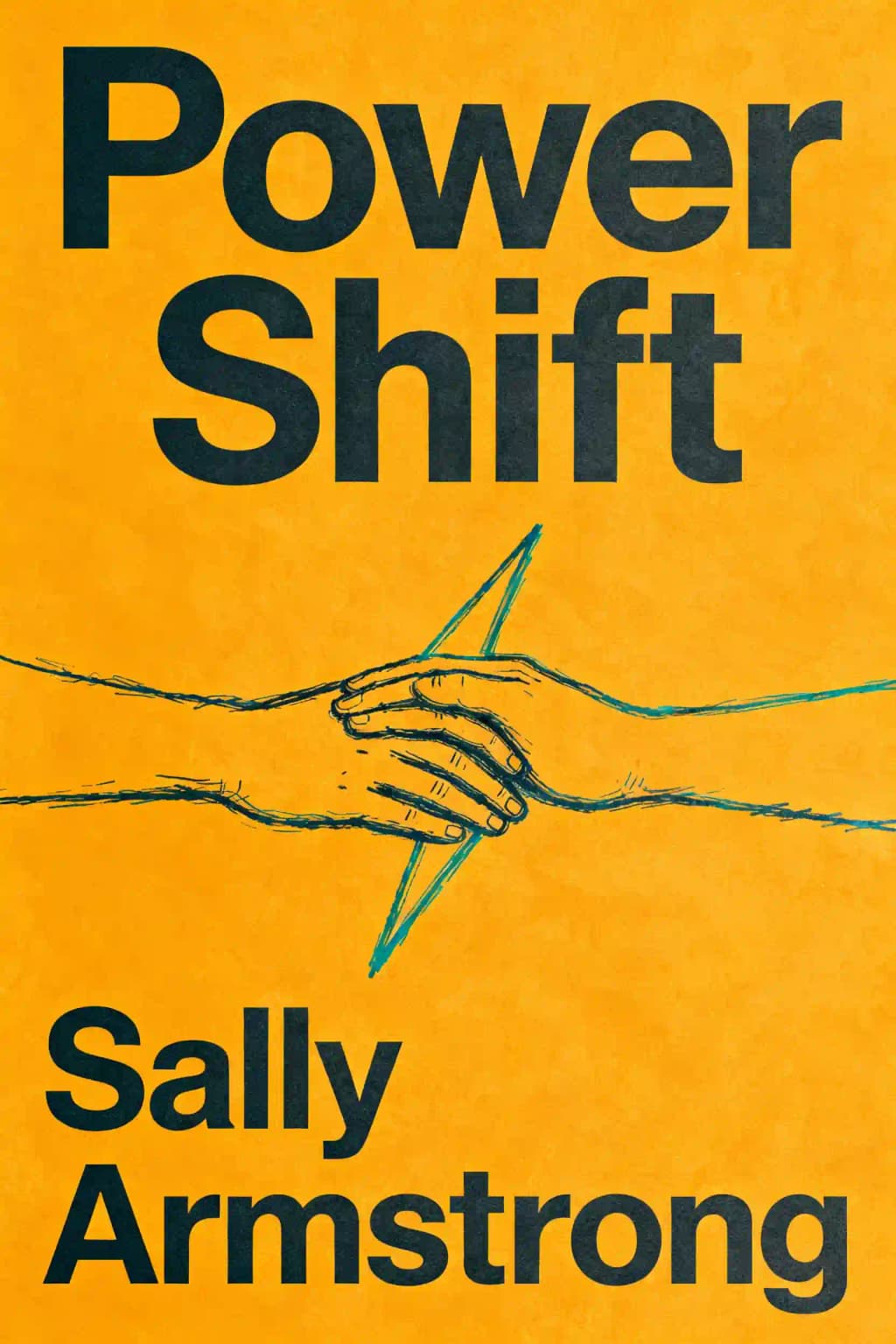
Imagine a world where half the population has been systematically denied basic rights for millennia, yet is now on the cusp of the greatest power shift in human history. Sally Armstrong's groundbreaking work reveals how women-after 10,000 years of subjugation-are finally breaking free from patriarchal systems worldwide. When the #MeToo movement exploded in 2017, even Steve Bannon recognized its significance, reportedly telling colleagues that the 2020 election would be "the Patriarchy versus the Matriarchy." This book has become required reading in gender studies programs across North America, with Gloria Steinem calling it "essential reading for understanding how far we've come-and how far we still must go." What makes Armstrong's analysis particularly compelling is her firsthand experience documenting women's struggles in conflict zones from Bosnia to Afghanistan, combining scholarly research with powerful personal narratives that illuminate history's longest revolution.
2장
Rewriting Prehistory: Women's Erased Contributions
For centuries, our understanding of prehistoric gender roles has been filtered through male-dominated archaeology. The popular "Man the Hunter" narrative portrayed prehistoric men as hunters and women as passive gatherers, creating an origin story for gender inequality that seemed rooted in biology. However, as more women entered archaeology in the 21st century, this narrative began to crumble under scientific scrutiny.
Margaret Conkey and her colleagues pioneered gender archaeology, questioning long-held assumptions about prehistoric life. Their research revealed that Stone Age societies likely had more gender-neutral divisions of labor than previously believed. Dean Snow's groundbreaking analysis of cave handprints demonstrated that women, not men, created most prehistoric cave art. Similarly, studies of stone tools showed many were designed for female hands, challenging the notion that men were the primary toolmakers.
At Catalhoyuk, a 9,400-year-old settlement in Turkey, archaeologist Ian Hodder found compelling evidence that "the question of whether you were a man or a woman did not determine the life you could lead." Excavations revealed no significant differences in diet, health, or burial practices between genders, suggesting a remarkably egalitarian society.
Our interpretation of prehistoric female figurines further illustrates how modern biases distort our understanding of the past. When the Venus of Hohle Fels was discovered in 2009, headlines immediately sexualized it as "prehistoric pinup" and "earliest pornography." As archaeologist April Nowell points out in her TEDx Talk "Paleo Porn," such characterizations say more about our current views on women than about prehistoric reality. These figurines likely served religious, educational, or cultural purposes rather than sexual ones.
The agricultural revolution around 10,000 years ago marked a pivotal shift. With farming came food surpluses, leading to concepts of property, currency, and power. During this transition, women's contributions remained vital-they were guardians of fire, invented vessels for storing food, discovered medicinal plants, and created textiles. However, this era also witnessed the birth of patriarchy as men began controlling women's reproductive capacity to produce more laborers for their newly privatized land.
By reexamining prehistory through a more objective lens, we discover that gender inequality isn't an inevitable outcome of human biology but rather a relatively recent social construct that emerged with agricultural civilization. This understanding fundamentally challenges the narrative that women's subordination is somehow "natural" or "inevitable."
3장
Divine Messages and Earthly Control: Religion's Role in Women's Oppression
Religious institutions have played a central role in codifying and enforcing women's subordination. The Adam and Eve narrative, which has influenced three major religions for two millennia, typically portrays Eve as the evil temptress responsible for humanity's fall. This interpretation has justified countless restrictions on women's autonomy and rights.
Yet even in the 17th century, voices challenged this narrative. Arcangela Tarabotti, an Italian nun forced into convent life against her will, argued that women were men's equals in God's eyes. Her radical reinterpretation claimed "the devil stands for the male" who would blame women for his failings. Similar views were expressed by Christine de Pizan in 1405 and Mary Wollstonecraft centuries later, yet misogyny's "bitter residue" persisted despite these challenges.
Religious texts have long relegated women to subservient roles. The Quran and Torah contain discriminatory injunctions against women inheriting or owning property. Rabbinical commentary states "anything that a woman acquires is acquired by her husband." While the Quran promoted certain women's rights and prohibited female infanticide, it still declares "Men have a status above women. Allah is mighty and wise." Modern religious leaders continue this tradition of misogyny, like Pat Robertson who claimed in 1992 that feminism encourages women to "leave their husbands, kill their children, practice witchcraft, destroy capitalism and become lesbians."
The discovery of skeleton B78 in Germany revealed how women's intellectual contributions have been systematically erased from religious history. This medieval nun, who lived between 997-1162 CE, was identified as a skilled scribe who worked with precious lapis lazuli pigment. Researchers found blue particles embedded in her dental calculus-evidence she licked her brush while creating illuminated manuscripts. This discovery challenges the assumption that only monks were literate scribes during the Middle Ages.
Hildegard von Bingen exemplifies how exceptional women could occasionally transcend religious restrictions. This 12th-century German abbess was a remarkable polymath-poet, philosopher, theologian, composer, artist, doctor, herbalist, visionary, and preacher. She boldly rejected the church's view of women as subservient, taught that women were created in God's image, claimed sexual pleasure existed in Eden before the Fall, and argued that menstruation didn't render women unclean.
Today, women worldwide are challenging harmful religious practices. In Senegal, women eradicated female genital mutilation (FGM) by forming community coalitions. After learning about health consequences and discovering neither their religion nor cultural traditions required the practice, they made a public pledge: "Never again, not my daughter." Within weeks, sixty more villages followed, and within a year, half of Senegal's villages had banned FGM.
Similarly, Canadian Muslim lawyer Sabha Sajjad-Hazai publicly challenges polygamy while reminding Muslim women of their God-given right to spiritual equality. Her message is clear: "You are not your father's honour. You are a blessing from Allah. You are not your husband's honour. You are your husband's equal companion. You are not your brother's honour. You are equal to your brother."
4장
The Personal Becomes Political: Women Challenging Power Structures
The fourth wave of feminism, beginning around 2012 with social media's rise, has transformed how women challenge power structures. Unlike earlier waves that failed to create lasting change, this movement has gained unprecedented momentum through what authors Heimans and Timms call "new power"-open, participatory, and peer-driven rather than hoarded by the few.
Women are mounting powerful resistance to populism worldwide. In Italy, protesters target the Catholic Church with signs reading "Keep your rosaries off my ovaries." The #MeToo movement, which began with Hollywood stars exposing sexual abuse, quickly spread globally with variations like France's #BalanceTonPorc ("rat out your pig"), Italy's #QuellaVoltaChe ("that time when..."), and China's #WoYeShi. The movement expanded beyond entertainment to sports, finance, and politics.
In Meru, Kenya, 160 girls aged three to seventeen sued their government for failing to protect them from rape. With guidance from Canadian human rights lawyers, these girls won a landmark victory that benefited ten million girls across Kenya. The case led to nationwide educational programs, special training for police and judiciary on child rape laws, and the creation of Justice Clubs in schools. These girls became powerful agents of change, going where "their mothers and aunties and grannies didn't dare to go."
The political landscape has transformed dramatically since women began pursuing "critical mass" representation. In 1995, Hillary Clinton declared at the Fourth World Conference on Women in Beijing that "human rights are women's rights and women's rights are human rights." While the theory that 30 percent female representation creates cultural change in political bodies lacks scientific proof, it has driven gender quota initiatives worldwide. "Fast-track countries" recovering from conflict have outpaced established democracies in female representation, with Rwanda (61.3%) and Bolivia (53.1%) surpassing Canada (26.9%) and the UK (32%).
Women are reshaping politics by asking different questions-not "What's the matter with him?" but "What happened to him?" This approach leads to different policies, like Canada's evolving parental leave system. The 2019 federal program allowing second parents five additional weeks of benefits has proven transformative, as Quebec's experience shows 80% of fathers taking some leave compared to just 12% in the rest of Canada.
In 2014, Sweden pioneered a feminist foreign policy built on "3R": rights, representation, and resources. This approach publicizes women's issues including violence and discrimination, supports women in decision-making positions across sectors, and ensures equitable funding allocation. Following Sweden's lead, by 2019 eighty national governments had created action plans to increase women's roles in peace and security.
The relationship between women's political inclusion and successful peace negotiations is well-documented by the UN and academic research, showing peace agreements without women's participation are more likely to fail. McKinsey & Company's 2015 study revealed an economic dimension to gender equality, calculating that $28 trillion could be added to global GDP by 2025 if women participated in the economy at the same rate as men.
5장
The Economics of Equality: Women's Rising Financial Power
The gender pay gap remains a stubborn reality across professions and countries. White women earn 79 cents for every dollar white men make, with even larger disparities for Black women (63 cents) and Latinas (54 cents). Financial services show the largest gaps, with women financial advisers facing the worst inequality. These disparities cost economies trillions and create long-term problems as women retire with less savings.
Excluding women from economic participation has profound negative consequences. Studies show that increased female employment in developed countries has contributed more to global GDP than China's entire economy. If India achieved gender balance in its workforce, it would be 27% richer. Women farmers with equal access to resources could feed 150 million more people worldwide.
Despite legislation pushing for gender equality, progress remains slow. California now fines companies without women on boards, while many EU countries have implemented quotas. Yet in Canada's capital markets, women's representation has barely moved from 10% to 13% in two decades, with only 24 women among 312 executive officers. The tech sector faces similar challenges-despite Toronto's tech job growth outpacing Silicon Valley, women represent only 27% of Canada's information technology workforce, a figure that has actually declined since 2011.
Women now constitute 40% of the global workforce and 43% of agricultural labor, with 24% of senior management roles filled by women-a slowly rising figure. However, board representation varies dramatically by region, with women making up only 16% of board members in G7 economies compared to 26% in BRIC countries and 38% in Baltic nations.
Financial expert Dona Eull-Schultz argues women have untapped economic power as consumers, shareholders and asset owners. She urges women to exercise their rights as shareholders to question companies about equal pay, female board representation, sexual harassment protocols, and plans for hiring women-putting their "wallet where their values are."
Gender-lens investing represents both a moral imperative and an economic opportunity, as companies advancing gender equality through their products and services show market benefits. Muhammad Yunus demonstrated through Grameen Bank that lending to women produces excellent repayment rates, leading him to conclude that "poverty is unnecessary."
6장
The Backlash: Resistance to Women's Progress
As women gain ground in politics, economics, and culture, they face increasingly organized resistance. Populist leaders worldwide continue their attacks on women's rights. Brazil's Jair Bolsonaro once told a congresswoman he wouldn't rape her because "you're very ugly," while Philippines' Rodrigo Duterte told soldiers they could rape up to three women with impunity.
Political scientist Valerie Hudson explains this phenomenon: "men agreed to be ruled by other men in return for all men ruling over women." When authoritarian men gain power, they quickly target women through humiliation, blame, and promoting subservience. Poland, despite its professional women and low gender pay gap, saw women's rights rapidly deteriorate when the Law and Justice party gained power in 2015, launching campaigns telling women to "breed like rabbits," banning emergency contraception, attacking reproductive rights, and raiding women's organizations.
Similar patterns emerged in Italy under Giuseppe Conte and in Hungary under Viktor Orban, who offered tax elimination for women with four or more children while claiming few women can handle political stress. These leaders sell anti-women policies under the banner of "family values"-code for staying home, producing children, and abandoning aspirations for change.
The harassment of women journalists has evolved into a sophisticated form of online abuse. While earlier threats came through letters or phone calls, today's digital harassment is more pervasive yet harder to combat. Two-thirds of female journalists face abuse including death threats, rape threats, and misogynistic slurs like "lying whore." The impact is severe-40% have shelved stories to avoid attacks, 30% considered changing careers, and many face psychological effects including anxiety and stress.
Honor killings represent femicide in its most brutal form. Women can be killed by family members-beaten, burned, strangled, shot, stabbed-for any perceived transgression: dating the wrong man, being raped, or refusing to submit to male authority. Some countries legally permit honor killings or barely punish perpetrators. Jordan's penal code exempts men from punishment for killing female relatives found "guilty" of adultery, while "mitigating reasons" can be claimed for assault.
Despite these challenges, women are pushing back against normalized sexism. When Toronto reporter Shauna Hunt was harassed on camera with a crude sexual meme, she confronted her harassers directly. The video went viral, resulting in one man being fired from his $106,000 job. Similarly, high school girls in Maryland organized against male students who ranked them by appearance, demanding not just punishment but a school-wide reckoning with toxic culture.
7장
Men's Changing Roles in the Gender Revolution
As women gain equality worldwide, men face significant adjustment challenges. The "Understanding Masculinities" study examining men in the Middle East and North Africa (MENA) region found many "holding to a past that no longer fits the present" amid conflict, poverty, unemployment and political instability. Despite the patriarchal structure where men control household decisions and women's personal freedoms, a quarter or more of men surveyed showed support for some dimensions of women's equality.
Men's roles are evolving alongside women's empowerment. Deloitte's "The Design of Everyday Men" report shows that inclusive business cultures outperform others financially, yet many men remain trapped between modern home expectations and traditional workplace demands. The #MeToo movement has prompted varied male reactions-from defensive distancing to genuine awakening as men hear women's stories for the first time.
Workplace culture remains designed for men with stay-at-home partners handling family responsibilities. As Melinda Gates observes, "We're sending our daughters into a workplace that was designed for our dad." Psychologist Delee Fromm identifies "gender blind spots"-childhood-learned beliefs and stereotypes that impact women's careers. She outlines four key elements affecting workplace gender dynamics: childhood socialization, communication rules, interaction patterns, and leadership behaviors.
Girls learn to fit in while boys learn to stand out; power among girls is shared while boys establish hierarchies. Women excel at negotiating for others but struggle when advocating for themselves. They face a double bind in leadership: adopt masculine styles and be judged "hostile" or feminine approaches and be deemed "not tough enough"-despite research showing "feminine" leadership styles are most effective.
Scientific research has documented structural, chemical, genetic, hormonal and functional brain differences between men and women. Dr. Louann Brizendine's work shows women have 11 percent more neurons in language and hearing centers, and larger hippocampi for emotion and memory function. Women excel at expressing emotions and remembering emotional details, while men have more brain space devoted to sexual drive and aggression. Despite these differences, studies confirm males and females have the same average intelligence levels and equal capacity for math and science. These differences don't explain or justify misogyny, violence, or oppression against women.
This power shift ultimately benefits everyone, as "liberating women also liberates men." Yet persistent questions remain about pay inequality, domestic violence justified as religious duty, virginity tests, girls' education, and sexual violence. The author argues that men who care about the women in their lives must join this fight for equality, particularly in addressing intimate partner violence.
8장
The Archaeology of Intimacy: Our Shared Human Story
Archaeologist Leslie Van Gelder's groundbreaking research on "finger flutings" - prehistoric marks made by human hands on cave walls 27,000 years ago - reveals profound insights about our ancestors' intimate connections. Through precise measurements and innovative analytical techniques, she discovered these weren't merely random markings but deliberate expressions of human relationships. Her methodology involved measuring the width between fingers, which creates unique identifiers as distinctive as fingerprints, allowing her to identify children's marks (those 30mm or smaller) and track individual movement patterns through caves.
Van Gelder's findings challenged long-held assumptions about prehistoric cave use. While many believed hundreds visited these ritual spaces, her evidence revealed surprisingly intimate gatherings. In one vast cave system, she found traces of just eight distinct individuals, with even smaller numbers in other locations. Most significantly, every panel showed collaborative creation - never the work of a single person. These partnerships manifested in various forms: mothers working with children balanced on their hips, pairs of adults sitting shoulder-to-shoulder sharing light sources, and groups working together to reach higher surfaces.
Her most poignant discovery centered on a four-year-old girl whose bilateral markings told an extraordinary story. The child made simultaneous marks with both hands, indicating someone else must have been holding her light source - an invisible presence in the archaeological record but crucial to the creation process. This finding led Van Gelder to develop her theory of the "archaeology of intimacy," suggesting that human achievement fundamentally depends on mutual support and collaboration - "someone else holds our light."
The modern parallel of the "Fearless Girl" statue, installed in New York's Financial District in 2017, echoes these ancient declarations of presence. Standing defiantly before the massive "Charging Bull" sculpture, she generated intense debate about gender, power, and representation in public spaces. The bull's creator, Arturo Di Modica, protested her placement as an "advertising trick" that altered his work's meaning, while supporters worldwide rallied with the hashtag #KeepHer, demonstrating how contemporary markers of presence still spark controversy.
The historical struggle for women's equality spans millennia, beginning formally with Christine de Pizan's revolutionary 1405 publication advocating for women's education and independence. This movement represents history's longest revolution, building upon the legacy of countless voices - from ancient priestesses and medieval mystics to suffragettes and modern feminists. The author draws parallels between her own work documenting women in conflict zones and photographer Yannis Behrakis's mission to create undeniable evidence of human experience.
Throughout human history, from prehistoric cave markings to modern urban sculptures, women have persistently declared their presence and right to equality. Despite facing systematic oppression across cultures and centuries, this resistance never ceased. The movement has evolved from individual voices to global campaigns, demonstrating that the drive for equality remains as powerful as the ancient hands that first marked cave walls millennia ago.
9장
The Power Shift: Why This Time Is Different
Despite numerous moments in history when change seemed imminent, equality has remained elusive for half the world's population. But now there's a power shift happening. Despite pushback from misogynists and chauvinists, women are closer to equality than ever before, with implications for our economy, jobs, and future.
Women need to abandon soft approaches like lobbying and adopt more robust demands. Consider the women of Liberia who, led by Leymah Gbowee, organized a sex strike as part of their Mass Action for Peace. When they confronted tyrannical ruler Charles Taylor in 2003, Gbowee declared, "We are tired of war... tired of our children being raped... we are now taking this stand to secure the future of our children." Their actions resulted in a ceasefire, and Gbowee later won the Nobel Peace Prize in 2011.
The fourth wave of feminism has embraced intersectionality as crucial for addressing the complex and varied challenges women face. This approach recognizes that poor women struggle more to get elected, disabled women face higher rates of violence, LGBTQ women encounter unique obstacles to services like disaster relief, and Indigenous women are often dismissed when reporting violence.
The movement has evolved from relying solely on political and public will to recognizing the power of personal will-as demonstrated by Malala Yousafzai, the 160 Kenyan girls who sued their government for failing to protect them from rape, and the twelve-year-old Milly who stood up at a village meeting to identify her rapist. Personal will has driven unprecedented responses to crises, creating a new dynamic where personal will energizes public will and ultimately drives political will toward meaningful change.
Despite concerns that women's progress could be undone by natural disasters or economic depressions, the emancipation movement has achieved lasting momentum. The social disruption challenging old boys' clubs, economic disruption demanding fair pay, and political disruption bringing record numbers of women into office have fundamentally reordered society. These disruptions have created a power shift that appears irreversible.
The historical erasure of women has distorted our understanding of gender equality, but as more women enter positions of influence across disciplines, they're challenging male-dominated interpretations of our shared human story. This isn't just about men making room for women or women catching up to men-it's about creating a more equitable future for everyone.