1장
When Death Rides a Taxi: The Chilling Game of a Serial Killer
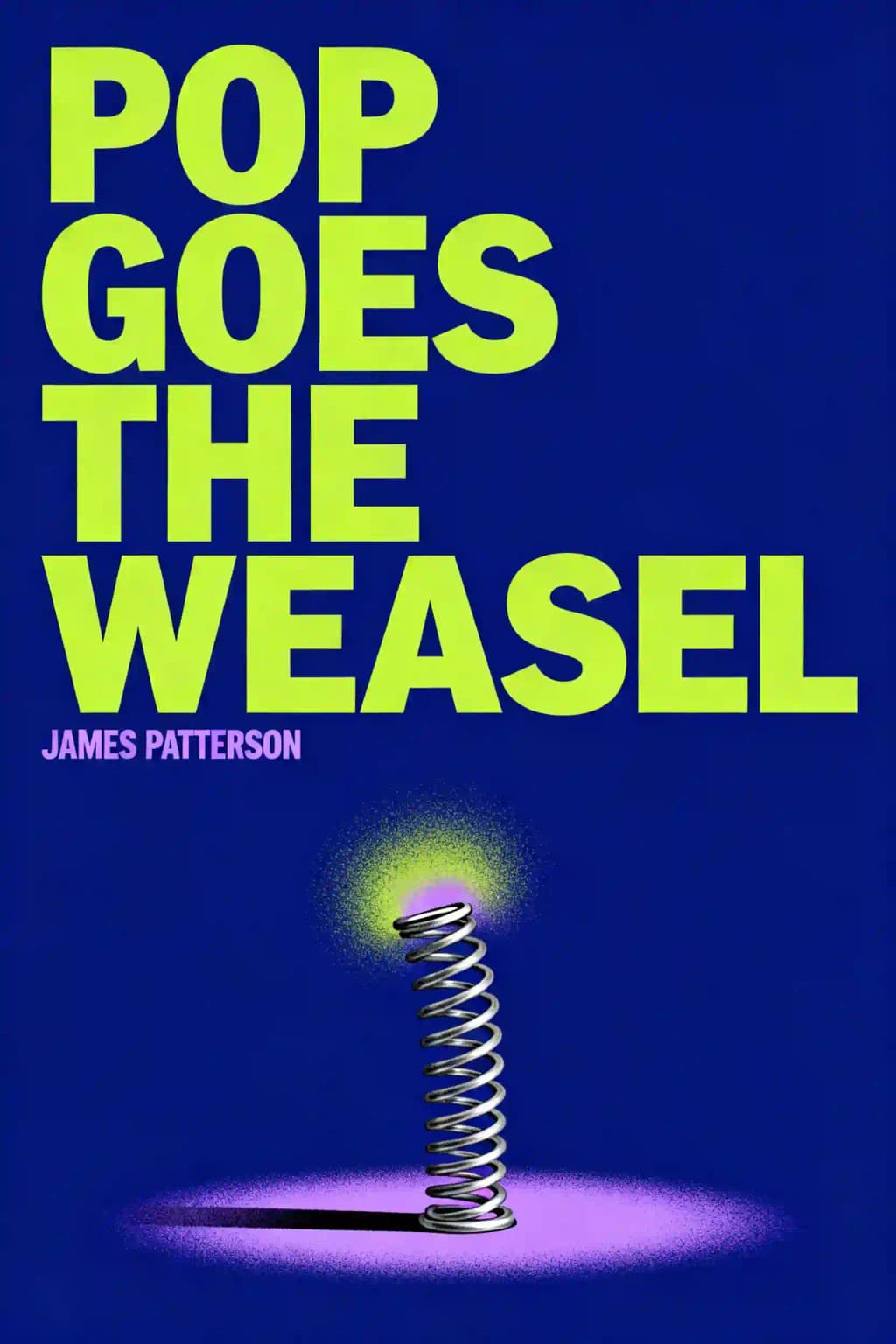
Geoffrey Shafer appears to be the quintessential British diplomat-impeccably dressed, Oxford-educated, with a beautiful wife and three children in their elegant Kalorama townhouse. But beneath this polished veneer lurks one of the most disturbing villains in modern thriller literature. James Patterson's "Pop Goes the Weasel" became an instant bestseller upon its 1999 release, spending weeks on the New York Times list and cementing Patterson's reputation as the master of psychological suspense. The novel's exploration of dual identities resonated with readers and critics alike, with Stephen King famously calling it "terrifying precisely because the monster seems so ordinary." Let's dive into the twisted world where diplomatic immunity meets deadly obsession.
2장
The Weasel's Deadly Game
Geoffrey Shafer lives for the thrill of the hunt. By day, he's a respectable British diplomat with MI6 credentials. By night, he transforms into "Death," one of four players in a global fantasy role-playing game called "The Four Horsemen." What makes Shafer uniquely terrifying is that while the other players merely fantasize about violence, he acts out his murderous scenarios in real life.
The novel opens with Shafer deliberately courting death, driving his black Jaguar at breakneck speeds through Washington DC, nearly crashing multiple times before being stopped by police. When confronted, he calmly produces diplomatic credentials, claiming immunity. This initial scene brilliantly establishes his dual nature-the controlled exterior masking a man addicted to risk and violence.
Shafer's game has specific rules. He rolls twenty-sided dice to determine his actions, transforming murder into a ritualized experience. He drives a purple-and-blue taxi-his "nightmare machine"-through Southeast DC, picking up prostitutes and vulnerable women before brutally killing them. The dice dictate whether he acts or waits, creating a bizarre moral abdication where he pretends fate, not his own depravity, determines who lives or dies.
What makes Shafer's character so disturbing is his self-awareness. He knows he's losing control, taking medications like Thorazine, Librium, and Xanax to manage his mental state. Yet he deliberately courts chaos, sending taunting messages to his fellow players: "DEATH IS ON THE LOOSE." The game provides structure to his psychopathy-rules, competition, and the thrill of outwitting not just victims but fellow players and law enforcement.
Patterson brilliantly reveals how Shafer's entire life is performance. He plays the devoted husband while secretly despising his family. He maintains his diplomatic facade while plotting murders. Even his psychiatric sessions with Dr. "Boo" Cassady are manipulative games where he obtains drugs and sexual gratification while sharing nothing genuine. In Shafer, Patterson has created a villain who understands the rules of society perfectly-which is precisely why he's so effective at breaking them.
3장
Alex Cross: The Detective with a Heart
Detective Alex Cross stands as the perfect foil to Geoffrey Shafer's calculated madness. Where Shafer compartmentalizes his life to indulge his worst impulses, Cross integrates his roles as detective, psychologist, father, and partner into a coherent moral identity. Patterson doesn't just give us a brilliant detective-he gives us a fully realized human being whose personal struggles inform his professional insights.
Cross's humanity is immediately evident when we first meet him driving a school bus of sixteen boys to visit their incarcerated fathers at Lorton Prison. This volunteer work with the Alliance of Concerned Men reveals his deep commitment to his community in Southeast DC. While investigating brutal murders, Cross never loses sight of the victims' humanity, insisting on justice for those society often overlooks. When a teenager dismissively calls a murdered prostitute "just some street whore," Cross firmly asserts they're there for "all the Jane Does."
Patterson weaves Cross's personal life throughout the investigation, creating a rich contrast to Shafer's empty existence. Cross's home with his grandmother Nana Mama and his children Damon and Jannie provides emotional grounding. Their family rituals-boxing lessons, piano playing, Nana's famous sticky buns-create a sanctuary of normalcy amid the horror he confronts daily. His relationship with Christine Johnson adds romantic depth, culminating in a marriage proposal at Washington National Cathedral's Children's Chapel.
Cross's psychological training gives him unique insight into Shafer's pathology. He develops a profile of the killer they nickname "the Weasel": organized, employed, family man, caught in an escalating fantasy cycle, possibly suicidal. Yet Cross's greatest strength is his emotional intelligence-he understands the human cost of violence in ways Shafer cannot comprehend.
When Christine disappears during their Bermuda vacation, Cross experiences the case from a victim's perspective. This personal tragedy doesn't derail his investigation but deepens his commitment to justice. Even as he grieves, he continues pursuing the Weasel, demonstrating remarkable resilience. Patterson shows us that Cross's strength comes not from compartmentalizing like Shafer, but from integrating his personal pain into his professional mission.
4장
The Jane Doe Murders: Invisible Victims
Patterson uses the Jane Doe murders to explore systemic inequities in how society values human life. The novel repeatedly contrasts the minimal resources allocated to investigating murders of Black women in Southeast DC with the attention given to white victims like Franklin Odenkirk or a German tourist in Georgetown.
The victims in Southeast are often prostitutes, drug addicts, or marginalized women whose deaths barely register with authorities. Chief of Detectives George Pittman dismisses the possibility of a serial killer targeting these communities, calling it "complete bullshit" and claiming it's just "criminals murdering other criminals." When Cross and his colleagues unofficially investigate these connected killings, they're actively discouraged and eventually suspended.
Patterson doesn't romanticize the victims or their circumstances but insists on their humanity. Through Cross's perspective, we learn their names and stories: Nina Childs, an ER nurse raising two children; Tori Glover and Marion Cardinal, teenagers whose bodies are arranged in a grotesque tableau; women whose deaths would otherwise be statistical footnotes. The novel forces us to confront society's tendency to categorize certain deaths as less worthy of investigation.
This theme reaches its crescendo when Cross shares sixty-seven unsolved homicide reports with Washington Post reporter Zachary Taylor, exposing how Southeast murders receive fewer resources than cases in wealthier neighborhoods. Cross reveals that some Metro cops refer to Southeast as "self-cleaning ovens" and victims as "NHIs" - No Humans Involved. This institutional callousness creates perfect hunting grounds for predators like Shafer, who exploits these blind spots in the justice system.
Patterson's critique extends beyond law enforcement to media coverage and public interest. When Christine disappears in Bermuda, it immediately makes front-page news-a stark contrast to the Jane Doe murders that barely register. The novel suggests that this disparity in attention creates a two-tiered justice system where some victims matter more than others, allowing killers like Shafer to operate with relative impunity in certain communities.
5장
The Four Horsemen: When Fantasy Becomes Reality
The Four Horsemen game represents the novel's most disturbing innovation-a global network of former intelligence agents who compete in elaborate murder fantasies. What begins as role-playing evolves into actual violence, blurring the line between game and reality. Each player assumes a biblical identity: Shafer is Death, Oliver Highsmith is Conqueror, George Bayer is Famine, and James Whitehead is War.
Patterson reveals the game's origins in Bangkok in 1991, where three players were posted with MI6. The fourth, Highsmith, operated from London as their supervisor. What began as a fantasy outlet for men trained in violence gradually transformed as Shafer began acting out his scenarios with real victims. The other players initially doubted his claims, assuming his detailed murder accounts were elaborate fiction. By the time they realized the truth, they were already complicit.
The game operates with specific rules-players roll twenty-sided dice to determine actions, creating an illusion of chance that absolves them of moral responsibility. They communicate through encrypted online channels, sharing their "adventures" in graphic detail. This structure provides psychological distance from their actions, allowing them to frame murder as merely part of an elaborate competition.
Patterson uses the game to explore how violence becomes normalized through abstraction. By converting murder into a scoring system with rules and competition, the players detach from the human consequences of their actions. The Four Horsemen represents the ultimate moral perversion-turning human suffering into entertainment.
The game also serves as a metaphor for how intelligence agencies operate. All four men were trained by MI6 to kill without remorse, performing "sanctions" in Asia. The novel suggests their official work blurred moral boundaries, making the transition to recreational violence disturbingly seamless. When British intelligence officer Andrew Jones finally admits the players are "four former British agents, four grown men who love diabolical games... four murderers," he acknowledges the institutional responsibility for creating these monsters.
6장
Diplomatic Immunity: Justice Denied
Patterson uses diplomatic immunity as both plot device and metaphor, exploring how privilege can place certain individuals beyond the reach of conventional justice. When Geoffrey Shafer is arrested for Detective Patsy Hampton's brutal murder, he immediately produces his diplomatic credentials from the British Embassy, creating an impenetrable legal barrier to prosecution. This moment crystallizes the fundamental inequity at the heart of the novel - how diplomatic privilege can transform a seemingly straightforward murder case into a complex international incident.
The novel meticulously details the frustrating limitations this immunity imposes on investigators. Despite substantial physical evidence - Hampton's blood saturating Shafer's clothes, traces in his bathroom drain, likely fingerprints in her car, and security camera footage placing him at the scene - they initially cannot charge him. Detective Cross and his team watch helplessly as crucial evidence degrades while bureaucratic channels slowly grind forward. This legal shield becomes symbolic of broader societal systems that protect the powerful from consequences, from corporate immunity to political privilege.
In a calculated twist that blindsides investigators, Shafer voluntarily waives his diplomatic immunity to stand trial. This unexpected move reveals both his supreme arrogance and his sophisticated understanding that formal legal processes can be manipulated by those with resources and connections. His defense attorney Jules Halpern - described as a $1000-per-hour lawyer who hasn't lost a major case in fifteen years - orchestrates a defense that systematically dismantles the prosecution's case piece by piece.
The trial transforms into carefully choreographed theater rather than a pursuit of justice. Shafer stages a dramatic suicide attempt in his cell, complete with self-inflicted wounds designed to garner maximum jury sympathy. He presents himself as a devoted father through carefully edited footage from his daughter's birthday parties, while his wife Margaret delivers tearful testimony about their supposedly perfect marriage. When Dr. Elizabeth Cassady provides an alibi for Shafer despite their inappropriate relationship, the prosecution's case begins to unravel. Most devastatingly, Halpern suggests Cross himself could be the murderer after revealing his fingerprints on Hampton's belt buckle and dashboard - prints left during the initial investigation but now twisted to cast doubt on Cross's integrity.
When the jury returns a "not guilty" verdict after just six hours of deliberation, Patterson delivers a scathing critique of how justice can fail even with overwhelming evidence. Shafer's acquittal represents not just a personal victory but a systemic failure that exposes the deep flaws in the legal system. The novel suggests that conventional justice mechanisms are fundamentally inadequate against sophisticated adversaries who understand and exploit the system's vulnerabilities - particularly when protected by institutional privilege and armed with expensive legal representation. Through this lens, diplomatic immunity becomes a metaphor for all the ways wealth and status can place individuals beyond accountability, leaving victims' families without recourse and justice unfulfilled.
7장
The Psychology of a Killer
Patterson offers a nuanced psychological portrait of Geoffrey Shafer, exploring how nature, nurture, and professional training combined to create a monster. Through Cross's meticulous profiling and Shafer's revealing internal monologues, we learn he suffers from severe bipolar disorder complicated by polysubstance abuse, particularly cocaine and prescription medications. His mental state violently fluctuates between manic episodes characterized by "inflated self-esteem," grandiose delusions, and "excessive involvement in pleasurable activities" to crushing depressive episodes requiring increasingly potent pharmaceutical interventions. These mood swings create a destabilizing pattern that feeds his violent tendencies.
Shafer's childhood trauma forms the foundation of his pathology. His father, a decorated but deeply troubled military officer, subjected the family to systematic physical and psychological abuse. The violence peaked with his mother's death from a suspicious fall when Shafer was twelve - an event that haunts him and possibly served as his first exposure to deadly violence. While Shafer exhibited bullying behavior throughout his youth, his capacity for violence fully emerged after joining MI6, where killing became not just sanctioned but professionally rewarded. This institutional normalization of violence - being trained in sophisticated methods of murder and assassination as part of his job - systematically eroded his already fragile moral boundaries and unleashed his darkest impulses.
Patterson masterfully shows how Shafer's psychological compartmentalization enables his complex double life. He maintains distinct personas: the polished, respectable diplomat; the outwardly devoted family man; and the methodical, sadistic killer. These aren't merely superficial disguises but deep psychological partitions that allow him to function seamlessly in different contexts without experiencing cognitive dissonance. His ability to switch effortlessly between these identities - from hosting a children's birthday party complete with clowns and cake to brutally murdering prostitutes just hours later - demonstrates his complete moral disconnection and sophisticated ability to maintain parallel lives.
The novel deeply explores addiction dynamics through Shafer's escalating behavior patterns. He's physically and psychologically dependent on both drugs and the intense adrenaline rush of violence, with each kill requiring greater extremes to achieve the same neurochemical thrill. His risk-taking increases dramatically throughout the story - progressing from anonymous prostitutes to a prominent nurse to directly challenging law enforcement by targeting a detective actively investigating him. This pattern precisely mirrors addiction's progressive nature, with the addict requiring increasingly dangerous stimuli to maintain the desired effect.
Perhaps most disturbing is Shafer's acute awareness of his condition. Unlike many killers who operate without understanding their actions, he fully recognizes his pathology but consciously embraces it. When he reflects "I am suicidal. I really am Death," he's acknowledging how completely his identity has merged with his game persona "Death." This self-awareness makes him exponentially more dangerous - he understands societal expectations well enough to perfectly mimic normalcy while consciously and enthusiastically rejecting all moral constraints. His intellectual understanding of his condition, combined with his complete lack of desire to change it, creates a particularly lethal combination.
8장
The Personal Cost of Violence
While exploring the mechanics of investigation and the psychology of killers, Patterson never loses sight of violence's human impact. The novel poignantly depicts how murder creates ripples of trauma affecting families, communities, and even the investigators themselves.
When Nina Childs is murdered, we witness her family's devastation-her husband William breaking down while holding their baby daughter, her toddler proudly showing Alex the braids "my mommy" did for her. These intimate moments humanize the statistics of violence. Similarly, when Cross interviews Marion Cardinal's cousin Evita at Stamford High School, her bitter statement "We're nothin' to nobody" expresses the community's justified perception that authorities don't value their lives.
The investigators themselves aren't immune to trauma. When Sampson learns his former girlfriend Nina has been killed, he breaks down crying-something Cross has never witnessed before. Cross's own psychological state deteriorates after Christine's disappearance, leaving him unable to concentrate or sleep. The novel honestly portrays how repeated exposure to violence creates cumulative trauma, even for professionals trained to handle it.
Patterson also explores how violence transforms relationships. Cross's proposal to Christine is complicated by her fears about his dangerous profession. Their conversation at Damon's choir practice acknowledges this tension: "I guess we were made for each other. Why fight it?" This exchange recognizes that loving someone means accepting the risks inherent in their choices.
The novel's most profound exploration of violence's cost comes through Cross's children. When Jannie asks, "Daddy, is Christine dead?" Cross must navigate explaining mortality to a child while processing his own grief. Jannie's response-offering her room if he gets lonely and insisting Christine isn't dead-shows how children attempt to comfort adults during crisis, reversing traditional protective roles.
Through these intimate portraits, Patterson reminds us that behind every crime statistic are human beings whose lives are permanently altered. This emotional grounding prevents the novel from becoming merely a procedural puzzle, keeping the human stakes central to the narrative.
9장
Endgame: When Justice Requires Breaking Rules
As conventional justice fails with Shafer's acquittal, Patterson explores an alternative approach where Cross and British intelligence officer Andrew Jones operate outside formal systems to stop the Four Horsemen. This "endgame" raises complex questions about when breaking rules becomes morally necessary to achieve justice, particularly when dealing with adversaries who exploit legal loopholes and jurisdictional boundaries.
After Shafer's acquittal, Cross doesn't abandon his pursuit but adapts his strategy, demonstrating the evolution from law enforcement officer to someone operating in moral gray areas. Working with Jones, he conducts aggressive surveillance on Shafer, deliberately making his presence known through subtle intimidation tactics - parking outside Shafer's residence, appearing at his usual haunts, and maintaining constant pressure. They monitor The Four Horsemen's communications through unofficial channels, tracking financial transactions, travel patterns, and encrypted messages across multiple continents. This extrajudicial investigation acknowledges that sophisticated criminals like Shafer operate beyond conventional law enforcement's reach, necessitating unconventional methods.
The final confrontation in Jamaica represents justice outside formal systems, unfolding in a remote location beyond official jurisdiction. When Shafer systematically eliminates his former associates - killing George Bayer with calculated precision, executing Oliver Highsmith in cold blood, and leaving James Whitehead permanently disabled - he's enacting his personal vengeance against fellow players who betrayed him. Cross's pursuit of Shafer culminates in a visceral underwater struggle where he possibly breaks Shafer's neck before letting him sink into the depths. This ambiguous ending - with Shafer's body unrecovered and no official confirmation of death - suggests justice may sometimes require actions that exist outside legal documentation.
Patterson carefully complicates this vigilante justice through Cross's moral framework and psychological struggle. Unlike Shafer, who kills for pleasure and maintains detailed journals of his victims' suffering, Cross acts solely to prevent further violence and protect potential victims. His primary motivation remains finding Christine, not pursuing personal revenge. When he discovers Shafer has been methodically surveilling his family - photographing his children at school, monitoring their routines, and potentially orchestrating Christine's disappearance - his pursuit becomes both professional duty and desperate personal necessity.
The novel's conclusion in Jamaica, where Cross discovers Christine alive and caring for their infant son in hiding, offers emotional redemption without providing neat legal closure. The epilogue delivers a chilling revelation: Shafer survived and murdered his wife Lucy in London, leaving his signature theatrical staging at the crime scene. This confirms that conventional justice failed completely to contain his evil. This deliberately unsettling ending suggests that some predators cannot be constrained by formal legal systems - a troubling conclusion that leaves readers questioning whether true justice can ever be achieved through conventional means alone. Patterson forces us to confront uncomfortable questions about the limitations of legal justice and the moral complexity of operating outside it when facing determined evil.
10장
The Game Never Ends
James Patterson's "Pop Goes the Weasel" transcends typical thriller conventions by exploring how violence functions as a game with different rules for different players. For Shafer, murder is literal entertainment - a sophisticated competition complete with intricate rules, strategic dice rolls, and a complex scoring system that turns human lives into point values. His methodical approach mirrors that of a chess master, each move calculated for maximum impact. For the justice system, investigation and prosecution follow procedural "rules" that can be manipulated by those with resources and knowledge - a reality demonstrated when Shafer uses his diplomatic immunity and political connections to evade capture. For Cross, the challenge becomes determining when following rules serves justice and when rules must be broken to protect the vulnerable, particularly as he navigates the grey areas between legal procedure and moral imperative.
The novel's greatest achievement is making readers uncomfortable with easy answers about justice and morality. We want Shafer punished but must confront the troubling implications of extrajudicial justice, especially when Cross considers taking matters into his own hands. We celebrate Cross finding Christine alive but cannot ignore that the system failed countless Jane Doe victims - women whose deaths were dismissed as insignificant by the very institutions meant to protect them. The stark contrast between the attention paid to Christine's disappearance and the minimal resources devoted to investigating other victims' deaths highlights systematic inequalities in how society values different lives.
Patterson leaves us with the disturbing realization that for some, violence isn't aberrant behavior but a structured game with rules and rewards - a perspective chillingly embodied in Shafer's elaborate scoring system and the Four Horsemen's ritualistic approach to murder. Their game represents an extreme version of how violence becomes normalized through abstraction and competition, turning brutal acts into statistical achievements. The Four Horsemen's activities continue because the conditions that created them - institutional protection for powerful perpetrators, systematic devaluation of marginalized victims, and the intoxicating thrill of exercising power over others - remain deeply embedded in society's structure.
In our contemporary world of true crime podcasts, serial killer documentaries, and increasingly graphic violent entertainment, "Pop Goes the Weasel" challenges us to examine how we too might treat violence as a game - something to be consumed rather than confronted. The novel forces readers to question their own fascination with true crime and violence, asking whether our consumption of such content makes us complicit in turning real tragedy into entertainment. The weasel may pop in Patterson's narrative, but the systems that allowed him to flourish remain intact, waiting for the next player to roll the dice. This uncomfortable truth suggests that the real game isn't just about catching individual perpetrators but addressing the broader societal structures that enable them to operate with impunity.