1장
The Tyranny of Time Confetti: Why We're All Overwhelmed
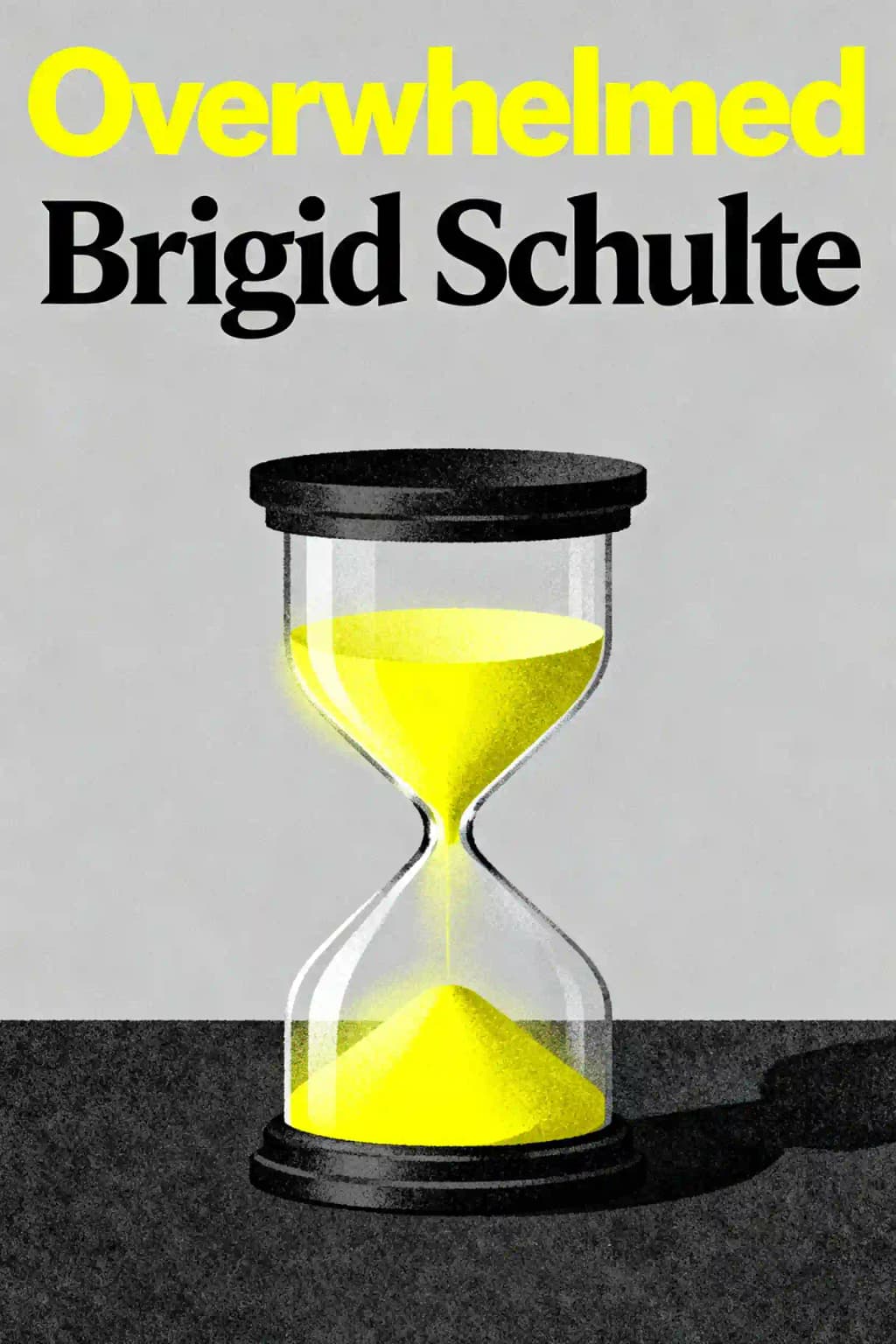
Imagine waking up at 6 a.m. to the sound of your phone buzzing with work emails, your child crying in the next room, and your mental to-do list already scrolling like endless movie credits. This is the reality for millions of Americans caught in what Brigid Schulte calls "the Overwhelm." Her groundbreaking book, which Arianna Huffington praised as "a wake-up call for our society," has struck a chord with readers worldwide, becoming required reading in corporate leadership programs and psychology courses alike. Time magazine called it "the definitive guide to managing modern life's constant pressures," while celebrities from Sheryl Sandberg to Oprah have recommended it as essential reading for anyone feeling crushed by competing demands.
2장
The Tyranny of Time Confetti
We've all experienced it - those scattered fragments of minutes that never add up to meaningful time. Schulte calls this phenomenon "time confetti" - the way our days shatter into tiny, unsatisfying shards. Unlike previous generations who might have had clear boundaries between work and home, today's adults navigate a constant state of mental pollution, with thoughts of unfinished tasks contaminating potentially restorative moments.
When time-use researcher John Robinson claimed that modern Americans have about 30 hours of leisure time weekly, Schulte was incredulous. Her life as a Washington Post reporter and mother felt like a perpetual state of breathless rushing, with hours evaporating on tasks she could barely recall completing. To test Robinson's theory, she kept meticulous time diaries, only to discover a profound disconnect between how time is measured by researchers and how it's experienced by actual humans.
Robinson counted activities like reading a newspaper or exercising as "leisure," while Schulte experienced them as obligations or multitasking opportunities. Even moments with her children were contaminated by mental checklists of undone tasks and looming deadlines. This "contaminated time" - when your body is present but your mind is elsewhere - characterizes modern life, especially for working parents.
The problem isn't just personal perception. Time studies worldwide show rising levels of "role overload," with two-thirds of working parents reporting they don't accomplish what they want daily. This overwhelm costs businesses and healthcare systems billions annually in lost productivity, turnover, and stress-related illness. The situation is particularly acute for mothers, who experience both role overload and "task density" - the intense responsibility and multitude of jobs performed simultaneously.
3장
The Status Symbol of Busyness
Why do we live this way? Communication professor Ann Burnett uncovered a fascinating shift in social dynamics through her extensive research: busyness has evolved from a burden into a coveted status symbol. By meticulously analyzing holiday letters spanning five decades, she discovered people increasingly showcase their overwhelming schedules, turning daily planners into badges of honor. The language has shifted from sharing life updates to competitively highlighting packed calendars, missed vacations, and endless commitments.
"I'm busier. I win" followed by "I have two more kids than you" has become a common conversational pattern, especially among middle-class parents and professionals. Being busy signals importance in our culture - if you're in demand, you must be valuable. This creates what Burnett calls the "nonchoice choice" - people claim busyness is a personal choice for advancement while simultaneously feeling swept away by forces beyond their control. The paradox lies in how we both celebrate and complain about our packed schedules.
The human urge to conform to social norms proves nearly irresistible, as demonstrated through multiple studies. Brain scan research by Gregory Berns showed that when subjects faced group disagreement, their amygdala (fear center) activated intensely - at levels similar to facing physical threats. The pressure to conform was so strong that perception circuits actually changed what subjects saw, suggesting our need to fit in can literally alter our reality. Follow-up studies revealed that this conformity pressure increases significantly in professional settings where status and advancement are at stake.
This cultural expectation validates the busy while sanctioning those who aren't following suit. As sociologist Edson Rodriguez explains, "As a culture, we have translated speed into being a virtue. If you're busy, it expresses success." This mentality has created a self-perpetuating cycle where people feel compelled to maintain hectic schedules to prove their worth. The phenomenon is particularly pronounced in urban centers and competitive industries, where "crazy busy" has become the default response to "How are you?"
Recent workplace studies indicate that many professionals intentionally create the appearance of busyness through visible markers like scheduled back-to-back meetings, rapid email responses at odd hours, and public complaints about workload. This performance of busyness has become so ingrained that taking breaks or maintaining work-life boundaries can trigger anxiety about appearing less committed or valuable than peers.
4장
The Incredible Shrinking Brain
The consequences of chronic overwhelm extend beyond emotional distress into profound physical brain changes. When humans experience persistent stress, neuroscientists like Emily Ansell at the Yale Stress Center have discovered something deeply alarming: the prefrontal cortex - our brain's command center responsible for our highest cognitive functions including planning, decision-making, and impulse control - actually shrinks in volume.
Advanced brain imaging studies reveal a troubling pattern: during periods of sustained stress, the amygdala (the primitive emotional center and seat of negative emotions) becomes hyperactive while the prefrontal cortex simultaneously diminishes in both size and function. This structural shrinkage significantly impairs our ability to think clearly, make rational decisions, maintain emotional equilibrium, and engage in complex problem-solving. Research from Stanford University shows this reduction can be as much as 20% in certain areas.
The human stress response evolved as a sophisticated survival mechanism over millions of years. When threatened, the hypothalamus initiates a cascade of events, triggering adrenal glands to release a cocktail of hormones including adrenaline, norepinephrine, and cortisol. This system works brilliantly for occasional acute danger, but when we're continuously stressed, it turns against us in what scientists call "allostatic overload" - a state where our adaptive systems become overwhelmed and begin causing damage.
Chronic stress creates a devastating cascade of physical health consequences. It weakens the immune system by up to 30%, increases inflammation markers throughout the body, and significantly raises risks of cardiovascular disease, type 2 diabetes, rheumatoid arthritis, obesity, and Alzheimer's disease. Studies show it's particularly linked to depression and anxiety disorders, affecting women at twice the rate of men, and new research suggests it may accelerate the growth of certain cancers through stress hormone stimulation of malignant cells.
Our modern information-saturated environment dramatically exacerbates this neurological strain. The average American now processes an astounding 34 gigabytes of data and 100,000 words daily across approximately 12 hours of media consumption. Information workers switch tasks every three minutes on average, visit upwards of 40 websites daily, and juggle 17 different software programs. Research from the University of California shows each interruption requires 10-20 times the length of the interruption to fully refocus, creating a cognitive deficit that accumulates throughout the day. Even Fortune 500 CEOs average only 28 uninterrupted minutes daily, according to leadership studies. The constant context-switching and information overload create a perfect storm for chronic stress activation, perpetuating the cycle of brain changes and health impacts.
5장
The Ideal Worker Is Not Your Mother
Why does workplace culture intensify rather than alleviate these pressures? The answer lies in what legal scholar Joan Williams calls the "ideal worker" norm - an outdated workplace standard designed around men's traditional life patterns despite dramatic demographic shifts.
The ideal worker is completely unburdened by family responsibilities. He doesn't take parental leave, need flexible scheduling, or handle childcare emergencies. Instead, he devotes himself entirely to work - arriving first, leaving last, rarely taking vacation, answering emails at 3 a.m., relocating whenever necessary, and pulling all-nighters on demand.
Despite women comprising half the workforce and most mothers working outside the home, this outdated norm persists. Research reveals pervasive "caregiver bias" - mothers are viewed as less competent and committed than non-mothers, facing hiring discrimination and significant wage penalties. While childless women earn 94 cents to a childless man's dollar, mothers earn only 60 cents to a father's dollar.
The "flexibility stigma" punishes workers who challenge this norm. When men like Ariel Ayanna seek flexible arrangements for caregiving, they face particularly harsh penalties. Ayanna, a corporate lawyer who received excellent evaluations while working flexibly to care for his family, was fired after taking parental leave. Research confirms this pattern - men who request caregiving leave are viewed as weak, less masculine, less intelligent, and less ambitious.
Ironically, the ideal worker isn't actually the best worker. Research shows that long hours, mandatory face time, and constant connectivity actually kill creativity and productivity while increasing stress, anxiety, and depression. Workers with predictable time off, reasonable hours, and the ability to fully disconnect produce better work, show higher job satisfaction, and receive better performance reviews.
6장
A Tale of Two Approaches to Family Policy
America's approach to supporting working families was shaped by a pivotal moment in 1971 when President Nixon vetoed the Comprehensive Child Development Act, which would have created a national system of affordable, quality childcare. Conservative strategist Pat Buchanan, who orchestrated opposition to the bill, viewed universal childcare as threatening traditional family values.
This decision created the fragmented, unregulated, and often inadequate childcare system that burdens American families today. Childcare costs more than college tuition in 19 states, with quality varying wildly and subsidies difficult to access. The system's dysfunction sends a not-so-subtle message to mothers to "quit and go home where they belong," as one advocate noted.
In contrast, other developed nations took different paths. European countries implemented "pro-natalist" policies supporting families, while Scandinavian nations embraced family-friendly approaches as part of national identity. Though conservatives claim these programs drain economies, productivity measures tell a different story. When measuring productivity per hour worked, countries like France and Norway outperform the US.
The early 1970s represented a pivotal moment when governments responded differently to changing social movements. While Buchanan was engineering the veto of comprehensive childcare in America, Denmark was building a society where both parents could balance work and family. Today, Danish parents typically leave work by 4:30 to pick up children, with the hours of 5-8 considered sacred family time. Danish mothers enjoy more leisure time than mothers in any other country studied - six hours and twelve minutes daily, with ninety minutes of "pure" child-free time. By comparison, American mothers have only thirty-six minutes daily to themselves.
7장
The Stalled Gender Revolution
Despite dramatic changes in women's workforce participation since the 1970s, the "gendered division of labor" at home has remained surprisingly resistant to change. While women now make up nearly half the workforce and are primary breadwinners in 40% of households, domestic responsibilities haven't shifted accordingly. Research consistently shows that marriages with shared responsibilities are most satisfying - couples who equitably divide housework report 50% more sexual intimacy and significantly higher relationship satisfaction scores. Yet progress has stagnated since the mid-1990s - fathers' household contributions have plateaued at around 35% of domestic work, the percentage of mothers in the workforce has actually decreased slightly, and attitudes about traditional parental roles have remained largely unchanged.
Women's time and mental bandwidth is "contaminated" by the exhaustive "mental labor" of constantly tracking and coordinating multiple spheres - children's schedules, household inventory, work deadlines, medical appointments, gift-buying, vacation planning, and maintaining extended family relationships. This invisible work explains why women across cultures report 20-30% higher levels of chronic stress and are twice as likely as men to feel their lives are spinning out of control. The mental load creates a constant background hum of anxiety and responsibility that men largely escape.
The author illustrates this through her own revealing Thanksgiving Day experience when her husband casually announced he was helping a friend with his smoker while she single-handedly managed the entire holiday - shopping, cooking, cleaning, decorating, and coordinating relatives. Despite both working demanding full-time jobs with equal salaries, she realized she managed nearly everything domestic while he helped only when specifically asked. Time use studies confirm this isn't unusual - married American women still perform 70-80% of household labor regardless of employment status, with their domestic responsibilities typically tripling after children arrive while men's increase only marginally.
Gay couples offer an instructive model for moving beyond gendered expectations - extensive research shows they share domestic labor more equitably based on individual preferences, skills and schedules rather than predetermined roles. They resolve conflicts more constructively through direct communication and negotiation, report lower levels of power struggles, and partners tend to be equally satisfied with the division of responsibilities. As relationship psychologist Patrick Markey notes, same-sex couples demonstrate greater "openness" to flexible arrangements and more willingness to share power and decision-making. Their example suggests that when gender roles don't dictate household duties, couples can create more balanced and satisfying partnerships.
The data clearly shows that despite women's advancement in education and employment, deeply ingrained cultural expectations about domestic roles remain powerful barriers to achieving true partnership. Moving forward requires actively challenging these assumptions and creating new models for sharing both the visible and invisible work of maintaining home and family life.
8장
The Cult of Intensive Motherhood
Modern motherhood has become a time-devouring endeavor with impossibly high standards. American mothers across all demographics have dramatically increased both the quantity and quality of time spent with children since the 1960s. Working mothers today spend eleven hours weekly in active childcare (as much as stay-at-home mothers did in the 1960s), while today's at-home mothers spend seventeen hours weekly.
Despite this intensive parenting, mothers consistently report feeling they aren't doing enough, trapped in a culture of impossible standards. This self-sacrificing maternal ideal has grown to monstrous proportions, with mothers flogging themselves for falling short while engaging in "mompetition" over everything from toddler art classes to Olympic-track activities.
Several factors drive intensive mothering: smaller, more planned families make each child seem more precious; cultural ideals have created an impossibly wide gap between expectations and reality; and working mothers face pressure to compensate for their absence by being hyper-present when with their children.
The guilt many working mothers feel stems partly from a statistical error. In the 1990s, time-use researcher John Robinson incorrectly calculated that mothers' time with children had dropped 40% between 1965-1985. Media amplified this mistake in over fifty articles about absent parents and societal decline. Though Robinson quickly issued a correction, the damage was done. Ironically, mothers' time with children has been climbing steeply since 1985 - at the expense of sleep, personal care, and leisure.
9장
New Dads Redefining Fatherhood
Fathers are increasingly embracing hands-on parenting roles, fundamentally challenging traditional provider expectations. Recent census data reveals that one-third of fathers with working wives now routinely care for children, with half reporting equal or primary childcare responsibility - double the percentage from previous decades. Longitudinal research shows fathers have tripled their direct engagement time with children since 1965, from an average of 2.5 hours per week to 7.3 hours, with particularly dramatic increases in developmental activities like reading, bathing, and homework help.
A comprehensive Boston College study found that 85% of fathers now consider caregiving equally or more important than breadwinning, with 53% expressing willingness to stay home with children if financially possible. These "new dads" are becoming increasingly visible in media and popular culture, organizing through hundreds of Meetup groups worldwide, and actively advocating for workplace policy changes like paid parental leave and flexible scheduling. Online communities for stay-at-home dads have grown from dozens to thousands of members in just a few years.
While the national conversation about changing gender roles has historically focused on women's desires and challenges, researchers have only recently begun investigating men's authentic aspirations and struggles. Recent studies show that fathers in dual-earner couples now report 35% more work-family conflict than mothers, with the "new male mystique" - the pressure to be both primary provider and involved parent - creating the same overwhelm that working mothers have faced for decades. Many men report feeling caught between workplace cultures that still expect traditional male dedication and their genuine desire to be present, engaged fathers.
Research consistently demonstrates that involved fathers produce children with measurably greater cognitive competence, emotional self-control, empathy, and less rigid gender stereotyping. Children with highly engaged fathers score higher on standardized tests, show better linguistic and problem-solving capabilities, and demonstrate stronger social skills. For many new dads like Charlie, taking extended parental leave becomes a transformative experience that permanently reshapes their relationship with their children, despite initial awkwardness and workplace resistance. Companies leading in paternity leave policies report that 90% of eligible fathers now take full advantage of available time, compared to less than 30% a decade ago.
This shift represents more than just changing statistics - it reflects a fundamental reimagining of fatherhood from pure provider to nurturing caregiver. Support groups, policy advocates, and pioneering fathers are working to normalize this evolution, though significant cultural and institutional barriers remain. The most successful companies are recognizing that supporting involved fatherhood through concrete policies benefits not just families, but also workplace engagement, retention, and productivity.
10장
The Lost Art of Play
Play is not merely recreational but essential to human existence. As Dr. Stuart Brown describes it, "Play can save your life" - it's "the basis of all art, games, books, sports, movies, fashion, fun, and wonder - in short, the basis of what we think of as civilization." Yet contrary to popular belief, enjoying leisure requires skill.
Throughout history, women have been denied leisure and play. From Veblen's "Theory of the Leisure Class" relegating women to drudge work, to the Bible's "good wife" who "does not eat the bread of idleness," women's time has never truly been their own. Even in retirement, studies show women continue household responsibilities while men increase leisure time.
True leisure isn't defined by specific activities but by how time feels. While time-use researcher John Robinson categorizes leisure as specific activities or residual time, leisure researchers emphasize that authentic leisure requires both control and voluntary choice - elements women often lack. For women, "leisure" frequently means more work: planning events, packing supplies, and managing everyone else's enjoyment while carrying mental checklists of undone tasks.
Play is a timeless state of being essential from birth to death. Neuroscience increasingly confirms that humans should be called Homo ludens - the playing human - as play builds complex, flexible brains and societies. Scientists have found direct correlations between animal play and growth of the cerebellum and prefrontal cortex - findings likely applicable to humans, where free play correlates with social and academic proficiency.
Life without play is bleak. Studies show play-deprived young rats develop abnormal brains resembling those with damaged prefrontal cortexes. When exposed to cat odor, both playful and play-deprived rats initially flee, but only playful rats eventually reemerge to explore - the non-players remain hidden with elevated stress hormones until death.
11장
Finding Time Serenity
How can we escape the overwhelm? The author works with coach Terry Monaghan to clear mental clutter, starting with her physical desk. Monaghan teaches her to use a "Worry Journal" - writing furiously for five minutes about everything bothering her to free mental energy. She implements a weekly planning routine beginning with a "brain dump" of everything on her mind, which prevents her brain from getting stuck in an endless loop trying to remember everything.
Tony Schwartz, author of "The Way We're Working Isn't Working," introduces the author to working in rhythmic pulses rather than marathon sessions. He explains that humans naturally pulse between energy expenditure and recovery - like heartbeats, breathing, and brain waves. Scientists discovered these 90-minute "ultradian cycles" of alertness, and research shows that working continuously without breaks produces subpar work.
The author implements Monaghan's pulse technique, chunking her time to minimize multitasking and constant role-switching between work and home. She begins working in uninterrupted 30-minute blocks (gradually building to 90 minutes), turning off email and phones during focused work periods. For difficult tasks, she uses a timer, knowing her brain can focus on anything unpleasant if it knows relief is coming.
At a mindfulness meditation retreat with Tara Brach, she seeks to escape the "ceaseless frenzy" of overwhelm. Scientists have discovered that while stress physically shrinks the thinking brain, mindfulness practices actually expand gray matter after just eight weeks of daily practice. The overwhelm never disappears, but mindfulness changes how we respond to it - seeing the swirl without getting swept away.
The author now guides her life less by impossible ideals and more by feelings of happiness, meaningful work, and connection to family and friends. At home, sharing the second shift has freed time for play - she's run half marathons, participated in a 200-mile relay, joined "Binders Full of Women" for activities like canoeing and paddle boarding, and even tried crew, finding soul-nourishing peace gliding on water at dawn.
With clearer priorities and stronger self-efficacy, she's less driven by the urge to do "just one more thing." While still imperfect - working too much, sleeping too little, struggling with weight - she's learning. "Time feels better," she writes. "Rather than ambivalence, what I feel most of the time is gratitude."