1장
When Chaos Becomes Your Default Setting
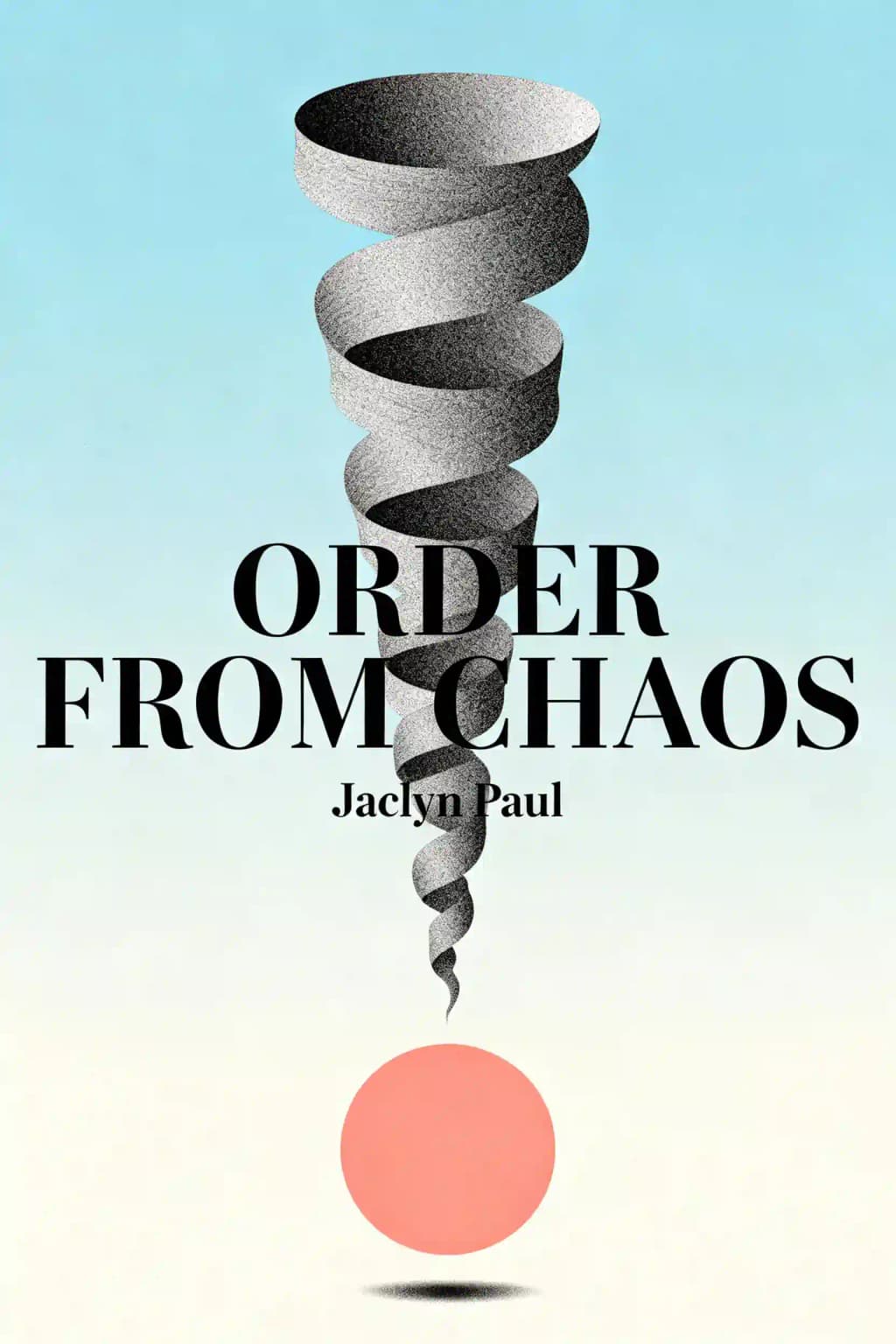
Ever found yourself staring at a mountain of unopened mail, wondering how your home became a maze of clutter? For Jaclyn Paul, this wasn't just a bad day-it was her everyday reality. Before her ADHD diagnosis, her home featured dust-covered surfaces, year-old uninstalled coat hooks, and dining tables buried under weeks of mail containing at least one overdue bill. This wasn't just about appearances; it was about a life spinning out of control.
Order from Chaos has become something of a cult classic among adults with ADHD since its 2018 publication, with readers praising its compassionate, realistic approach to organization. Unlike traditional organizing books that feel impossible for the ADHD brain, Paul's work acknowledges the neurological differences that make standard advice ineffective. The book has garnered attention from mental health professionals who recommend it as a practical companion to clinical ADHD treatment, recognizing that medication alone doesn't solve the organizational challenges that can derail an otherwise capable person's life.
2장
The Hidden Struggle Behind the Mess
The disconnect between who we are inside and how others perceive us creates profound suffering for adults with ADHD. Paul describes scribbling "Lazy is as lazy does" on an envelope after her husband called her lazy during an argument. Despite being hardworking and caring deeply about her responsibilities, she couldn't translate those intentions into consistent action.
This disorganization extracted heavy tolls across all aspects of her life: financial losses from misplaced checks and late fees, neglected health from forgotten medical appointments, constant fear of being "found out" by colleagues who respected her, perpetual anxiety waiting for the next disaster, and creative aspirations that withered from neglect. The emotional burden was crushing-daily anxiety, panic, guilt, and dread.
What many don't understand about ADHD is that it's not simply about distractibility. The term itself is misleading-people with ADHD don't lack attention but struggle to direct it appropriately. The condition primarily affects the prefrontal cortex, the brain region controlling executive functions that determine what we attend to and how we respond.
Despite desperately wanting an organized life, adults with ADHD face significant neurological barriers: uncontrollable distraction by random thoughts, impulsive decision-making, difficulty transitioning between activities (inertia), trouble following instructions carefully, inability to complete tasks in logical sequence, and struggle to organize behaviors sensibly.
The motivation for getting organized must come from within. External pressure or obligation simply doesn't work with the ADHD brain. Paul organized her life not to please others or for appearances, but to ease her own suffering. This journey requires substantial effort that can only be sustained through personal desire rather than external expectations.
3장
Understanding the ADHD Brain
ADHD is a complex neurobiological condition, not a character flaw or lack of willpower. While everyone experiences scattered moments or occasional disorganization, ADHD is fundamentally different-a genetic condition affecting brain chemistry and structure that typically emerges in childhood and impacts multiple life contexts, from academic performance to relationships and career development.
It primarily impacts two critical brain functions: working memory and executive functioning. Working memory allows us to hold multiple thoughts simultaneously and manipulate information in real-time-when impaired, we forget why we entered rooms, lose track of conversations mid-sentence, or struggle to retain instructions long enough to complete tasks. People with ADHD often find information dissolving before it reaches long-term storage, making learning and daily task management particularly challenging. Executive functions, housed primarily in the prefrontal cortex, enable planning, delayed gratification, strategizing, and emotional intelligence. These functions act as the brain's "command center," coordinating everything from simple daily routines to complex project management.
Research has shown that individuals with ADHD have structural and functional differences in several brain regions, particularly those involved in attention, impulse control, and reward processing. Brain imaging studies reveal that certain regions may be smaller or less active in people with ADHD, and neurotransmitter systems, especially those involving dopamine and norepinephrine, function differently.
The relationship between our surroundings and cognitive abilities creates a continuous feedback loop that can either support or undermine symptom management. When our environment becomes chaotic-with visual clutter, excessive noise, or poor organization-even medication can't fully compensate for these external challenges. Conversely, an organized environment with clear systems and reduced distractions supports symptom management and cognitive function. This creates a chicken-and-egg situation: you need some symptom control to get organized, but organization helps maintain symptom control.
The solution comes through gradual learning and systematic skill-building-like mastering a manual transmission by first practicing with just the clutch before adding gas. Start by managing symptoms through appropriate treatment options, whether medication, behavioral therapy, or both, to get that baseline feeling of control. This initial stability enables you to begin the organizational work, implementing systems one at a time rather than attempting a complete life overhaul. Eventually, these practices become your new normal, though occasional setbacks are inevitable and should be viewed as natural parts of the learning process. Success comes from understanding that managing ADHD is not about achieving perfection but about developing sustainable strategies that work with your brain's unique wiring.
4장
Busting Myths About ADHD and Organization
The belief that ADHD makes organization impossible is widespread but fundamentally misleading. While living with ADHD means working harder at organization-writing everything down when others can simply remember-the difference is between difficult and impossible. People with ADHD need systems that genuinely work with their brains, not against them. This might mean using color-coding, visual cues, or digital tools that provide immediate feedback. Many successful ADHD individuals have developed powerful organizational systems by embracing their need for external structure rather than fighting it.
Another harmful myth is that creative people are naturally messy and that too much organization will stifle creativity. This cultural stereotype linking messiness with creativity can become a self-limiting belief that prevents artists and creative professionals from achieving their full potential. While some artists embrace disorder, this doesn't mean organization stifles creativity. In fact, many renowned creatives, from Maya Angelou to Frank Lloyd Wright, maintained highly organized workspaces. Our spaces should be intentional (reflecting conscious choices rather than avoidance), inspiring (motivating work when we enter), and healthy (clean enough not to compromise wellbeing). The key is finding the right balance between structure and flexibility.
Finding your "Why"-your personal motivation for getting organized-is essential for sustainable change. Your Why must connect to deeper values rather than external pressures or societal expectations. For example, organizing might enable you to spend more time with family, pursue passion projects, or reduce daily stress. I organize not because I should, but because it creates space for my true self-providing security, peace, confidence, and the ability to be spontaneous. This might mean maintaining a clutter-free desk to focus better, organizing your schedule to protect creative time, or streamlining your home to reduce daily friction.
The journey to organization isn't about perfection or conforming to others' standards. It's about creating systems that support your unique way of thinking and working. This might involve unconventional solutions, like using clear containers for everything because "out of sight" truly means "out of mind" for some people, or creating detailed checklists for seemingly simple tasks. The goal is to build habits and systems that enhance rather than restrict your natural tendencies and strengths.
5장
Making Peace with Reality
The first rule of getting organized with ADHD is making peace with reality. This means letting go of "shoulds" that dictate your life based on others' expectations rather than your own needs and capabilities. These "shoulds" often manifest as internal pressure to maintain impossible standards or follow organizational systems that work for neurotypical individuals but may be counterproductive for those with ADHD.
Paul shares how holiday travel with a baby became overwhelming when trying to visit three different family homes because they "should" treat everyone equally. The logistics of packing, unpacking, and maintaining routines across multiple locations created immense stress. Eventually, she set boundaries, limiting travel to one location and having family visit them instead. This decision, while initially difficult, led to more enjoyable holidays and better-managed energy levels. The lesson: even organized people can take on too much, and those with ADHD have lower thresholds for what's manageable before becoming overwhelmed.
Understanding your unique brain and specific situation should inform your organizational approach. Several frameworks can help identify your personal needs and tendencies. Gretchen Rubin's Four Tendencies explains how different people respond to expectations, categorizing individuals as Upholders, Questioners, Obligers, or Rebels. Dr. Daniel Amen's ADD subtypes describe different ADHD manifestations, including Classic, Inattentive, Overfocused, Temporal Lobe, Limbic, and Ring of Fire, each requiring different organizational strategies. Learning styles (visual, auditory, or tactile) further influence how effectively you process and retain information.
Your cognitive preferences matter tremendously for organization. When Paul created a color-coded filing system that worked perfectly for her, her color-blind husband found it completely unusable, highlighting how personal organizational systems must be. Understanding your peak performance times is crucial - some people focus better in the morning, while others hit their stride late at night. Identifying when your brain works best for different types of tasks-whether physically organizing, paying bills, or planning with your spouse-allows you to schedule accordingly and dramatically increases your chances of success.
Being true to yourself means focusing on what works for you, not what others are doing. Many of our "shoulds" come from family expectations or societal norms, but following someone else's blueprint when it's not right for you leads only to unfinished projects and frustration. For instance, if traditional planning methods don't work for you, using voice memos or visual boards might be more effective. Regularly review your commitments and identify which ones to release-holding onto obligations you won't fulfill helps no one and creates unnecessary stress. This might mean declining social events that drain you, adjusting work schedules to match your energy patterns, or creating unconventional but effective systems for managing household tasks.
Remember that what works today might need adjustment tomorrow as circumstances change. The key is remaining flexible and willing to adapt your systems while staying true to your core needs and limitations.
6장
Creating External Containers for Everything
The second rule focuses on creating external containers for everything-from physical objects to thoughts and schedules. Before attempting to manage chaos, you must first contain it effectively. Sorting loose items into appropriate containers makes overwhelming tasks manageable while providing visible progress and a sense of control. This systematic approach helps break down larger organizational challenges into smaller, more manageable units.
For visually-oriented people with ADHD, traditional hidden storage creates an "out of sight, out of mind" problem where items essentially cease to exist when not visible. This can lead to forgotten appointments, misplaced important documents, and duplicate purchases. Paul discovered that baskets provide an effective solution-placing appropriate containers at clutter hotspots acknowledges reality while creating order. These might include entry-way baskets for keys and mail, bathroom baskets for daily toiletries, or desk baskets for current projects. However, each basket must serve only one clearly defined purpose to prevent becoming another clutter magnet. For example, a "bills to pay" basket should never mix with "papers to file."
For larger storage needs, open shelving often works better than drawers or cabinets. Examples include using cube shelves instead of drawers for clothes, rolling garment racks instead of closets, and storing kitchen utensils in visible containers. This approach honors the reality that visually-oriented people need to see their belongings to interact with them effectively. Clear storage containers work particularly well for craft supplies, pantry items, and office materials, allowing quick visual inventory while maintaining organization.
Adults face overwhelming flows of to-dos from both physical items (receipts, mail, notes) and digital sources. While physical clutter becomes visibly problematic, digital clutter like email can grow endlessly without spatial constraints-some people accumulate over 100,000 unread messages. This invisible accumulation can be just as mentally taxing as physical clutter, creating anxiety and reducing productivity.
For overwhelming inboxes, Paul recommends "declaring bankruptcy" by creating a "DMZ" folder and moving all old emails there-giving yourself a fresh start without deleting anything potentially important. This creates psychological relief while preserving access to historical information. She recommends creating a few central "inboxes" for incoming tasks rather than scattering reminders throughout your environment: email inbox (consolidating multiple accounts into one manageable feed), office inbox (for sticky notes, mail, and random ideas), and front door inbox (for family members to leave items requiring attention). Each inbox should be processed regularly, ideally daily, to prevent new accumulation.
The key to successful containment is choosing systems that match your natural tendencies rather than fighting against them. For example, if you tend to drop clothes on a chair, place a hamper there instead. If you regularly lose important papers, create a single processing station where all papers land first. These external containers become reliable systems that reduce cognitive load and create sustainable organization.
7장
Managing Your Thoughts and Schedule
For people with ADHD, forgetting important things creates both practical problems and emotional pain. Our memories work like sieves-valuable thoughts fall through alongside trivial ones, regardless of importance. The solution is writing everything down immediately, which requires having writing surfaces within arm's reach at all times.
Paul's most important ADHD lesson: never trust your brain. Drawing a parallel to potty training toddlers, she explains that her brain requires constant vigilance. Like whisking a toddler to the potty at the first sign they need it, she must immediately capture ideas in appropriate containers before they're lost.
She distinguishes between thought containers (numerous collection points for capturing ideas) and inboxes (limited processing centers). For ADHD management, she recommends having abundant thought containers within reach at all times, but funneling everything into just three main inboxes.
Thought-capturing tools include sticky notes (kept everywhere for dropping into inboxes, temporary labeling, leaving notes), dry-erase markers on bathroom mirrors (perfect for capturing shower ideas), chalkboard paint on doors, checklists for repetitive processes, notebooks for more complex ideas, and a "Someday Maybe" list for storing appealing ideas that aren't current priorities.
For scheduling, Paul recommends putting everything with a date attachment on your calendar: hard deadlines, squishy commitments, anniversaries, birthdays, appointments, and reminders. She strongly advocates for electronic calendars (particularly Google Calendar) over paper planners because they offer automatic backups, recurring events, and the ability to filter information by category.
However, she warns against putting wishful thinking on your calendar. Calendars should only contain time-sensitive items that become irrelevant if not done that day, otherwise you dilute the importance of truly critical tasks.
8장
Building Systems That Work
The third rule is creating systems that actually work for your unique brain. It's not enough to simply contain your mess in tidy boxes-you must bring those containers under control and keep them that way. Focus first on controlling the incoming flow before tackling your backlog, just as you'd need to shut off a leaky pipe before mopping up the puddle.
We can view organizing systems like computer software-adaptable, updatable, and capable of being customized to user needs. The Agile software development approach offers valuable principles for ADHD organization: build systems around motivated individuals, measure progress by what actually works (not perfection), embrace simplicity, create sustainable systems, and regularly reflect and adjust your approach.
David Allen's "Getting Things Done" (GTD) transformed Paul's organizational life, though many people with ADHD struggle to implement and maintain it. Allen defines a project as anything requiring "more than one action needed to achieve a desired result." This broader definition reveals why seemingly simple tasks like getting family flu shots become challenging-they involve multiple steps that tax our working memory.
When processing your inbox, the most challenging part with ADHD is proceeding methodically-one item at a time, in order, without putting anything back once you've taken it out. While it's appropriate to resolve quick tasks (2-5 minutes), longer projects should go into your management system.
For those finding GTD overwhelming, the Bullet Journal offers a more flexible, creative alternative that combines planning with free-form note-taking. This system helps organize elements and prevents losing track of important information through consistent indexing. The beauty of this system is its flexibility-you can eliminate sections you don't use, removing potential sources of guilt.
9장
Striving for Less
The fourth rule is striving for less-less stuff, less distraction, less overwhelm. People with ADHD often self-medicate by taking on too much and over-structuring their lives. Our attraction to novelty, craving for stimulation, and poor time perception make it difficult to say "no" or recognize when we're overloaded. This tendency to overcommit can manifest in countless ways: joining multiple committees, starting numerous projects simultaneously, or accumulating hobbies that ultimately become sources of stress rather than enjoyment.
Stephen Guise's Mini Habits approach teaches us to reject motivation as a strategy and instead rely on "stupid small" goals that require minimal willpower. For ADHDers who struggle with both inertia and limited success experiences, this approach is transformative. When Paul couldn't finish painting her dining room, she lowered her bar to just touching sandpaper to the wall once-an embarrassingly small goal that ultimately led to completion. Other examples of mini habits might include writing one sentence of a report, organizing a single drawer, or reading one page of a book. The key is making the goal so ridiculously achievable that the brain's resistance mechanisms don't activate.
Most adults maintain numerous commitments without questioning them, but people with ADHD must be ruthless with time and attention. Our condition makes us work harder at organizing life and setting ourselves up for success-we can't hold much in our heads, and relationships require real effort. When overwhelmed, it's essential to temporarily pare back activities, even enjoyable ones. This might mean declining social invitations, stepping down from voluntary positions, or postponing non-essential projects until there's more bandwidth available.
For people with ADHD who already struggle with household chores and financial management, a smaller home offers freedom-freedom from excessive maintenance, freedom to make financial mistakes without ruining credit or alienating spouses, and freedom to lead a calm, uncluttered life. The benefits extend beyond just having less space to maintain; smaller homes often force better organization habits and prevent the accumulation of unnecessary items. They also reduce decision fatigue by limiting storage options and requiring regular evaluation of possessions.
Having less stuff not only sharpens focus but makes chores easier. Paul assesses rooms based on their horizontal surfaces, keeping them as uninterrupted as possible for quick cleaning. This creates "lazy cleaning" opportunities where she can dust or wipe surfaces with almost no effort. She recommends maintaining clear countertops, minimal decorative items, and designated homes for frequently used objects. This approach extends to digital spaces as well, where keeping fewer tabs open, maintaining a clean desktop, and regularly purging emails can significantly reduce cognitive load and increase productivity.
The principle of less applies equally to daily schedules. Rather than trying to pack every moment with activity, leaving deliberate gaps in the day provides crucial buffer time for transitions, unexpected delays, or simply mental recovery. This might mean scheduling only two major tasks per day instead of five, or building in regular "white space" for decompression and reflection.
10장
The Daily Grind: Staying Organized Long-Term
The organizing process follows six key steps that form the foundation of lasting organizational success: (1) Know yourself-your brain, personality, and values, including understanding your specific ADHD challenges and natural tendencies; (2) Accept reality and work with your ADHD, not against it, acknowledging both strengths and limitations; (3) Contain everything externally-your stuff, information, and obligations through reliable systems like digital calendars, labeled containers, and designated spaces; (4) Establish systems that work specifically for you, whether that's color-coding, voice memos, or visual reminders; (5) Process your inbox methodically, one piece at a time, using consistent routines and time blocks; and (6) Lower your expectations, embracing small wins and gradual progress rather than seeking instant perfection.
Getting organized is a learning process that requires practice and patience with inevitable mistakes. The key insight is finding ways to merge your desired path with the path of least resistance. For example, if you consistently drop clothes on the floor, place a hamper exactly where you tend to undress. If you forget medications, link them to an existing habit like making coffee. Let go of shame about your ADHD, view failures as mere data points for adjustment, and stop listing "try harder" as a solution - instead, focus on creating better systems and environmental supports.
Don't fixate on the perfect organized life-like staring down a steep ski slope, the enormity can paralyze you. Break tasks into smaller, manageable chunks: rather than "organize the house," start with "clear one drawer" or "create one landing zone for keys." There's no easy way down, and you'll likely have some spectacular falls along the way, such as missed appointments or forgotten tasks. The only proper response is to stand up, laugh it off, and keep going with slow, steady progress, celebrating small victories like maintaining a calendar for a week or keeping your desk clear for three days.
The most crucial insight is to stop fighting against your brain. As Paul wrote in her diary at 17: "I have to constantly stay a step ahead of this, beat it, sidestep it, and wrestle it to the ground"-an exhausting and unsustainable approach that eventually led her to seek treatment. Instead, create systems that work with your unique brain, not against it. This might mean using voice-to-text for notes if you hate writing, setting multiple alarms with different sounds, or creating visual systems with Post-it notes and whiteboards. When you do, you'll discover that organization isn't about perfection-it's about creating space for the life you truly want to live, with systems that support rather than constrain your natural tendencies.
Remember that maintenance is easier than organization from scratch. Build regular review periods into your schedule - weekly for immediate tasks, monthly for bigger projects, and quarterly for life goals. Use external reminders and accountability partners when needed, and always have a backup plan for when systems inevitably break down.