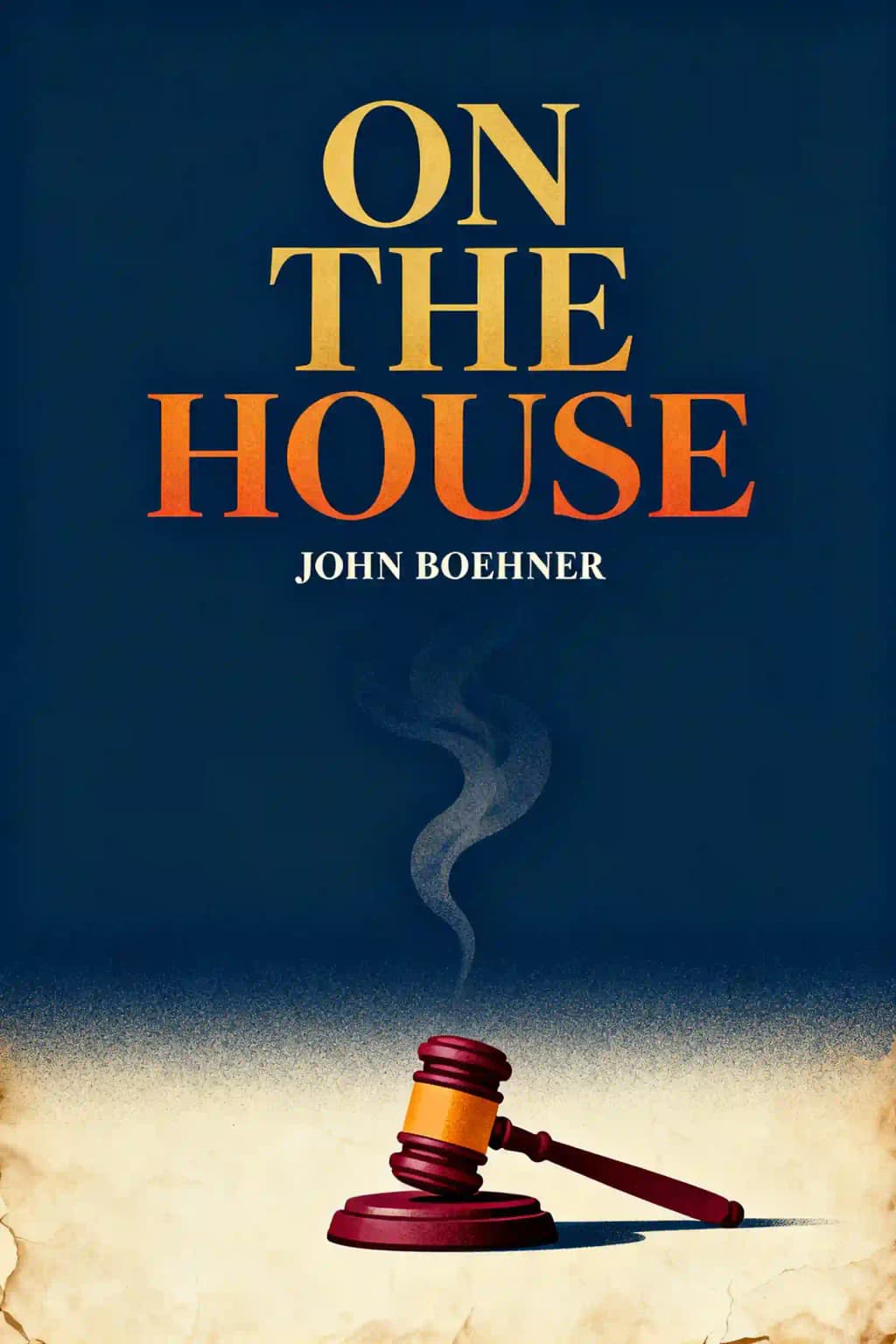
Inside Boehner's explosive Washington memoir, where political civility meets bourbon-soaked candor. The former Speaker reveals Capitol Hill's dark underbelly, calling Freedom Caucus members "political terrorists" while offering a sobering glimpse into how extreme polarization fractured American governance.
John Boehner, former U.S. House Speaker and author of On the House, brings decades of political leadership and Republican Party strategy to this candid political memoir.
A congressman from Ohio for nearly 25 years, Boehner shaped pivotal legislation like the Contract with America, the No Child Left Behind Act, and the Budget Control Act, reflecting his focus on fiscal responsibility and bipartisan reform. Known for dismantling congressional earmarks and championing private-sector growth, Boehner’s career underscores his reputation as a pragmatic dealmaker—a theme central to On the House’s exploration of governance and partisan dynamics.
After retiring from Congress in 2015, he joined global law firm Squire Patton Boggs as a senior strategic advisor, leveraging his legislative expertise in public policy. The book draws from his role in leading the largest Republican House majority in 80 years and his $300 million fundraising efforts for the party.
On the House has been cited as a must-read for understanding modern political negotiations, with Boehner’s firsthand accounts of landmark battles over healthcare, immigration, and economic policy.
On the House: A Washington Memoir chronicles John Boehner’s journey from a blue-collar upbringing in Ohio to becoming Speaker of the House, blending personal anecdotes with insights into Washington’s political machinery. The book critiques rising extremism in both parties, praises Reagan-era pragmatism, and oscillates between cautious optimism and concern for America’s governance challenges.
This memoir appeals to political enthusiasts, conservatives seeking insider perspectives, and liberals interested in bipartisan governance critiques. It’s particularly relevant for readers analyzing shifts in the Republican Party from Reagan-era conservatism to modern polarization.
Boehner condemns “political terrorists” on both sides, criticizing figures like the Freedom Caucus and “The Squad” for prioritizing chaos over governance. He argues such extremism undermines legislative compromise, contrasting it with Reagan’s pragmatic deal-making approach.
Boehner advocates for Reagan-style bipartisanship, emphasizing negotiation and incremental progress. He laments the erosion of congressional traditions, blaming media-driven outrage and ideological rigidity for legislative gridlock.
Notable quotes include:
Growing up in a 12-child household and working at his family’s bar, Boehner learned grit and service-oriented values. These experiences fueled his belief in hard work, fiscal conservatism, and pragmatic leadership.
Reviewers note Boehner’s conflicting tone, alternating between hopefulness and doom-mongering. Some argue he oversimplifies systemic issues while romanticizing Reagan-era politics.
He expresses frustration with post-2010 GOP factions that prioritize ideological purity over governance, contrasting them with “Reagan Republicans” who balanced principles with compromise.
Boehner urges leaders to reject absolutism, rebuild bipartisan relationships, and focus on incremental progress. He cites debt-ceiling negotiations and fiscal reforms as examples of achievable, if imperfect, deals.
Unlike memoirs focused on scandal or self-promotion, Boehner’s emphasizes institutional decline and the human side of governance. It aligns more with pragmatic critiques like McCain’s The Restless Wave than polemical works.
Boehner shares candid moments, including emotional struggles during the 2008 financial crisis and clashes with colleagues like Ted Cruz. His vulnerability contrasts with his public “tough guy” persona.
The book’s warnings about polarization, media-driven outrage, and legislative dysfunction resonate amid ongoing debates over democracy’s health. Its insider perspective aids understanding of Capitol Hill’s evolving dynamics.
저자의 목소리로 책을 느껴보세요
지식을 흥미롭고 예시가 풍부한 인사이트로 전환
핵심 아이디어를 빠르게 캡처하여 신속하게 학습
재미있고 매력적인 방식으로 책을 즐기세요
I wasn’t really a tea-bag kind of guy.
I’d known Donald Trump for years, but he was still a mystery to me.
I wasn’t interested in being a revolutionary.
Pop had a saying: 'You can’t be mad at a guy for looking out for his family.'
I was a pretty normal guy who’d gotten caught up in some pretty abnormal times.
On the House의 핵심 아이디어를 이해하기 쉬운 포인트로 분해하여 혁신적인 팀이 어떻게 창조하고, 협력하고, 성장하는지 이해합니다.
생생한 스토리텔링을 통해 On the House을 경험하고, 혁신 교훈을 기억에 남고 적용할 수 있는 순간으로 바꿉니다.
무엇이든 묻고, 학습 스타일을 선택하고, 나에게 맞는 인사이트를 함께 만들어보세요.

샌프란시스코에서 컬럼비아 대학교 동문들이 만들었습니다
"Instead of endless scrolling, I just hit play on BeFreed. It saves me so much time."
"I never knew where to start with nonfiction—BeFreed’s book lists turned into podcasts gave me a clear path."
"Perfect balance between learning and entertainment. Finished ‘Thinking, Fast and Slow’ on my commute this week."
"Crazy how much I learned while walking the dog. BeFreed = small habits → big gains."
"Reading used to feel like a chore. Now it’s just part of my lifestyle."
"Feels effortless compared to reading. I’ve finished 6 books this month already."
"BeFreed turned my guilty doomscrolling into something that feels productive and inspiring."
"BeFreed turned my commute into learning time. 20-min podcasts are perfect for finishing books I never had time for."
"BeFreed replaced my podcast queue. Imagine Spotify for books — that’s it. 🙌"
"It is great for me to learn something from the book without reading it."
"The themed book list podcasts help me connect ideas across authors—like a guided audio journey."
"Makes me feel smarter every time before going to work"
샌프란시스코에서 컬럼비아 대학교 동문들이 만들었습니다

On the House 요약을 무료 PDF 또는 EPUB으로 받으세요. 인쇄하거나 오프라인에서 언제든 읽을 수 있습니다.
John Boehner's journey from mopping floors in his father's bar to becoming Speaker of the House offers a rare glimpse into the machinery of American politics. Unlike most political memoirs that carefully sidestep controversy, Boehner's account pulls no punches, naming names and confronting his own party's descent into extremism. Growing up as one of twelve children in a cramped Ohio home taught him to value what little he had - explaining his later intolerance for wrinkled suits or scuffed shoes. This chaotic childhood prepared him remarkably well for managing congressional mayhem with unflappable calm. "After dealing with eleven siblings," he reflects, "handling a bunch of congressmen isn't that big a challenge." His father's bar, Andy's Cafe, became his first classroom in human relations, teaching him to treat everyone with equal respect regardless of their status - a principle that would guide his political career even when it put him at odds with his party's evolving extremism.
Andy's Cafe shaped Boehner's worldview more profoundly than any political theory. Factory workers who stopped for drinks became like extended family. Working there from age eight, Boehner learned about money and hustle - negotiating his first raise from $2 to $5 per Saturday and saving for a bicycle that expanded his world through caddying jobs. Despite raising twelve children on limited means, his parents maintained patience and structure with sacred family dinners at 6:00 PM, complete with grace and fair food distribution. Later, when managing fractious House Republicans, Boehner drew on skills developed breaking up sibling squabbles and assigning chores. Growing up with limited resources instilled values that defined his leadership style, even when those values made him an outlier in his increasingly radical party.
True power in Washington comes from strategic restraint, not grandstanding. Boehner observed how Nancy Pelosi's frequent House floor speeches diminished her impact, while he followed Senator John Tower's advice: "You never get in trouble for something you don't say." When Pelosi's forceful Obamacare push contributed to Democrats' 2010 midterm losses, Boehner instead pursued consensus over unanimity. Mitch McConnell represented a different leadership style - inscrutable and calculating. He once established their working relationship by saying: "I'll never presume to know more about the House than you do. And trust me, you'll never know as much about the Senate as I do." Boehner viewed leadership as institutional responsibility rather than a power grab. His management meetings became genuine feedback sessions. He mentored younger members who were "cruisin' for a bruisin'" to protect both them and Congress itself. His key principle: never enter a meeting without a plan, because without alternatives, your plan becomes THE plan.
Boehner's political journey began at a 1977 neighborhood Fourth of July party with a Homeowners Association board appointment. Born to Democratic parents, he initially shared their politics. After high school, he worked construction jobs while attending Xavier University part-time. Meeting his wife Deb in 1972 while working as an overnight janitor provided direction in his life. Boehner's views shifted as the 1970s ended - his frustration with high taxes drew him to Reagan's economic vision. "I'm not a Democrat anymore," he realized, "I'm a Republican. And I'm a Reagan Republican too." He advanced from Homeowners Association president to township trustee, overcoming self-doubt by personally canvassing West Chester. Throughout his career, Boehner followed Reagan's philosophy of smaller government and pragmatic compromise. He laments that Reagan wouldn't recognize today's Republican Party, nor could he get elected in it. Reagan understood that achieving 80% of your goals counted as victory and worked with Democratic Speaker Tip O'Neill rather than "throwing bombs to score points with partisan media."
In Boehner's Speaker's office sat an unusual centerpiece: an African Cape buffalo scrotum in a clear plastic box. Despite staff attempts to hide it, he kept returning it to the conference table-a symbol of courage needed for tough decisions. Boehner believed America's system provides stability by avoiding major policy swings, frustrating radicals but serving the country well. With Bush, he found a willing partner on education reform, insisting on including Democrat George Miller despite White House objections. Obama proved different, dismissing Boehner during stimulus discussions with "Well, John, you have to remember, I won." Their most significant negotiation came during the 2011 debt ceiling crisis. After a productive golf outing, they nearly reached a historic agreement with $1.2 trillion in spending cuts and $800 billion in revenue increases. However, Obama later demanded $400 billion more in revenue, causing Boehner to refuse and the deal to collapse. Boehner had been willing to risk his Speakership for this agreement if it meant fixing these problems for future generations.
When Boehner became Speaker in 2011, he essentially became "mayor of Crazytown" - fighting "batshit ideas" daily while trying to focus on jobs and economic recovery. He was shocked by newcomers' hatred for Obama, whom right-wing media had transformed into a toxic brand for conservatives. When Boehner first entered Congress, conservative media barely existed beyond magazines like National Review. By 2011, America had Drudge Report, Breitbart, and countless YouTube personalities spreading dangerous nonsense. Even his friend Roger Ailes at Fox News succumbed to conspiracies, ranting about Soros, Clinton, and Obama plots when Boehner urged restraint. Ailes claimed White House surveillance and showed off his "safe room." By 2013, the "chaos caucus" had built power through right-wing media and outrage-driven fundraising, led by Senator Ted Cruz. Despite reservations, Boehner eventually allowed the government shutdown - sometimes you need to let people blow themselves up to make a point. The shutdown lasted two weeks before Boehner declared "This fight is over," receiving a standing ovation from the entire Conference. Boehner notes these self-proclaimed "fiscal conservatives" proved their hypocrisy by ignoring Trump adding $1 trillion to the deficit by 2019, before any COVID spending. It was never about money or principle - it was about chaos and power.
From Andy's Cafe to the Speaker's chair, Boehner distilled wisdom through his "Boehnerisms": "There's a fine line between stupidity and courage," "Never get into a pissing match with a skunk," and "If you do the right things, for the right reasons, the right things will happen." Global experiences broadened his perspective, from meeting Gaddafi in a desert tent to encountering a fellow high school graduate in a mujahedeen camp. Despite navigating financial crises, government shutdowns, and party extremism, Boehner maintains faith in America's resilience. He watched in horror as the January 6, 2021 Capitol attack unfolded - "a betrayal of his supporters' trust and democracy's lowest points." In retirement, he prioritizes family, friendships, and golf while preserving lessons from Andy's Cafe: respect everyone, work hard, and remember your roots. "I left office the same jackass I was when I entered 25 years earlier," he reflects - perhaps his greatest achievement in a town where power typically corrupts.