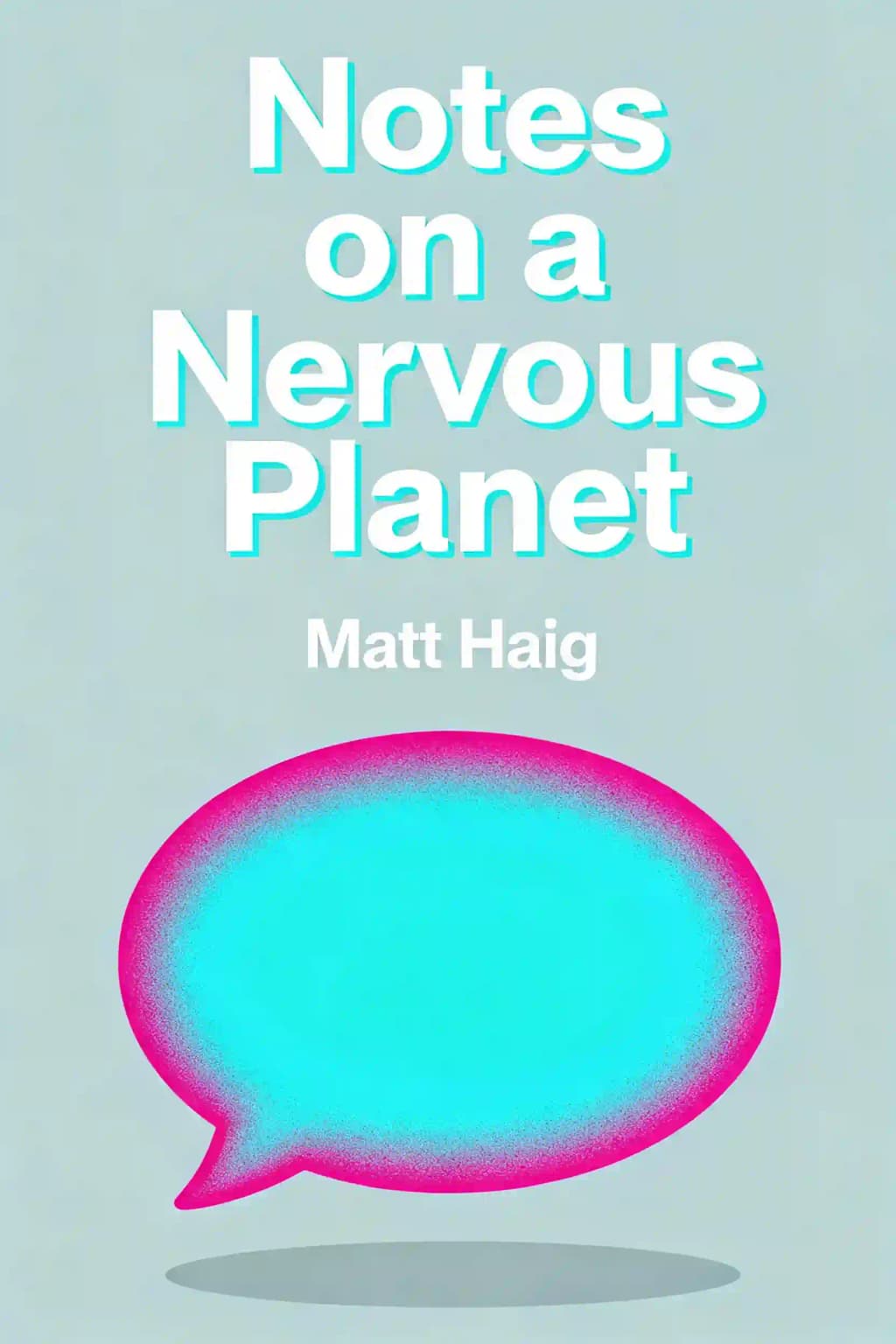
In "Notes on a Nervous Planet," Matt Haig offers a lifeline through our anxiety-inducing digital age. This Sunday Times bestseller has sparked global conversations about mental health, prompting thousands to reassess their relationship with technology. Can disconnecting actually help us reconnect with ourselves?
Matt Haig, the internationally bestselling author of Notes on a Nervous Planet, is celebrated for his profound explorations of mental health, resilience, and modern-day anxiety.
A British writer whose works span fiction, non-fiction, and children’s literature, Haig draws from his own struggles with depression and panic disorder, detailed in his memoir Reasons to Stay Alive. This memoir was a #1 Sunday Times bestseller that spent 46 weeks in the UK top 10.
His genre-defying narratives, from the speculative fiction of The Midnight Library to the alien perspective on humanity in The Humans, merge philosophical depth with accessible storytelling. Haig’s insights have been featured on BBC Radio 2 and in global media, amplifying his role as a mental health advocate.
With over three million books sold worldwide, his works, including How to Stop Time and The Radleys, have been translated into 40+ languages. His book A Boy Called Christmas was adapted into a major film.
Notes on a Nervous Planet explores how modern life—including technology overload, social media, and societal pressures—exacerbates anxiety and stress. Matt Haig blends personal anecdotes, philosophical reflections, and actionable advice to help readers navigate a world that often feels overwhelming. Key themes include mental health awareness, digital detox strategies, and redefining success beyond materialism.
This book is ideal for anyone feeling overwhelmed by modern life’s pace, particularly those struggling with anxiety, burnout, or digital fatigue. Fans of Haig’s Reasons to Stay Alive, mental health advocates, and readers seeking a blend of memoir and self-help will find it resonant. It’s also valuable for individuals reevaluating their relationship with technology.
Yes, for its relatable insights into managing anxiety in a hyperconnected world. Haig’s candid storytelling and practical tips—like prioritizing “less stuff to do” over productivity—offer solace. However, some critics note repetitive themes or a lack of depth in solutions. Overall, it’s praised for its accessibility and timely relevance.
Haig critiques social media’s role in fostering comparison, reducing attention spans, and distorting reality. He advises intentional usage—like designated offline hours—to mitigate its mental toll. A standout quote: “Being unhappy about your looks is not about your looks” challenges superficial digital narratives.
While both address mental health, Reasons to Stay Alive focuses on Haig’s personal depression journey, whereas Notes examines external societal triggers. Readers praise Reasons for its raw intimacy but favor Notes for its broader cultural critique.
Some reviewers find the advice oversimplified or repetitive, citing lists and bullet points as lacking depth. Others argue it states obvious truths about modern life without novel solutions. However, most agree its strength lies in validating shared struggles.
Haig advocates “unplugging” rituals, like tech-free mornings or nature walks, to reclaim mental space. He emphasizes mindful consumption: “Do something in the day that isn’t work or duty or the internet.” These practices aim to reduce overwhelm and foster presence.
Haig critiques hustle culture’s unsustainable pace, urging readers to reject the “race we’re losing.” He reframes balance as “stripping back” obligations, not multitasking. The goal: align daily actions with personal values, not societal expectations.
As AI and digital saturation intensify, Haig’s warnings about technology’s mental health toll grow more urgent. The book’s focus on intentional living, resilience, and redefining progress resonates amid rising burnout and screen-time debates.
Yes, Haig provides concise strategies:
These steps aim to build mental “buffer zones” against external chaos.
저자의 목소리로 책을 느껴보세요
지식을 흥미롭고 예시가 풍부한 인사이트로 전환
핵심 아이디어를 빠르게 캡처하여 신속하게 학습
재미있고 매력적인 방식으로 책을 즐기세요
How do we stay sane on a planet that seems increasingly designed to drive us mad?
We're essentially cavemen in a world that arrived faster than our minds and bodies expected.
There is nothing either good or bad, but thinking makes it so.
We've temporarily solved the problem of scarcity and replaced it with the problem of excess.
Notes on a Nervous Planet의 핵심 아이디어를 이해하기 쉬운 포인트로 분해하여 혁신적인 팀이 어떻게 창조하고, 협력하고, 성장하는지 이해합니다.
Notes on a Nervous Planet을 빠른 기억 단서로 압축하여 솔직함, 팀워크, 창의적 회복력의 핵심 원칙을 강조합니다.

생생한 스토리텔링을 통해 Notes on a Nervous Planet을 경험하고, 혁신 교훈을 기억에 남고 적용할 수 있는 순간으로 바꿉니다.
무엇이든 물어보고, 목소리를 선택하고, 진정으로 공감되는 인사이트를 함께 만들어보세요.

샌프란시스코에서 컬럼비아 대학교 동문들이 만들었습니다
"Instead of endless scrolling, I just hit play on BeFreed. It saves me so much time."
"I never knew where to start with nonfiction—BeFreed’s book lists turned into podcasts gave me a clear path."
"Perfect balance between learning and entertainment. Finished ‘Thinking, Fast and Slow’ on my commute this week."
"Crazy how much I learned while walking the dog. BeFreed = small habits → big gains."
"Reading used to feel like a chore. Now it’s just part of my lifestyle."
"Feels effortless compared to reading. I’ve finished 6 books this month already."
"BeFreed turned my guilty doomscrolling into something that feels productive and inspiring."
"BeFreed turned my commute into learning time. 20-min podcasts are perfect for finishing books I never had time for."
"BeFreed replaced my podcast queue. Imagine Spotify for books — that’s it. 🙌"
"It is great for me to learn something from the book without reading it."
"The themed book list podcasts help me connect ideas across authors—like a guided audio journey."
"Makes me feel smarter every time before going to work"
샌프란시스코에서 컬럼비아 대학교 동문들이 만들었습니다

Notes on a Nervous Planet 요약을 무료 PDF 또는 EPUB으로 받으세요. 인쇄하거나 오프라인에서 언제든 읽을 수 있습니다.
Your phone buzzes. Again. It's 11 PM and you're scrolling through headlines about climate disasters, political chaos, and economic uncertainty while simultaneously checking how many likes your last post got. Your heart rate quickens. You tell yourself you'll put the phone down in just a minute, but an hour later you're still there, caught in an endless loop of refreshing, scrolling, comparing. Sound familiar? We're living in a strange contradiction-objectively, life has never been safer or more comfortable, yet anxiety and depression rates are climbing worldwide. Despite longer lifespans, better medicine, and technology that promises to connect us, we feel more isolated and overwhelmed than ever. This isn't coincidence. Our ancient brains are colliding with a modern world that moves faster than our biology can handle, creating what can only be described as a collective nervous breakdown. The question isn't whether modern life is making us anxious-it's how we stay sane in a world seemingly designed to drive us mad.