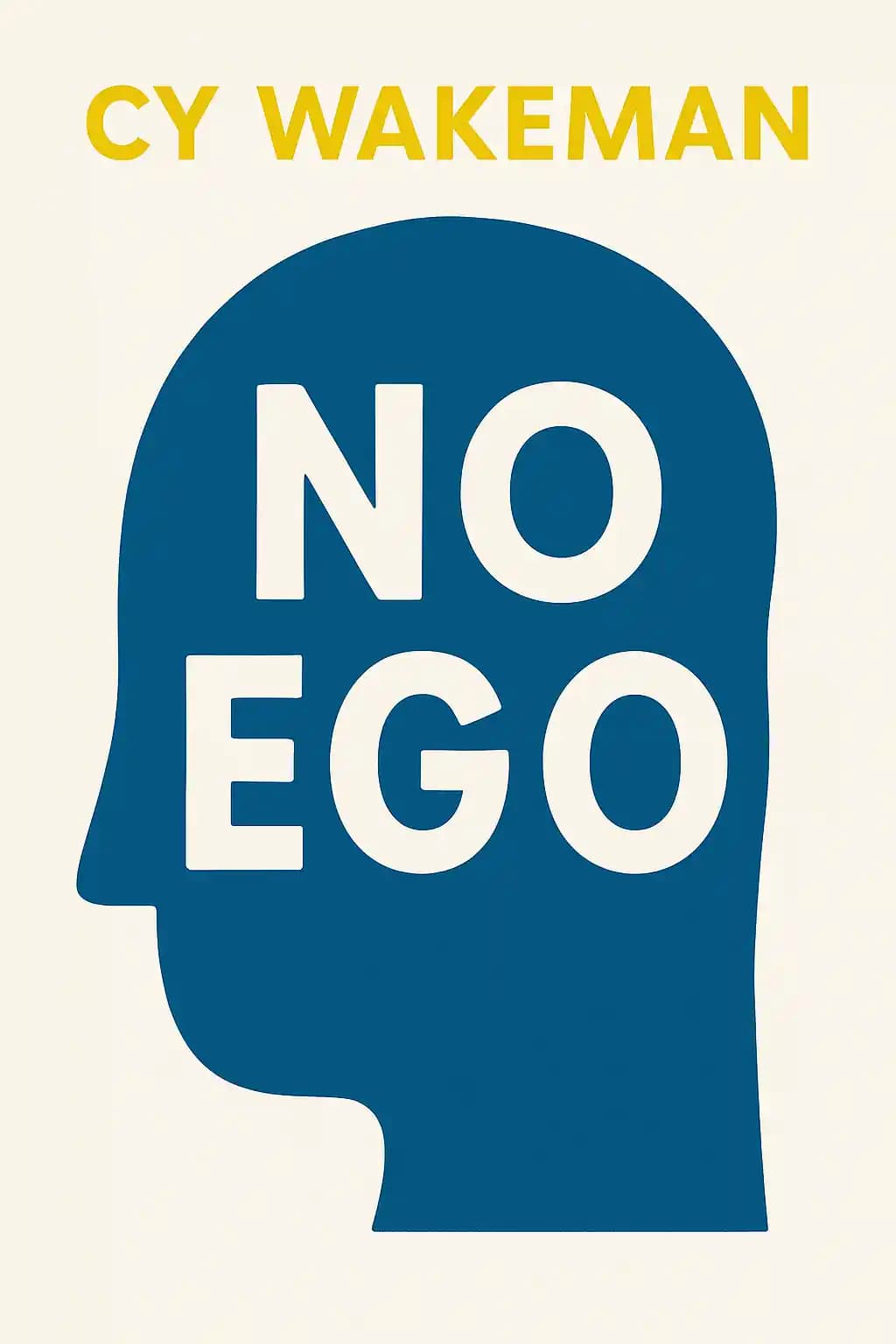
"No Ego" exposes the hidden cost of workplace drama - 2.5 hours daily wasted by leaders. Cy Wakeman's reality-based approach has transformed organizations by replacing emotional waste with accountability. What if eliminating drama, not managing it, is the key to breakthrough results?
Cy Wakeman, New York Times bestselling author of No Ego: How to Cut the Cost of Drama, End Entitlement, and Drive Big Results, is a globally recognized leadership expert and drama researcher. A Certified Speaking Professional and 2023 World’s #1 Leadership Guru, her Reality-Based Leadership philosophy empowers organizations to eliminate workplace conflict and foster accountability. With over 25 years of experience, Wakeman has advised Fortune 500 companies like Google, NASA, and Bank of America, blending practical strategies with psychological insights to address leadership challenges.
Her work extends beyond No Ego to include acclaimed titles like Reality-Based Leadership: Ditch the Drama, Restore Sanity to the Workplace and Life’s Messy, Live Happy, which further explore resilience and mental clarity in professional and personal contexts.
A frequent contributor to Forbes, Business Insider, and The Huffington Post, she hosts the No Ego podcast and a viral weekly leadership newsletter reaching over 30,000 subscribers. Inducted into the Speaker Hall of Fame in 2024, Wakeman’s methods are celebrated for transforming workplace culture worldwide, with her keynotes ranking her among the top 3% of global speakers.
No Ego by Cy Wakeman provides a reality-based leadership framework to eliminate workplace drama, reduce emotional waste, and drive results by fostering personal accountability. The book critiques traditional management practices like open-door policies and entitlement-driven engagement strategies, offering tools to help leaders redirect energy toward productivity. Key concepts include self-reflection, accountability filters, and dismantling ego-driven behaviors.
Leaders, managers, and HR professionals seeking to reduce workplace conflict and improve team performance will benefit most. It’s ideal for those navigating entitlement, low accountability, or excessive drama in organizations. Cy Wakeman’s strategies are particularly relevant for industries like healthcare, tech, and finance, where she has partnered with firms like Google and NASA.
Yes, No Ego is praised for its actionable insights into cutting organizational drama and boosting accountability. It’s recommended for leaders tired of conventional engagement tactics and seeking a results-driven approach. The book includes self-assessment tools and real-world examples, making it a practical guide for transforming workplace culture.
Reality-Based Leadership focuses on confronting facts over emotions, bypassing ego, and empowering employees to solve problems through self-reflection. Key principles include rejecting victim mentalities, minimizing emotional waste, and using accountability metrics to drive decisions. Wakeman emphasizes equipping teams to adapt to change rather than dwell on complaints.
Wakeman argues open-door policies often enable unproductive venting and drama. Instead of resolving issues, they create cycles of dependency where employees seek validation rather than solutions. She advocates replacing open-door hours with structured problem-solving questions like, “How can you contribute to fixing this?” to foster accountability.
The book redefines engagement by pairing it with accountability, arguing traditional methods create entitlement. Wakeman suggests using “accountability filters” to prioritize feedback from high-performing employees and linking engagement to business outcomes, not just satisfaction. This shifts focus from perks to measurable results.
Key tools include:
Wakeman advises leaders to set clear expectations, reject “victim” narratives, and reward problem-solving over complaining. For example, instead of accommodating unreasonable demands, ask, “How can you adapt to this constraint?” This reinforces personal responsibility and reduces entitlement.
Some argue Wakeman’s approach oversimplifies complex workplace dynamics or dismisses valid emotional concerns. Critics suggest it risks alienating employees who feel unheard. However, supporters counter that the book targets unproductive drama, not genuine issues, and provides a pathway to healthier dialogue.
Unlike books focusing on empathy or motivation, No Ego prioritizes accountability and actionable problem-solving. It contrasts with works like Radical Candor by avoiding “nice” feedback and instead fostering self-driven solutions. Wakeman’s data-driven approach appeals to leaders seeking tangible cultural shifts.
With remote work and rapid organizational changes amplifying drama, Wakeman’s strategies help teams adapt without emotional friction. The book addresses hybrid work challenges, generational entitlement, and burnout by teaching employees to control their responses to stress.
Key quotes include:
저자의 목소리로 책을 느껴보세요
지식을 흥미롭고 예시가 풍부한 인사이트로 전환
핵심 아이디어를 빠르게 캡처하여 신속하게 학습
재미있고 매력적인 방식으로 책을 즐기세요
The ego is not your amigo.
Ego talks you out of discomfort.
Stop believing everything you think.
Reality doesn't cause suffering; attachment to how things 'should be' does.
No Ego의 핵심 아이디어를 이해하기 쉬운 포인트로 분해하여 혁신적인 팀이 어떻게 창조하고, 협력하고, 성장하는지 이해합니다.
No Ego을 빠른 기억 단서로 압축하여 솔직함, 팀워크, 창의적 회복력의 핵심 원칙을 강조합니다.

생생한 스토리텔링을 통해 No Ego을 경험하고, 혁신 교훈을 기억에 남고 적용할 수 있는 순간으로 바꿉니다.
무엇이든 물어보고, 목소리를 선택하고, 진정으로 공감되는 인사이트를 함께 만들어보세요.

샌프란시스코에서 컬럼비아 대학교 동문들이 만들었습니다
"Instead of endless scrolling, I just hit play on BeFreed. It saves me so much time."
"I never knew where to start with nonfiction—BeFreed’s book lists turned into podcasts gave me a clear path."
"Perfect balance between learning and entertainment. Finished ‘Thinking, Fast and Slow’ on my commute this week."
"Crazy how much I learned while walking the dog. BeFreed = small habits → big gains."
"Reading used to feel like a chore. Now it’s just part of my lifestyle."
"Feels effortless compared to reading. I’ve finished 6 books this month already."
"BeFreed turned my guilty doomscrolling into something that feels productive and inspiring."
"BeFreed turned my commute into learning time. 20-min podcasts are perfect for finishing books I never had time for."
"BeFreed replaced my podcast queue. Imagine Spotify for books — that’s it. 🙌"
"It is great for me to learn something from the book without reading it."
"The themed book list podcasts help me connect ideas across authors—like a guided audio journey."
"Makes me feel smarter every time before going to work"
샌프란시스코에서 컬럼비아 대학교 동문들이 만들었습니다

No Ego 요약을 무료 PDF 또는 EPUB으로 받으세요. 인쇄하거나 오프라인에서 언제든 읽을 수 있습니다.
What if I told you that every single day, you're burning nearly two and a half hours on absolutely nothing? Not lunch breaks or coffee chats-those have value. I'm talking about pure, unproductive drama: the venting sessions about impossible bosses, the hallway conspiracies about unfair policies, the endless loops of "they should have" and "why can't they just." This isn't harmless stress relief. It's what gets called "emotional waste," and it's quietly bankrupting organizations while exhausting everyone inside them. The math is staggering: 816 hours per person annually-that's over 20 full work weeks spent spinning wheels in mental mud. And here's the kicker: despite decades of team-building retreats, communication workshops, and employee engagement surveys, the problem has only gotten worse. Why? Because we've been treating the symptoms while feeding the disease. Think about the last time you didn't get something you wanted at work-a promotion, a project, recognition. What story did you tell yourself? Chances are, it went something like this: "They don't appreciate me. The system is rigged. My boss plays favorites." Now here's the uncomfortable question: what if that story is complete fiction? Your ego functions as an unreliable narrator, constantly spinning events to protect your self-image. It's like having a defense attorney in your head who never rests, always building cases for why you're right and everyone else is wrong. When someone finally got that promotion you wanted, did you immediately recognize they stayed late, collaborated generously, kept leadership informed, and pursued additional training? Probably not. Your ego was too busy writing a different script. This isn't a character flaw-it's human nature. But it's also the root of nearly every unproductive hour you'll spend at work. The ego doesn't just distort reality; it actively prevents you from seeing the truth that could actually help you grow. It transforms every setback into someone else's fault and every challenge into evidence of unfair treatment. Meanwhile, reality sits there, patient and unchanging, offering straightforward information about what actually works.