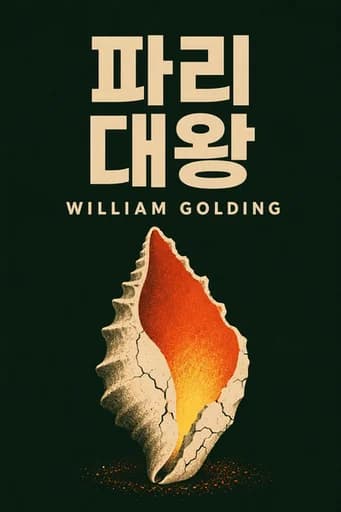
Lord of the flies
a novel
Lord of the flies 개요
Stranded schoolboys descend into savagery on a deserted island - a Nobel Prize-winning exploration of humanity's darkest instincts. Banned yet beloved, this 1954 classic influenced "The Hunger Games" and continues challenging readers: what veneer of civilization might you shed when nobody's watching?
Lord of the flies의 핵심 주제
- societal breakdown
- innate human depravity
- civilization versus savagery
- loss of innocence
- primal fear
Lord of the flies의 명언
This belongs to us.
Next time there would be no mercy.
What are we? Humans? Or animals? Or savages?
Bollocks to the rules! We're strong-we hunt!
The silence that follows is the sound of innocence beginning to crack.
Lord of the flies의 등장인물
- RalphThe athletic, fair-haired elected chief
- PiggyAn intellectual, asthmatic boy with glasses
- Jack MerridewThe authoritarian leader of the choir and hunters
- RogerJack's lieutenant who tests the limits of taboos
저자 소개
Lord of the flies의 저자 소개
Sir William Gerald Golding (1911–1993), Nobel Prize-winning author of Lord of the Flies, was a British novelist renowned for his incisive explorations of human nature and morality.
A veteran of World War II, Golding served in the Royal Navy, an experience that deeply influenced his examination of civilization’s fragility and humanity’s inherent brutality. Lord of the Flies, his debut allegorical novel, merges gripping survivalist fiction with themes of societal collapse, innocence lost, and the darkness within human psychology.
Golding’s literary authority is cemented by works like Rites of Passage (Booker Prize winner, 1980) and Darkness Visible, which further dissect existential and ethical dilemmas. His writing is celebrated for blending mythic universality with stark realism, a style recognized by the Nobel Committee as “illuminating the human condition.”
Lord of the Flies remains a modern classic, translated into over 30 languages and widely taught as essential literature for its unflinching portrayal of humanity’s dual nature.
Lord of the flies 요약 다운로드
Lord of the flies 요약을 무료 PDF 또는 EPUB으로 받으세요. 인쇄하거나 오프라인에서 언제든 읽을 수 있습니다.
이 책에 대한 FAQ
Lord of the Flies explores the descent into savagery among a group of British boys stranded on an uninhabited island. Through allegorical storytelling, the novel examines human nature’s inherent darkness, the fragility of civilization, and the conflict between primal instincts and societal order. Key symbols like the conch shell and the “beast” underscore themes of power, fear, and moral decay.
This book is ideal for readers interested in psychological allegories, moral philosophy, or dystopian literature. Students analyzing themes like civilization vs. savagery, educators teaching symbolic storytelling, and fans of classics like 1984 or The Hunger Games will find it compelling. Its exploration of human nature remains relevant for modern discussions about societal collapse and ethical behavior.
Yes—Golding’s masterful use of symbolism and gripping narrative make it a timeless critique of human behavior. It offers profound insights into group dynamics, fear-driven decision-making, and the loss of innocence. The novel’s enduring relevance in psychology, leadership studies, and ethics cements its status as a must-read classic.
The conch represents order, democracy, and civilized communication. Initially used to organize meetings, its eventual destruction marks the boys’ complete descent into chaos. The shell’s fading influence mirrors the collapse of structured society and the rise of tribal authoritarianism.
Piggy’s glasses embody intellectualism, scientific reasoning, and the power of innovation. Used to start fires, they become a target for Jack’s tribe, symbolizing the rejection of logic in favor of brute force. Their destruction signifies the triumph of ignorance over knowledge.
The severed sow’s head, dubbed the “Lord of the Flies,” symbolizes innate human evil and the psychological “beast” within. Simon’s hallucinatory conversation with it reveals the novel’s central thesis: darkness originates not from external threats but from humanity’s primal instincts.
Major themes include:
- Civilization vs. savagery: The boys’ struggle to maintain order versus their regression to violence.
- Loss of innocence: The transformation from disciplined children to merciless hunters.
- Power dynamics: Jack’s authoritarian rule contrasted with Ralph’s democratic ideals.
- Fear and mob mentality: The “beast” as a manifestation of collective paranoia.
The island mirrors the biblical Garden of Eden, initially pristine but corrupted by human presence. Its gradual destruction reflects humanity’s capacity for environmental and moral degradation. The boys’ inability to sustain it underscores the fragility of utopian ideals.
The “beast” symbolizes the primal fear and inherent evil within each boy. While initially perceived as a physical threat, it ultimately represents psychological darkness—a metaphor for humanity’s capacity for violence when freed from societal constraints.
Golding employs dense symbolism to critique human nature:
- The signal fire: Hope and the desire for rescue, juxtaposed with destructive wildfires.
- The ocean: Isolation and the insurmountable divide between the boys and civilized society.
- Face paint: Dehumanization and the masking of individuality to enable violence.
As an allegory, the novel parallels biblical themes (the Fall of Man) and political critiques (the failure of democracy). The boys’ microcosm reflects macrocosmic societal collapses, suggesting that civilization is a thin veneer over humanity’s inherent brutality.
Golding argues that societal structures are fleeting safeguards against humanity’s natural savagery. The boys’ rapid abandonment of rules, adoption of tribalism, and scapegoating of outsiders mirror real-world authoritarianism and moral hypocrisy. The ending—their rescue by a naval officer—ironically contrasts the island’s chaos with the adult world’s wartime violence, implying cyclical human failure.