Unmask the silent saboteur in your life. Since 1993, Wetzler's psychological classic has helped thousands recognize passive-aggressive patterns that poison relationships. With a 4.04/5 Goodreads rating, it reveals: Are you unknowingly playing victim, manager, or rescuer in your own relationship drama?
Scott Wetzler, Ph.D., clinical psychologist and bestselling author of Living with the Passive-Aggressive Man, is a leading authority on relationship dynamics and passive-aggressive behavior. A professor of psychiatry at Albert Einstein College of Medicine and Vice Chairman of Psychiatry at Montefiore Medical Center, Wetzler combines decades of clinical experience with research to address communication challenges in personal and professional relationships.
His work extends beyond academia as CEO of University Behavioral Associates, where he oversees innovative behavioral health programs funded by institutions like the US Department of Health and Human Services.
Wetzler’s expertise has been featured in The Atlantic, where he advocated for government-funded relationship education, and his book has been translated into six languages, including German, Japanese, and Chinese. Recognized for blending actionable advice with psychological insights, he bridges clinical rigor with accessible self-help strategies. Living with the Passive-Aggressive Man remains a seminal resource, cited by therapists and recommended in media for its nuanced approach to understanding covert emotional patterns.
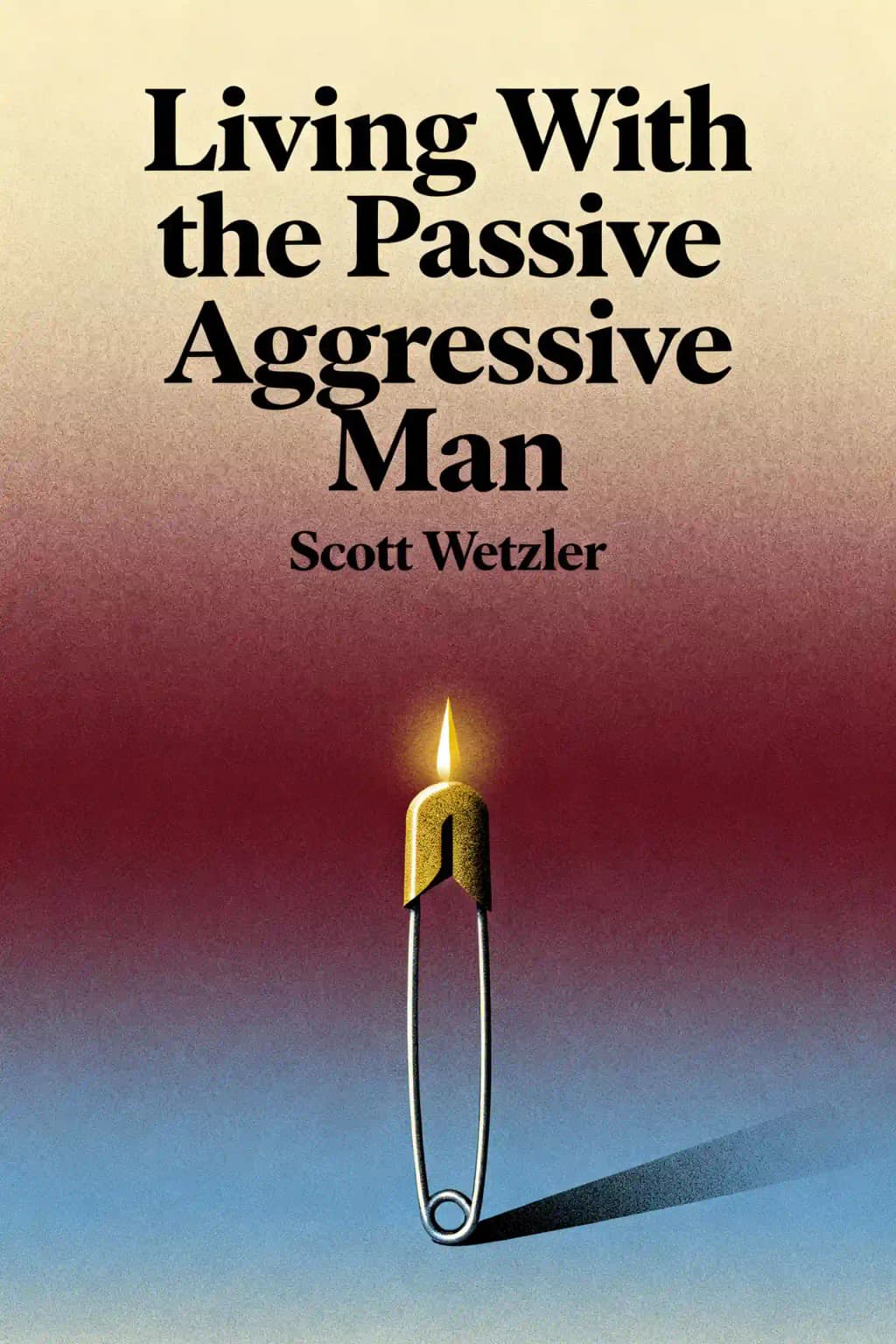
Living with the Passive-Aggressive Man by Scott Wetzler explores how to identify and address passive-aggressive behaviors in men through clinical case studies. It analyzes root causes like repressed anger and fear, offering strategies to improve relationships and workplace dynamics. The book emphasizes recognizing patterns like procrastination, indirect hostility, and emotional withdrawal.
This book is essential for partners, family members, or colleagues of men who exhibit avoidance, sarcasm, or covert defiance. It’s also valuable for therapists and HR professionals seeking frameworks to address passive-aggressive behavior in personal or professional settings.
Yes—with over 100,000 copies sold, the book provides actionable tools to break cycles of frustration. Readers praise its clear analysis of behaviors like the “catch-me-if-you-can” lover or manipulative coworker, coupled with tactics to set boundaries without escalating conflict.
Key concepts include:
Wetzler describes it as hostility masked by passivity, often expressed through procrastination, backhanded compliments, or silent treatment. He links it to unresolved anger and fear of confrontation, using examples like spouses delaying chores or coworkers undermining projects.
Some readers note the book focuses more on accommodating passive-aggressive men than holding them accountable. Others critique its heteronormative examples, though its principles apply broadly.
It teaches assertiveness techniques to counter indirect hostility, such as using “I” statements and refusing to engage in mind games. Wetzler emphasizes clarity over emotional reactivity to reduce misunderstandings.
Unlike broader conflict-resolution guides, Wetzler’s work specifically decodes male passive-aggression using clinical insights. It complements books on emotional intelligence but stands out for its focus on gendered behavioral patterns.
Yes—the book’s framework helps address issues like passive resistance to authority or guilt-tripping. However, adaptations may be needed for age-appropriate boundary-setting.
Passive-aggression remains prevalent in modern relationships and workplaces, especially in hybrid environments where indirect communication thrives. The book’s case studies mirror contemporary issues like ghosting or digital conflict avoidance.
저자의 목소리로 책을 느껴보세요
지식을 흥미롭고 예시가 풍부한 인사이트로 전환
핵심 아이디어를 빠르게 캡처하여 신속하게 학습
재미있고 매력적인 방식으로 책을 즐기세요
Passive-aggression isn't simply alternating between passive and aggressive behaviors.
Passivity used as a power play can provoke as much anger as active hostility.
Have you ever questioned your own sanity in a relationship?
Once you doubt yourself, he seizes the upper hand.
Without you, he's just a man with personality problems; with you, he exercises emotional power.
Living with the passive-aggressive man의 핵심 아이디어를 이해하기 쉬운 포인트로 분해하여 혁신적인 팀이 어떻게 창조하고, 협력하고, 성장하는지 이해합니다.
Living with the passive-aggressive man을 빠른 기억 단서로 압축하여 솔직함, 팀워크, 창의적 회복력의 핵심 원칙을 강조합니다.

생생한 스토리텔링을 통해 Living with the passive-aggressive man을 경험하고, 혁신 교훈을 기억에 남고 적용할 수 있는 순간으로 바꿉니다.
무엇이든 물어보고, 목소리를 선택하고, 진정으로 공감되는 인사이트를 함께 만들어보세요.

샌프란시스코에서 컬럼비아 대학교 동문들이 만들었습니다
"Instead of endless scrolling, I just hit play on BeFreed. It saves me so much time."
"I never knew where to start with nonfiction—BeFreed’s book lists turned into podcasts gave me a clear path."
"Perfect balance between learning and entertainment. Finished ‘Thinking, Fast and Slow’ on my commute this week."
"Crazy how much I learned while walking the dog. BeFreed = small habits → big gains."
"Reading used to feel like a chore. Now it’s just part of my lifestyle."
"Feels effortless compared to reading. I’ve finished 6 books this month already."
"BeFreed turned my guilty doomscrolling into something that feels productive and inspiring."
"BeFreed turned my commute into learning time. 20-min podcasts are perfect for finishing books I never had time for."
"BeFreed replaced my podcast queue. Imagine Spotify for books — that’s it. 🙌"
"It is great for me to learn something from the book without reading it."
"The themed book list podcasts help me connect ideas across authors—like a guided audio journey."
"Makes me feel smarter every time before going to work"
샌프란시스코에서 컬럼비아 대학교 동문들이 만들었습니다

Living with the passive-aggressive man 요약을 무료 PDF 또는 EPUB으로 받으세요. 인쇄하거나 오프라인에서 언제든 읽을 수 있습니다.
Have you ever felt like you're fighting a ghost? That's the experience of dealing with a passive-aggressive man. The maddening dynamic involves loving someone who says "yes" while meaning "no," who promises connection while creating distance, and who turns every interaction into a power struggle while claiming innocence. Passive-aggression isn't simply alternating between passive and aggressive behaviors - it's a simultaneous blend where aggression is expressed through passivity. The passive-aggressive man renounces his hostility even as he delivers it, creating constant mixed messages that blur the line between appearance and reality. His communication resembles double-speak: "I can't live without you" while thinking "Why are you around all the time?" What distinguishes him from someone who's merely passive is the element of control. Passivity used as a power play can provoke as much anger as active hostility. He delivers small doses of hostility just large enough to irritate while maintaining plausible deniability. Behind the "Mr. Nice Guy" facade lies an angry man afraid of his own anger, simmering with resentment and fear.