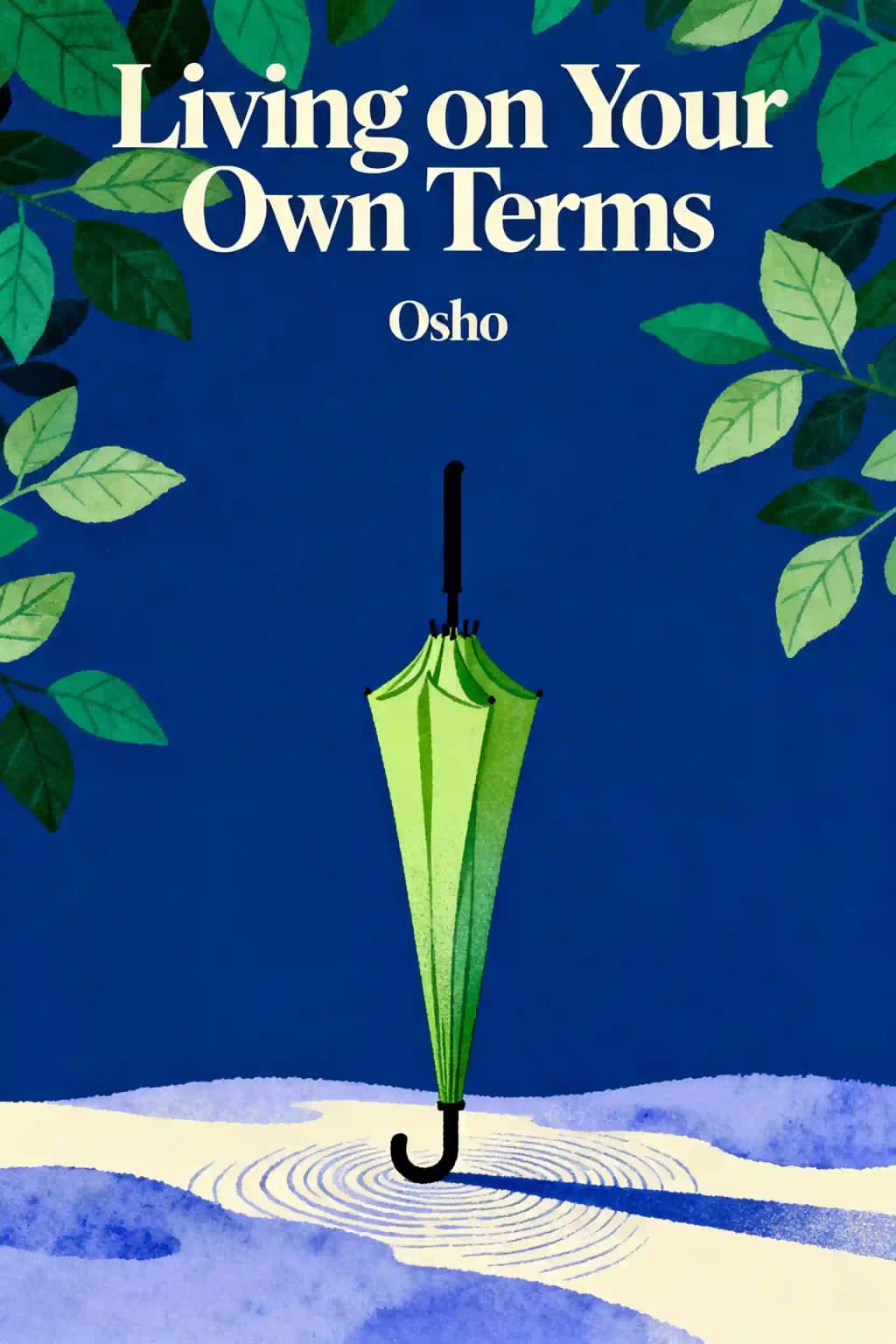
Osho's radical manifesto challenges you to shatter societal chains and discover authentic freedom. Named among the "1000 Makers of the 20th Century," his controversial teachings sparked global communes and influenced countless seekers. What outdated beliefs are quietly controlling your life?
Osho (Rajneesh Chandra Mohan Jain, 1931–1990) was a provocative spiritual guru and the bestselling author of Living on Your Own Terms. He revolutionized modern self-help and mindfulness discourse with his fusion of Eastern philosophy and Western individualism.
Born in rural India and educated in philosophy, Osho rose to prominence in the 1970s as a charismatic speaker and meditation pioneer, founding ashrams that attracted global seekers.
His works, including The Ultimate Risk and Death Comes Dancing, challenge societal norms while exploring themes of personal freedom, consciousness, and rebellion against dogma.
Osho is credited with creating Dynamic Meditation—a cathartic practice adopted by therapists worldwide. His teachings gained renewed attention through Netflix’s Wild Wild Country documentary. Translated into over 50 languages, his books have sold millions of copies, with 600,000 sold in China in a single year during the 1990s.
Living on Your Own Terms explores authentic self-discovery and inner freedom, challenging societal conditioning and fear-based living. Osho argues that real rebellion means questioning inherited beliefs, embracing individuality, and living consciously in the present moment. The book combines philosophical insights with practical guidance to help readers break free from external expectations and cultivate self-awareness.
This book is ideal for seekers of personal growth, spiritual enthusiasts, and individuals navigating life transitions. It resonates with those questioning societal norms, aspiring to live authentically, or seeking tools to overcome fear and conformity. Osho’s teachings cater to readers open to unconventional perspectives on freedom and self-realization.
Yes, for its provocative insights into conscious living and fearlessness. While not a step-by-step guide, it offers timeless wisdom on self-mastery and authenticity. Critics may find its abstract style challenging, but its emphasis on inner exploration makes it valuable for readers seeking philosophical depth.
Key themes include:
Osho distinguishes rebellion from revolution: rebellion is an internal shift toward self-governance, while revolution seeks to replace external systems. Real rebellion involves shedding inherited ideologies and making choices aligned with personal truth, not societal approval.
Some readers may find Osho’s teachings overly abstract or lacking structured guidance. The book’s rejection of societal frameworks could be misinterpreted as promoting impractical idealism. However, supporters argue its value lies in provoking introspection rather than offering prescriptive solutions.
Unlike tactical self-help guides, Osho’s work focuses on dismantling psychological constraints rather than optimizing productivity. It shares themes with The Power of Now (Tolle) in emphasizing mindfulness but stands apart with its radical emphasis on individualism and anti-conformity.
In an era of AI-driven change and cultural upheaval, the book’s message of inner freedom and self-trust resonates. Its critique of systemic conformity aligns with contemporary movements advocating mental health, workplace autonomy, and ethical individualism.
The book advocates aligning work with intrinsic values rather than external prestige or fear-driven choices. By cultivating self-awareness, readers can navigate career transitions with clarity, prioritizing fulfillment over societal definitions of success.
저자의 목소리로 책을 느껴보세요
지식을 흥미롭고 예시가 풍부한 인사이트로 전환
핵심 아이디어를 빠르게 캡처하여 신속하게 학습
재미있고 매력적인 방식으로 책을 즐기세요
Be — don't try to become.
Drop the idea of becoming someone, because you are already a masterpiece. You cannot be improved.
Fighting only gives the old energy it doesn't deserve.
Violence fundamentally violates life and consciousness.
Truth is punished, lies pay.
Living on Your Own Terms의 핵심 아이디어를 이해하기 쉬운 포인트로 분해하여 혁신적인 팀이 어떻게 창조하고, 협력하고, 성장하는지 이해합니다.
Living on Your Own Terms을 빠른 기억 단서로 압축하여 솔직함, 팀워크, 창의적 회복력의 핵심 원칙을 강조합니다.

생생한 스토리텔링을 통해 Living on Your Own Terms을 경험하고, 혁신 교훈을 기억에 남고 적용할 수 있는 순간으로 바꿉니다.
무엇이든 물어보고, 목소리를 선택하고, 진정으로 공감되는 인사이트를 함께 만들어보세요.

샌프란시스코에서 컬럼비아 대학교 동문들이 만들었습니다
"Instead of endless scrolling, I just hit play on BeFreed. It saves me so much time."
"I never knew where to start with nonfiction—BeFreed’s book lists turned into podcasts gave me a clear path."
"Perfect balance between learning and entertainment. Finished ‘Thinking, Fast and Slow’ on my commute this week."
"Crazy how much I learned while walking the dog. BeFreed = small habits → big gains."
"Reading used to feel like a chore. Now it’s just part of my lifestyle."
"Feels effortless compared to reading. I’ve finished 6 books this month already."
"BeFreed turned my guilty doomscrolling into something that feels productive and inspiring."
"BeFreed turned my commute into learning time. 20-min podcasts are perfect for finishing books I never had time for."
"BeFreed replaced my podcast queue. Imagine Spotify for books — that’s it. 🙌"
"It is great for me to learn something from the book without reading it."
"The themed book list podcasts help me connect ideas across authors—like a guided audio journey."
"Makes me feel smarter every time before going to work"
샌프란시스코에서 컬럼비아 대학교 동문들이 만들었습니다

Living on Your Own Terms 요약을 무료 PDF 또는 EPUB으로 받으세요. 인쇄하거나 오프라인에서 언제든 읽을 수 있습니다.
A Hollywood star credits him for career breakthroughs. A tech visionary kept his books on the nightstand. Millions worldwide have transformed their lives through his teachings, yet he remains one of the most controversial figures in modern spirituality. What makes Osho's philosophy so magnetic-and so threatening to conventional society? Perhaps it's because he doesn't offer comfort or quick fixes. Instead, he demands something far more radical: that you become utterly, unapologetically yourself. In a world selling conformity as safety and obedience as virtue, his message cuts through the noise-you don't need to become anything. You already are everything you need to be. The question isn't whether you're worthy of freedom; it's whether you're brave enough to claim it.




