1장
Beyond the Ordinary: Unlocking the Limitless Human Mind
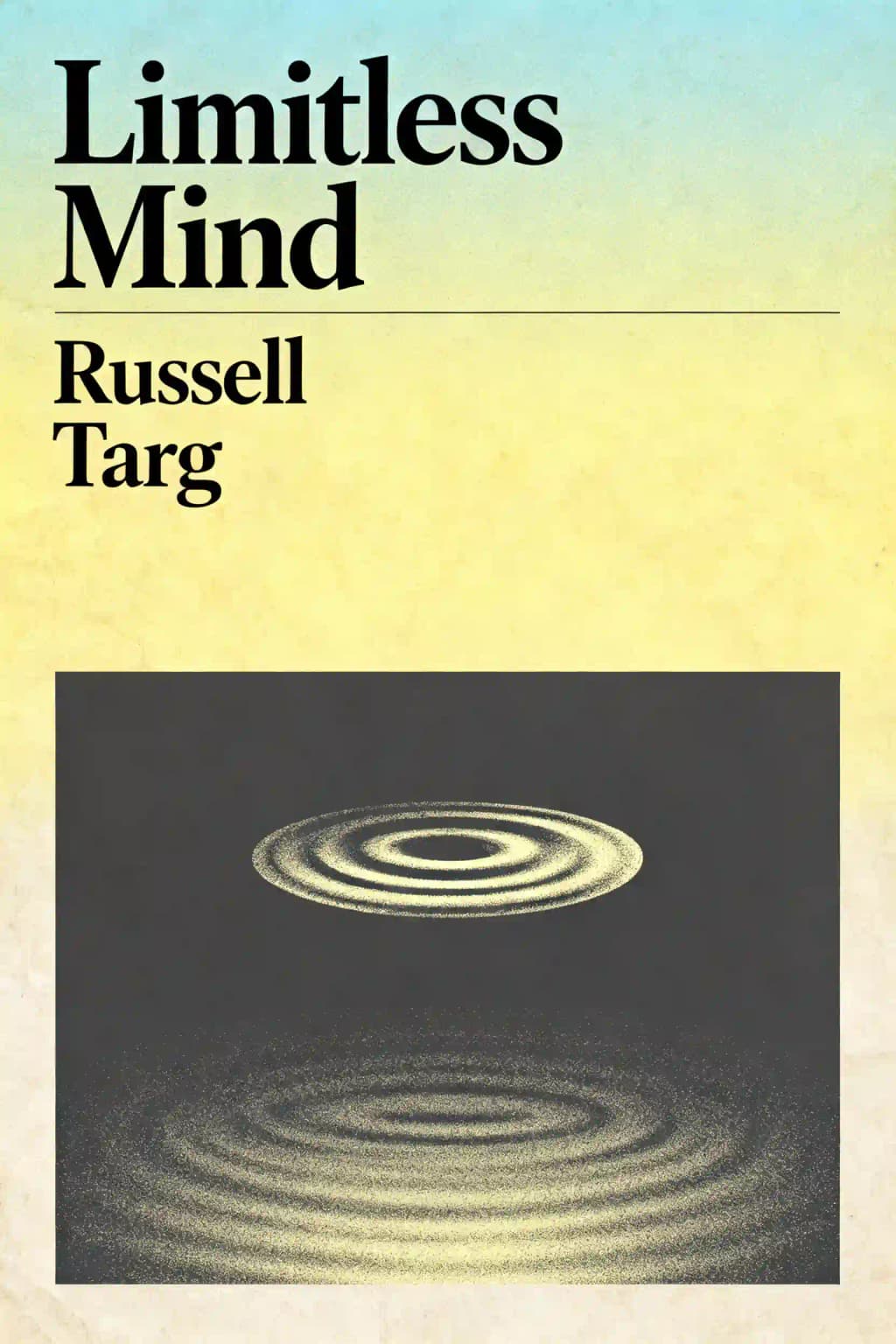
The idea that our minds can transcend the boundaries of space and time might sound like science fiction, but for physicist Russell Targ, it's simply science. As the co-founder of Stanford Research Institute's groundbreaking ESP research program, Targ spent decades gathering compelling evidence that humans possess extraordinary psychic abilities. "Limitless Mind" represents the culmination of this scientific journey, which began during the Cold War when the CIA funded his remote viewing research. The book has garnered praise from luminaries like Deepak Chopra, who called it "a brilliant blend of science and spirituality," and has influenced everyone from Silicon Valley tech executives seeking competitive advantages to spiritual seekers looking for scientific validation of ancient wisdom. What makes this work particularly remarkable is how it bridges the gap between rigorous laboratory research and profound spiritual insights, suggesting that the expansion of consciousness might be humanity's next evolutionary frontier.
2장
The Nonlocal Universe: We Are More Than Our Bodies
Modern physics has revealed a universe far stranger than our everyday experience suggests. The concept of nonlocality-that we can be affected by events distant from our ordinary awareness-forms the foundation of Targ's exploration of psychic phenomena. This isn't just alarming to physicists because it suggests experiments could be influenced by factors beyond their control; it challenges our fundamental understanding of reality itself.
When we speak of nonlocality, we're suggesting that all of space-time is available to your consciousness right where you are. This manifests in both time and space, exemplified by identical twins separated at birth who develop striking similarities in life choices despite never communicating. The data from precognition research even indicates experiments might be affected by signals from the future-a concept that stretches our understanding of causality to its limits.
Psychic phenomena aren't transmitted through electromagnetic signals but exist as information always present and accessible through intention. In remote viewing and healing, practitioners act as messengers translating impressions from nonlocal space. As physicist John Wheeler suggested, the explanation for psi abilities will likely be found in the geometry of space-time rather than electromagnetic fields.
This aligns with Nobel laureate Brian Josephson's view connecting quantum nonlocality with psi phenomena like telepathy and psychokinesis. We aren't separate beings on isolated points in space-time-a revolutionary concept that ancient spiritual traditions have articulated for millennia.
Buddhist teachings propose that distinctions like "here and not here" cause suffering. Aldous Huxley's "perennial philosophy" identifies consciousness as the universe's fundamental building block, with humans having dual local/nonlocal natures. Through meditation, one experiences increasing unity consciousness, realizing "one is not a body; one has a body."
Hinduism teaches that individual consciousness (Atman) and universal consciousness (Brahman) are one-what physicist Erwin Schrodinger considered metaphysics' most profound statement. Judaism, Christianity, and other traditions similarly describe our interconnectedness through concepts like HaShem, Holy Spirit, or collective unconscious.
The Buddhist four-valued logic system helps resolve paradoxes that two-valued Western logic cannot handle. This approach illuminates how we can be both a self and not a self-separated as bodies yet unified in awareness. As Patanjali taught, quieting the mind achieves union with the divine, naturally allowing psychic abilities to emerge from this stillness.
3장
Remote Viewing: The Science of Psychic Perception
Remote viewing demonstrates nonlocal mind in action-a scientifically validated ability to perceive and describe distant locations or objects without using the physical senses. When Targ and Dr. Hal Puthoff established their psychic research program at Stanford Research Institute in 1972, they weren't exploring fringe pseudoscience; they were conducting rigorous experiments that would eventually be published in Nature, one of science's most prestigious journals.
Their work identified four practical applications for remote viewing: evaluation (weighing alternatives by combining psychic ability with intuition), location (finding valuable objects, minerals, or missing people), diagnosis (identifying medical problems, mechanical issues, safety hazards), and forecasting (predicting earthquakes, political conditions, technological developments, weather, and financial markets).
The Hearst kidnapping case dramatically demonstrated remote viewing's practical value. When nineteen-year-old newspaper heiress Patricia Hearst was kidnapped in 1974, psychic Pat Price correctly identified Donald "Cinque" DeFreeze as the leader from a mug book-a remarkable hit verified within a week. Price also accurately located an abandoned white station wagon used by the kidnappers, describing its position near a highway overpass, restaurant, and two large white storage tanks.
Despite compelling evidence for psychic abilities, organizations like CSICOP (Committee for the Scientific Investigation of Claims of the Paranormal) actively work to discredit researchers. As psychic Ingo Swann aptly noted, establishing unresolvable guilt among parapsychologists keeps the field subdued and unproductive.
The Ganzfeld studies represent the most carefully examined data on psi functioning. These "Auto-Ganzfeld" experiments isolated researchers, senders, and receivers from each other, with target videotapes selected automatically by computer. With an expected 25% chance success rate, the actual hit rate across 354 sessions with 240 people was 32%-a result with odds against chance of 500 to 1. The most successful study involved twenty classical music and modern dance students from the Julliard School, who achieved a remarkable 50-percent success rate-twice what chance would predict.
Through decades of research, scientists have learned that remote viewers can contact and describe distant targets using only geographical coordinates or other "addresses," without anyone present needing to know the correct location. Inexperienced viewers more reliably describe a target's shape, form, and color than its function. Beyond visual imagery, viewers may perceive associated feelings, sounds, smells, and even electrical or magnetic fields.
Remarkably, viewers can perceive present, past, and future activities at target sites with equal facility. Research consistently shows that accuracy and resolution remain unaffected by distances up to ten thousand miles. Faraday-cage screen rooms and underwater shielding that block electromagnetic waves have no negative effects on remote viewing-some viewers even prefer such environments.
4장
Precognition: Our Minds Beyond Time
Precognition-the ability to expand awareness through time as well as space-provides powerful evidence of our timeless existence. This ability allows our peaceful mind to reside outside of time, free from depression about the past, anxiety about the future, or fear of the present.
Precognitive dreams are probably the most common psychic occurrence for average people, offering glimpses of future events. Rather than seeing these as predictions, Targ proposes that the future experience actually causes the earlier dream-an example of retrocausality where the future affects the past. These dreams have a distinctive clarity and often contain bizarre or unfamiliar material, distinguishing them from ordinary anxiety or wish-fulfillment dreams.
Research on precognition is substantial and compelling. Honorton and Ferrari examined 309 precognition experiments from 1935 to 1987 involving over 50,000 participants and 2 million trials. Thirty percent of these studies showed statistically significant results-six times what would be expected by chance-with overall significance exceeding 10^20 to 1.
Laboratory research demonstrates that our bodies physically anticipate future events. Dean Radin showed that subjects exhibit physiological "orienting responses" seconds before seeing emotionally charged images, with stronger reactions preceding more disturbing pictures. The strongest evidence comes from Zoltan Vassy's work with electric shocks, which consistently produced prestimulus responses because the body never habituates to such stimuli.
In 1982, Targ participated in a team called Delphi Associates that used psychic functioning to predict silver market movements. Since directly reading future numbers is exceptionally difficult, they employed "associative remote viewing"-linking different objects to possible market outcomes. The team achieved nine consecutive correct forecasts, earning over $100,000 and attracting media attention including coverage in the Wall Street Journal.
The Princeton University research by Jahn and Dunne demonstrated that remote viewing accuracy doesn't diminish with increasing distance or time into the future. In their 227 formal experiments, viewers described where researchers would be hiding at a later time with the same accuracy regardless of whether they looked hours or days ahead. The statistical significance was an astonishing one in a hundred billion (10^-11).
The critical question in precognition research is whether viewers see the actual future or merely probable futures. Targ and his daughter Elisabeth designed an experiment using twelve precognitive trials with unequal probabilities of target selection. They found that viewers accurately described the actually chosen object regardless of its probability, suggesting they see the actualized future rather than probable outcomes.
5장
Medical Intuition: The Diagnostic Power of Psychic Perception
Intuitive medical diagnosis represents a sophisticated intersection of analytical thinking and psychic perception. Unlike spiritual healers who channel healing energy without needing to identify specific conditions, intuitive diagnosticians must precisely identify affected body systems, pinpoint imbalances, and understand both the physical manifestations and psychological underpinnings of illness. This requires a unique combination of medical knowledge and heightened intuitive sensitivity.
The analytical naming function in medical intuition demonstrates remarkable accuracy compared to other forms of psychic work, including general remote viewing. This enhanced precision appears linked to practitioners' understanding of human anatomy and physiology - medical terminology and knowledge of bodily systems creates a framework that helps organize and interpret intuitive impressions. Similar to remote viewing protocols, physical distance between patient and diagnostician doesn't diminish accuracy. In fact, many practitioners report clearer readings when physically separated from their subjects, as this reduces sensory distractions and allows for pure intuitive perception.
Edgar Cayce, known as the "sleeping prophet" and America's most documented psychic diagnostician (1877-1943), exemplified this phenomenon through his extensive work. During his 43-year career, he performed over 14,000 clairvoyant readings, including 9,400 health-related diagnoses. His process was distinctive: entering a self-induced hypnotic trance state, Cayce needed only a patient's name and location to provide detailed medical information. His diagnoses were remarkably accurate, often identifying conditions before modern medical testing could confirm them, and his prescribed treatments, frequently incorporating herbal remedies and dietary changes, showed high success rates.
Contemporary medical professionals like Dr. Judith Orloff demonstrate how intuitive abilities can enhance conventional medical practice. As a board-certified psychiatrist, she integrates traditional medical training with psychic perception, creating a comprehensive approach to patient care. In clinical settings, she simultaneously processes verbal information while sensing patients' energetic patterns, allowing her to detect underlying issues that might not surface through conventional examination. Many practitioners utilize the chakra system - seven primary energy centers aligned along the spine from its base to the crown - as a diagnostic framework. Each chakra corresponds to specific physical systems and emotional aspects, providing a structured approach to energetic assessment.
Medical intuitives develop exceptional sensitivity to subtle energetic shifts in both their own bodies and those of others. This heightened awareness often allows them to detect developing health issues before they manifest as physical symptoms. Dr. Mona Lisa Schulz, holding both M.D. and Ph.D. degrees, demonstrates the evolution of these abilities - from her early experiences of instant diagnosis during medical training to her later capacity to perform detailed readings remotely, requiring only basic identifying information like name and age.
The development of intuitive diagnostic abilities follows a structured pathway that combines remote-viewing methodology with medical knowledge. The process involves three distinct phases: the feeling stage (establishing a meditative state of focused attention while noting bodily sensations), the visual stage (conducting systematic energy scans across the body's seven major centers), and the investigative stage (using targeted questions to access deeper subconscious insights). This systematic approach helps practitioners develop reliable and reproducible results while maintaining the integrity of their intuitive perceptions.
6장
Distant Healing: The Power of Intention
Our ability to "outflow" healing energy or intentions to alleviate suffering builds on our capacity to receive information about hidden, distant, or future matters. The concept of distant healing connects to humanity's oldest traditions, from shamans to religious founders like Jesus, who all demonstrated healing abilities.
Two critical questions arise: Can one person's thoughts actually heal another's body from a distance? And what role do the recipient's expectations play? Contemporary research increasingly validates that directed healing intentions can positively impact those in need, challenging our understanding of consciousness and physical reality.
Dr. William Braud spent over three decades researching distant mental influence at the Institute of Transpersonal Psychology. Working with Dr. Marilyn Schlitz, he conducted dozens of experiments showing people could mentally influence others' physiological states from a distance. Their successful, repeatable experiments included affecting blood pressure, skin resistance, gerbil activity, and even fish swimming direction.
Braud and Schlitz demonstrated that simply staring at someone's image on a closed-circuit television could influence their autonomic responses. In seventy-six sessions across four experiments, participants intermittently stared at a monitor showing a distant person, following randomized instructions. The person being observed, who sat quietly with eyes closed, showed significant electrodermal (GSR) responses during staring periods.
Larry Dossey identifies three eras of healing methodology in medical science. Era I encompasses physical therapies like drugs and surgery where the body is viewed as a mechanism following Newtonian principles, with no role for mind. Era II introduces mind-to-body approaches like biofeedback and self-healing imagery, recognizing the psychosomatic connection but still seeing mind as localized in the brain. Era III medicine, emerging in the 1990s, recognizes nonlocal mind that can affect healing across space and time.
Healing practices span from ancient to modern approaches. Laying on of hands appears in both biblical traditions and contemporary practices like Reiki. Noncontact Therapeutic Touch, taught to thousands of nurses, allows practitioners to focus healing energies without physical contact. Healers operate in two primary modes: psychic healing (through an act of will) and spiritual healing (through surrendered connection to a higher power).
A landmark study by Fred Sicher, Elisabeth Targ and colleagues published in the Western Journal of Medicine demonstrated positive effects of distant healing on men with advanced AIDS. In two randomized, double-blind studies, experienced healers from diverse traditions directed healing intentions toward patients they never met. The replication study showed the treatment group experienced significantly fewer outpatient visits (185 vs. 260), fewer hospitalization days (10 vs. 68), less severe illnesses (severity score 16 vs. 43), and less emotional distress compared to controls, with odds against chance of 100 to 1.
7장
The Spiritual Path: Finding Peace in Timeless Awareness
Remote viewing isn't necessarily a spiritual path, but it can lead us there by providing mind-quieting tools that help expand our awareness through space and time. Between the inflow of remote viewing and the outflow of spiritual healing lies an experience of peace and oceanic connection available in the present moment.
Our modern technology risks preventing us from ever experiencing this quiet-a devastating loss. Even brilliant minds like Carl Sagan couldn't find God because they looked outward through telescopes rather than inward through stillness. The spiritual practice for our century involves desiring freedom from conditioned awareness and finding stillness. God isn't an entity but "an activity in consciousness"-a flow of loving awareness accessible when we surrender fear and quiet the mind.
The spiritual teacher Gangaji invites us to "not have anything" and discover who we truly are in that moment of emptiness. Father Thomas Keating says, "God's first language is silence. Everything else is a bad translation." The Vedic teaching "Thou art that" reminds us that we already contain the universe-including the love we seek externally.
Unlike Silicon Valley's "full, full, happy, happy" approach, the spiritual path of "empty, empty, happy, happy" offers lasting peace, as the ego's hungry ghost can never be satisfied by accumulation. A Course in Miracles teaches that our separation from each other is an illusion, echoing both Jesus's command to "Love your neighbor as yourself" and the nondual Advaita Vedanta tradition.
Forgiveness is essential to spiritual growth. Carrying a grudge is like holding a red-hot rock or giving someone free rent in your mind. Grievances and resentments block the free flow of love through awareness and body, limiting healing. Forgiveness isn't forgetting-it's letting go, an essential step toward peace and healing.
We can choose peace in every moment. Heaven and hell exist in our heads-when joyful, we're in heaven; when angry, in hell. Each morning we can awaken in gratitude for limitless possibilities, experiencing even traffic lights as opportunities for appreciation rather than frustration.
As we open our hearts, we experience love, compassion, joy and equanimity-what Dzogchen masters call "spontaneous equalness." While heart-opening leads to freedom, Dzogchen recognizes we also have limitless awareness that seeks expansion into timeless existence. Gratitude becomes our salvation-while in a state of gratitude, it's impossible to be unhappy.
8장
A Legacy of Discovery: Elisabeth Targ's Pioneering Work
Elisabeth Targ, the author's daughter, was a brilliant seeker of truth whose luminosity was evident to all who encountered her. From an early age, she displayed remarkable psychic abilities that intrigued both scientists and family members. She would accurately describe birthday presents before opening them, identifying specific colors and contents with uncanny precision. In controlled ESP experiments, she consistently achieved scores that were statistically significant on various testing machines, including the random number generators used in parapsychology research.
Her groundbreaking research in distant healing became a cornerstone in the field of consciousness studies. In her most notable study with AIDS patients, she designed a rigorous double-blind protocol where neither patients nor doctors knew who was receiving healing intentions. The results were remarkable: patients receiving prayers from experienced healers showed measurable improvements in multiple areas. They experienced enhanced mental outlook, demonstrated stronger immune responses, developed fewer opportunistic infections, and required significantly fewer hospitalizations than the control group. This research was so well-designed that it attracted attention from mainstream medical institutions, leading to additional studies supported by the National Institutes of Health and inspiring a new wave of research into mind-body connections.
Elisabeth's intellectual capabilities were extraordinary across multiple domains. She was fluent in several languages, including Russian, French, and German. At age 21, she demonstrated her exceptional abilities when she delivered her father's complex 90-minute technical presentation to Russian scientists in their native language, without notes or preparation time. The presentation included detailed scientific terminology and complex theoretical concepts, yet she conveyed them with perfect accuracy and natural fluency, earning the admiration of the Russian scientific community.
Throughout her distinguished career, she fearlessly tackled some of medicine's most challenging frontiers. Her work spanned various fields, including innovative treatments for schizophrenia, groundbreaking studies in psychoneuroimmunology, and extensive research into the physiological effects of meditation and prayer. She was particularly interested in understanding how consciousness and intention could influence physical health outcomes, developing protocols that bridged traditional medicine with alternative healing approaches.
Tragically, Elisabeth developed glioblastoma, an aggressive form of brain cancer that, in a cruel twist of fate, was the very condition she had been studying in her latest distant healing research. Despite receiving healing intentions from many of the practitioners she had worked with, she passed away peacefully on July 18, 2002. Her death at the height of her career left a profound void in consciousness research, but her methodological rigor and groundbreaking findings continue to influence the field. She remained a pioneer until the end, approaching her own illness with the same scientific curiosity and spiritual openness that characterized her research, becoming, as her father noted, the first of her generation to know the truth about consciousness while the rest of us are left to wonder and continue her work.
9장
The Invitation: Discovering Your Own Limitless Mind
The evidence presented throughout this book invites us to fundamentally reconsider our understanding of human consciousness and its vast capabilities. Far from being confined to our skulls, our awareness appears to be fundamentally nonlocal-able to transcend the conventional boundaries of space and time. Research from prestigious institutions like Princeton's PEAR laboratory and the Stanford Research Institute has consistently demonstrated that consciousness can extend beyond physical limitations, accessing information across distances and even through time.
These remarkable abilities aren't supernatural gifts reserved for a chosen few but natural capacities available to most people with proper training and practice. The exercises provided throughout the book offer practical ways to develop these skills, from basic remote viewing protocols to intuitive medical diagnosis techniques. For instance, controlled studies have shown that individuals with no prior experience can achieve significant results in remote viewing tasks after just a few training sessions. Simple practices like mindfulness meditation, focused visualization, and energy awareness exercises can help develop these innate abilities.
Beyond the fascinating phenomena themselves lies a more profound invitation-to recognize our fundamental interconnectedness and the timeless nature of consciousness itself. When we quiet our minds and let go of our conditioned patterns of thought, we discover a spacious awareness that transcends our individual identities. This state has been documented in advanced meditation practitioners through EEG studies showing increased gamma wave coherence and altered states of consciousness.
The implications of these discoveries extend far beyond laboratory settings into how we live our daily lives. If we are indeed nonlocal beings temporarily experiencing local existence, our priorities might shift from accumulation and competition toward connection and compassion. The practices that develop psychic abilities-quieting the mind, letting go of preconceptions, surrendering to direct experience-are the same ones that lead to spiritual awakening. This convergence suggests that ancient wisdom traditions and modern scientific inquiry may be approaching the same fundamental truths from different angles.
In this sense, the scientific exploration of psychic phenomena serves as a bridge between the material and spiritual dimensions of human experience, offering evidence-based pathways to the timeless wisdom taught by mystics throughout the ages. Research into phenomena like telepathy, precognition, and distant healing not only validates these experiences but provides a framework for understanding them within our modern scientific worldview. The limitless mind is not just a fascinating scientific frontier-it's our birthright and our true nature, waiting to be rediscovered through dedicated practice and open-minded investigation.
The journey to exploring these capabilities often begins with simple exercises in present-moment awareness and gradually expands to include more advanced practices in energy sensing, remote viewing, and intuitive development. Success stories from both research participants and everyday practitioners demonstrate that these abilities can be cultivated through patient practice and a willingness to challenge our assumptions about what is possible.