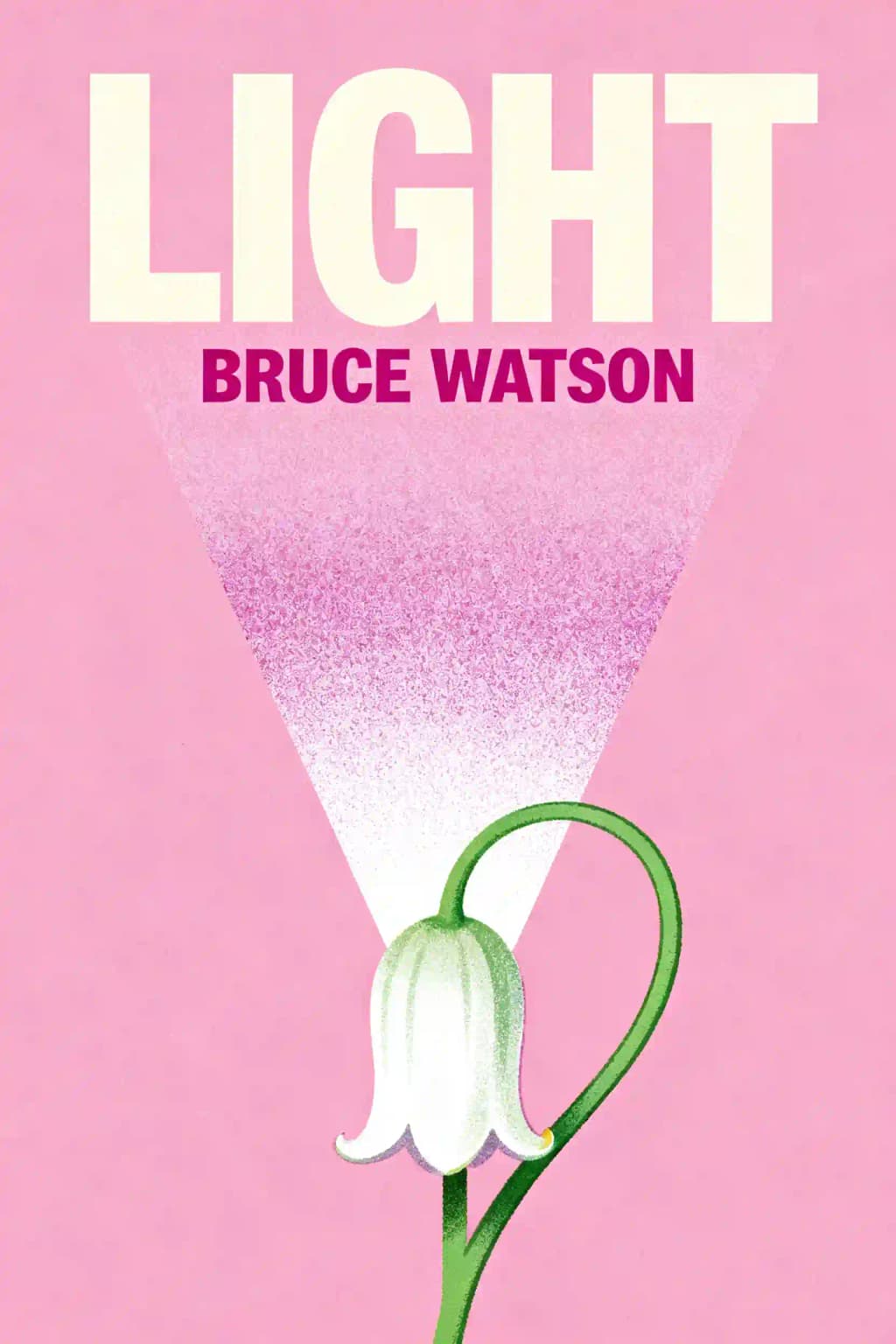
Bruce Watson's "Light" illuminates the race to electrify America - a forgotten saga of genius, greed, and world-changing innovation. How did Edison and Westinghouse's bitter rivalry shape our modern world while forever changing how humans experience darkness?
Bruce Edward Watson, author of Light, is an award-winning writer renowned for his narrative explorations of American culture and history.
A master’s graduate in American history from the University of Massachusetts, Watson combines rigorous scholarship with vivid storytelling, as seen in his critically acclaimed works like Freedom Summer and Sacco and Vanzetti: The Men, The Murders, and The Judgment of Mankind. His blog The Attic, launched in 2017, amplifies overlooked historical narratives to foster a "kinder, cooler America."
In Light, Watson traces humanity’s evolving relationship with illumination, blending scientific discovery, cultural history, and philosophical inquiry—an approach honed through decades of contributions to Smithsonian, The Washington Post, and American Heritage, where he serves as senior editor.
A former educator at Bard College and Deerfield Academy, Watson’s works, including the New York Public Library–honored Bread and Roses, have been celebrated for making complex historical themes accessible. Light continues his tradition of transforming niche subjects into compelling mainstream narratives, reflecting his belief that "history lives in the details."
Bruce Watson’s Light explores humanity’s fascination with light across 3,000 years, blending science, art, and philosophy. It traces light’s role in ancient myths, Gothic cathedrals, Renaissance art, and breakthroughs like Newton’s optics and Einstein’s relativity. The book also examines modern innovations, including lasers and LEDs, framing light as both a scientific marvel and a cultural force.
This book is ideal for readers interested in interdisciplinary histories, combining science, art, and technology. Science enthusiasts will appreciate chapters on Galileo and quantum physics, while art lovers gain insights into Impressionist techniques and Rembrandt’s use of chiaroscuro. Philosophy buffs will enjoy explorations of light’s symbolism in religion and literature.
Yes. Critics praise Watson’s lyrical prose and ability to simplify complex concepts. The Washington Post calls it “a delightful journey,” while Kirkus highlights its “ingenious combination of science and art history.” The book balances deep research with engaging storytelling, making it accessible for casual readers and scholars alike.
Watson chronicles the centuries-old debate, from Newton’s particle theory to Huygens’ wave theory, culminating in Einstein’s photoelectric effect. He ties this duality to broader themes, showing how light’s ambiguity mirrors humanity’s quest to reconcile science and spirituality.
The book details how artists like Rembrandt and Monet harnessed light’s properties. Watson links the invention of cameras to Impressionists’ fragmented brushstrokes and explores how Gothic cathedrals used stained glass to spiritualize light.
Watson examines light’s sacred status in Buddhism, Christianity, and ancient myths. He contrasts Stonehenge’s solstice rituals with Dante’s “heaven of pure light,” illustrating how civilizations equated light with divine truth and existential hope.
The book covers transformative inventions like Edison’s lightbulb, fiber optics, and lasers. Watson argues these technologies democratized light but also created new challenges, such as light pollution, while enabling modern innovations like medical imaging.
Unlike narrow scientific accounts, Watson’s work interweaves art, theology, and biography. It resembles Neil MacGregor’s A History of the World in 100 Objects in its interdisciplinary approach but focuses solely on light’s cultural and scientific legacy.
Some reviewers note the book’s broad scope sacrifices depth in specific eras. Kirkus suggests quantum physics sections could be denser, while praising the “Renaissance art-to-science” connections as particularly compelling.
Watson blends poetic descriptions with clear scientific explanations. For example, he calls light “the magician of the cosmos” while demystifying Maxwell’s equations. This approach makes complex topics like relativity accessible without oversimplifying.
The book concludes that light remains central to 21st-century innovation, from LED sustainability to quantum computing. Watson argues understanding light’s history is crucial for navigating its future ethical and technological implications.
Yes. Watson highlights contributors like François Arago, who discovered polarization, and Charles Brush, inventor of arc lamps. He also explores Goethe’s color theory, showing how non-scientists shaped light’s cultural narrative.
Watson integrates quotes from Einstein (“I will reflect on what light is”), Dante, and Edison to anchor each era. These excerpts provide historical authenticity while illustrating evolving perspectives on light’s purpose and meaning.
저자의 목소리로 책을 느껴보세요
지식을 흥미롭고 예시가 풍부한 인사이트로 전환
핵심 아이디어를 빠르게 캡처하여 신속하게 학습
재미있고 매력적인 방식으로 책을 즐기세요
Myths aren't merely stories but 'reality lived.'
Light wasn't a piece of god, they argued, but a natural phenomenon.
Genesis simply states: 'God saw the light, that it was good.'
Light remains our most intimate companion.
The millennium of divine radiance divided humanity.
Things We Hide from the Light의 핵심 아이디어를 이해하기 쉬운 포인트로 분해하여 혁신적인 팀이 어떻게 창조하고, 협력하고, 성장하는지 이해합니다.
Things We Hide from the Light을 빠른 기억 단서로 압축하여 솔직함, 팀워크, 창의적 회복력의 핵심 원칙을 강조합니다.

생생한 스토리텔링을 통해 Things We Hide from the Light을 경험하고, 혁신 교훈을 기억에 남고 적용할 수 있는 순간으로 바꿉니다.
무엇이든 물어보고, 목소리를 선택하고, 진정으로 공감되는 인사이트를 함께 만들어보세요.

샌프란시스코에서 컬럼비아 대학교 동문들이 만들었습니다
"Instead of endless scrolling, I just hit play on BeFreed. It saves me so much time."
"I never knew where to start with nonfiction—BeFreed’s book lists turned into podcasts gave me a clear path."
"Perfect balance between learning and entertainment. Finished ‘Thinking, Fast and Slow’ on my commute this week."
"Crazy how much I learned while walking the dog. BeFreed = small habits → big gains."
"Reading used to feel like a chore. Now it’s just part of my lifestyle."
"Feels effortless compared to reading. I’ve finished 6 books this month already."
"BeFreed turned my guilty doomscrolling into something that feels productive and inspiring."
"BeFreed turned my commute into learning time. 20-min podcasts are perfect for finishing books I never had time for."
"BeFreed replaced my podcast queue. Imagine Spotify for books — that’s it. 🙌"
"It is great for me to learn something from the book without reading it."
"The themed book list podcasts help me connect ideas across authors—like a guided audio journey."
"Makes me feel smarter every time before going to work"
샌프란시스코에서 컬럼비아 대학교 동문들이 만들었습니다

Things We Hide from the Light 요약을 무료 PDF 또는 EPUB으로 받으세요. 인쇄하거나 오프라인에서 언제든 읽을 수 있습니다.
Galileo Galilei, the man who discovered Jupiter's moons and mapped Venus's phases, spent his final days haunted by one unsolved mystery. "I would have gladly spent all my life in jail," he confessed in 1642, "if only I could have solved this single puzzle." What tormented him? Light. This most intimate companion-the first thing we see at birth, the last before death-has captivated humanity for three millennia. Steve Jobs kept only one book on his iPad: Shunryu Suzuki's "Zen Mind, Beginner's Mind," finding wisdom in its teachings about "beginner's light." Einstein spent his final decades puzzling over light's dual nature. From creation myths to quantum physics, from divine worship to a $100 billion industry powering smartphones and fiber optics, light's story traces humanity's evolution from spiritual reverence to scientific mastery-yet the mystery endures. Each summer solstice, thousands gather at Stonehenge for what locals call a "Woodstock of Light"-a ritual dating back millennia, testament to our eternal fascination with this elemental force.
