1장
When Monsters Fall in Love: A Dark Romance of Betrayal and Redemption
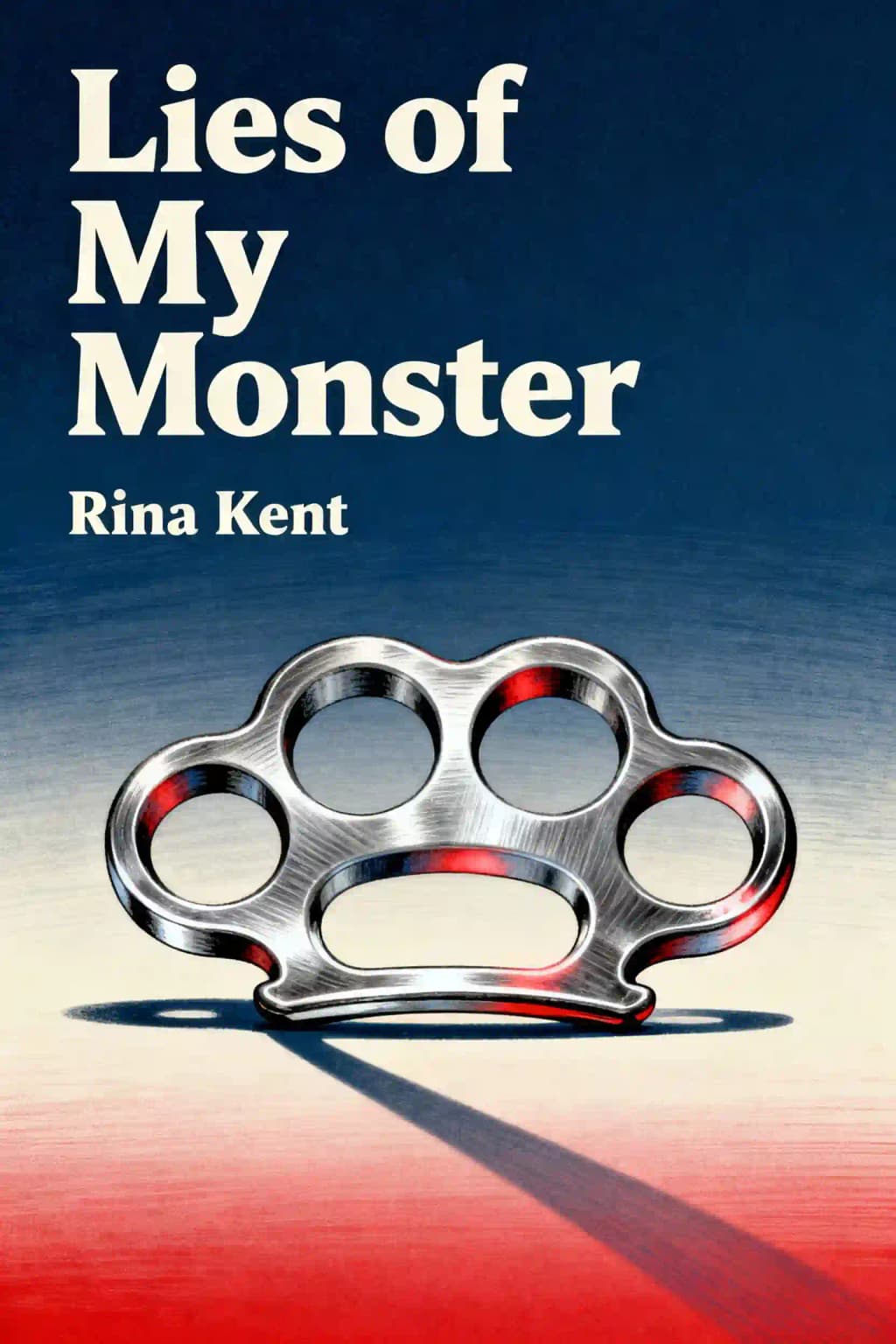
Rina Kent's "Lies of My Monster" has captivated readers worldwide with its intoxicating blend of danger, passion, and psychological complexity. This dark romance has become a TikTok sensation, with thousands of videos featuring readers emotionally reacting to its shocking twists. Celebrity fans include actress Lucy Hale, who called it "the perfect escape" and musician Halsey, who praised its "beautifully flawed characters." The novel's exploration of power dynamics in relationships has sparked countless book club discussions and psychological analyses. What makes this story so compelling? Perhaps it's the universal question at its core: can we truly love someone when we don't know all their secrets?
2장
The Brutal World of the Bratva Elite
In the ruthless world of the Russian mafia, weakness means death - a lesson written in blood and broken bones. No one understands this better than Kirill Morozov, who was shaped by cruelty from childhood in ways that would leave permanent scars, both visible and invisible. Raised by Roman Morozov, a notorious Bratva king who viewed children as assets to be hardened rather than nurtured, Kirill endured systematic "training" sessions that crossed every boundary of human decency. These sessions included being locked in freezing basements for days, forced combat with grown men, and psychological warfare designed to break his spirit.
One particularly haunting memory stands out among the countless traumas: a supposed Christmas vacation to Switzerland when Kirill was thirteen. The holiday facade crumbled when masked men stormed their chalet at midnight. While trying to shield his younger siblings Konstantin and Karina with his own body, Kirill fought desperately against the attackers. The simulation ended with him being beaten unconscious as his siblings were dragged away screaming - their terrified faces burned into his memory. Later, Roman would call this "lesson" a success, praising Kirill's protective instincts while criticizing his failure to anticipate the attack.
These formative experiences created a man who approaches every relationship like a chess match, calculating moves and countermoves. Now a high-ranking Bratva member himself, Kirill has built his reputation on legendary calm and ruthless efficiency. His associates speak in whispers about his ability to orchestrate complex operations without showing a flicker of emotion. His life operates like a precise machine, every element carefully controlled - until his trusted bodyguard Sasha Lipovsky introduces an unprecedented variable into his equations.
Kirill's first inkling of trouble came when he overheard Sasha speaking Russian on the phone, her voice soft with an tenderness he'd never heard before, calling someone her "snowflake." Though Sasha managed to destroy the phone before Kirill could trace the call, this mysterious connection tormented him, keeping him awake at night. When Sasha requests time off to visit Russia, citing family obligations, Kirill's carefully constructed control begins to crack. His possessiveness and paranoia, traits inherited from his father, drive him to follow her to Moscow, determined to eliminate this unknown rival for her affections.
This decision leads to catastrophe in the frozen outskirts of Moscow. Kirill is ambushed in a snow-covered field, taking multiple bullets before he can reach his weapon. As consciousness fades and blood stains the pristine snow, he sees Sasha standing among the attackers, her face as cold as the Russian winter. The physical wounds from the bullets will eventually heal, but the psychological damage cuts to his core - how could someone so meticulously careful have missed such treachery from the person he'd allowed closest to him? This betrayal forces Kirill to confront an uncomfortable truth: perhaps his father's brutal lessons didn't prepare him for everything after all.
3장
Secrets Within Secrets: The Dual Lives of Sasha Lipovsky
What Kirill doesn't know is that Sasha Lipovsky harbors far more secrets than just a mysterious phone call. Born Aleksandra Ivanova to a wealthy Russian family in St. Petersburg, she grew up in a world of privilege and cultural refinement. Her father, Viktor Ivanov, was a prominent art collector and businessman whose influence stretched from Moscow to London. The family lived in an ornate mansion on the banks of the Neva River, where young Aleksandra spent her days studying ballet and learning four languages from private tutors.
Everything changed during a lavish Christmas celebration when she was sixteen. As crystal glasses clinked and carols played, armed men in black tactical gear stormed the mansion. Hiding under an antique mahogany table, she watched helplessly as soldiers methodically executed her parents, grandparents, and siblings. Her cousins Dmitri and Natasha created a diversion that allowed her to remain hidden, sacrificing themselves in the process. The massacre lasted seven minutes - seven minutes that would forever alter the trajectory of her life.
This trauma transformed her from a privileged teenager into a hardened survivor. She spent two years learning combat skills from underground contacts, mastering the art of disguise, and crafting a new identity. At eighteen, she joined the Russian army as Sasha Lipovsky, binding her chest and adopting masculine mannerisms with meticulous attention to detail. Her exceptional marksmanship and tactical abilities quickly drew notice, leading to specialized training and eventually a position in elite security operations.
Her calculated path led her to Kirill Morozov's organization, where she became his most trusted bodyguard while maintaining her male persona. Only Kirill knows her true gender - a revelation that occurred during an assassination attempt when a bullet grazed her chest. This shared secret created an electric undercurrent between them, evolving into a complex relationship that blurred the lines between professional duty and personal desire. Yet she keeps her deepest secret - her true identity as the sole survivor of the Ivanov massacre - hidden even from him, suspecting his organization might have ties to the Christmas night slaughter.
The suspicious Russia trip that caught Kirill's attention was actually Sasha meeting her Uncle Albert Ivanov, who had been in London during the massacre. Operating from a fortified compound outside Moscow, Albert had spent years gathering intelligence on the attack's orchestrators. When Kirill followed her and was shot by her uncle's security team, Sasha faced an impossible choice. Despite Albert presenting evidence suggesting Kirill's involvement in their family's destruction, something in her gut refused to accept it. Drawing on her military training, she managed to get Kirill's unconscious body onto a snowmobile, navigating treacherous terrain for three hours to reach the nearest hospital while fighting off hypothermia.
This pivotal moment creates the central tension that defines their relationship: Kirill believes Sasha betrayed him by leading him into an ambush, while Sasha cannot reveal the full truth without compromising her years-long mission of vengeance. Their relationship becomes an intricate dance of half-truths and calculated omissions, with each holding back vital information while becoming increasingly entangled in a web of mutual dependency and unspoken attraction. Every shared moment is shadowed by the weight of their secrets, creating a dangerous intimacy that threatens to destroy them both.
4장
The Psychology of Power and Submission
The relationship between Kirill and Sasha explores fascinating psychological territory as they navigate the complex power dynamics between them. As Kirill's bodyguard, Sasha is technically his subordinate, yet her role is to protect him - creating an inherent contradiction that sets the foundation for their complicated dynamic. This professional paradox mirrors their personal relationship, where dominance and submission constantly shift like a dangerous dance.
After the shooting incident, Kirill demotes her to weapon maintenance duty, a calculated move that serves multiple purposes. By physically distancing her while keeping her within his sphere of influence, he maintains control while investigating her supposed betrayal. This demotion represents more than just punishment - it's a psychological power play designed to break her spirit while ensuring she remains dependent on his authority.
Their power struggle reaches a critical point when Sasha stages a hunger strike outside Kirill's mansion. Camping in the bitter Moscow winter, she demands reinstatement to her position with a determination that both challenges and fascinates Kirill. Her act of defiance demonstrates remarkable psychological warfare - she uses her own vulnerability as a weapon, forcing Kirill to either capitulate or bear responsibility for her suffering. When he finally relents, his words cut deeper than any physical punishment: "You're no longer my trusted person, Lipovsky. You're nothing more than a stranger that I'm keeping for information."
The physical dimension of their relationship perfectly embodies this power dynamic. Their encounters are marked by intensity and violence, with Kirill frequently using physical dominance to assert control. After Sasha saves his life during an Albanian ambush - disobeying his direct orders in the process - he responds with a punishment that blurs the line between violence and intimacy. Tying her to his bed and marking her skin with a military knife becomes an act of both possession and retribution, demonstrating how their power struggles manifest in increasingly intimate ways.
Yet within this brutal dynamic, moments of unexpected tenderness emerge like rays of light through storm clouds. When Kirill discovers Sasha huddled on the bathroom floor following her traumatic kidnapping by Albanians, his response reveals a deeper emotional connection. His gentle embrace in this moment - so contrary to his usual forceful demeanor - suggests that their power dynamic isn't simply about dominance and submission, but about trust and vulnerability.
The psychological complexity of their relationship is perhaps best illustrated through their use of pet names. Kirill's choice to call Sasha "Solnyshko" (his sun) reveals her central importance to his existence, even as he struggles to acknowledge his own vulnerability. When Sasha counters by calling him "Luchik" (sunray), explaining it represents "the only beam of light in the darkness," she acknowledges both her emotional surrender and the dangerous nature of their connection. These seemingly simple endearments become powerful symbols of their evolving relationship, representing both the light and shadow of their complex dynamic.
Their relationship ultimately demonstrates how power and submission aren't simply about control, but about the intricate dance of trust, vulnerability, and emotional dependency. Each interaction between them adds another layer to their psychological warfare, where victory often feels indistinguishable from surrender.
5장
Trauma Bonds and Emotional Scars
Both Kirill and Sasha carry profound childhood traumas that fundamentally shape their adult behaviors and relationships. Kirill's mother Yulia harbored a pathological hatred for him from birth, attempting to kill him multiple times as an infant - including trying to smother him with a pillow and leaving him in freezing temperatures. This maternal rejection created a man fundamentally incapable of trust who views emotional attachment as weakness. His nightmares frequently feature his sister Natasha's face as she witnessed his torture, and when Sasha comforts him during these episodes, we glimpse how deeply these childhood experiences continue to haunt him. These moments of vulnerability reveal the scared child beneath his carefully constructed facade of control.
Similarly, Sasha's trauma from witnessing her family's massacre drives both her elaborate disguise and her mission for justice. She describes the horrific scene to Kirill in vivid detail: "I was hiding under the table when they killed everyone. The tablecloth was soaked with blood. My cousins sacrificed themselves so I could survive. I was sixteen and I couldn't even scream." This shared vulnerability marks a crucial turning point in their relationship - instead of responding with rage about her deception, Kirill promises to help investigate from his position of power, recognizing in her pain a mirror of his own suffering.
Their trauma bonds create a complex attachment that transcends conventional romance, rooted in their shared understanding of survival against impossible odds. When Sasha experiences nightmares about blood pools and her parents' disintegrating bodies, Kirill stays awake listening to her sleep-talking, methodically piecing together fragments of her past. Though he initially uses this information strategically, there's genuine concern beneath his manipulation - he recognizes the patterns of her night terrors and learns to anticipate them, keeping her favorite tea ready for when she wakes.
This trauma-informed perspective helps explain why Sasha remains with Kirill despite his controlling behavior and occasional cruelty. Having lost her entire family in one night and subsequently being disowned by her grandmother and uncle for seeking revenge, Kirill's household becomes the closest thing to belonging she's experienced in years. His staff treat her with careful respect, and even his sister Natasha becomes a surrogate family member. As Sasha reflects in a moment of clarity, "Kirill has become my only certainty - the reason I get out of bed each morning. He understands the darkness inside me because he carries the same shadows." Their relationship, while toxic by conventional standards, provides a stability neither has experienced elsewhere, built on a foundation of shared trauma and mutual understanding of what it means to survive when the world has tried to destroy you.
6장
The Mafia Marriage Game: Power, Politics, and Passion
The novel's central conflict emerges when Kirill becomes engaged to Kristina Petrov, daughter of Igor Petrov, a powerful Bratva figure. This political marriage is Kirill's path to becoming the next Pakhan (leader), representing the culmination of his lifelong ambition for power. When the engagement is announced at a major Bratva gathering, Sasha is devastated, having confessed her love to Kirill mere hours earlier.
This triangular relationship exposes the fundamental tension between personal desire and political ambition. When Sasha confronts Kirill, he explains coldly that Kristina is merely a "business transaction"-a step to reach the top. He refuses to end the engagement despite Sasha's heartbreak, insisting it's temporary until he gains enough power to protect her.
Sasha's ultimatum-"Choose between us"-forces Kirill to reveal his priorities. His refusal to choose demonstrates his unwillingness to sacrifice power for love, yet he also refuses to let Sasha leave. When she attempts to quit, he imprisons her in his underground suite for six days, declaring she can "never leave" him. This possessive response reveals his emotional dependence on her despite his strategic marriage plans.
The resolution comes unexpectedly when Kirill proposes to Sasha after her imprisonment. He presents wedding rings-one engraved with "Kirill's" and another with "Sasha's"-symbolizing their mutual possession of each other. Their secret wedding, with only Viktor as witness, represents Kirill choosing love over convention, though not necessarily over power. As Sasha reflects during the ceremony: "For the first time in years, I feel beautifully feminine. I'm his wife now."
This apparent happy ending is shattered when Sasha later sees photos of Kirill marrying Kristina anyway. The revelation that he has been named Pakhan because of this public marriage suggests their private wedding was merely another manipulation. This devastating betrayal forces Sasha to question everything about their relationship-was any of it real, or was she simply a pawn in his power games?
7장
The Brotherhood Code: Honor Among Thieves
The Bratva operates by strict codes of loyalty and hierarchy that constrain even the most powerful members. Throughout the novel, we see how these unwritten rules shape behavior and limit choices. When Sasha attempts to quit her position, Viktor warns her that leaving the Bratva isn't an option without Kirill's permission-once in, there's no way out alive.
The brotherhood extends beyond the Russian mafia to include alliances with other criminal organizations. At mandatory gatherings, the Yakuza, Triads, Italians, and cartels come together to maintain the delicate balance of power. These relationships are formalized through blood contracts and strategic marriages, creating a complex web of obligations that supersede personal desires.
Women occupy a particularly precarious position in this world. They are primarily valued as bargaining chips for alliances, exemplified by Kristina's role as her father's "trump card." Even Kirill's mother Yulia, despite her cruelty, remains dependent on male protection. When she berates Karina during Kirill's birthday celebration, Kirill threatens to throw her out of the house-demonstrating that even maternal figures survive at male discretion.
Sasha disrupts this gender hierarchy by disguising herself as a man to gain access to power. When Rai, the Pakhan's grandniece, discovers Sasha's true gender during their captivity by Albanians, it creates a dangerous vulnerability. Kirill attempts to neutralize this threat by pressuring Rai to reveal his supposed "homosexuality" to the brotherhood, part of his plan to protect Sasha's identity. This complex maneuvering shows how even the appearance of breaking brotherhood codes requires elaborate countermeasures.
The novel's exploration of honor among criminals reveals the contradiction at the heart of organized crime-a system that values loyalty above all else while encouraging betrayal as a path to advancement. As Adrian warns Kirill about his engagement machinations: "You're playing with fire." The question becomes not whether someone will get burned, but who and how badly.
8장
The Price of Ambition: Climbing the Bratva Ladder
Kirill's driving motivation throughout the novel is his ambition to reach the top of the Bratva hierarchy. Having been raised as nothing more than a "commodity" by Roman Morozov, he has internalized the lesson that power is the only true protection. His meticulous planning is symbolized by the house of cards he builds in his office-a delicate structure that Sasha ultimately disrupts.
The path to becoming Pakhan requires calculated sacrifices and strategic alliances. Kirill explains to Sasha that his engagement to Kristina is necessary because "the Pakhan offered me something I couldn't refuse: power." This single-minded focus on advancement leads him to sign a blood contract with Igor and the current Pakhan, binding himself to obligations that conflict with his personal desires.
The novel explores the psychological cost of such ambition. Despite achieving his goal of being named Pakhan through his marriage to Kristina, Kirill finds himself torn between power and love. His decision to secretly marry Sasha before his public wedding to Kristina represents an attempt to have both-a compromise that ultimately satisfies neither his ambition nor his heart.
This conflict reaches its climax when Sasha discovers Kirill's dual marriages. The revelation that he has achieved his ambition of becoming Pakhan through his marriage to Kristina makes his betrayal even more painful-he has literally traded their relationship for power. Yet the question remains whether this was his plan all along or whether circumstances forced his hand.
The novel leaves us with the provocative question: Is the top worth reaching if you lose everything that matters along the way? Kirill's house of cards, both literal and figurative, comes crashing down in the explosive finale, suggesting that even the most carefully constructed plans for power can be undone by the unpredictable force of human emotion.
9장
Redemption Through Protection: The Heart of a Monster
Despite Kirill's monstrous behavior throughout much of the novel, moments of genuine protection reveal his capacity for redemption. When Sasha is kidnapped by Albanians, Kirill leads the assault team himself, running to her and promising fiercely, "No one will be able to kill me. Or you." His subsequent destruction of the Albanians' hideout demonstrates his willingness to declare "war" against anyone who hurts her.
Similarly, when Sasha reveals the trauma of her family's massacre, Kirill immediately promises to help investigate from his position of power. Rather than being angry about her deception, he says, "You're my wife. Your problems are now mine." This moment of empathy, rare for his character, suggests that love has begun to transform his fundamental nature.
Even Kirill's controlling behaviors can be interpreted through this lens of protection. When he imprisons Sasha in his suite after she attempts to leave, his explanation-"I'm not letting you go"-reflects both possessiveness and a desperate desire to keep her safe in the only way he knows how. His world is dangerous, and letting her walk away would expose her to threats he couldn't control.
This theme reaches its emotional peak during their wedding night, when Kirill experiences true peace for the first time in his life as he falls asleep in Sasha's arms. This vulnerability represents a profound transformation for a man who has never trusted anyone enough to lower his guard. Though he wonders if this "compliant honeymoon phase" will last, the moment suggests his potential for genuine emotional growth.
The novel's title-"Lies of My Monster"-acknowledges Kirill's monstrous qualities while suggesting that even monsters can find redemption through love. As Sasha reflects after learning about his childhood: "He's a monster, but not that type of monster." This nuanced view recognizes his capacity for both cruelty and protection, suggesting that the heart of a monster may still beat with human feeling.
10장
The Explosive Cliffhanger: Truth and Consequences
Just when it seems Sasha and Kirill might find happiness despite their complicated circumstances, the novel delivers its most shocking twist. Yuri-who has been Sasha's friend and confidant throughout-reveals himself to be her brother Anton in disguise. He shows her surveillance footage of Kirill's men attacking Uncle Albert's warehouse and claims their grandmother is injured, insisting they escape before Kirill "finishes the job" with her.
This revelation forces Sasha to reconsider everything she thought she knew about Kirill. Could he actually be connected to her family's massacre? Was their relationship merely his way of keeping his enemy close? Before she can process these questions, they hear ticking, and the novel ends with an explosion as Anton jumps to protect her.
This cliffhanger masterfully brings together all the novel's themes-betrayal, hidden identities, family loyalty, and the question of whether monsters can truly change. The explosion serves as both literal and metaphorical destruction of the fragile trust Sasha and Kirill had built, leaving readers to wonder whether anything can survive such devastation.
The ending also raises profound questions about truth and perspective. Throughout the novel, we've seen events from both Kirill's and Sasha's viewpoints, yet crucial information has been withheld from both characters and readers. This final twist suggests that truth in their world is always partial, always contingent on who's telling the story and what they choose to reveal or conceal.
As the dust settles on this explosive conclusion, the stage is set for the trilogy's final book, "Heart of My Monster." Will Kirill and Sasha find their way back to each other? Can love survive such fundamental betrayal? And perhaps most importantly-whose version of the truth will ultimately prevail? These questions linger, ensuring readers will eagerly await the final installment of this dark, complex romance between two damaged souls fighting for love in a world built on lies.