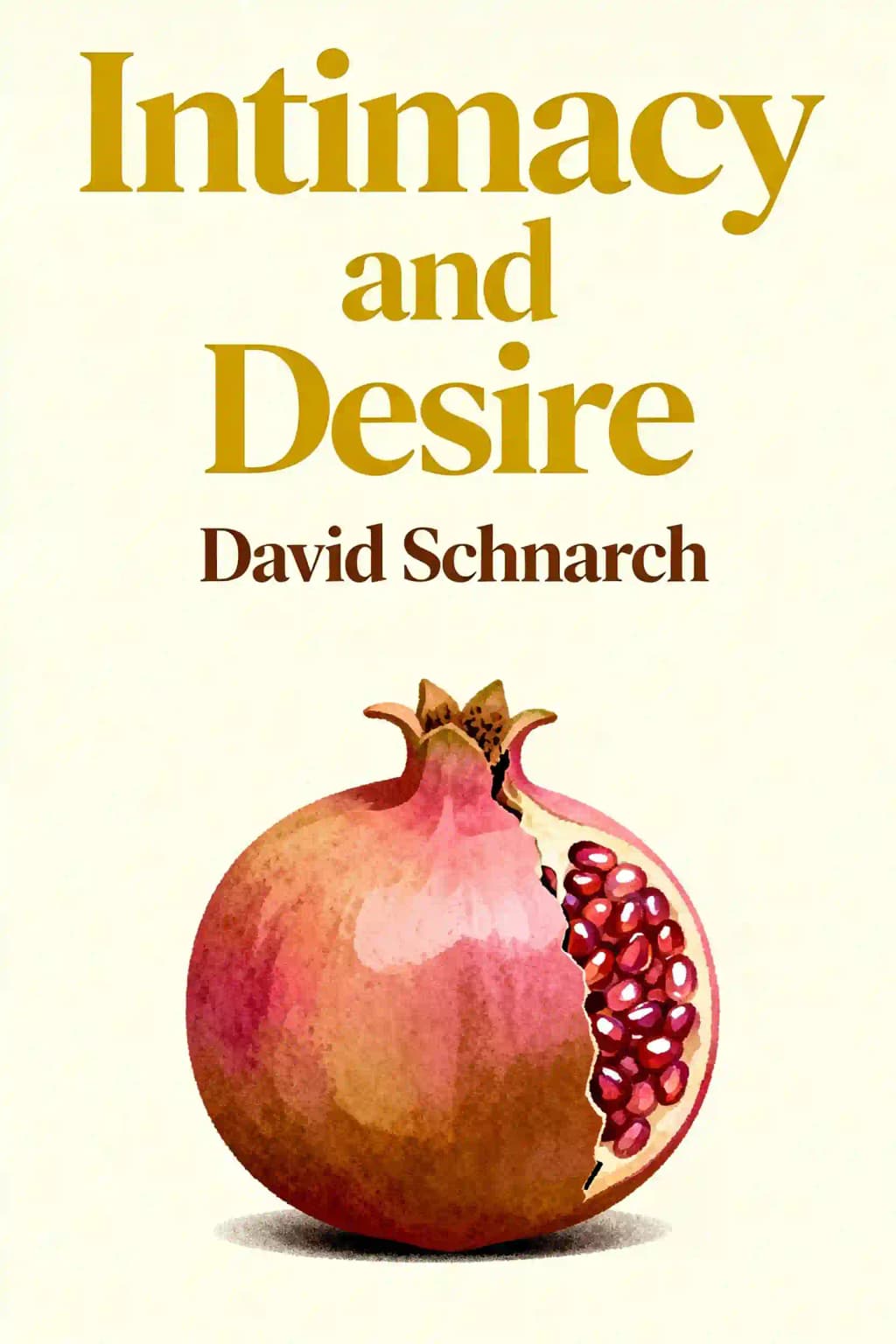
Dr. Schnarch's revolutionary guide reveals why sexual desire problems are normal in committed relationships. Through real case studies, he challenges conventional wisdom about intimacy - showing how the tension between "High" and "Low" desire partners can spark growth, not signal failure. Ready to transform marital conflict into passion?
David Morris Schnarch (1946–2020), author of Intimacy & Desire, was a groundbreaking clinical psychologist and internationally recognized authority on relationships and sexuality.
A licensed therapist with a PhD from Michigan State University, he pioneered the Crucible Approach®, blending marital therapy, sexual health, and personal growth.
His work as Director of Louisiana State University Medical School’s Sex and Marital Health Clinic and co-founder of Colorado’s Marriage & Family Health Center informed his bestselling books, including Passionate Marriage and Resurrecting Sex—cornerstones of modern relationship psychology used in clinical training worldwide.
Schnarch’s media appearances on NPR and The Phil Donahue Show popularized his differentiation-based therapy model, which teaches partners to maintain selfhood while deepening connection. His books have been translated into 15+ languages, with Passionate Marriage remaining a perennial bestseller since 1997.
Intimacy & Desire explores how to reignite passion in long-term relationships by addressing sexual desire problems through self-differentiation and emotional resilience. Dr. Schnarch introduces the Four Points of Balance—calmness, clarity, groundedness, and endurance—to help couples transform conflicts into opportunities for intimacy. The book blends case studies, neuroscientific insights, and practical tools to challenge myths about love and sexuality.
This book is ideal for couples struggling with mismatched sexual desire, therapists seeking evidence-based frameworks, or individuals wanting deeper emotional connections. It’s particularly valuable for those open to confronting personal insecurities to build resilient relationships.
Yes—readers praise its groundbreaking approach to intimacy, with 50+ Goodreads reviews highlighting its transformative insights. Critics note its dense clinical language, but the blend of storytelling, neuroscience, and actionable strategies makes it a standout for relationship growth.
The Four Points of Balance are calmness (regulating emotions), clarity (self-awareness), groundedness (staying present), and endurance (tolerating discomfort). These tools help partners resolve desire discrepancies by fostering personal accountability and reducing dependency on their partner’s validation.
Schnarch argues low desire often stems from emotional fusion—overidentifying with a partner’s needs. By cultivating differentiation (self-identity separate from the relationship), individuals reclaim autonomy, reigniting desire through self-confrontation and collaborative problem-solving.
Differentiation is the ability to maintain individuality while staying emotionally connected. Schnarch posits it as the cornerstone of passion, enabling partners to disagree without fear of abandonment and fostering authentic intimacy.
Yes—the book provides tools like collaborative confrontation (addressing conflicts without blame) and self-soothing techniques to manage anxiety. Case studies demonstrate how couples apply these methods to rebuild trust and sexual connection.
Unlike John Gottman’s focus on communication, Schnarch emphasizes internal resilience over compromise. It’s often contrasted with The Seven Principles for Making Marriage Work for its direct approach to sexual dynamics and emotional self-reliance.
Some reviewers find Schnarch’s tone overly clinical or dismissive of attachment-based therapies. Others note the heavy reliance on case studies may overwhelm casual readers, though professionals appreciate its depth.
Notable lines include:
While most case studies feature heterosexual couples, the principles of differentiation and collaborative confrontation apply universally. Therapists widely use Schnarch’s methods across diverse relationships.
As relationships face modern pressures like digital distractions and shifting gender roles, Schnarch’s focus on self-reliance over codependency offers timeless strategies for maintaining passion amid societal change.
저자의 목소리로 책을 느껴보세요
지식을 흥미롭고 예시가 풍부한 인사이트로 전환
핵심 아이디어를 빠르게 캡처하여 신속하게 학습
재미있고 매력적인 방식으로 책을 즐기세요
The LDP always controls sex through a simple yet profound mechanism.
Sexual desire differences aren't symptoms of dysfunction.
Self-preservation can supersede even biological survival instincts.
Sexual desire problems often signal that everything is going right.
Many LDPs feel burdened by this control rather than enjoying it.
Intimacy & Desire의 핵심 아이디어를 이해하기 쉬운 포인트로 분해하여 혁신적인 팀이 어떻게 창조하고, 협력하고, 성장하는지 이해합니다.
Intimacy & Desire을 빠른 기억 단서로 압축하여 솔직함, 팀워크, 창의적 회복력의 핵심 원칙을 강조합니다.

생생한 스토리텔링을 통해 Intimacy & Desire을 경험하고, 혁신 교훈을 기억에 남고 적용할 수 있는 순간으로 바꿉니다.
무엇이든 물어보고, 목소리를 선택하고, 진정으로 공감되는 인사이트를 함께 만들어보세요.

샌프란시스코에서 컬럼비아 대학교 동문들이 만들었습니다
"Instead of endless scrolling, I just hit play on BeFreed. It saves me so much time."
"I never knew where to start with nonfiction—BeFreed’s book lists turned into podcasts gave me a clear path."
"Perfect balance between learning and entertainment. Finished ‘Thinking, Fast and Slow’ on my commute this week."
"Crazy how much I learned while walking the dog. BeFreed = small habits → big gains."
"Reading used to feel like a chore. Now it’s just part of my lifestyle."
"Feels effortless compared to reading. I’ve finished 6 books this month already."
"BeFreed turned my guilty doomscrolling into something that feels productive and inspiring."
"BeFreed turned my commute into learning time. 20-min podcasts are perfect for finishing books I never had time for."
"BeFreed replaced my podcast queue. Imagine Spotify for books — that’s it. 🙌"
"It is great for me to learn something from the book without reading it."
"The themed book list podcasts help me connect ideas across authors—like a guided audio journey."
"Makes me feel smarter every time before going to work"
샌프란시스코에서 컬럼비아 대학교 동문들이 만들었습니다

Intimacy & Desire 요약을 무료 PDF 또는 EPUB으로 받으세요. 인쇄하거나 오프라인에서 언제든 읽을 수 있습니다.
When was the last time you felt truly desired by your partner? Or perhaps you're the one struggling to feel desire despite loving them deeply? This paradox haunts countless relationships, yet clinical psychologist David Schnarch discovered something revolutionary: sexual desire problems aren't signs of dysfunction but normal developmental challenges that can catalyze profound personal growth. His groundbreaking "Crucible Approach" reframes the conversation entirely. Rather than viewing fading passion as a relationship death sentence, what if it's actually an invitation to deeper connection and personal evolution? The truth about desire lies not in new positions or date nights, but in understanding the intricate dance between your sense of self and your capacity for intimacy.




