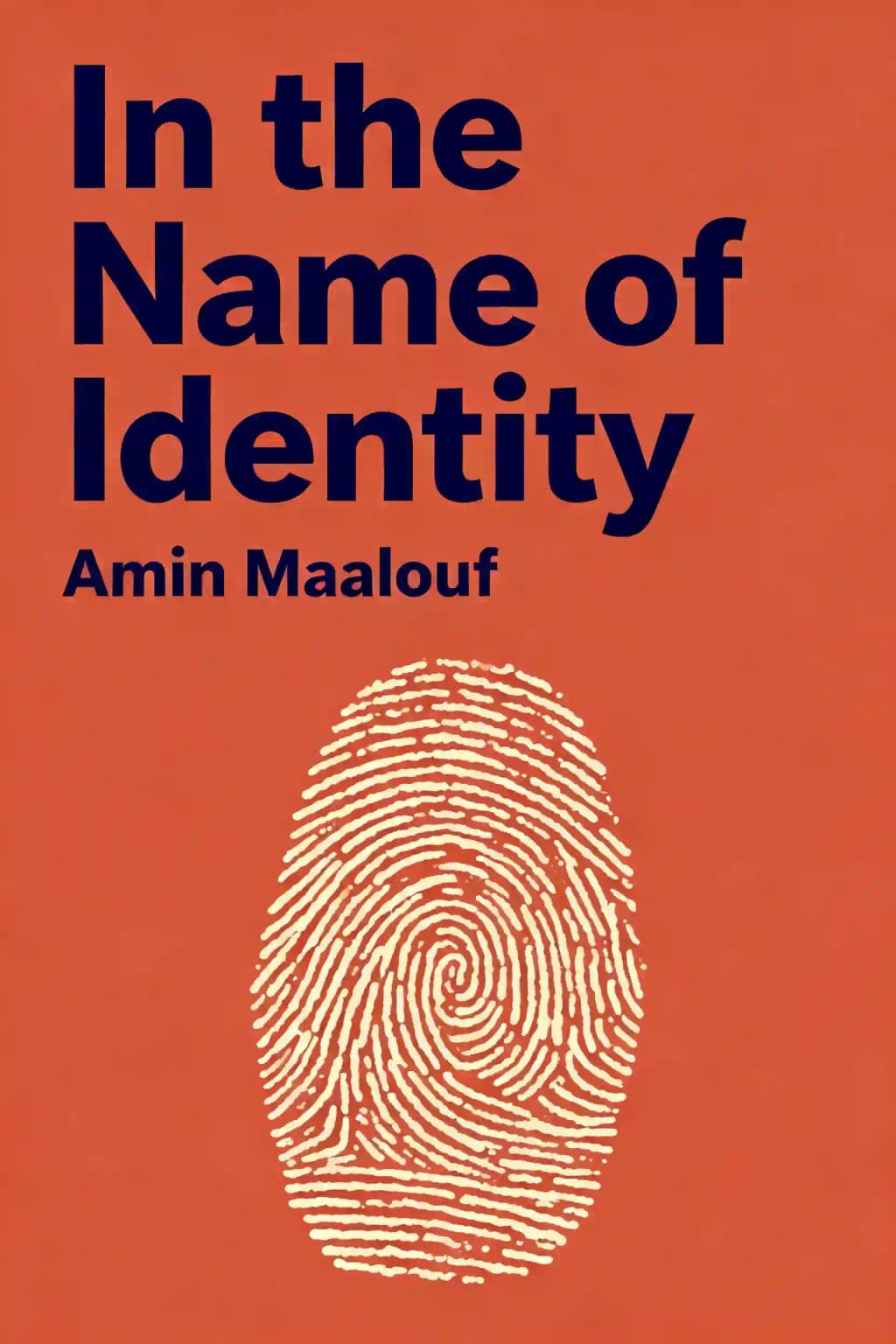
Maalouf's radical exploration of identity challenges how we define ourselves in a divided world. With 12,000+ Goodreads ratings, this pre-9/11 work remains eerily relevant, even captivating 13-year-old students. What dangerous allegiances are you unknowingly forming through your own identity?
Amin Maalouf, the Lebanese-French author of In the Name of Identity, is a renowned novelist and essayist celebrated for his exploration of cultural hybridity, migration, and historical memory.
Born in Beirut in 1949, Maalouf fled Lebanon’s civil war in 1976, settling in Paris, where his multilingual upbringing and journalistic career at An-Nahar informed his nuanced analysis of identity politics.
His acclaimed nonfiction works, including The Crusades Through Arab Eyes and On Identity, dissect globalization’s tensions through historical and philosophical lenses, while novels like Samarkand and The Rock of Tanios (winner of the Prix Goncourt) weave myth and history across continents.
A member of the Académie Française since 2011 and its elected Perpetual Secretary in 2023, Maalouf’s books have been translated into over 40 languages, cementing his status as a bridge between Eastern and Western literary traditions.
In the Name of Identity examines the complex nature of identity, arguing it is shaped by multiple factors like culture, religion, and history. Maalouf warns against reducing identity to a single trait, which he claims fuels conflict. The book blends personal anecdotes, global examples, and philosophical insights to advocate for embracing hybrid identities as a path to tolerance.
This book is ideal for readers interested in sociology, multiculturalism, or conflict studies. It appeals to those grappling with questions of belonging in a globalized world, as well as educators and policymakers seeking frameworks to address cultural divides. Maalouf’s accessible style makes it suitable for both academic and general audiences.
Yes—it offers a timely exploration of identity crises in an era of globalization and polarization. Maalouf’s emphasis on multifaceted identities provides a nuanced alternative to rigid "us vs. them" narratives. The book’s interdisciplinary approach, combining history, memoir, and analysis, makes it a standout in identity studies.
Maalouf defines identity as a “kaleidoscope” of inherited and chosen traits, including nationality, language, religion, and personal values. He argues identities are dynamic, evolving through life experiences rather than being fixed. This pluralistic view challenges monolithic constructs often used in political or cultural discourse.
Reducing identity to one aspect (e.g., religion or nationality) breeds exclusion and violence, according to Maalouf. He illustrates this with historical conflicts like the Crusades and modern extremism, showing how singular identity claims dehumanize others. This narrow focus ignores the richness of overlapping affiliations.
Born in Lebanon and later emigrating to France, Maalouf draws on his hybrid identity as a Christian Arab writing in French. His journalism career covering global conflicts informs his analysis of how identity politics escalate violence. This dual lens lends authenticity to his arguments.
Maalouf highlights language as both a cultural anchor and a bridge. He describes writing in French (not his native Arabic) as an act of “linguistic migration,” reflecting how language choices can expand or constrain self-expression. This theme mirrors his critique of rigid identity boxes.
Yes—Maalouf analyzes how globalization intensifies identity struggles, as people cling to traditions while navigating interconnected societies. He proposes embracing “rooted cosmopolitanism,” where individuals honor their heritage without rejecting cross-cultural dialogue.
Some scholars argue Maalouf underestimates institutional barriers to hybrid identities, like systemic racism. Others note his Eurocentric examples, despite aiming for universality. However, the book is widely praised for its accessible synthesis of complex ideas.
Its themes resonate with 2024 debates on immigration, nationalism, and AI-driven social fragmentation. Maalouf’s warnings about weaponized identity echo in discussions about misinformation and cultural polarization, making the book a resource for understanding modern crises.
Unlike his historical novels (Leo Africanus), this essay directly engages socio-political theory. However, both genres explore displacement and cultural exchange, reflecting his belief that “all writing is born of exile”.
저자의 목소리로 책을 느껴보세요
지식을 흥미롭고 예시가 풍부한 인사이트로 전환
핵심 아이디어를 빠르게 캡처하여 신속하게 학습
재미있고 매력적인 방식으로 책을 즐기세요
My identity is what prevents me from being identical to anybody else.
Identity has become both our most treasured possession and our most dangerous weapon.
The most dangerous idea in our world may be the notion that each person has one overriding identity.
Touch one part and the entire person reacts.
In The Name Of Identity Violence And The Need To Belong의 핵심 아이디어를 이해하기 쉬운 포인트로 분해하여 혁신적인 팀이 어떻게 창조하고, 협력하고, 성장하는지 이해합니다.
In The Name Of Identity Violence And The Need To Belong을 빠른 기억 단서로 압축하여 솔직함, 팀워크, 창의적 회복력의 핵심 원칙을 강조합니다.

생생한 스토리텔링을 통해 In The Name Of Identity Violence And The Need To Belong을 경험하고, 혁신 교훈을 기억에 남고 적용할 수 있는 순간으로 바꿉니다.
무엇이든 물어보고, 목소리를 선택하고, 진정으로 공감되는 인사이트를 함께 만들어보세요.

샌프란시스코에서 컬럼비아 대학교 동문들이 만들었습니다
"Instead of endless scrolling, I just hit play on BeFreed. It saves me so much time."
"I never knew where to start with nonfiction—BeFreed’s book lists turned into podcasts gave me a clear path."
"Perfect balance between learning and entertainment. Finished ‘Thinking, Fast and Slow’ on my commute this week."
"Crazy how much I learned while walking the dog. BeFreed = small habits → big gains."
"Reading used to feel like a chore. Now it’s just part of my lifestyle."
"Feels effortless compared to reading. I’ve finished 6 books this month already."
"BeFreed turned my guilty doomscrolling into something that feels productive and inspiring."
"BeFreed turned my commute into learning time. 20-min podcasts are perfect for finishing books I never had time for."
"BeFreed replaced my podcast queue. Imagine Spotify for books — that’s it. 🙌"
"It is great for me to learn something from the book without reading it."
"The themed book list podcasts help me connect ideas across authors—like a guided audio journey."
"Makes me feel smarter every time before going to work"
샌프란시스코에서 컬럼비아 대학교 동문들이 만들었습니다

In The Name Of Identity Violence And The Need To Belong 요약을 무료 PDF 또는 EPUB으로 받으세요. 인쇄하거나 오프라인에서 언제든 읽을 수 있습니다.
What does it mean when someone asks, "Are you more French or more Lebanese?" For Amin Maalouf, the answer is simple yet profound: "Both!" This seemingly straightforward response challenges our fundamental understanding of identity in an increasingly interconnected world. Identity isn't a single, fixed attribute but a complex tapestry of affiliations that evolves throughout our lives. Each of us carries a unique combination of religious beliefs, nationalities, languages, cultural traditions, and personal experiences that makes us irreplaceable and impossible to categorize simply. This complexity isn't just theoretical-it's the battleground where modern conflicts begin and end, where personal journeys unfold, and where our collective future will be determined.