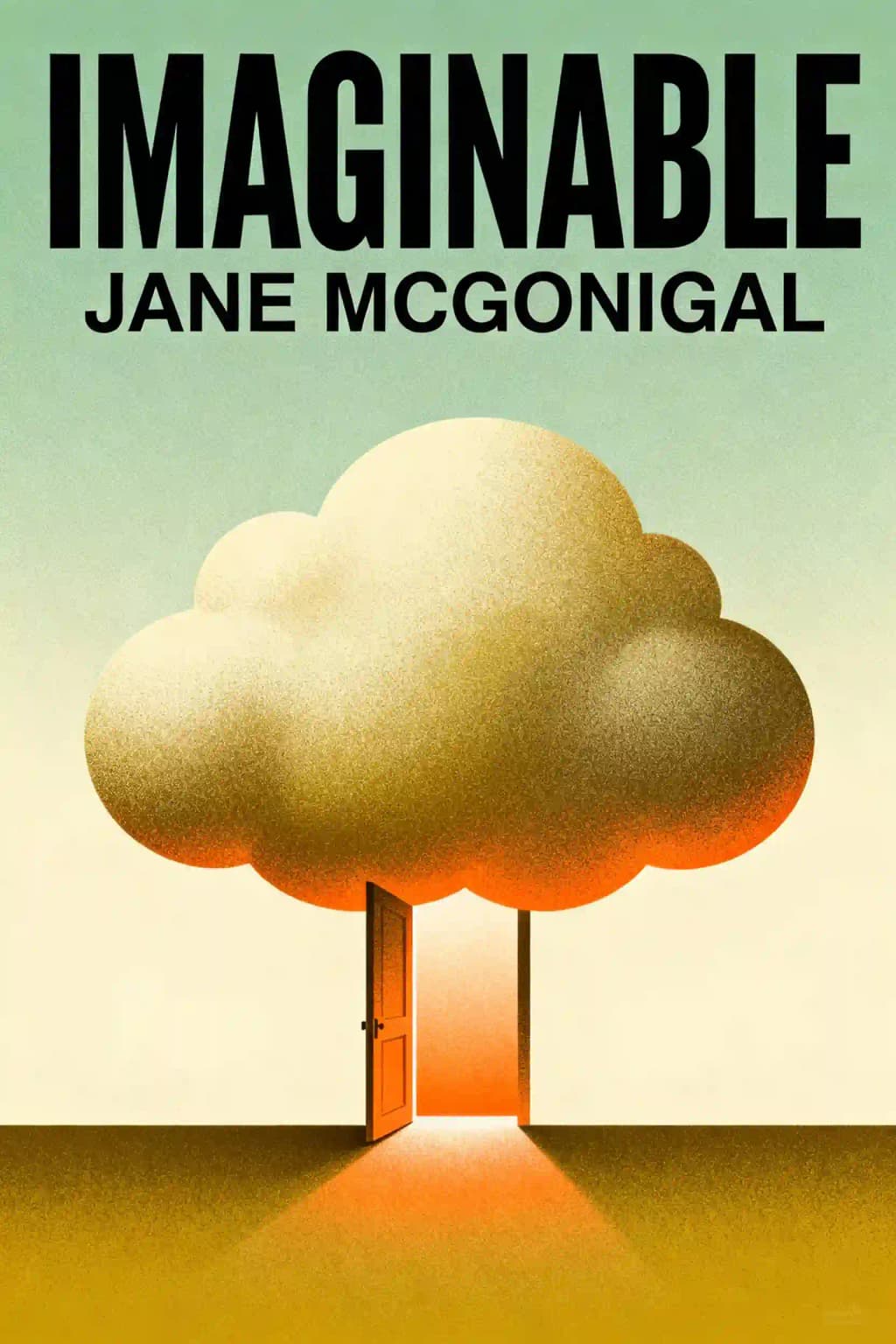
In "Imaginable," futurist Jane McGonigal reveals how to anticipate seemingly impossible futures. Endorsed by innovation titan Peter Diamandis as "more than a book - a mindset upgrade," it transforms pandemic-era anxiety into "urgent optimism" through thought experiments that make you excited about tomorrow, not fearful.
Jane McGonigal, New York Times bestselling author of Imaginable: How to See the Future Coming and Feel Ready for Anything—Even Things That Seem Impossible Today, is a pioneering game designer and futurist renowned for merging gameplay with real-world problem-solving. As Director of Game Research and Development at the Institute for the Future, her work bridges speculative fiction and practical strategies to help individuals and organizations build resilience against uncertainty.
A PhD holder in Performance Studies from UC Berkeley, McGonigal has designed groundbreaking alternate reality games like SuperBetter—which has empowered over 1 million players to overcome health challenges—and World Without Oil, commissioned by institutions including the World Bank and American Heart Association.
Her expertise in using games to tackle global crises, from climate change to mental health, is showcased in her other influential works, Reality is Broken and SuperBetter, which explore how game mechanics can enhance motivation and collaboration. A two-time TED speaker with 15+ million views, McGonigal’s ideas have been featured in The New York Times, Wired, and NPR.
Imaginable distills her decades of research into actionable techniques for future-proofing decisions, combining neuroscience insights with her signature approach to "urgent optimism." The book has been adopted by Fortune 500 companies and academic programs worldwide as a guide to navigating disruption.
Imaginable explores how to train your mind to envision and prepare for radical futures using neuroscience-backed strategies. McGonigal combines game design principles with psychological research to help readers build mental resilience, practice "future simulation" exercises, and reframe uncertainty as a solvable challenge. The book argues that imagining worst-case scenarios empowers proactive problem-solving for crises like climate change or technological disruption.
This book is ideal for futurists, leaders, and anyone facing rapid change in their career or personal life. Educators, policymakers, and innovators will appreciate its actionable frameworks for stress-testing ideas against potential futures. McGonigal’s approach also appeals to gamers interested in applying collaborative problem-solving skills to real-world challenges.
Yes—critics praise its blend of scientific rigor and practicality. The book offers 10+ exercises like “time traveling” to 10 years ahead or role-playing dystopian scenarios, making abstract futurism tangible. With examples from pandemic preparedness to AI ethics, it’s particularly valuable for post-2025 readers navigating accelerating technological shifts.
Core ideas include:
While Reality is Broken focused on gaming’s societal benefits and SuperBetter tackled personal resilience, Imaginable scales these ideas to collective futures. It expands on her EVOKE and Superstruct games, teaching readers to apply "massively multiplayer foresight" to climate, health, and tech ethics.
This exercise involves vividly imagining yourself 10 years in the future, navigating hypothetical scenarios like AI-dominated workplaces or climate migrations. By journaling from this “future self” perspective, you build neural pathways to handle ambiguity and spot early warning signs of emerging risks.
McGonigal proposes “climate victory” games where players strategize net-zero policies or disaster responses. One case study shows how simulating 2040 food shortages helped urban planners design vertical farming networks. The book emphasizes turning eco-anxiety into collaborative action through time-bound missions.
Some reviewers note the exercises require significant time investment and group participation, which may limit solo readers’ results. Others argue its optimism about collective problem-solving underestimates systemic barriers to change. However, most praise its evidence-based approach to overcoming “future fatigue”.
The book teaches “job mutation” thinking: analyzing how AI/automation might transform your role, then gaming out upskilling paths. A chapter profiles workers who used future scenarios to transition into hybrid tech-ethics roles during industry disruptions.
Notable exercises:
With AI adoption accelerating and climate thresholds nearing, McGonigal’s methods help individuals and organizations stress-test decisions against multiple futures. The book’s focus on “adaptive hope” resonates amid global polycrises, offering tools to avoid paralysis in uncertain times.
Both address existential risks, but Imaginable focuses on psychological readiness rather than statistical risk analysis. McGonigal emphasizes emotional resilience and everyday practice, while Ord prioritizes institutional reforms. They complement each other for readers seeking both personal and systemic strategies.
저자의 목소리로 책을 느껴보세요
지식을 흥미롭고 예시가 풍부한 인사이트로 전환
핵심 아이디어를 빠르게 캡처하여 신속하게 학습
재미있고 매력적인 방식으로 책을 즐기세요
This isn't fortune-telling; it's deliberate imagination training.
Ten years lifts the ceiling on our imagination.
We set maximal goals focused on the best possible outcomes.
Imagining anything in your far future increases motivation.
The most valuable aspect of future simulations isn't perfect prediction but preparing our minds.
Imaginable의 핵심 아이디어를 이해하기 쉬운 포인트로 분해하여 혁신적인 팀이 어떻게 창조하고, 협력하고, 성장하는지 이해합니다.
Imaginable을 빠른 기억 단서로 압축하여 솔직함, 팀워크, 창의적 회복력의 핵심 원칙을 강조합니다.

생생한 스토리텔링을 통해 Imaginable을 경험하고, 혁신 교훈을 기억에 남고 적용할 수 있는 순간으로 바꿉니다.
무엇이든 물어보고, 목소리를 선택하고, 진정으로 공감되는 인사이트를 함께 만들어보세요.

샌프란시스코에서 컬럼비아 대학교 동문들이 만들었습니다
"Instead of endless scrolling, I just hit play on BeFreed. It saves me so much time."
"I never knew where to start with nonfiction—BeFreed’s book lists turned into podcasts gave me a clear path."
"Perfect balance between learning and entertainment. Finished ‘Thinking, Fast and Slow’ on my commute this week."
"Crazy how much I learned while walking the dog. BeFreed = small habits → big gains."
"Reading used to feel like a chore. Now it’s just part of my lifestyle."
"Feels effortless compared to reading. I’ve finished 6 books this month already."
"BeFreed turned my guilty doomscrolling into something that feels productive and inspiring."
"BeFreed turned my commute into learning time. 20-min podcasts are perfect for finishing books I never had time for."
"BeFreed replaced my podcast queue. Imagine Spotify for books — that’s it. 🙌"
"It is great for me to learn something from the book without reading it."
"The themed book list podcasts help me connect ideas across authors—like a guided audio journey."
"Makes me feel smarter every time before going to work"
샌프란시스코에서 컬럼비아 대학교 동문들이 만들었습니다

Imaginable 요약을 무료 PDF 또는 EPUB으로 받으세요. 인쇄하거나 오프라인에서 언제든 읽을 수 있습니다.
Have you ever been blindsided by a world-changing event that seemed to come out of nowhere? In 2020, as the pandemic upended our lives, many described it as "unimaginable." Yet twelve years earlier, Jane McGonigal had simulated a global respiratory pandemic with remarkable accuracy. Her 2008 Superstruct simulation predicted mask resistance, school closures impacting working mothers, and religious gatherings becoming superspreader events. This wasn't coincidence - it was the result of deliberate future-thinking techniques that anyone can learn. The most valuable aspect of future simulations isn't perfect prediction but preparing our minds for flexibility and resilience. These mental exercises create lasting habits, particularly watching for early signals that imagined scenarios might be becoming reality. By practicing these techniques, we develop what McGonigal calls "urgent optimism" - the ability to recognize serious challenges while maintaining realistic hope about our capacity to address them.