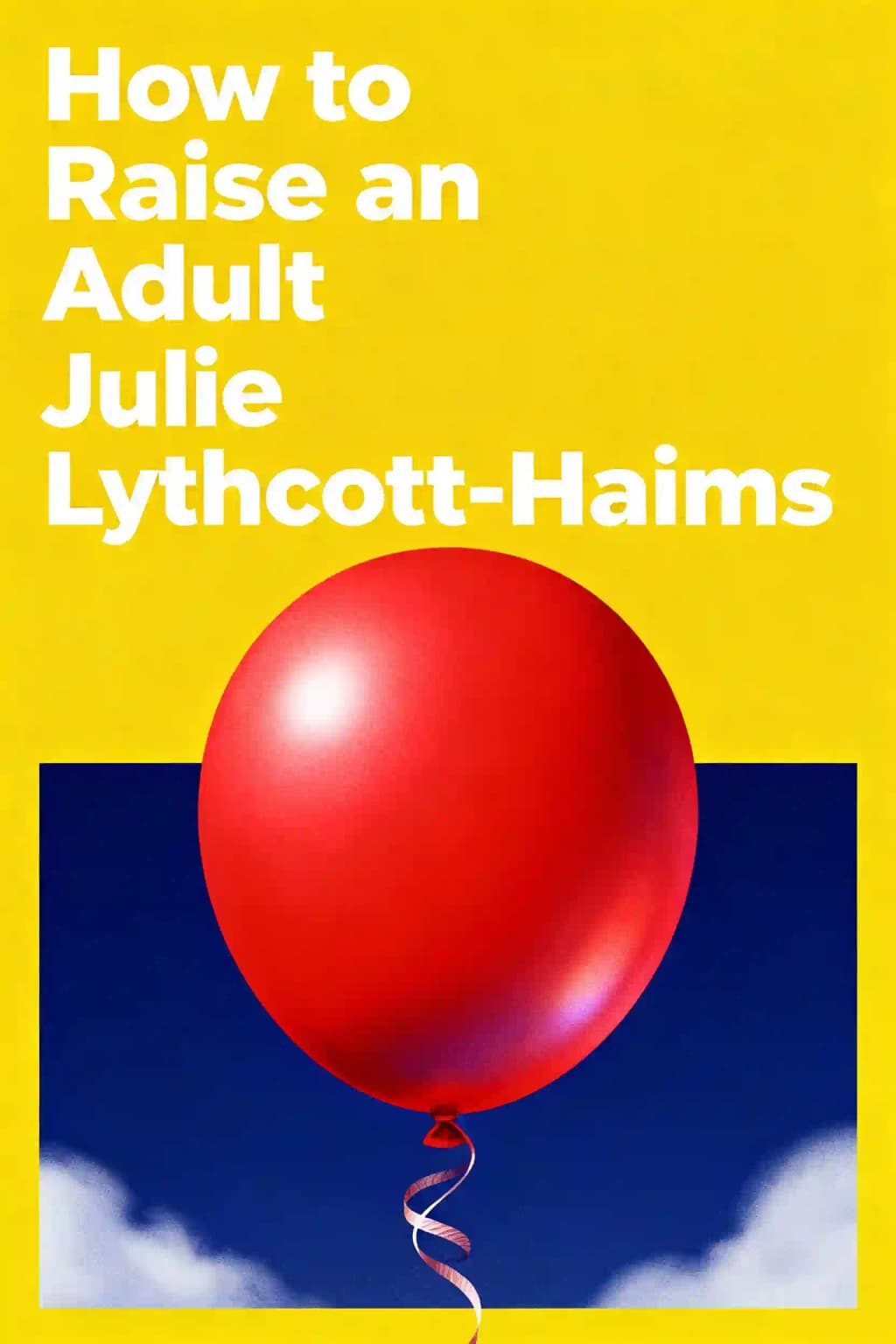
Former Stanford dean Julie Lythcott-Haims exposes how helicopter parenting cripples kids. This New York Times bestseller asks: Are you raising capable adults or dependent children? Daniel Pink calls it "the right book at the right time" for reclaiming childhood resilience.
Julie Lythcott-Haims, New York Times bestselling author of How to Raise an Adult, is a leading voice on parenting, youth development, and fostering resilience. A former Stanford University Dean of Freshmen and Undergraduate Advising, her decade-long experience observing the consequences of overparenting inspired this groundbreaking critique of helicopter parenting.
Her expertise spans education, law, and public policy—with degrees from Stanford University, Harvard Law School, and California College of the Arts. She amplifies her insights through a viral TED Talk (3.5M+ views) and media appearances on NPR, CBS This Morning, and The Today Show.
Lythcott-Haims’ other works include the award-winning memoir Real American, exploring racial identity, and Your Turn: How to Be an Adult, a guide for young adults. Recognized as Silicon Valley NAACP’s 2023 Legislator of the Year and California’s Woman of the Year, she serves on nonprofit boards addressing education and health equity. How to Raise an Adult has been translated into 25+ languages and remains a cornerstone text for parents and educators worldwide.
How to Raise an Adult critiques helicopter parenting and advocates fostering independence in children through authoritative parenting. It emphasizes allowing kids to face challenges, build resilience, and pursue their own passions, drawing on research and interviews with educators and employers.
This book is essential for parents, educators, and caregivers seeking to avoid overparenting traps. It’s particularly relevant for those raising teens or young adults, offering strategies to nurture self-reliance and emotional resilience.
Yes—it’s a research-backed, practical guide with enduring relevance. Its critique of overparenting and actionable advice on fostering independence have made it a New York Times bestseller and library staple.
Overparenting stifles independence, leading to anxiety, poor decision-making, and difficulty adapting to adulthood. Shielding children from failure deprives them of critical problem-solving skills and self-confidence.
Lythcott-Haims advocates authoritative parenting, which balances warmth with clear boundaries. This approach encourages autonomy while providing guidance, contrasting with permissive, authoritarian, or neglectful styles.
A former Stanford Dean of Freshmen, Lythcott-Haims holds degrees from Stanford, Harvard Law, and California College of the Arts. Her insights stem from decades of advising students and researching parenting trends.
Critics note it focuses more on overparenting than emotional neglect. Some argue its advice assumes socioeconomic privilege, potentially limiting applicability for marginalized families.
Unlike achievement-focused guides, it emphasizes long-term life skills over short-term success. It complements works like The Gift of Failure but adds unique insights from higher education.
Helicopter parenting persists, exacerbated by academic pressure and social media. The book’s lessons on mental health and self-sufficiency remain urgent for Gen Alpha and Gen Z parents.
Her works include Real American (a memoir on racial identity) and Your Turn: How to Be an Adult, a guide for young adults transitioning to independence.
저자의 목소리로 책을 느껴보세요
지식을 흥미롭고 예시가 풍부한 인사이트로 전환
핵심 아이디어를 빠르게 캡처하여 신속하게 학습
재미있고 매력적인 방식으로 책을 즐기세요
We've criminalized normal childhood independence.
Boomers became intensely involved in every aspect of their children's lives.
We're raising children who lack the resilience.
The natural independence that once characterized childhood has been systematically replaced.
Are we inadvertently crippling them with our well-intentioned involvement?
HOW TO RAISE AN ADULT의 핵심 아이디어를 이해하기 쉬운 포인트로 분해하여 혁신적인 팀이 어떻게 창조하고, 협력하고, 성장하는지 이해합니다.
HOW TO RAISE AN ADULT을 빠른 기억 단서로 압축하여 솔직함, 팀워크, 창의적 회복력의 핵심 원칙을 강조합니다.

생생한 스토리텔링을 통해 HOW TO RAISE AN ADULT을 경험하고, 혁신 교훈을 기억에 남고 적용할 수 있는 순간으로 바꿉니다.
무엇이든 물어보고, 목소리를 선택하고, 진정으로 공감되는 인사이트를 함께 만들어보세요.

샌프란시스코에서 컬럼비아 대학교 동문들이 만들었습니다
"Instead of endless scrolling, I just hit play on BeFreed. It saves me so much time."
"I never knew where to start with nonfiction—BeFreed’s book lists turned into podcasts gave me a clear path."
"Perfect balance between learning and entertainment. Finished ‘Thinking, Fast and Slow’ on my commute this week."
"Crazy how much I learned while walking the dog. BeFreed = small habits → big gains."
"Reading used to feel like a chore. Now it’s just part of my lifestyle."
"Feels effortless compared to reading. I’ve finished 6 books this month already."
"BeFreed turned my guilty doomscrolling into something that feels productive and inspiring."
"BeFreed turned my commute into learning time. 20-min podcasts are perfect for finishing books I never had time for."
"BeFreed replaced my podcast queue. Imagine Spotify for books — that’s it. 🙌"
"It is great for me to learn something from the book without reading it."
"The themed book list podcasts help me connect ideas across authors—like a guided audio journey."
"Makes me feel smarter every time before going to work"
샌프란시스코에서 컬럼비아 대학교 동문들이 만들었습니다

HOW TO RAISE AN ADULT 요약을 무료 PDF 또는 EPUB으로 받으세요. 인쇄하거나 오프라인에서 언제든 읽을 수 있습니다.
Picture this: a Stanford freshman calls home five times daily, unable to decide what classes to take or when to do laundry. Meanwhile, a parent rents an apartment near their child's college to continue managing their life. These aren't rare exceptions - they represent a troubling new normal. Over the past three decades, we've transformed from a culture that valued childhood independence into one obsessed with protection, perfection, and parental involvement at every turn. The consequences? A generation entering adulthood without the basic skills to function independently. As former Stanford dean Julie Lythcott-Haims witnessed firsthand, even the most academically accomplished young people often lack the resilience, problem-solving abilities, and self-direction needed for adult life. The question isn't whether we love our children enough - it's whether our love has taken a form that undermines their development into capable adults.