1장
Love Will Break Your Mind (And That's Okay)
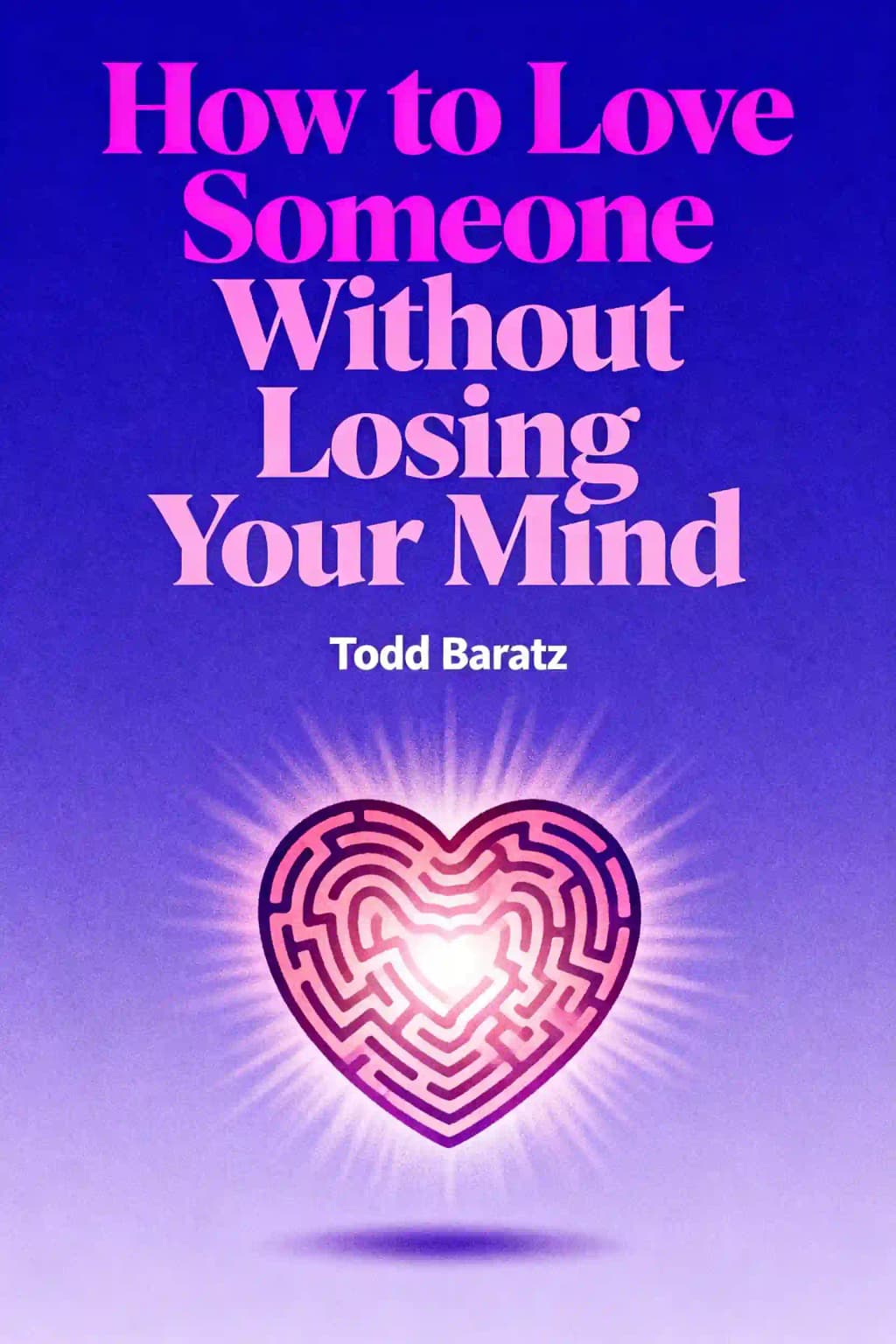
When was the last time you felt truly seen in a relationship? Or found yourself spiraling after a text went unanswered? Maybe you've wondered if your partner is "the one" or if you should keep searching for someone better. If so, you're not alone. In "How to Love Someone Without Losing Your Mind," psychotherapist Todd Baratz shatters the fairy tale version of love we've been sold. This isn't your typical relationship advice book filled with "Live, Laugh, Love" platitudes or promises of finding a perfect soulmate. Instead, it's a raw, honest exploration of why relationships are inherently messy, why we're all somewhat unhealthy, and why that's completely normal. The book has resonated deeply with celebrities like Dan Levy and Jonathan Van Ness, who praise its refreshing honesty. As relationship anxiety reaches epidemic levels in our swipe-right culture, Baratz's work stands out by embracing the uncomfortable truth: love will mess with your head, and that's exactly how it's supposed to be.
2장
The Love Marketplace: How We Got Here
Western culture has transformed love into a capitalist pursuit. Dating apps function as marketplaces where potential partners are products to be evaluated based on job titles, appearance, and perceived compatibility with minimal information. We approach dating like shopping-weighing options, comparing features, and simultaneously marketing ourselves as desirable assets to attract the best possible match.
We're chasing a marketed fantasy of love-the perfect soulmate who provides effortless happiness. This mindset leads to absurd disqualifications over minor issues: "It won't work because they live in Brooklyn and I live on the Upper West Side" or "because they're a Gemini and I'm a Scorpio." We want instant certainty rather than taking time to truly know someone.
Our modern approach to relationships is fundamentally broken. We've created rigid rules about love that function as defensive strategies born from fear and anxiety, rebranded as essential health measures. Our obsession with red flags, boundaries, and avoiding "narcissists" represents normal trauma responses that can ultimately harm more than help. Instead of accepting the inevitable difficulties in relationships, we condemn partners and ourselves for being imperfect.
This isn't to say all relationship rules are harmful-some do protect us from truly abusive situations. But many simply prevent authentic connection. We've developed a collective crisis of unresolved intergenerational trauma, leading us to approach relationships with excessive caution and unrealistic expectations.
As our expectations for love have skyrocketed, our commitment to the necessary work has plummeted. We cling to the fantasy that the "right" person will bring total bliss, ignoring that all relationships include disappointment. This fairy tale actually sabotages our connections. The problem isn't that our expectations are too high or too low-it's that our focus is wrong.
3장
Emotional Ghosts: How Your Past Shapes Your Present
For over a decade, Baratz has worked with individuals and couples exploring their narratives about love. Every relationship challenge traces back to loss and longing for love and acceptance. Though our experiences feel unique, we're not the starting point-our lives are chapters in older stories predating us. Understanding this intergenerational narrative is crucial to healing.
Consider Baratz's own family history: When he asked his mother why she married his father, she simply said, "I just wanted to be loved." She married at twenty-two to escape her abusive stepfather. Meanwhile, his father lost his own father at eleven, experienced anti-Semitism, and was often left alone as his mother worked constantly after attempting suicide. In Baratz's family, independence was discouraged after losing relatives in the Holocaust; survival trumped relationship satisfaction, and being alone was associated with death.
These patterns directly influenced Baratz's own relationship with Alex, his partner of ten years. Though their relationship was fundamentally healthy, Baratz felt the same powerlessness he'd observed in his mother. While Alex wasn't abusive like Baratz's father, Baratz responded similarly-staying small, quiet, and never confronting him about their challenges. For two years, he spiraled in ambivalence-loving Alex but curious about other possibilities, stuck in what he calls a "second childhood"-paralyzed and powerless despite having the adult tools to either improve the relationship or leave it.
We all carry these emotional ghosts from our families of origin. Our wounds affect our partner choices and relationship dynamics through "re-enactments" of intergenerational trauma patterns. Understanding these patterns doesn't mean we're trapped by them. Whether single, partnered, or mid-breakup, change is always possible-not toward perfection, but toward a more satisfying, meaningful, though still imperfect life.
The path forward isn't about finding a partner who'll transform your life-it's about changing yourself through self-understanding. This requires embracing pain as a teacher and exploring your unconscious patterns, helping you become the author of your own story.
4장
The Real Story of Sex: Beyond Performance
Our collective discomfort with discussing sexuality reveals how deeply ingrained our repressive history and sex-negative attitudes remain, despite increased knowledge. We're bombarded with contradictory messages about sex that create confusion and shame. Everyone has sexual issues to varying degrees, as navigating sexuality within our cultural constraints is challenging for all.
This was evident with Jane, a 39-year-old lesbian client who blushed intensely when discussing sexuality because no one had ever asked her personal questions about it before. This is common-many people reach adulthood without having meaningful conversations about their sexuality and pleasure.
Medical doctors and psychotherapists receive minimal training on sexuality, focusing only on STIs and contraception rather than pleasure, masturbation, and body positivity. When people's only exposure to sex comes through pornography or unrealistic media portrayals (as is true for most of the population), they develop unrealistic expectations about bodies, pleasure, and orgasm, leading to performance anxiety, shame, negative body image, and sexual avoidance.
During sexual activity, our bodies release hormones like serotonin, dopamine, and oxytocin to create arousal and pleasure. If anything feels off-even a fleeting thought about rejection or discomfort-our bodies prioritize perceived threat over pleasure, releasing stress hormones that diminish arousal. This performance-based model is culturally ingrained and takes conscious effort to change.
The Dual Control Model explains how our sexual response involves both an accelerator (arousal) and brakes (turnoffs), with each person having unique sensitivity to both systems. Context matters enormously-safety, body image, even room temperature can impact psychological arousal.
Consider Thomas, a 38-year-old heterosexual man who began dating someone special but struggled to initiate sexual conversations despite being highly sexual. After months, they had one drunken hookup but otherwise left their sexual connection unexplored. Thomas's inability stemmed from childhood relational trauma-his parents worked late hours, modeled avoidance and emotional disconnection, and never allowed him to express his true self.
Sex transcends physical acts, intertwining with psychology, emotions, self-esteem, and fears of rejection. The greatest challenge is prioritizing personal pleasure-a form of selfishness often discouraged in childhood. As Dr. Michael Bader notes, sexual excitement requires momentarily becoming selfish to surrender to our own pleasure. This isn't about harming others but about consensually focusing on your own arousal, like enjoying a meal rather than forcing yourself to eat something unpleasant.
5장
When the Honeymoon Ends: The Real Work Begins
Most couples enter therapy years after resentment and hopelessness have become mountainous obstacles. They arrive with laundry lists of unfulfilled needs and criticisms that create polarizing hostage situations where partners hold each other in contempt, demanding change. The relationship becomes a battleground of complaints: "They don't see me," "We want different things," "They don't share emotions," "She's critical," "He's unemotional." By this point, both feel immense pressure to either fix the relationship or end it.
The end of the honeymoon period is inevitable for all couples. Initially, differences seem charming or manageable-as in Baratz's relationship with Alex, where his fitness focus contrasted with Alex's preference for TV, his early nights with Alex's late partying, his mindful eating with Alex's love of fast food. For three years, Baratz's usually active anxiety journal remained empty because he was genuinely happy. They had amazing chemistry, lived in an oceanfront condo, and enjoyed a low-conflict relationship where minor squabbles were easily repaired through humor, sex, and food.
But as relationships progress, the pressure to meet milestones can disrupt genuine connection when people focus on controlling a hypothetical future rather than being present. While it's natural to fantasize about potential futures with someone, obsessing over whether a new date will want children or be a good co-parent creates distance from the actual person before you.
As Baratz entered graduate school, his worldview expanded dramatically, creating a profound shift in how he viewed his relationship. Despite their differences, Alex loved him deeply-cooking for him, prioritizing his pleasure, holding him when he cried about family issues, and creating a sense of home and safety he'd never experienced before. However, problems emerged from their codependency: Alex was his everything-best friend, social network, lover, roommate, family. Without friends of his own, Baratz felt isolated and unable to express his authentic self.
Rather than addressing these issues directly, Baratz began focusing only on Alex's limitations, wishing he would change ("if onlys"), rather than acknowledging his own role in their troubles. He wanted Alex to rescue him, to give him permission to self-express, when he should have been giving that to himself. The very qualities that initially drew him to Alex-his lightness and fun-now frustrated him, as he felt trapped inside his own story, powerless and alone, just as he had been in childhood.
6장
Love Will Trigger You: Understanding Emotional Reactions
Love inevitably triggers us, sending us on emotional roller coasters where we alternate between adoration and fury. When triggered, we experience flooding-our brain's emergency response system activates, making us feel attacked and unable to calm down, often leading to emotional shutdown. Peter Levine calls this the "veracity trap," where we equate emotional intensity with truth. These powerful reactions are deeply rooted in how our bodies store trauma, creating invisible wounds that partners often unknowingly trigger.
Triggers are specific present situations that provoke powerful emotional responses rooted in past trauma wounds. They don't just produce any reaction but can unleash tremendous emotional upheaval leading to frustration, contempt, and dysregulation. When triggered, our reactions are approximately 30 percent response to the present situation and 70 percent tied to past experiences-typically trauma.
Trauma extends beyond obvious physical or sexual abuse to include emotional abandonment, neglect, and what Terry Real calls "passive abuse"-families lacking warmth and nurturing. Trauma isn't just what was done to us but what wasn't provided-the protected space for psychological growth. As Bessel van der Kolk explains, trauma fundamentally reorganizes how our mind and brain manage perceptions, changing not just what we think about but our capacity to think.
Every relationship has its own dance shaped by present circumstances but rooted in childhood patterns. Re-enactments aren't inherently negative-they're opportunities for healing and repair. These unconscious processes recreate familiar roles, emotions, and behaviors that impact everything from communication to attachment patterns. Freud called this "repetition compulsion," suggesting we're attempting to master unresolved childhood issues.
When clients claim they only have problems with their partner, Baratz reminds them this is natural-partners occupy central roles in our lives unlike anyone else. We share vulnerabilities with them that we don't with others, and their flaws affect us profoundly. Adult partnerships directly parallel early attachment relationships, which is why similar issues arise. We unconsciously choose partners who love us in familiar ways, co-create dynamics resembling childhood experiences, and feel entitled to have partners fix resulting feelings.
Consider Denise and Sam, clients for two years, who showed genuine care despite significant childhood trauma. Their trigger responses created a destructive cycle-Denise would withdraw and dissociate when triggered, causing Sam to feel abandoned and anxiously pursue her for reassurance. Neither could regulate their emotions enough to repair conflicts, have sex, or plan enjoyable activities together.
Through therapy, they explored their trauma while developing mutual empathy and understanding. The breakthrough came when they realized neither had ever safely relaxed into a relationship or received love without fear of abuse. Recovery from trauma isn't just about processing pain-it's learning to live without fear, recognizing what didn't occur (safety and trust) during trauma, and cultivating pleasure, joy and relaxation to create safety.
7장
Growing Up: Finding Yourself Within Relationships
Many of us are disconnected from our inner selves-fearful of self-honesty, reluctant to voice our thoughts, and overly focused on others. We've lost clarity about our desires and goals, obscuring our path to fulfillment. Instead of looking inward, we seek rescue from partners, family, or strangers online, hoping they'll provide the purpose and acceptance we can't find within ourselves.
In relationships, we become obsessed with analyzing others rather than focusing on ourselves, asking questions like "Why haven't they responded?" or "Are they losing interest?" This defense mechanism helps manage anxiety but distances us from our own experiences. By focusing on others, we avoid confronting our own pain and sorrow.
Baratz blamed Alex for their relationship problems, convinced Alex needed to change for them to be happy. But he failed to use his voice or recognize his own role in their dynamic. Having never lived independently and still healing from childhood trauma, he let himself become defined by their relationship. He silently withdrew while expecting Alex to intuitively know his needs without expressing them. He made himself invisible then resented feeling unseen.
Differentiation, a concept introduced by Murray Bowen and refined by David Schnarch, describes the ability to maintain one's sense of self while in relationship. Well-differentiated people can handle disagreements without becoming overwhelmed or passive-aggressive. This differentiation begins in childhood as we develop identities separate from our families. Ideally, parents support this independence, but many families discourage self-exploration or punish it, teaching children that self-expression is unsafe.
Schnarch describes differentiated couples as two separate boats navigating alongside each other rather than one shared vessel. As Esther Perel notes, "When two become one, connection can no longer happen." True intimacy requires balancing individual growth with shared experiences-a delicate dance between "me" time and "us" time.
While standard communication advice like using "I" statements and validation techniques has value, these tools alone won't create fulfilling relationships. When trauma is triggered, these techniques often fail us. True intimacy requires embracing discomfort and hearing difficult truths, not just seeking validation.
It's normal to occasionally feel frustrated or even hateful toward your partner-the problem comes when you define them solely by these irritating traits. Relationship satisfaction doesn't depend on your partner lacking flaws but on how you understand and respond to those flaws. Adult intimacy requires seeing your partner's shortcomings through the lens of their personal history rather than how they affect your fulfillment.
Childhood is inherently choiceless-a "gentle open prison" as Alain de Botton puts it. As adults, we often swear not to recreate these powerless dynamics, yet unconsciously repeat them in our relationships. Breaking free requires confronting our realities and investing in our capacity to drive change, even when our partner isn't matching our effort. When we change ourselves, our relationship changes too. This is differentiation. This is growing up.
8장
Too Good to Leave, Too Bad to Stay: Making Peace with Ambivalence
Relationships defy the binary portrayal of health we often seek. We crave absolutism and certainty, wanting clear answers about whether to stay or leave, but relationships exist in shades of gray that fluctuate daily. Making pro/con lists rarely brings clarity-they often just exacerbate existing uncertainty.
We're culturally encouraged to end relationships that aren't wholly fulfilling, creating a "new shame" around staying in imperfect partnerships. The online therapy space overflows with checklists identifying "bad" partners and theories about why we can't leave them. But whether a relationship is new or decades-old, encountering challenges is normal, and finding a path forward is complex and often triggering.
After seven years in Florida, Baratz desperately wanted to return to New York City while Alex refused to leave his job. Baratz moved north without him, and surprisingly, their long-distance relationship thrived through daily FaceTime, texting, and regular visits-though he noticed Alex never came to New York.
Their relationship fractured when Baratz discovered Alex was cheating during a conference. After noticing suspicious grooming habits before the trip, he created a fake Grindr profile and caught Alex red-handed-messaging him as the fake person while simultaneously texting him as himself and watching him lie. His betrayal wasn't just the infidelity but the gaslighting that followed.
Working through the aftermath, Baratz learned Alex felt abandoned by his move to New York but never verbalized these feelings. Instead, he enacted his emotions behaviorally through cheating. Despite his eventual apology, Baratz never trusted him again. Three years later, when he caught Alex with someone else during a family cruise, he realized the truth no longer mattered-there was no trust left to salvage.
Baratz ultimately ended his relationship with Alex not simply because he cheated or lied, but because he couldn't see a path forward where he could trust him to be honest when challenges arose. Though he wanted them to stay together and wasn't even angry anymore-just deeply sad-he recognized they had grown apart.
Rather than blame Alex and label him toxic, Baratz eventually realized his own rigidity played a role. With distance from the relationship, he understood his inflexibility regarding certain needs he wanted fulfilled. Alex tried everything to win him back except what Baratz truly needed-therapy, reading self-help books, or couples counseling. Baratz never told him these requirements explicitly, and so he broke both their hearts.
The road to healing sometimes involves staying to work through difficulties, and other times requires the courage to leave-both choices can bring healing.
9장
Endings and Beginnings: Finding Your Way Forward
While we obsessively celebrate love's beginnings with Valentine's Day, weddings, and engagement parties, we lack rituals for honoring relationship endings. There are no breakup apps, divorce celebrations, or cultural norms supporting this equally significant life transition. Instead, we grieve silently, ignoring the courage it takes to end a relationship.
Endings deserve as much attention as beginnings-they represent transformation and growth, not failure. Every relationship teaches us something valuable, regardless of duration. Ironically, anxiety about potential endings haunts us from the very start of relationships, leading to protective behaviors like maintaining checklists, playing texting games, and avoiding difficult conversations.
Baratz's breakup with Alex was devastating-a self-inflicted amputation of his most stabilizing force. What followed was three years of daily communication as "friends," with both cycling through periods of wanting reconciliation. Despite friends and therapists advocating the no-contact rule, he continued their connection. The reality is that more than half his clients maintain some form of connection with exes despite societal pressure to cut ties completely.
With his biological family relationships strained, the idea of suddenly not speaking to Alex-who had become his family-seemed ridiculous. They texted daily and talked often, sometimes even sexting, creating an intimacy without boundaries where they served as each other's unofficial backup plan. When Baratz moved to Los Angeles seeking change, Alex and he maintained their intimate connection. He even discussed visiting, which felt like a trial for rekindling their relationship. But two months later, Alex met someone else and suddenly withdrew from their communication patterns, triggering Baratz's PTSD and a severe depressive episode.
One month after finally ending this post-breakup relationship, Baratz attended an Esther Perel talk where he tearfully identified as "single" for the first time-a vulnerable, official acknowledgment of his new status. Unlike rom-com depictions of post-breakup self-discovery, his reality was confronting an algebraic equation: Childhood + trauma + being gay + family estrangement/breakup = prolonged grief.
Living alone after a decade was jarring-sometimes going months without being touched. Yet there was freedom in only being accountable to himself. After Alex, Baratz grew up professionally and created a whole new life-an empowering but herculean effort that deserves celebration. Though rebuilding his social life was challenging after years of neglect, he learned that his preference for solitude wasn't luxuriating but hiding.
When it comes to dating, Baratz encourages approaching it as an opportunity for new experiences rather than expecting to find "the One." He wishes we could start a cultural movement encouraging people to cling more, as people are too avoidant and unavailable. The desire for deep attachment is a strength, not something to suppress due to social pressure. Everyone is "relationship-ready" despite the labels society puts on us. Get into relationships for the experience, growth, and fun!
10장
Embracing Imperfection: The Path to Authentic Love
Being a therapist gives Baratz unique insight into people's inner worlds. Sometimes he knows more about his clients than their spouses or best friends do. What he's learned is that everyone-every single person-is a little bit unhealthy. We all lash out when we should show compassion, make major relationship mistakes, and fail to meet idealistic standards. Yet everyone's seemingly unhealthy behavior makes perfect sense within their personal story.
The Instagram posts with empowering phrases often bypass the messy reality of human experience-we can't simply "cut someone out" or follow a checklist to happiness. Our society places enormous pressure on people to have healthy relationships without teaching them how, leaving many to learn about intimacy from unrealistic sources like pornography. Everyone has limitations, everyone is deeply flawed, and every relationship is imperfect. It's actually healthy, at times, to be unhealthy.
In relationships, we're all like babies learning to walk, except we must also effectively communicate while navigating past traumas. No relationship can measure up to perfectionistic standards-all will face challenges that could be judged as unhealthy by outsiders. The biggest bummer of all: happiness isn't life's ultimate goal; meaning is what matters most.
We organize our lives around hope and desire for change, fixating on fantasies of a better future while missing the present. If you hope for a pain-free, controllable life, you'll see threats everywhere, leading to anxiety. Peace comes from understanding your capacity to recognize, tolerate, and work through pain.
Taking the first step toward healing begins with curiosity-asking "What can I learn about myself?" Healing isn't a destination but a lifelong practice. As Socrates noted, wisdom comes not from knowing but from knowing what you don't know. This isn't just about healthy communication or conscious relationships-it's a complete paradigm shift, a cultural movement. We must approach emotional challenges differently than physical pain, accepting that problems are normal within life's context.
Pain is inevitable-not something to resist but to welcome with kindness. Self-discovery has no endpoint; as James Hollis says, we may never fully know ourselves "any more than a swimmer could know the ocean." Life's unpredictable contours give it poetic beauty.
Baratz wants you to develop a love of life-not just romantic love, but deep appreciation for all life's ups and downs. Growing up, he hated life until Alex taught him what it meant to be alive. After their breakup, he rebuilt by learning to love himself, getting a dog, developing as a therapist, and seeing his mother as a complex human.
Remember: there's absolutely nothing wrong with you. You've been hurt, but you're loved and important. Life is tough but beautiful. You'll experience pain, love, and growth in cycles. Figure out why you are the way you are, befriend all those parts, forgive others and yourself. Experiment, make mistakes, learn from them. The moral? Fuck the fairy tale!