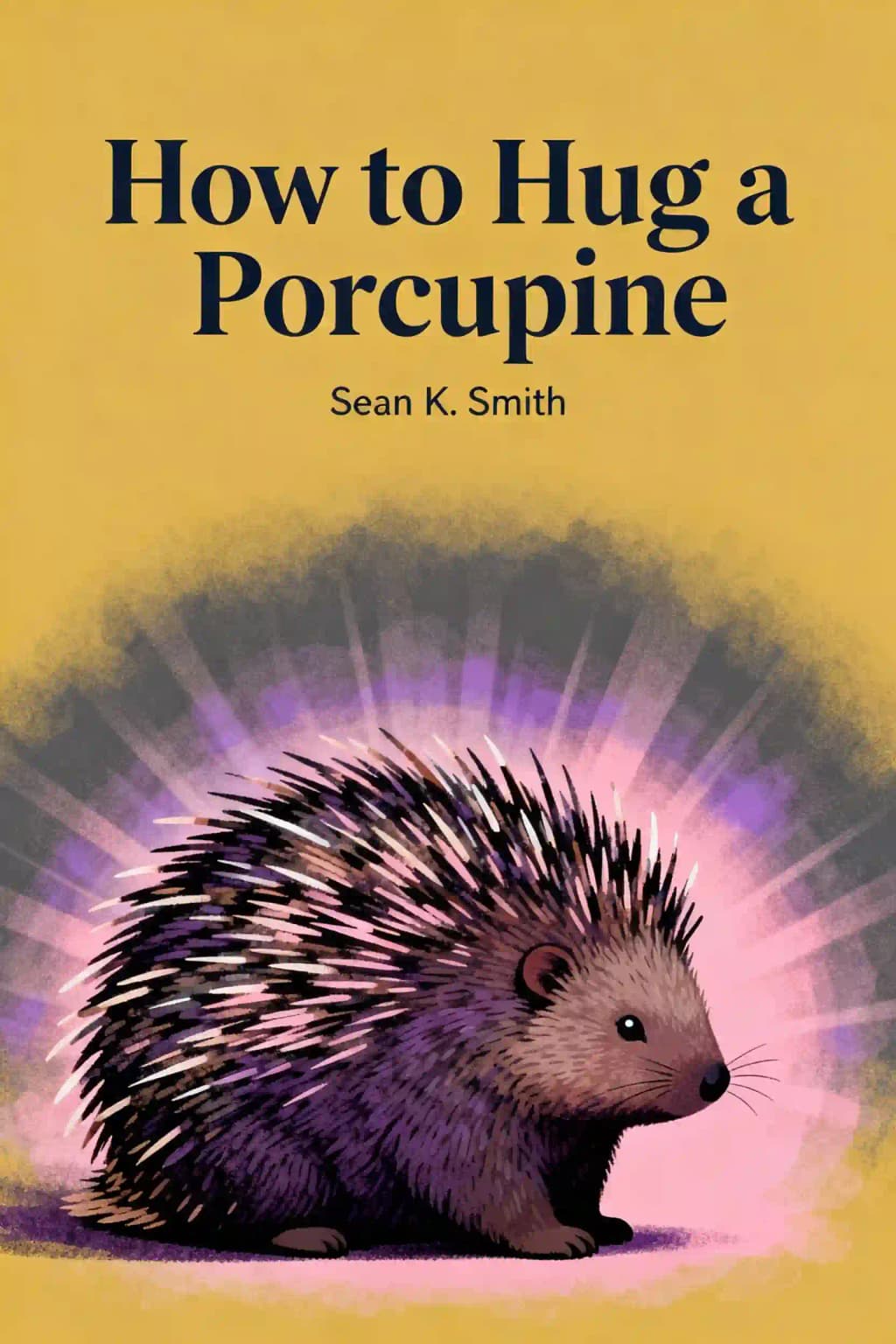
In "How to Hug a Porcupine," Sean K. Smith delivers 101 strategies for loving difficult people. TikTok's viral sensation offers practical wisdom endorsed by renowned psychologist Dr. Debbie Joffe Ellis. Ever wondered why the most challenging relationships might become your greatest teachers?
Sean K. Smith, author of How to Hug a Porcupine, is a self-help author and communication strategist known for blending psychological insights with actionable advice. His work focuses on interpersonal relationships, emotional intelligence, and conflict resolution, themes central to this guide on navigating difficult interactions.
Smith’s expertise extends to sustainability and personal development, evidenced by his other titles like You Can Save the Earth and Reel Wisdom, which have been featured on platforms such as Goodreads and ThriftBooks.
While details about his academic background are limited, his practical approach resonates with readers seeking tangible strategies for improving communication and fostering empathy. How to Hug a Porcupine has gained traction as a go-to resource for its relatable frameworks, available in multiple formats including audiobook and paperback.
Smith’s accessible style transforms complex emotional dynamics into digestible steps, making his work a staple for those aiming to build healthier connections.
How to Hug a Porcupine offers 101 actionable strategies for building healthier relationships with challenging individuals (“porcupines”). It emphasizes empathy, self-awareness, and effective communication to defuse conflicts and foster patience. The book teaches readers to recognize defensive behaviors rooted in fear and respond with kindness, whether dealing with family, colleagues, or strangers.
This book is ideal for anyone navigating difficult personal or professional relationships, including parents, managers, or individuals seeking emotional resilience. Its practical advice benefits those aiming to improve communication, manage conflicts, or understand fear-driven behaviors in others.
Sean K. Smith is an author, journalist, and screenwriter with degrees from Harvard and Stanford. Known for blending storytelling with psychological insights, he has written extensively on interpersonal dynamics and self-improvement. His works, including How to Hug a Porcupine, focus on practical solutions for modern relational challenges.
Yes—the book provides concise, actionable tips backed by psychological principles. Readers praise its relatable examples and tools for transforming interactions with “prickly” people. Its viral TikTok popularity underscores its relevance for fostering empathy and reducing conflict in daily life.
A “porcupine” is someone who uses aggressive or confrontational behaviors as a defense mechanism, often due to insecurity or past negative experiences. The book notes that everyone has an “inner porcupine” that emerges under stress.
Some readers may find its advice overly simplistic for deeply entrenched relational patterns. Critics note it focuses more on individual adaptation than systemic solutions, which may not address all scenarios.
As remote work and digital communication reduce face-to-face interactions, the book’s focus on empathy and conflict resolution remains critical. Its principles align with rising interest in emotional intelligence and mental health awareness.
These lines underscore the importance of self-regulation and perspective-taking.
Unlike Crucial Conversations (focused on dialogue frameworks) or The Subtle Art of Not Giving a F (prioritizing self-interest), this book blends psychological insights with bite-sized, relational tweaks. It’s ideal for readers seeking quick, practical steps over theoretical depth.
저자의 목소리로 책을 느껴보세요
지식을 흥미롭고 예시가 풍부한 인사이트로 전환
핵심 아이디어를 빠르게 캡처하여 신속하게 학습
재미있고 매력적인 방식으로 책을 즐기세요
Difficult behavior isn't personal; it's protective.
Their sharp words, like quills, are defensive weapons.
Human porcupines are born soft and vulnerable.
The challenge lies in not responding in kind.
Empathy as Your Secret Weapon
How to hug a porcupine의 핵심 아이디어를 이해하기 쉬운 포인트로 분해하여 혁신적인 팀이 어떻게 창조하고, 협력하고, 성장하는지 이해합니다.
How to hug a porcupine을 빠른 기억 단서로 압축하여 솔직함, 팀워크, 창의적 회복력의 핵심 원칙을 강조합니다.

생생한 스토리텔링을 통해 How to hug a porcupine을 경험하고, 혁신 교훈을 기억에 남고 적용할 수 있는 순간으로 바꿉니다.
무엇이든 물어보고, 목소리를 선택하고, 진정으로 공감되는 인사이트를 함께 만들어보세요.

샌프란시스코에서 컬럼비아 대학교 동문들이 만들었습니다
"Instead of endless scrolling, I just hit play on BeFreed. It saves me so much time."
"I never knew where to start with nonfiction—BeFreed’s book lists turned into podcasts gave me a clear path."
"Perfect balance between learning and entertainment. Finished ‘Thinking, Fast and Slow’ on my commute this week."
"Crazy how much I learned while walking the dog. BeFreed = small habits → big gains."
"Reading used to feel like a chore. Now it’s just part of my lifestyle."
"Feels effortless compared to reading. I’ve finished 6 books this month already."
"BeFreed turned my guilty doomscrolling into something that feels productive and inspiring."
"BeFreed turned my commute into learning time. 20-min podcasts are perfect for finishing books I never had time for."
"BeFreed replaced my podcast queue. Imagine Spotify for books — that’s it. 🙌"
"It is great for me to learn something from the book without reading it."
"The themed book list podcasts help me connect ideas across authors—like a guided audio journey."
"Makes me feel smarter every time before going to work"
샌프란시스코에서 컬럼비아 대학교 동문들이 만들었습니다

How to hug a porcupine 요약을 무료 PDF 또는 EPUB으로 받으세요. 인쇄하거나 오프라인에서 언제든 읽을 수 있습니다.
Beneath every defensive exterior lies someone worthy of understanding and connection. The porcupine metaphor brilliantly captures the essence of difficult people in our lives-those whose sharp words and behaviors keep others at a distance. Just as real porcupines raise their quills when threatened, human "porcupines" deploy defensive behaviors when they feel psychologically unsafe. Their cutting remarks, hostile body language, and emotional withdrawal aren't personal attacks; they're protective mechanisms developed from past hurts, traumas, and failed relationships. What makes this framework so powerful is its compassionate perspective. Those 30,000 quills on a real porcupine aren't meant for aggression-they're survival tools. Similarly, human defensiveness stems from vulnerability, not malice. Just as porcupettes are born soft and develop hardened exteriors over time, difficult people have learned these behaviors as adaptive strategies. Understanding this transforms how we approach these relationships, allowing us to see the soft creature beneath the spines.