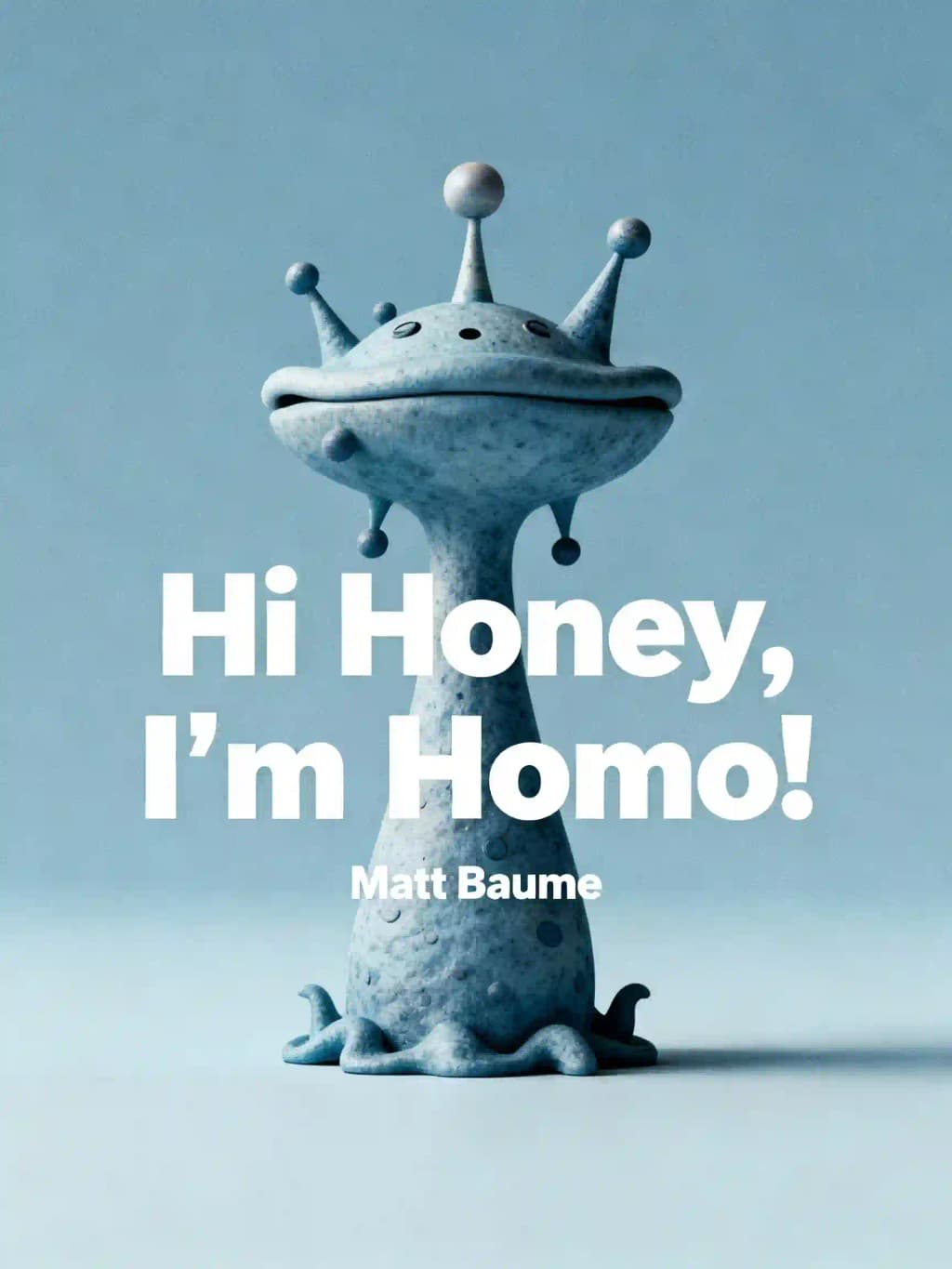
Matt Baume's award-winning journey through television history reveals how sitcoms secretly revolutionized LGBTQ+ acceptance. From "Bewitched" to "Modern Family," discover the behind-the-scenes battles that transformed American culture. As Dan Savage declares, "a triumph everyone should read."
Matt Baume, acclaimed author of Hi Honey, I'm Homo! and Lambda Literary Award winner, is a leading voice in LGBTQ+ pop culture analysis.
His book explores queer representation in American sitcoms, blending meticulous research with insights shaped by his decade-long YouTube series documenting LGBTQ+ media history and his GLAAD-nominated podcast The Sewers of Paris.
A Seattle-based writer and cultural critic, Baume’s work has been featured in The New York Times, Rolling Stone, and NPR, while his lectures at institutions like Sony and South by Southwest amplify his expertise in queer storytelling.
His previous book, Defining Marriage, chronicles pivotal battles for marriage equality, establishing his reputation as a chronicler of LGBTQ+ civil rights milestones. Hi Honey, I'm Homo! won the 2024 Lambda Literary Award for Nonfiction and was named an NPR “Book We Love,” solidifying its status as a landmark work in media studies.
Hi Honey, I'm Homo! explores how LGBTQ+ representation in 20th-century sitcoms like Bewitched, All in the Family, and Modern Family shaped American culture. Matt Baume reveals hidden queer narratives, behind-the-scenes activism, and censorship battles, arguing that these shows played a pivotal role in advancing LGBTQ+ visibility and acceptance. The book blends pop culture analysis, interviews, and queer history to show how humor subverted norms and drove social change.
This book is ideal for pop culture enthusiasts, LGBTQ+ history scholars, and sitcom fans. Readers interested in media’s role in social movements, queer representation, or the intersection of comedy and activism will find it insightful. It’s also accessible for casual readers seeking engaging nonfiction about TV’s cultural impact.
Yes. A 2024 Stonewall Book Honor Award winner, it’s praised as “thoughtful and thorough” (NYT) and “informative and funny” (Forbes). Critics highlight its blend of entertainment and scholarship, with Vulture calling it a “heartbreaking historical document” that showcases sitcoms’ power to drive progress.
Baume uncovers queer subtexts, like Bewitched’s flamboyant Uncle Arthur as a coded gay character and All in the Family’s groundbreaking but cautious LGBTQ+ storyline. He details how writers navigated network censorship to humanize queer experiences, using humor to challenge stereotypes.
The book highlights The Golden Girls’ trailblazing LGBTQ+ episodes, including one of TV’s first AIDS storylines. Baume reveals behind-the-scenes advocacy by Betty White and how the show balanced humor with empathy, normalizing queer lives for mainstream audiences.
Baume acknowledges backlash against shows like Ellen and Will & Grace, which faced boycotts for “pushing agendas.” However, he argues these sitcoms humanized queer characters during pivotal moments, fostering public support for LGBTQ+ rights despite media oversimplification.
The book links TV milestones to historical events, like Soap’s queer character coinciding with Anita Bryant’s anti-LGBTQ+ campaign. Baume shows how sitcoms mirrored—and sometimes accelerated—broader societal shifts, such as marriage equality.
Key insights include:
Unlike academic texts, Baume’s narrative prioritizes accessibility and humor. It complements works like The Celluloid Closet but focuses on sitcoms’ unique role in domesticating queer identities for mainstream audiences.
Amid ongoing debates over LGBTQ+ rights, the book warns that progress isn’t permanent. It underscores media’s power to normalize equality—or erase it—making it essential for understanding current cultural battles.
The book includes accounts like:
Baume concludes with a call to defend LGBTQ+ visibility, urging readers to recognize sitcoms as both cultural artifacts and tools for change. He emphasizes that representation remains a battleground, blending optimism with caution.
저자의 목소리로 책을 느껴보세요
지식을 흥미롭고 예시가 풍부한 인사이트로 전환
핵심 아이디어를 빠르게 캡처하여 신속하게 학습
재미있고 매력적인 방식으로 책을 즐기세요
Conservative religious groups were outraged.
Bewitched is about repression in general.
Why? What good does it do?
The year of the fag.
WITCHES ARE PEOPLE TOO.
Hi Honey, I'm Homo!의 핵심 아이디어를 이해하기 쉬운 포인트로 분해하여 혁신적인 팀이 어떻게 창조하고, 협력하고, 성장하는지 이해합니다.
Hi Honey, I'm Homo!을 빠른 기억 단서로 압축하여 솔직함, 팀워크, 창의적 회복력의 핵심 원칙을 강조합니다.

생생한 스토리텔링을 통해 Hi Honey, I'm Homo!을 경험하고, 혁신 교훈을 기억에 남고 적용할 수 있는 순간으로 바꿉니다.
무엇이든 물어보고, 목소리를 선택하고, 진정으로 공감되는 인사이트를 함께 만들어보세요.

샌프란시스코에서 컬럼비아 대학교 동문들이 만들었습니다
"Instead of endless scrolling, I just hit play on BeFreed. It saves me so much time."
"I never knew where to start with nonfiction—BeFreed’s book lists turned into podcasts gave me a clear path."
"Perfect balance between learning and entertainment. Finished ‘Thinking, Fast and Slow’ on my commute this week."
"Crazy how much I learned while walking the dog. BeFreed = small habits → big gains."
"Reading used to feel like a chore. Now it’s just part of my lifestyle."
"Feels effortless compared to reading. I’ve finished 6 books this month already."
"BeFreed turned my guilty doomscrolling into something that feels productive and inspiring."
"BeFreed turned my commute into learning time. 20-min podcasts are perfect for finishing books I never had time for."
"BeFreed replaced my podcast queue. Imagine Spotify for books — that’s it. 🙌"
"It is great for me to learn something from the book without reading it."
"The themed book list podcasts help me connect ideas across authors—like a guided audio journey."
"Makes me feel smarter every time before going to work"
샌프란시스코에서 컬럼비아 대학교 동문들이 만들었습니다

Hi Honey, I'm Homo! 요약을 무료 PDF 또는 EPUB으로 받으세요. 인쇄하거나 오프라인에서 언제든 읽을 수 있습니다.
September 1977. ABC production secretary Marsha Posner Williams watched as thousands of protest letters poured in-before a single episode of "Soap" had even aired. Religious groups condemned the show's planned gay character while activists feared damaging stereotypes. This wasn't just about a sitcom. It was about who got to exist on America's most powerful medium: television. For closeted teenagers watching from darkened living rooms, these shows offered something revolutionary-proof that people like them existed at all. Comedy became the spoonful of sugar that helped challenging ideas go down, what producer Norman Lear called "the intravenous of messaging through laughter." From witch allegories to watershed kisses, sitcoms didn't just reflect social change-they accelerated it, reaching millions of Americans simultaneously in their most intimate space: home. Looking back over a century of broadcasting reveals a persistent tug-of-war between queer representation and censorship. From Cole Porter's songs being scrutinized by radio censors in the 1930s to television's early decades of invisibility, representation has faced constant challenges. Television isn't just furniture-it's a conversation, a tool, a project to participate in rather than passively watch.