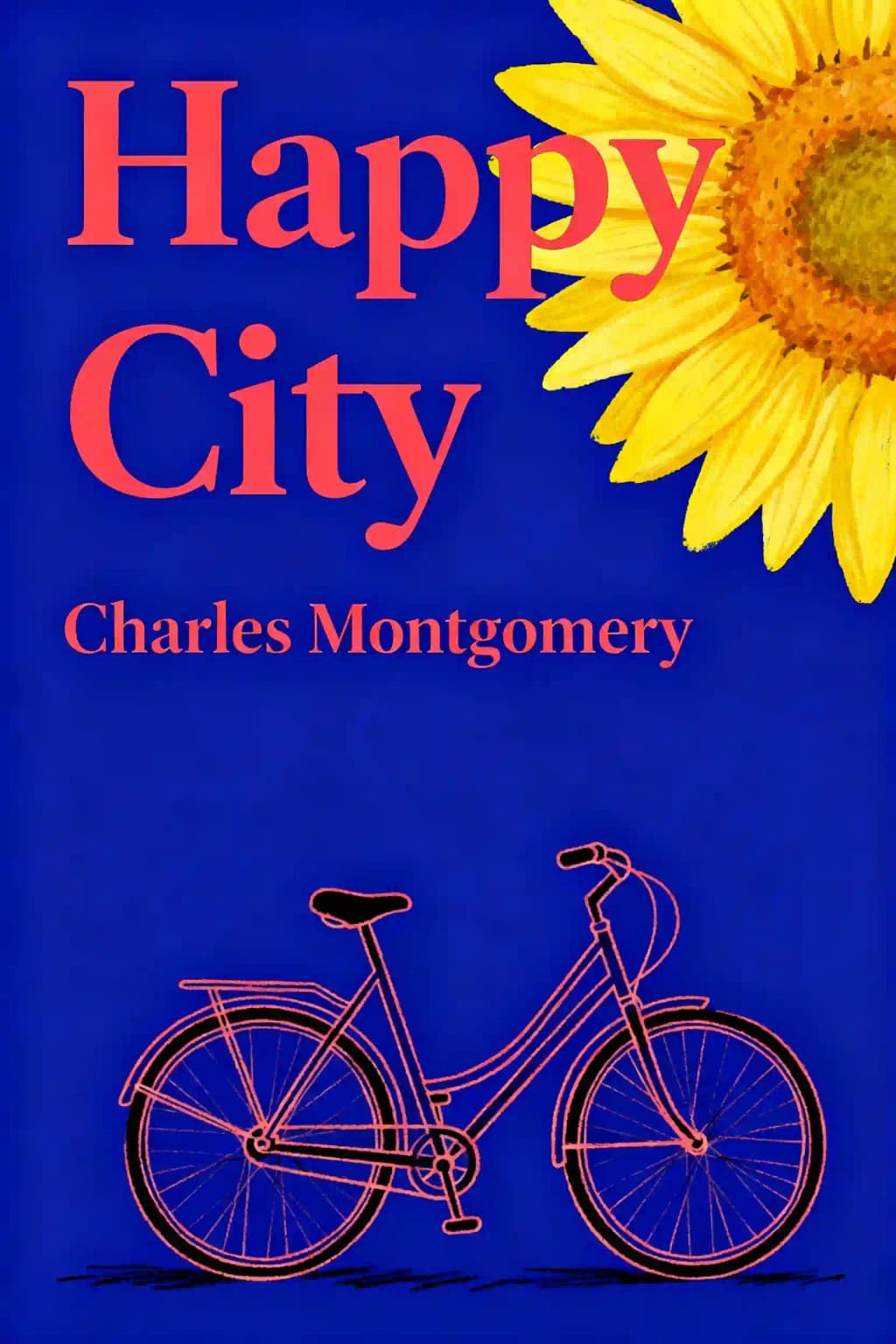
In "Happy City," Charles Montgomery reveals how urban design shapes our happiness more than wealth. Endorsed by Richard Florida and David Suzuki, this award-winning guide shows how cities like Bogota transformed stress into joy - challenging us to reimagine our neighborhoods as engines of wellbeing.
Charles Montgomery is the award-winning author of Happy City: Transforming Our Lives Through Urban Design and a globally recognized urbanist specializing in the intersection of urban design, psychology, and human wellbeing. A Canadian writer born in North Vancouver, Montgomery combines investigative journalism with behavioral science to explore how cities shape happiness, trust, and social connection.
His work is informed by collaborations with institutions like the World Health Organization, the Guggenheim Museum, and governments worldwide, where he conducts urban experiments to reimagine public spaces.
Montgomery’s critically acclaimed The Last Heathen—winner of the Charles Taylor Prize for Literary Non-Fiction—showcases his narrative prowess in cultural exploration. His writing has appeared in The Guardian, The New York Times, and Canadian Geographic, earning accolades including National Magazine Awards.
Named among Planetizen’s 100 Most Influential Urbanists (2023), Montgomery founded Happy Cities, a consultancy driving wellbeing-focused urban policies across four continents. Happy City has been praised by The New York Times for reframing urban discourse and remains essential reading for planners, policymakers, and citizens alike. His forthcoming book on designing for trust is anticipated in 2026.
Happy City explores how urban design impacts human happiness, arguing that cities can reduce isolation, improve health, and foster community through smarter planning. Charles Montgomery combines psychology, neuroscience, and global case studies—like Bogotá’s pedestrian zones and Copenhagen’s bike lanes—to show how walkability, green spaces, and social infrastructure create thriving communities.
Urban planners, policymakers, architects, and residents passionate about livable cities will find actionable insights. Environmental activists and anyone curious about the link between public spaces and well-being will benefit from its research-driven strategies for combating urban sprawl and car dependency.
Yes—it’s praised for blending academic rigor with engaging storytelling. The book offers practical solutions to modern urban crises, making it essential for understanding how design shapes social connectedness, equity, and sustainability. Critics highlight its global examples and advocacy for citizen-led change.
Montgomery links design to happiness through reduced commuting stress, increased social interaction, and access to nature. Car-centric layouts isolate people, while walkable neighborhoods and mixed-use zones promote spontaneity and trust among residents, boosting mental and physical health.
Key ideas include:
Bogotá’s pedestrian-friendly La Septima, Vancouver’s green spaces, and Copenhagen’s cycling networks are featured. These cities demonstrate how prioritizing people over cars, fostering community hubs, and embracing density can enhance quality of life.
He critiques car-centric design for increasing isolation, pollution, and stress. Alternatives like public transit, cycling, and pedestrian zones reduce these harms while fostering healthier, more social communities.
Some argue it underplays economic barriers to urban transformation and the challenges of retrofitting existing cities. Others note its focus on Western case studies, though Montgomery addresses global applicability in later chapters.
Advocate for walkable neighborhoods, mixed-use developments, and green corridors. Support policies that prioritize pedestrians over cars and engage in local planning initiatives to demand inclusive, sustainable design.
Unlike Jane Jacobs’ The Death and Life of Great American Cities, Montgomery emphasizes happiness metrics and global examples. It bridges academic theory and real-world application, offering a holistic view of urban well-being.
As cities grapple with climate change, inequity, and post-pandemic recovery, its lessons on density, green infrastructure, and community-driven design remain vital for creating resilient, joyful urban spaces.
저자의 목소리로 책을 느껴보세요
지식을 흥미롭고 예시가 풍부한 인사이트로 전환
핵심 아이디어를 빠르게 캡처하여 신속하게 학습
재미있고 매력적인 방식으로 책을 즐기세요
The city can make them happier.
Sprawl wasn't a natural development but a designed, subsidized, and legally mandated urban form.
Social isolation may be the greatest environmental hazard of city living.
Happy City의 핵심 아이디어를 이해하기 쉬운 포인트로 분해하여 혁신적인 팀이 어떻게 창조하고, 협력하고, 성장하는지 이해합니다.
Happy City을 빠른 기억 단서로 압축하여 솔직함, 팀워크, 창의적 회복력의 핵심 원칙을 강조합니다.

생생한 스토리텔링을 통해 Happy City을 경험하고, 혁신 교훈을 기억에 남고 적용할 수 있는 순간으로 바꿉니다.
무엇이든 물어보고, 목소리를 선택하고, 진정으로 공감되는 인사이트를 함께 만들어보세요.

샌프란시스코에서 컬럼비아 대학교 동문들이 만들었습니다
"Instead of endless scrolling, I just hit play on BeFreed. It saves me so much time."
"I never knew where to start with nonfiction—BeFreed’s book lists turned into podcasts gave me a clear path."
"Perfect balance between learning and entertainment. Finished ‘Thinking, Fast and Slow’ on my commute this week."
"Crazy how much I learned while walking the dog. BeFreed = small habits → big gains."
"Reading used to feel like a chore. Now it’s just part of my lifestyle."
"Feels effortless compared to reading. I’ve finished 6 books this month already."
"BeFreed turned my guilty doomscrolling into something that feels productive and inspiring."
"BeFreed turned my commute into learning time. 20-min podcasts are perfect for finishing books I never had time for."
"BeFreed replaced my podcast queue. Imagine Spotify for books — that’s it. 🙌"
"It is great for me to learn something from the book without reading it."
"The themed book list podcasts help me connect ideas across authors—like a guided audio journey."
"Makes me feel smarter every time before going to work"
샌프란시스코에서 컬럼비아 대학교 동문들이 만들었습니다

Happy City 요약을 무료 PDF 또는 EPUB으로 받으세요. 인쇄하거나 오프라인에서 언제든 읽을 수 있습니다.
Picture this: a city where children play freely in streets, neighbors know each other by name, and people move through their days with genuine contentment. Now contrast that with our reality - sprawling suburbs where isolation is the norm, commutes drain our energy, and despite unprecedented wealth, happiness levels have flatlined. This disconnect forms the heart of "Happy City," where the shape of our urban environments directly impacts our well-being in ways we've barely begun to understand. The modern American city presents a profound paradox: despite accumulating more wealth than any civilization in history, our happiness hasn't increased accordingly. Depression rates have risen threefold compared to two generations ago, with one in ten Americans now taking antidepressants. The culprit may be hiding in plain sight - in the very design of our cities and suburbs. When Enrique Penalosa became mayor of Bogota in 1997, he made a revolutionary declaration: "We might not make everyone as rich as Americans. But we can design the city to give people dignity, to make them feel rich. The city can make them happier."