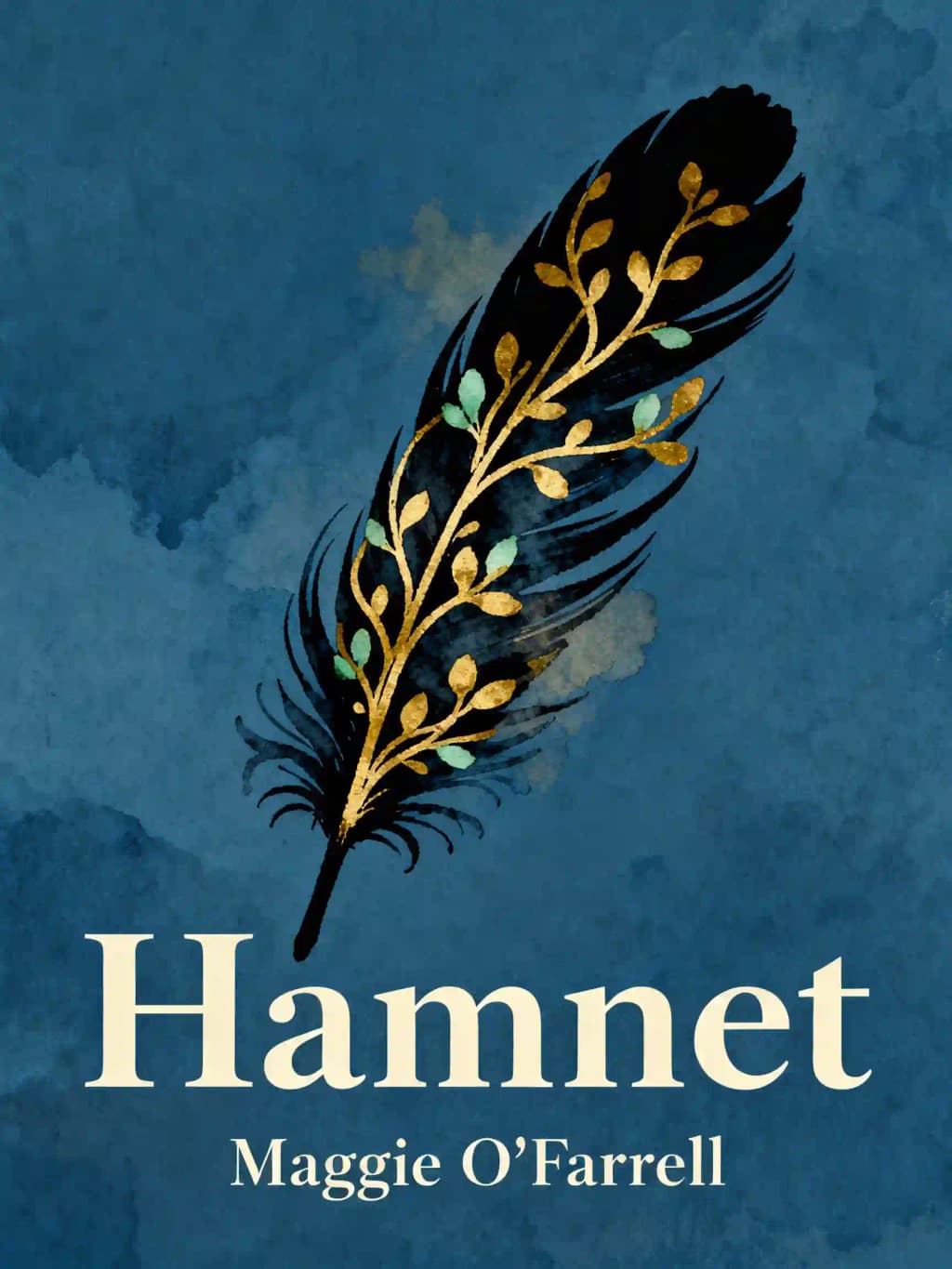
Behind Shakespeare's "Hamlet" lies the heartbreaking story of his son Hamnet. This Women's Prize-winning novel reimagines the untold grief that inspired literary genius. What happens when personal tragedy transforms into immortal art? Oprah Daily called it "profound" for its transcendent exploration of loss.
Maggie O’Farrell, the award-winning author of Hamnet, is an acclaimed novelist renowned for her deeply humanistic historical fiction and explorations of grief, resilience, and familial bonds.
Born in Northern Ireland in 1972 and raised in Wales and Scotland, O’Farrell has published eight novels, including The Hand That First Held Mine (Costa Novel Award winner) and the memoir I Am, I Am, I Am, a Sunday Times bestseller.
Her work often draws on her experiences with loss and survival, themes that resonate powerfully in Hamnet—a reimagining of Shakespeare’s son Hamnet’s life and death, which won the 2020 Women’s Prize for Fiction and the National Book Critics Circle Award.
Other notable works, such as The Vanishing Act of Esme Lennox and The Marriage Portrait (shortlisted for the 2023 Women’s Prize), further cement her mastery of layered, emotionally charged narratives. Translated into 38 languages, Hamnet has also been adapted into a critically acclaimed stage production by the Royal Shakespeare Company.
Hamnet is a historical fiction novel reimagining the life of William Shakespeare’s family, centered on the death of his 11-year-old son, Hamnet, in 1596, and its emotional aftermath. The story alternates between Hamnet’s final days and his parents’ early relationship, highlighting Agnes (Shakespeare’s wife), a healer grappling with grief, and the indirect inspiration for Shakespeare’s play Hamlet. Themes include loss, familial bonds, and the quiet resilience of women overshadowed by history.
This book appeals to lovers of literary fiction, historical dramas, and emotionally layered family sagas. Fans of Shakespearean themes, feminist reinterpretations of historical figures, and stories exploring grief and motherhood will find it compelling. It’s ideal for readers who appreciate lyrical prose and character-driven narratives over plot-heavy storytelling.
While Hamnet draws on historical records of Shakespeare’s son, who died in 1596, the novel is a fictionalized account. Maggie O’Farrell reimagines Agnes (Anne Hathaway) as a proto-feminist figure with supernatural healing abilities and explores how Hamnet’s death might have influenced Shakespeare’s writing of Hamlet. Historical gaps are filled with poetic license, particularly in portraying domestic life and marital dynamics.
Key themes include:
The novel suggests Hamnet’s death indirectly inspired Hamlet, with the play serving as a metaphorical resurrection of the boy. O’Farrell draws subtle parallels, such as Agnes’s psychic visions mirroring the ghostly elements in Hamlet, and the thematic exploration of remembrance (“Remember me”) linking both works.
Agnes is portrayed as a fiercely independent herbalist and mystic, overshadowed by her husband’s legacy. O’Farrell shifts focus to her emotional journey, emphasizing her resilience, maternal devotion, and connection to nature. This choice critiques historical erasure of women’s contributions and reasserts Agnes’s significance in Shakespeare’s life and work.
O’Farrell employs lush, sensory prose to evoke 16th-century England, with vivid descriptions of landscapes and emotions. The narrative alternates between timelines, building suspense around Hamnet’s fate. Shakespeare remains unnamed, referred to as “the father” or “the husband,” to underscore Agnes’s perspective.
The novel depicts Agnes’s grief as all-consuming yet quietly transformative. Her bond with Hamnet is heightened by their shared intuition, and her inability to save him amplifies her despair. O’Farrell contrasts Agnes’s tangible, earthbound healing practices with the abstract solace of art, illustrating divergent coping mechanisms.
Some readers find the prose overly descriptive, slowing the pacing. Others note that Shakespeare’s anonymization feels contrived, as his identity is evident. A minority critique the historical liberties taken, particularly Agnes’s mystical traits, though most praise the fresh perspective on a historically marginalized figure.
The novel highlights limited opportunities for women like Judith (Hamnet’s sister), who is denied education, while Hamnet attends school. Agnes’s herbalism, though revered, is viewed with suspicion, reflecting societal distrust of female autonomy. These elements underscore the tension between women’s unseen labor and male-dominated legacies.
The novel’s exploration of loss, parental love, and resilience transcends its historical setting. Its focus on marginalized voices resonates with contemporary conversations about gender and historical representation. O’Farrell’s lyrical meditation on art’s power to immortalize personal pain offers universal solace.
저자의 목소리로 책을 느껴보세요
지식을 흥미롭고 예시가 풍부한 인사이트로 전환
핵심 아이디어를 빠르게 캡처하여 신속하게 학습
재미있고 매력적인 방식으로 책을 즐기세요
she might have headed off what was coming.
Agnes sees the world as no one else does.
utterly transporting.
exceptional emotional force
miraculous
Hamnet의 핵심 아이디어를 이해하기 쉬운 포인트로 분해하여 혁신적인 팀이 어떻게 창조하고, 협력하고, 성장하는지 이해합니다.
Hamnet을 빠른 기억 단서로 압축하여 솔직함, 팀워크, 창의적 회복력의 핵심 원칙을 강조합니다.

생생한 스토리텔링을 통해 Hamnet을 경험하고, 혁신 교훈을 기억에 남고 적용할 수 있는 순간으로 바꿉니다.
무엇이든 물어보고, 목소리를 선택하고, 진정으로 공감되는 인사이트를 함께 만들어보세요.

샌프란시스코에서 컬럼비아 대학교 동문들이 만들었습니다
"Instead of endless scrolling, I just hit play on BeFreed. It saves me so much time."
"I never knew where to start with nonfiction—BeFreed’s book lists turned into podcasts gave me a clear path."
"Perfect balance between learning and entertainment. Finished ‘Thinking, Fast and Slow’ on my commute this week."
"Crazy how much I learned while walking the dog. BeFreed = small habits → big gains."
"Reading used to feel like a chore. Now it’s just part of my lifestyle."
"Feels effortless compared to reading. I’ve finished 6 books this month already."
"BeFreed turned my guilty doomscrolling into something that feels productive and inspiring."
"BeFreed turned my commute into learning time. 20-min podcasts are perfect for finishing books I never had time for."
"BeFreed replaced my podcast queue. Imagine Spotify for books — that’s it. 🙌"
"It is great for me to learn something from the book without reading it."
"The themed book list podcasts help me connect ideas across authors—like a guided audio journey."
"Makes me feel smarter every time before going to work"
샌프란시스코에서 컬럼비아 대학교 동문들이 만들었습니다

Hamnet 요약을 무료 PDF 또는 EPUB으로 받으세요. 인쇄하거나 오프라인에서 언제든 읽을 수 있습니다.
What if the greatest play ever written was born from a father's unbearable grief? In 1596, an eleven-year-old boy named Hamnet died in Stratford-upon-Avon. Four years later, his father-a playwright we know as William Shakespeare-wrote *Hamlet*. Maggie O'Farrell's stunning novel bridges this gap, transforming a historical footnote into an intimate portrait of love, loss, and the alchemy of art. Winner of the 2020 Women's Prize for Fiction and praised by *The Guardian* for its "exceptional emotional force," the book has captivated readers from Natalie Portman to everyday people seeking meaning in grief. O'Farrell never names Shakespeare directly, instead calling him simply "the Latin tutor" or "the husband," shifting our focus from the famous playwright to the family who shaped him. This isn't a story about genius-it's about what happens when ordinary people face extraordinary loss, and how art can transform private anguish into something eternal.