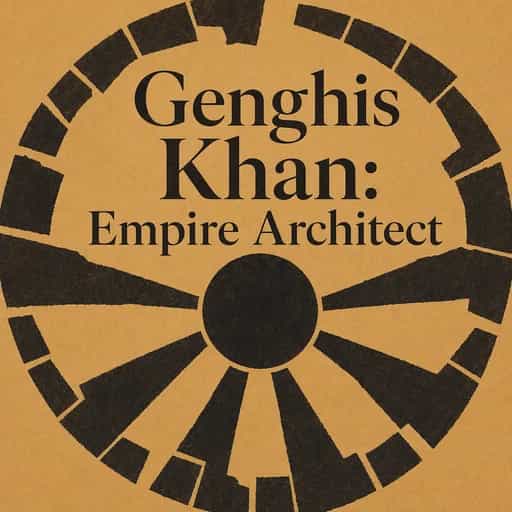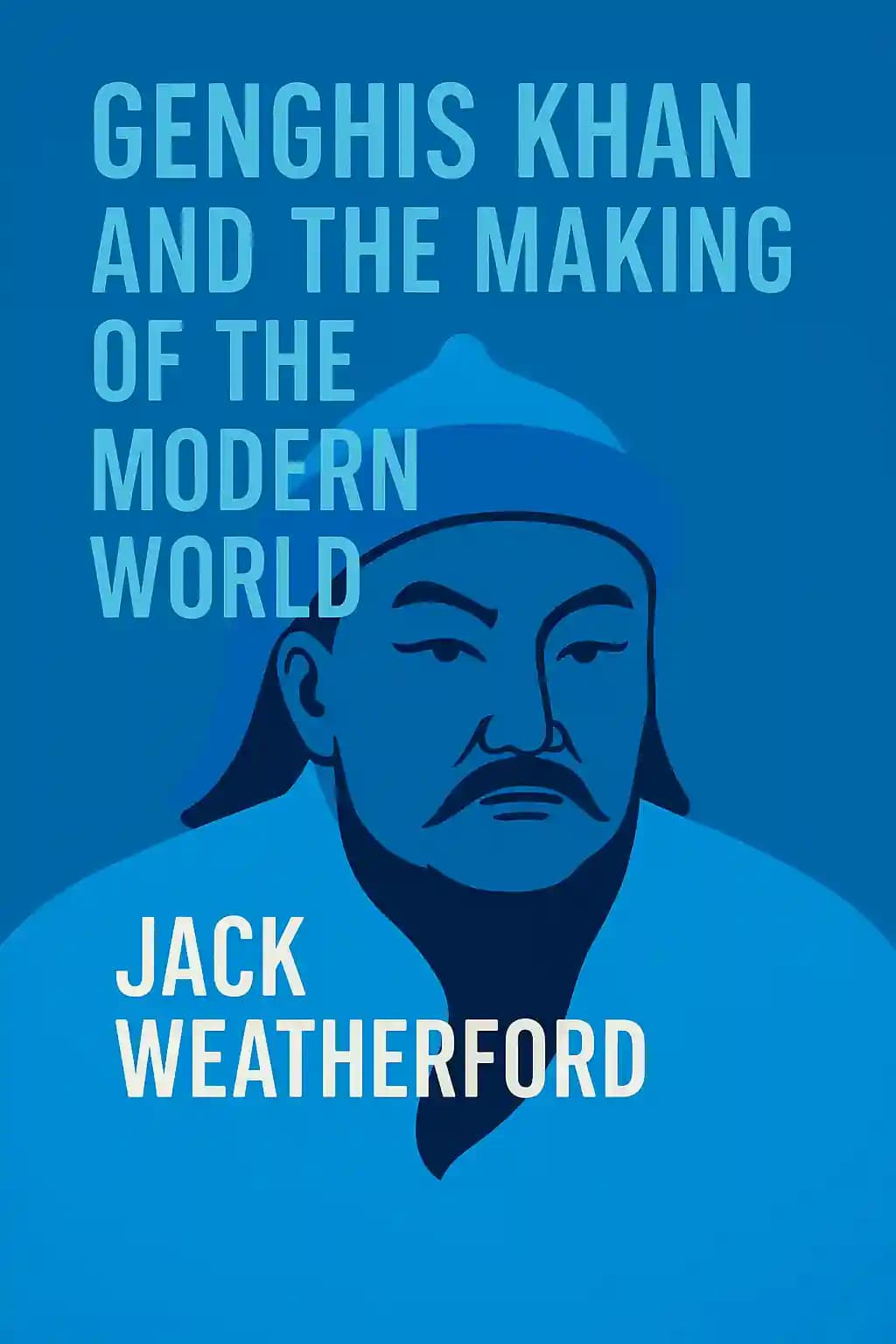
Forget the brutal barbarian myth. Weatherford's groundbreaking history reveals how Genghis Khan pioneered religious tolerance, free trade, and diplomatic systems that shaped our modern world. Even Tim Ferriss notes billionaires study Khan's revolutionary strategies - history's greatest empire builder was actually its greatest innovator.
Jack McIver Weatherford, the bestselling author of Genghis Khan and the Making of the Modern World, is an anthropologist and ethnographer. He is renowned for reshaping global understanding of Mongol history. Weatherford is a DeWitt Wallace Chair of Anthropology at Macalester College and an honorary faculty member at Mongolia’s Chinggis Khaan University.
Weatherford's 18 years of fieldwork in formerly restricted Mongolian regions inform his rigorous yet accessible analyses of Eurasian empires. Genghis Khan and the Making of the Modern World is a landmark in historical non-fiction, tying Genghis Khan’s governance innovations to modern concepts of diplomacy, trade, and cultural exchange.
Weatherford’s expertise extends through works like The Secret History of the Mongol Queens and Indian Givers, which explore Indigenous contributions to global systems. Honored with Mongolia’s Order of the Polar Star and Order of Genghis Khan, his research draws from decoded medieval texts like The Secret History of the Mongols.
Genghis Khan and the Making of the Modern World has sold over 355,000 copies in North America and has been translated into 17 languages. The book remains a staple in university curricula on Eurasian history. His latest work, Emperor of the Seas, continues his exploration of Mongol influence through Kublai Khan’s maritime legacy.
Genghis Khan and the Making of the Modern World explores how Genghis Khan unified Mongol tribes, built the largest contiguous empire in history, and pioneered innovations in governance, trade, and cultural exchange. The book argues that Mongol policies on meritocracy, religious tolerance, and international law laid foundations for globalization, shaping modern systems from commerce to diplomacy.
This book is ideal for history enthusiasts, readers interested in leadership strategies, and those curious about globalization’s origins. Jack Weatherford’s accessible narrative appeals to both academics and general audiences, offering fresh perspectives on the Mongols’ often-misunderstood legacy.
Yes. A New York Times bestseller, it challenges Eurocentric views by highlighting Mongol contributions to technology, governance, and cross-cultural connectivity. While some scholars critique its emphasis on Genghis Khan over his successors, the book remains a seminal work for redefining the empire’s role in shaping modernity.
Weatherford posits that Genghis Khan’s empire accelerated globalization through policies promoting free trade, diplomatic immunity, and cultural exchange. The Mongols’ meritocratic system and destruction of feudal hierarchies, he argues, enabled innovations in commerce, science, and governance that persist today.
Key achievements include establishing a merit-based military, implementing universal legal codes, and creating transcontinental trade networks like the Silk Road. The Mongols also advanced printing technology, standardized weights/measures, and fostered religious tolerance across Eurasia.
The book counters stereotypes of Mongols as mere destroyers by detailing their administrative innovations and cultural patronage. However, some historians argue Weatherford overstates their originality, noting adaptations from earlier nomadic groups like the Khitan.
Fragmentation into rival khanates, the Black Death’s devastation (1328–1332), and rebellions in Persia (1335) and China (1368) crippled the empire. Overextension and leaders’ gradual disconnect from Mongol martial traditions also contributed to collapse.
Unlike The Secret History of the Mongol Queens (focused on women leaders) or Emperor of the Seas (about Kublai Khan’s naval ambitions), this book centers on Genghis Khan’s geopolitical legacy. It shares Weatherford’s signature blend of anthropology and narrative history.
They enabled unprecedented East-West interaction, transferring Chinese gunpowder to Europe, Persian astronomy to China, and Italian crafts to Russia. The empire’s postal system and protected trade routes facilitated exchanges in medicine, agriculture, and art.
The book highlights timeless lessons on adaptive leadership, globalization’s risks/rewards, and diversity’s role in innovation. Its insights into managing vast, multicultural systems resonate in modern geopolitics and business.
He abolished inherited aristocratic privilege, enforced laws equally, and promoted officials based on skill—not birth. This contrast with Europe’s rigid class systems, Weatherford argues, made Mongol governance more efficient and inclusive.
In 2007, Mongolia awarded Weatherford the Order of the Polar Star, its highest civilian honor, for reshaping global perceptions of Genghis Khan. His work is taught in Mongolian schools and celebrated at sacred historical sites.
저자의 목소리로 책을 느껴보세요
지식을 흥미롭고 예시가 풍부한 인사이트로 전환
핵심 아이디어를 빠르게 캡처하여 신속하게 학습
재미있고 매력적인 방식으로 책을 즐기세요
Imagine this world: vast, open steppes where survival demanded constant vigilance.
What transforms a desperate child into history's greatest conqueror?
...survival depended not on what you owned, but on who you could count as an ally.
...adoption rather than subjugation created a rapidly expanding force...
Genghis Khan and the Making of the Modern World의 핵심 아이디어를 이해하기 쉬운 포인트로 분해하여 혁신적인 팀이 어떻게 창조하고, 협력하고, 성장하는지 이해합니다.
Genghis Khan and the Making of the Modern World을 빠른 기억 단서로 압축하여 솔직함, 팀워크, 창의적 회복력의 핵심 원칙을 강조합니다.

생생한 스토리텔링을 통해 Genghis Khan and the Making of the Modern World을 경험하고, 혁신 교훈을 기억에 남고 적용할 수 있는 순간으로 바꿉니다.
무엇이든 물어보고, 목소리를 선택하고, 진정으로 공감되는 인사이트를 함께 만들어보세요.

샌프란시스코에서 컬럼비아 대학교 동문들이 만들었습니다
"Instead of endless scrolling, I just hit play on BeFreed. It saves me so much time."
"I never knew where to start with nonfiction—BeFreed’s book lists turned into podcasts gave me a clear path."
"Perfect balance between learning and entertainment. Finished ‘Thinking, Fast and Slow’ on my commute this week."
"Crazy how much I learned while walking the dog. BeFreed = small habits → big gains."
"Reading used to feel like a chore. Now it’s just part of my lifestyle."
"Feels effortless compared to reading. I’ve finished 6 books this month already."
"BeFreed turned my guilty doomscrolling into something that feels productive and inspiring."
"BeFreed turned my commute into learning time. 20-min podcasts are perfect for finishing books I never had time for."
"BeFreed replaced my podcast queue. Imagine Spotify for books — that’s it. 🙌"
"It is great for me to learn something from the book without reading it."
"The themed book list podcasts help me connect ideas across authors—like a guided audio journey."
"Makes me feel smarter every time before going to work"
샌프란시스코에서 컬럼비아 대학교 동문들이 만들었습니다

Genghis Khan and the Making of the Modern World 요약을 무료 PDF 또는 EPUB으로 받으세요. 인쇄하거나 오프라인에서 언제든 읽을 수 있습니다.
Imagine a child clutching a blood clot at birth-an omen of extraordinary destiny in the harsh Mongolian steppes. This child would grow up to create the largest contiguous land empire in history, yet be remembered primarily as a savage destroyer. The true story of Genghis Khan reveals something far more complex: a visionary leader whose innovations in warfare, governance, and commerce continue to shape our world today. Born Temujin in 1162, this boy experienced unimaginable hardship after his father's murder left his family abandoned by their clan. Surviving on roots and rodents, wearing rat skins instead of proper furs, young Temujin learned brutal lessons about survival and loyalty that would inform his later rule. What transforms a desperate orphan into history's most influential conqueror? Perhaps it begins with the fierce determination of his mother Hoelun, who refused to accept defeat when abandoned by her tribe. Or perhaps it's forged in the crucible of extreme deprivation, where survival itself becomes a daily victory against overwhelming odds. Temujin's genius lay in his ability to break with tribal tradition and build relationships based on personal loyalty rather than kinship. In a world defined by clan affiliations, he created a new system that rewarded competence and fidelity over birthright. After escaping captivity and reclaiming his betrothed Borte, he began methodically building alliances that would eventually unite the notoriously fractious Mongol tribes. By 1206, the impossible had happened-Temujin was proclaimed Genghis Khan, ruler of the unified Mongol nation.