1장
The Hidden Scripts Behind Every Conversation
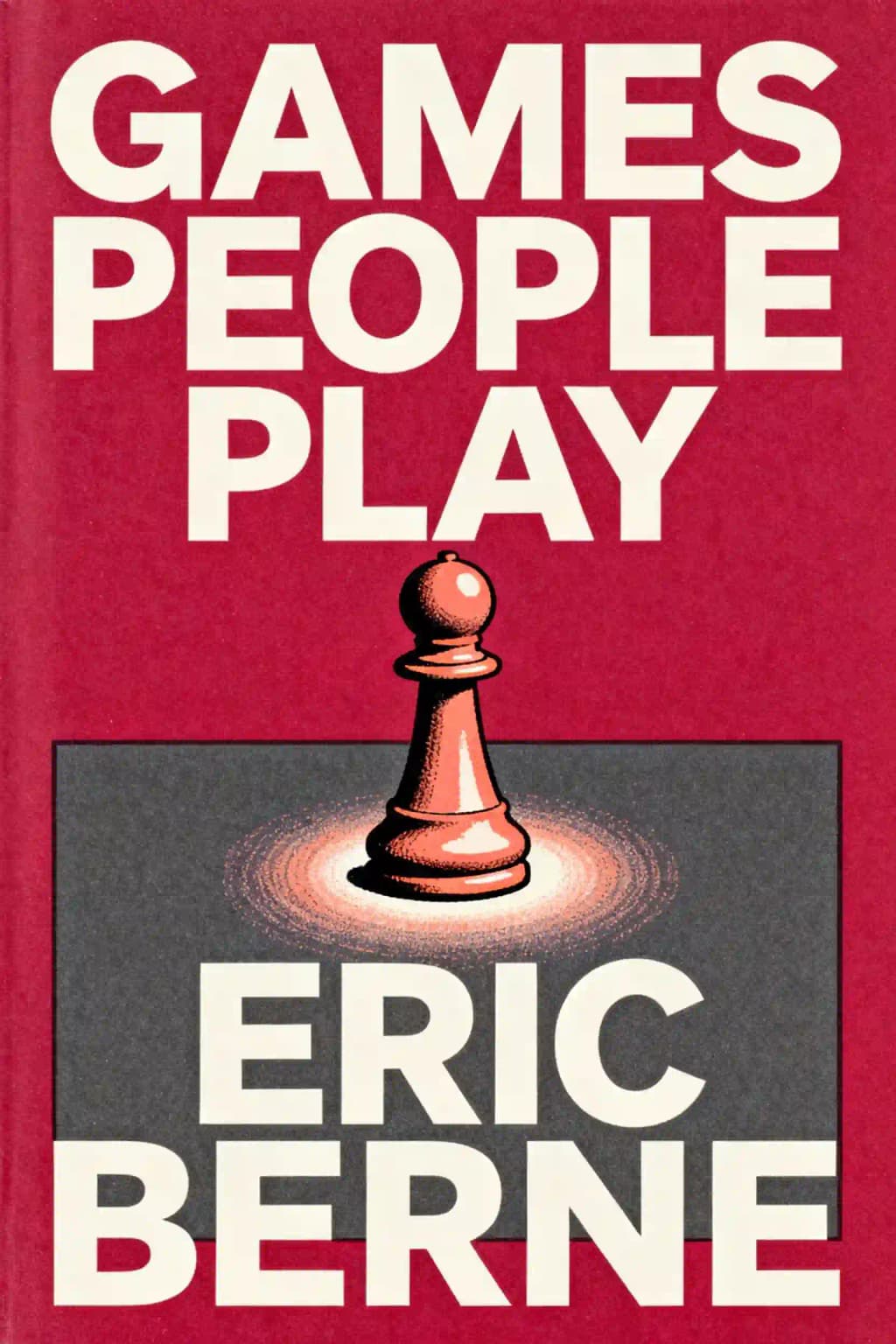
Have you ever wondered why your interactions with certain people always seem to follow the same frustrating pattern? Perhaps it's the colleague who constantly complains about problems but rejects every solution you offer, or the partner whose arguments always end with slammed doors and silent treatment. Eric Berne's "Games People Play" revolutionized our understanding of human interaction by revealing these patterns as psychological "games" we unconsciously play. Initially self-published in 1964 after being rejected by multiple publishers, this groundbreaking work became an international phenomenon, selling over five million copies and remaining on bestseller lists for over two years. The book's concepts of "strokes," "games," and the Parent-Adult-Child model entered popular culture, though often misunderstood. Today, Berne's intuitive observations are validated by modern neuroscience, with over 10,000 practitioners worldwide identifying as transactional analysts. Even celebrities like Leonardo DiCaprio have praised the book's insights, with DiCaprio noting how it helped him understand character motivations in his acting. What makes this book so enduringly powerful is its ability to help us recognize the hidden scripts guiding our daily interactions-and potentially change them.
2장
The Building Blocks of Human Interaction
At our most fundamental level, humans crave recognition from others. Berne called this recognition "stroking"-the fundamental unit of social action. Just as infants require physical touch to develop properly, adults need psychological recognition to maintain emotional health. Research confirms that maternal deprivation and lack of attachment create profound developmental issues. As we mature, verbal and nonverbal exchanges become sufficient substitutes for physical contact, but the need for recognition remains essential.
After basic recognition needs are met, we face the eternal problem of structuring our time. Berne identified six ways we organize our waking hours: withdrawal (doing nothing), rituals (formalized exchanges), activities (productive work), pastimes (casual social interactions), games (patterned transactions with hidden motives), and intimacy (game-free openness). Most people spend the majority of their social time engaged in games, which provide structure while avoiding the vulnerability of true intimacy.
The foundation of Berne's approach is his model of personality structure. Each person contains three distinct ego states: Parent, Adult, and Child. The Parent ego state embodies internalized authority figures and operates through rules, judgments, and nurturing behaviors. The Adult processes information objectively and makes rational decisions based on present reality. The Child contains both our natural spontaneity and creativity as well as our adapted responses to parental demands.
These three aspects aren't metaphorical-they're observable in shifts of posture, vocabulary, tone of voice, and emotional expression. When someone suddenly stands straighter, wags a finger, and speaks in a judgmental tone, their Parent ego state has taken over. When they furrow their brow, speak precisely, and analyze data, their Adult is in charge. When they giggle, whine, or show impulsive emotions, their Child has emerged.
Understanding these ego states helps explain why we sometimes feel conflicted-different parts of ourselves literally want different things. The Parent might insist "You should save money," while the Child protests "But I want to have fun now!" and the Adult tries to mediate between them. This internal dialogue becomes external when we interact with others, creating the basis for both functional and dysfunctional relationships.
3장
The Anatomy of Games People Play
Games are recurring sets of transactions with a concealed motivation, predictable outcome, and payoff. Unlike simple interactions where what you see is what you get, games involve ulterior transactions-messages sent simultaneously on two levels. The social (overt) level appears reasonable while the psychological (covert) level contains the hidden agenda.
Consider the common marital game "If It Weren't For You" (IWFY). A wife complains about her husband's restrictions: "If it weren't for you, I could travel and meet interesting people." When he finally relents, she discovers she's actually afraid to do these things. His prohibitions weren't really the problem-they were protecting her from confronting her own fears while giving her something to complain about.
The real benefit? She gets to blame him for her limitations rather than facing them, receives guilt-motivated gifts when he feels bad about "restricting" her, and confirms her position that "all men are tyrannical." Meanwhile, he gets to feel important and needed. Both parties unconsciously benefit, which is why the game persists despite apparent conflict.
Games typically follow a formula: Con + Gimmick = Response -> Switch -> Payoff. The "con" is the opening move that hooks the other person. The "gimmick" is the other person's vulnerability that makes them respond. The "switch" is a sudden change in the interaction, leading to the emotional "payoff" that reinforces the player's life position.
Why do we play games? Because they're safer than intimacy, more exciting than pastimes, and provide psychological stability. Games learned in childhood become automatic, with players genuinely unaware of their hidden motivations. Most importantly, games advance our unconscious life script-the story we're living out based on early decisions about ourselves and the world.
The intensity of games varies from harmless social lubricants (First-Degree) to serious conflicts that players prefer to hide (Second-Degree) to potentially destructive patterns ending "in the surgery, courtroom, or morgue" (Third-Degree). As mental disturbance increases, games tend to become more rigid and destructive.
4장
Life Games: The Scripts That Shape Our Destiny
Some games significantly influence a person's entire life course. The "Alcoholic" game illustrates how what appears to be an individual problem actually involves multiple players in complementary roles. Beyond the central Alcoholic, there's typically a Persecutor (often the spouse who scolds), a Rescuer (doctor or counselor), a Patsy (who provides resources without judgment), and sometimes an Agitator and Connection (supplier).
What's fascinating is that the payoff isn't drinking itself but the morning-after suffering and recrimination. While social drinkers discuss drinks ("Martini"), alcoholics prefer discussing their suffering ("Morning After"). The game's psychological purpose is creating situations where the Child can be scolded by both internal and external Parent figures.
Organizations like Alcoholics Anonymous continue the game structure but shift the Alcoholic to the Rescuer role. A true "game cure" would allow the former Alcoholic to drink socially without danger, rather than requiring abstinence. The antithesis to this game is refusing to play any of the assigned roles-neither Persecutor, Rescuer, nor Patsy.
Another life-defining game is "Debtor," which in America often transcends being merely a game to become a life script. Society celebrates not the middle-aged man who has paid off his mortgage but the young man proudly waving newly-signed debt papers. After debts are paid, many people feel purposeless-like a sow bug struggling to right itself, they had purpose during the struggle but feel aimless after success.
A common variant is "Try and Collect," played by young couples who win whether creditors give up collection efforts (enjoying goods without payment) or pursue them aggressively (enjoying both goods and the chase). When creditors resort to extreme measures, the game switches to "Now I've Got You, You Son of a Bitch," allowing debtors to portray creditors as villains.
Perhaps the most self-defeating life game is "Kick Me," played by people who behave as though wearing a sign reading "Please Don't Kick Me"-an irresistible invitation that inevitably leads to their mistreatment. When kicked, they cry piteously, "Why does this always happen to me?" If those around them are restrained by kindness, these players become increasingly provocative until they force others to react. They become the perpetually cast out, jilted, and job-losing individuals who seem bewildered by their recurring bad luck.
5장
Marital Games: The Hidden Contracts of Intimacy
Marriage provides the perfect laboratory for observing games, as the legal and emotional bonds create both stability and pressure. In the game "Corner," one spouse maneuvers the other into a position where whatever they do is wrong. Mrs. White suggests going to a movie, her husband agrees, then she makes an "unconscious" slip about finances being tight. When he responds rudely, she takes offense and suggests he go alone-which he does. The winner takes the other literally while knowing this is dishonest.
The primary gain? Avoiding sexual intimacy, as both know movies stimulate their desire. This game appears in families with meddlesome parents who urge children to help but criticize their efforts, creating "double-binds" that some researchers associate with schizophrenia.
"Courtroom" transforms marital conflicts into legal proceedings with a plaintiff, defendant, and judge-typically husband, wife, and therapist in counseling. The husband plaintively describes his wife's behavior, she responds defensively with counter-accusations, and he adds gallantly that he only wants fairness. The therapist makes judicious comments or involves the group as jury.
Interestingly, while the husband overtly demands victory, he fundamentally believes he's wrong. The antithesis is prohibiting third-person references in therapy-members must address each other directly as "you" or talk about themselves as "I."
Perhaps the most destructive marital game is "Frigid Woman," which requires the privileges and time that only marriage provides. The husband makes advances, is repeatedly repulsed with accusations that "all men are beasts," until he eventually resigns himself and stops trying. After his withdrawal, the wife becomes increasingly provocative-walking half-dressed through the bedroom or flirting with other men at parties. When he finally responds, she repulses him again, triggering a game of "Uproar."
The crucial element is this terminal "Uproar" phase, which substitutes for the sex act itself. Despite appearances, both spouses typically fear sexual intimacy-the husband having chosen his wife precisely to minimize demands on his disturbed potency.
6장
Social Games: The Theater of Everyday Life
Our daily interactions are filled with games that structure time and provide mutual stroking while avoiding intimacy. The most common is "Why Don't You-Yes But" (WDYB), where someone presents a problem, others offer solutions beginning with "Why don't you..." and the player rejects each with "Yes, but..." The game's payoff comes when all others have exhausted their suggestions and fall silent, demonstrating they are inadequate.
The antithesis? When someone opens with "What do you do if..." respond with "That is a difficult problem. What are you going to do about it?" This exposes the player's frustration at being denied their game.
"Schlemiel" (from Yiddish for cunning) involves one person damaging property while another forgives them. White spills a drink on the hostess's gown, Black (the host) contains his rage, White apologizes, Black forgives him, and White proceeds to inflict more damage. White always wins: if Black shows anger, White can return resentment; if Black restrains himself, White continues his destructive behavior.
The real payoff isn't the pleasure of destruction but obtaining forgiveness. The antithesis involves refusing the expected absolution: "Tonight you can embarrass my wife, ruin the furniture and wreck the rug, but please don't say 'I'm sorry.'"
"Ain't It Awful" appears in various forms, all sharing unworthy feelings but differing in their focus. The Parental version ("Nowadays") is self-righteous and punitive, common among middle-aged women who claim to know solutions to community problems. The Adult variation ("Broken Skin") focuses morbidly on injuries and operations, with participants competing through surgical sophistication. The Child version ("Water Cooler" or "Coffee Break") uses the slogan "Look what they're doing to us now" and becomes "Bar Stool" after dark in political contexts.
As a game, "Ain't It Awful" finds dramatic expression among polysurgery addicts who seek operations despite medical opposition. The internal psychological advantage comes from body mutilation; the external advantage from avoiding intimacy except surrender to the surgeon.
7장
Sexual Games: When Intimacy Becomes Strategic
Sexual games exploit or fight off sexual impulses, with satisfaction displaced from the sexual act to the game's payoff. These are essentially perversions of sexual instincts, turning potential intimacy into strategic maneuvers.
"Let's You and Him Fight" can function as a maneuver, ritual, or game. As a maneuver, it's romantic-a woman challenges two men to compete for her, promising herself to the winner. As a ritual, it's often tragic-custom forces men to fight even if the woman has already chosen. As a game, it's comic-while two men compete, the woman escapes with a third man.
"Rapo" comes in three degrees of intensity. First-Degree "Rapo" or "Kiss Off" involves mild flirtation at social gatherings. The woman signals availability, enjoys the man's pursuit, then ends the game once he commits. Second-Degree "Rapo" or "Indignation" provides the woman primary gratification from rejection. She leads the man into a serious commitment before repulsing him.
Third-Degree "Rapo" is vicious, ending in murder, suicide or court. The woman leads the man into compromising physical contact, then claims criminal assault or irreparable damage. She may even allow completion of the sexual act before confrontation. This can be immediate (false rape claims) or delayed (suicide/homicide after a relationship).
"The Stocking Game" centers on calculated exhibitionism. A woman enters a group, raises her leg to expose herself provocatively while remarking about a run in her stocking. This move arouses men sexually while angering other women. When confronted, she protests innocence. Her aim is proving others have lascivious minds, while her Adult judgment is compromised by her Child and Parent.
"Uproar" offers a distressing but effective solution to sexual tensions, particularly between fathers and teenage daughters. They can only live together if angry, with slammed doors emphasizing their separate bedrooms. In degenerate households, this takes a sinister form where fathers interrogate daughters returning from dates, examining them for evidence of sexual activity.
8장
Beyond Games: The Path to Autonomy
If games are so prevalent and provide psychological stability, why would we want to move beyond them? Because while games offer temporary comfort and predictable outcomes, they ultimately constrain our potential for growth, authentic self-expression, and genuine human connection. Berne identifies three fundamental capacities that constitute true autonomy: awareness, spontaneity, and intimacy - each representing a distinct pathway to psychological freedom.
Awareness means experiencing the world directly rather than through learned filters and cultural conditioning. It's the ability to see a sunset, taste food, or hear music as if for the first time, without the overlay of past associations or learned responses. Most people lose this capacity early through formal "education" and social conditioning, seeing life secondhand rather than experiencing pure eidetic perception. Awareness requires living fully in the present moment, something that becomes increasingly difficult as we accumulate psychological filters and defenses. For example, a child might spontaneously dance to music, while an adult might first consider whether dancing is "appropriate" in that setting.
Spontaneity represents the freedom to choose feelings and responses from all available options (Parent, Adult, Child) rather than playing programmed games. It's the ability to respond freshly to each situation rather than following old scripts. For instance, instead of automatically becoming defensive when criticized (a learned game response), one might genuinely consider the feedback or respond with curiosity. This capacity allows for authentic reactions rather than predetermined patterns.
Intimacy involves the uncorrupted Child's game-free candidness and natural expression of feelings, which naturally evokes genuine affection and connection. This is the capacity for direct, honest emotional exchange without manipulation or hidden agendas. Unfortunately, adaptation to Parental influences typically corrupts this natural capacity for loving that most infants possess, replacing it with calculated interactions and strategic relationships.
Attaining autonomy requires a systematic liberation from parental teachings that, while necessary for early survival, deeply condition our behavior, thoughts, feelings, and perceptions. This liberation is possible because we begin life in an autonomous state and make specific adaptation decisions early on that can later be recognized and reversed. The process involves identifying and challenging our earliest decisions about ourselves and the world.
The path to autonomy involves overthrowing multiple layers of conditioning: tribal and family traditions, parental and cultural influences, contemporary social demands, and the rewards from one's immediate circle. One must abandon comfortable but limiting behavioral patterns - whether being a Sulk, a Jerk, or any other game player - and develop the capacity for game-free relationships. This requires developing personal and social awareness across all behavior patterns.
This journey essentially constitutes obtaining a "friendly divorce" from one's parents and other Parental influences - allowing them to exist in one's life without dominating it. While this suggests limited hope for humanity's collective transcendence of games, significant hope remains for individual growth and transformation. Those who commit to this path can achieve these transcendent qualities through dedicated self-awareness and persistent effort to break free from conditioned patterns.
9장
The Revolutionary Impact of Transactional Analysis
Berne's approach revolutionized psychology by making complex interpersonal dynamics accessible to ordinary people. Unlike the obscure terminology of traditional psychoanalysis, concepts like "games," "strokes," and the Parent-Adult-Child model provided an intuitive framework for understanding human behavior. This accessibility transformed therapy from an esoteric practice into a tool that anyone could use for self-improvement and better relationships.
The true power of transactional analysis lies in its potential for intervention. Once we recognize the games we play, we can choose different responses. If someone invites you to play "Why Don't You-Yes But" by asking for advice they'll reject, you can decline the invitation by asking what they plan to do instead. If your spouse starts "If It Weren't For You," you can suggest they actually try the activity they claim you're preventing. Other common games include "Now I've Got You," where people store up grievances to use later, and "Alcoholic," where enablers and victims play complementary roles in maintaining destructive patterns.
Modern neuroscience has validated many of Berne's intuitive observations. His concept of "stroking" aligns with research on attachment theory and the fundamental human need for recognition and touch. Ego states can be visualized as neural networks that activate different patterns of thinking and behavior. Game analysis provides a framework for examining dysfunctional interactions that matches current understanding of behavioral patterns and social conditioning. Brain imaging studies have even shown distinct neural activation patterns that correspond to Parent, Adult, and Child ego states.
Perhaps the most profound insight from Berne's work is that we have choices in our interactions. While our games may be deeply ingrained and unconscious, awareness allows us to recognize them and potentially change them. This awareness develops through three stages: first recognizing games in others, then identifying our own preferred games, and finally learning to initiate and maintain game-free interactions. Beyond games lies the possibility of autonomy-living with awareness, spontaneity, and the capacity for genuine intimacy. Though this path may be challenging and even frightening, it offers the possibility of authentic connection that games can never provide.
Transactional Analysis has evolved beyond clinical settings to find applications in education, business, and organizational development. Teachers use it to understand classroom dynamics, managers employ it for leadership development, and couples counselors utilize it to help partners communicate more effectively. The model's versatility and accessibility have made it a valuable tool for improving human interactions across all domains of life.
10장
The Enduring Legacy of Games People Play
Nearly sixty years after its publication, "Games People Play" remains remarkably relevant. In our age of social media and digital communication, the games Berne identified have simply found new platforms. "Why Don't You-Yes But" thrives in online forums where advice-seekers systematically reject every suggestion offered. "Ain't It Awful" dominates comment sections where users bond over shared complaints about society, while "Blemish" has become the foundation of cancel culture, where people eagerly search for and expose others' past mistakes or character flaws.
Modern manifestations of these games are particularly visible in professional networking platforms, where "Look How Hard I'm Trying" plays out through carefully curated posts about work ethic and hustle culture. Dating apps have become fertile ground for "Rapo" and "Let's You and Him Fight," while social media status games like "Look What You Made Me Do" unfold through public callouts and dramatic unfollowing.
What makes Berne's work so enduring is its fundamental insight into human nature. While technology and social norms change, the basic psychological needs that drive our behavior remain constant. We still crave recognition, structure our time to avoid boredom, and protect ourselves from the vulnerability of intimacy. The workplace games Berne described, such as "Now I've Got You" and "Why Does This Always Happen to Me?" continue to play out in office politics, albeit now through email chains and Slack channels.
The greatest gift of transactional analysis is the possibility of choice. By recognizing the games we play, we gain the freedom to respond differently. We can move from unconscious patterns to conscious decisions, from manipulative transactions to authentic connections. This awareness becomes particularly powerful in personal relationships, where identifying game patterns can break cycles of conflict and enable genuine dialogue.
The framework provides practical tools for understanding family dynamics, where games often pass through generations. For instance, recognizing when "If It Weren't For You" is being played allows couples to address underlying needs rather than perpetuating blame cycles. Similarly, understanding "See What You Made Me Do" can help parents break patterns of enabling behavior with their children.
In a world increasingly dominated by algorithmic interactions and artificial connections, Berne's vision of autonomy-living with awareness, spontaneity, and the capacity for genuine intimacy-offers a path to reclaiming our humanity. The rise of virtual reality, social media algorithms, and AI-driven interactions makes his insights about authentic human connection more vital than ever. The games may continue, but we don't have to play. Instead, we can choose conscious engagement, emotional honesty, and genuine relationships over the familiar comfort of psychological games.