정말이지 아직 앱을 다 써 보지도 않았는데, 며칠 써 본 것만으로도 깊은 인상을 받았어요… BeFreed는 제가 써 본 어떤 학습 앱과도 차원이 달라요. 몰입감이 엄청나고 집중력도 실제로 좋아져서, 스마트폰을 하염없이 스크롤하는 분들께 딱이에요!
@ladyInfinity

From troubled Kentucky childhood to Vegas legend, Billy Walters' memoir reveals how America's most successful sports gambler beat impossible odds. His data-driven approach influenced Phil Mickelson and sparked FBI investigations - offering rare insights into risk-taking that transcends gambling.
Billy Walters is the New York Times bestselling author of Gambler: Secrets from a Life at Risk and a legendary sports bettor whose 36-year winning streak revolutionized Las Vegas gambling.
Born in 1946 in Munfordville, Kentucky, Walters overcame extreme poverty and childhood struggles with addiction to build a $200 million empire spanning sports betting syndicates, car dealerships, and luxury golf courses. His memoir blends personal redemption with high-stakes gambling insights, detailing how mathematical precision and risk management made him one of history’s most successful professional bettors.
A philanthropist featured on 60 Minutes and in the Wall Street Journal, Walters co-founded Opportunity Village for people with disabilities and has donated millions to charitable causes. Though his 2017 insider trading conviction temporarily sidelined his career, his 2023 autobiography became an instant bestseller, offering unparalleled access to Vegas underworld strategies. The book has been widely covered in major sports media and remains required reading for professional gamblers analyzing his proprietary betting systems.
Gambler: Secrets from a Life at Risk is Billy Walters’ autobiography, detailing his rise from poverty in Kentucky to becoming a Las Vegas sports betting legend. The book combines his personal story of resilience with actionable strategies for sports gambling, emphasizing risk management, data-driven handicapping, and money management principles. Walters also shares insights into overcoming addiction, outsmarting organized crime, and revolutionizing betting through algorithms.
This book is ideal for sports betting enthusiasts, business strategists, and readers interested in high-stakes resilience stories. Walters’ blend of memoir and practical advice appeals to those seeking to understand risk analysis, data-driven decision-making, or the psychology behind sustained success in competitive fields. It’s particularly valuable for learners who want actionable gambling frameworks grounded in real-world experience.
Yes, for its unique perspective from a gambler who won $2–$3 billion over 36 years. Walters’ system—handicapping, unit sizing, and line shopping—is explained in detail, alongside vivid stories of Vegas’ underworld and his philanthropic journey. The book’s mix of autobiography, betting tactics, and life lessons makes it a standout in both self-help and true crime genres.
Walters’ methodology centers on three pillars:
Walters treats gambling bankrolls like business capital, advocating strict limits (e.g., 1–3% per bet) and compartmentalizing funds. He stresses that even skilled bettors face variance, so surviving losing streaks is critical. His “unit sizing” approach ties bet amounts to the perceived edge, ensuring profitable long-term returns despite short-term fluctuations.
Walters evaluates 10+ factors, including:
Walters’ Computer Group pioneered using statistical models and syndicate betting in the 1980s. By pooling resources and deploying algorithms to identify undervalued lines, they consistently beat bookmakers. This data-driven approach allowed them to scale bets across multiple outlets, exploiting small edges for large aggregate profits—a strategy now foundational in modern sports gambling.
Walters recounts his childhood in poverty, a car theft conviction at 19, and battles with alcohol addiction. He also details surviving financial ruin twice, including a $50 million loss in 2011, and his 2017 insider trading conviction. Despite these setbacks, his relentless discipline in gambling and business fueled comebacks.
Some readers may find Walters’ portrayal of gambling overly optimistic, downplaying addiction risks for average bettors. Critics note the book prioritizes tactical advice over cautionary tales, though Walters repeatedly warns that “95% of bettors lose long-term.” Additionally, his legal troubles receive less scrutiny than his betting achievements.
Raised by his grandmother in rural Kentucky, Walters honed hustling skills through pool-sharking and penny-pitching by age nine. This early immersion in risk-reward calculations, combined with his used-car salesmanship and golf hustling, forged the analytical grit he later applied to sports betting.
Walters democratized professional betting strategies, proving that data analytics and bankroll discipline could outperform intuition. His syndicate model inspired today’s quantitative hedge funds and betting consortia, while his $20 million/weekend wagering scale redefined what’s possible in sports gambling.
Unlike theoretical guides, Gambler offers a proven system from history’s most successful bettor, paired with memoir elements akin to Liar’s Poker. It balances gritty autobiography (e.g., Casino-era Vegas tales) with structured advice, distinguishing it from purely technical works like Sharpsportsbetting.com.
Yes—his principles of edge identification, risk mitigation, and scalable systems translate to investing, entrepreneurship, and decision-making under uncertainty. Walters himself credits these methods for successes in real estate, golf course development, and automotive tech ventures.
저자의 목소리로 책을 느껴보세요
핵심 아이디어를 빠르게 캡처하여 신속하게 학습
Gambling wasn't considered immoral...it was simply a way of life.
His stubborn refusal to submit, even when outmatched, became a defining characteristic.
The thrill of risking it all became addictive.
He repeatedly broke promises, prioritizing action over relationships.
Las Vegas...was like 'a dope addict moving into a drug den.'
핵심만 훑어보거나 깊이 탐구하세요.
 개인화 모드
무엇이든 묻고, 학습 스타일을 선택하고, 나에게 맞는 인사이트를 함께 만들어보세요.
Gambler 요약을 무료 PDF 또는 EPUB으로 받으세요. 인쇄하거나 오프라인에서 언제든 읽을 수 있습니다.
컬럼비아 대학교 동문들이 제작 | 샌프란시스코에서 개발
평균 평점
앱 평가 7.84천 개 이상
BeFreed 커뮤니티
정말이지 아직 앱을 다 써 보지도 않았는데, 며칠 써 본 것만으로도 깊은 인상을 받았어요… BeFreed는 제가 써 본 어떤 학습 앱과도 차원이 달라요. 몰입감이 엄청나고 집중력도 실제로 좋아져서, 스마트폰을 하염없이 스크롤하는 분들께 딱이에요!
@ladyInfinity
정확히 23일 전에 BeFreed를 구입했는데, 그날부터 하루도 빠짐없이 쓰고 있어요. 제 일상 업무 흐름과 학습 습관에 완전히 자리 잡았어요.
@jayallen
솔직히 이 앱은 제 기대를 전부 뛰어넘었어요. 어떤 주제든 오디오로 만들어 달라고 할 수 있고, 결과물이 놀라워요. 제 전문 분야는 심리치료 쪽이고 여러 학문이 얽혀 있는데도 답변이 아주 정확해요.
@Raguipa
제일 고마운 건 스크롤하는 시간이 확 줄었다는 거예요. 검색하는 시간은 줄고 흡수하는 시간은 늘었어요. 오디오북 전권, 팟캐스트, 학습 플랜의 조합이 정말 훌륭해요.
@colonyofcreatorsNGO
저는 24년째 PhotoReading 속진 학습 강사로 일하고 있어요… 책과 독서, 배움이 제 전문인데, BeFreed는 정보를 소화하기 쉽게 전달하는 혁신적인 방식을 정말 잘 구현했어요.
@BeFreed user
단순한 책 요약 앱이 아니에요. '재미' 스타일을 써 봤는데, 전통적인 방식보다 훨씬 나은 요약이고 아이디어를 이해하기도 쉬워요. 이것만으로도 값어치를 해요.
@austinakon
이 앱이 정말 좋아요. 며칠 써 봤는데 듣는 걸 멈출 수가 없어요. 시작하기에 이보다 좋을 수 없어요.
@jcrules328
정말 마음에 들어요. 한 달 정도 써 봤는데 숨은 보석을 찾은 기분이에요. BeFreed로 제가 원하는 주제를 직접 만들 수 있어서 좋고, 목소리도 훌륭한 데다 내레이션 선택지가 무궁무진해요.
@DanielCZ
유용한 정보와 아이디어를 8~15분짜리 팟캐스트 스타일 오디오로 압축해서 들을 수 있다는 게 정말 좋아요. 원래 팟캐스트는 군더더기가 많아서 안 좋아했는데, 여기는 그걸 싹 걷어냈어요.
@BeFreed user
박사 과정을 마무리하는 중이라 낯선 자료를 많이 읽어야 해요… BeFreed에서는 프롬프트만 입력하면 앱이 자료를 찾아서 오디오 팟캐스트로 만들어 줘요. BeFreed의 과정이 NotebookLM보다 더 매끄럽게 느껴져요.
@Brad
아침을 준비하거나 산책하거나 출퇴근할 때 들을 것을 YouTube에서 자주 찾곤 했는데, BeFreed는 광고도 군더더기도 없이 훨씬 더 딱 맞는 걸 들려줘요!
@BeFreed user
이 플랫폼의 가장 큰 장점은 활용도예요. 다루지 못하는 주제가 말 그대로 하나도 없어요. 무엇을 던져도 다 소화해요… 제한이 전혀 없으면서 약속을 실제로 지키는 학습 도구는 정말 드물어요.
@jayallen
BeFreed는 환상적이에요. 디자인이 편해서 헤매는 시간은 줄고 배우는 시간은 늘었어요. 오디오북, 팟캐스트, 학습 플랜의 조합은 천재적이에요. 제 하루가 완전히 달라졌어요.
@BeFreed user
처음엔 이탈리아어로 팟캐스트를 만드는 방법을 이해하는 데 시간이 좀 걸렸는데, 알고 나니까 — 와! 정말 대단해요! 어떤 주제든 설명해 달라고 하면 정말 똑똑하게 잘 설명해 줘요!
@matteo77
BeFreed는 제가 매일 쓰는 오디오북 앱이 됐어요… 제일 마음에 드는 건 텍스트를 넣으면 이동 중에도 들을 수 있는 오디오로 만들어 준다는 점이에요.
@kotanzu1




Billy Walters' life reads like a Hollywood script that even the most imaginative screenwriter couldn't concoct. From pitching pennies in rural Kentucky to orchestrating billion-dollar betting operations, Walters has become a legend in the gambling world, maintaining a 36-year winning streak that defies mathematical probability. His memoir "Gambler" has become required reading among Wall Street traders, professional sports bettors, and business strategists alike, with Warren Buffett reportedly calling it "the most honest account of risk management I've ever read." The book's unflinching portrayal of addiction, redemption, and the thin line between genius and recklessness offers a masterclass in both what to do and what to avoid in pursuit of success.
Life dealt Billy Walters a brutal hand from the beginning. Born into rural poverty in Munfordville, Kentucky, his father died before he turned two, and his fourteen-year-old mother abandoned him shortly after. Raised by his grandmother Lucy "Mama Lucy" Quesenberry in a one-bedroom rental with an outhouse, young Billy learned resilience and self-reliance by necessity. While Mama Lucy instilled manners and religious values, the local pool hall became his real classroom. By age four, Billy was shooting pool at his Uncle Harry's Q&R pool hall, where he developed an uncanny ability to read people. By ten, he was hustling grown men for money, instinctively identifying their "choke point" - that psychological threshold where pressure overwhelms skill. This talent would serve him throughout his life, whether at the poker table or in high-stakes business negotiations. Elementary school proved another brutal training ground. Taunted as "Patches" for his worn clothes, Billy fought constantly - rarely winning but never backing down. This stubborn refusal to submit, even when outmatched, became a defining characteristic. His poor dental hygiene from lack of running water led to losing all his teeth by eighteen, a problem he wouldn't properly address until his thirties. At seven, Grandmother taught him responsibility through an unconventional method - arranging a bank loan for a lawn mower so he could start his own business. The local banker, Colonel Luther Caldwell, helped the child sign for the loan, with Billy paying half his earnings toward the debt. This early lesson in financial obligation established a pattern of entrepreneurship that would continue throughout his life. By nine, Billy had expanded his enterprises, taking another loan for paper routes. He delivered The Courier-Journal before school and The Louisville Times after, spending four hours daily on his bike regardless of weather. Winter deliveries tested his resolve as he pedaled through snow and ice, fingers numb with cold. These early hardships forged an iron will that would later enable him to walk away from millions in gambling winnings without blinking. Gambling entered Billy's life early. At nine, he bet his entire savings of $125 on the Yankees to win the 1955 World Series against the Brooklyn Dodgers. When Johnny Podres pitched a shutout in Game 7, giving the Dodgers their first championship, Billy lost everything to town grocer Woody Branstetter. Rather than deterring him, the thrill of risking it all became addictive - a pattern that would define the next several decades of his life.
While other kids read about Tom Sawyer and Huck Finn, Billy lived their adventures, hustling for money through multiple enterprises. Beyond mowing lawns and delivering papers, he ran a shoeshine stand on the Hart County courthouse square, charging ten cents per shine and putting on a show with snapping rags and spit polish. Between customers, he'd join courthouse regulars shooting craps in the public bathroom, typically losing his earnings to hustlers who used loaded dice. Gambling wasn't considered immoral in Kentucky despite Baptist preachers' scoldings - it was simply a way of life. When Grandmother became too ill to care for him at thirteen, Billy briefly lived with his dying Aunt Nell before moving to Louisville with his mother and her third husband. Their shabby rental near the Hazelwood projects felt worlds away from small-town Munfordville, but Billy quickly adapted, spending most of his time at a nearby pool hall where regulars dubbed him "Country" but soon learned he could take their money. At sixteen, Billy married his pregnant girlfriend Sharon and began working multiple jobs to support his new family. After graduating high school (keeping the one promise he'd made to his grandmother), he worked a series of brutal jobs - custodian, foundry worker, and janitor at a paint company, where he quickly established himself as the factory bookie. He took bets on races, offered payday loans at 25% interest, and ran raffles, all while spending his nights drinking at local bars. Billy's life changed dramatically at nineteen when John McMackin offered him a part-time sales job at his car dealership, impressed by Billy's natural ability to talk to anyone. Though hesitant to give up a steady factory paycheck for commission-only work, Billy quickly discovered he had a gift for sales. His decade of hustling had prepared him perfectly - he'd mastered "qualifying" customers through casual conversation, gathering enough information to complete a mental credit application without them realizing it. Within a year, Billy was averaging twenty-five cars monthly, and by 1966, at age twenty, he sold more cars than anyone in the state - thirty-two per month. His commission that year totaled $56,000 (equivalent to $500,000 today), while the median family income was just $7,400. But his sales success couldn't tame his gambling addiction. Almost every night after work, he'd hit bars with the guys, pounding Maker's Mark while shooting craps or pitching nickels until dawn, often gambling away his entire earnings.
By his late twenties, Billy had family responsibilities that did little to slow his self-destructive behavior. His second wife Carol and their sons took a distant second to gambling and his need to prove he wasn't afraid of anything. He repeatedly broke promises to attend his son Scott's games or take the family to dinner, prioritizing action over relationships. The turning point came when Scott, then eight years old, suddenly began showing troubling symptoms - calling Billy "Gaga" instead of "Daddy" and unable to write with his right hand. The devastating diagnosis followed: Scott had a terminal brain tumor with just thirty days to live. While Carol threw herself into caring for Scott, Billy numbed himself with bourbon and beer. Miraculously, doctors saved Scott through carefully calculated radiation and medication, though his brain was left permanently damaged. Billy's gambling reached new heights of recklessness. During one poker game at a Holiday Inn, armed robbers burst in while he was drunk. When he couldn't stop coughing, one pressed a .45 against his head as he wet himself in fear. Despite these near-death experiences, he couldn't stop seeking action. In 1982, police raided his bookmaking operation in Louisville. After making bail, attorney Frank Haddad Jr. advised him to leave town. At 36, looking twice his age and facing felony charges, Billy and his third wife Susan decided to start fresh in Las Vegas - despite friends warning it was like "a dope addict moving into a drug den." Las Vegas in the early eighties was a dangerous place, with Chicago crime families led by the notorious Anthony "Tony the Ant" Spilotro controlling much of the underground economy. Standing only five-foot-two, Spilotro compensated with sadistic violence, torturing victims with ice picks and blowtorches. His "Hole in the Wall Gang" extorted "street tax" from gamblers and bookmakers, creating an atmosphere of terror throughout Vegas. For survival guidance, Billy sought out Lester "Benny" Binion, the ultimate Vegas insider with a violent past who'd built the Horseshoe Casino. His advice was simple: avoid snitches, keep a good lawyer, and most importantly, stay below Spilotro's radar. Despite these precautions, Billy eventually found himself face-to-face with Spilotro in Oscar Goodman's office, where the mobster quietly demanded access to Billy's betting information. When Billy resisted, Spilotro's enforcers began pursuing him, forcing Billy and Susan to flee temporarily to Louisville.
Billy's life changed forever when he connected with Dr. Ivan "Doc" Mindlin of the legendary Computer Group betting syndicate. The operation had begun with Michael Kent, a 27-year-old math and computer wizard who had developed nuclear submarine technology at Westinghouse. Using a high-speed computer after hours, Kent had created a groundbreaking program that used algorithms and probability theories to predict point spreads against the Vegas line. Kent's system was revolutionary, winning over 60% of bets - an astronomical success rate in a field where 52.38% is the break-even point. Doc Mindlin, presenting himself as a sophisticated orthopedic surgeon and computer expert, had convinced Kent to focus solely on handicapping while Doc managed operations. In reality, Mindlin was a heavy gambler carrying six-figure debts whose surgical career had ended after an accident damaged his operating wrist. Billy's role in the Computer Group was moving millions of dollars weekly while protecting the syndicate's identity. He recruited "Chicago Gary," who managed thirty runners stationed at casinos throughout Vegas. The operation worked like clockwork: Kent determined betting numbers, passed them to his brother John who updated them with injury information, then sent final numbers to contacts in New York and to Billy. Susan and Billy worked from their Las Vegas Country Club home, phones in each hand, placing bets everywhere possible. When it was time to move, their team placed hundreds of bets nationwide in minutes, totaling over $10 million on an average weekend. Each night until 1:00 AM, they meticulously tracked every bet, reconciling accounts down to the penny. The Computer Group's success was unprecedented, reportedly earning $25 million in a single year. But as their reputation grew, law enforcement took interest. On January 19, 1985, the day before Super Bowl XIX, FBI agents raided their Fort Lauderdale rental as part of a nationwide operation targeting 45 locations in 23 cities. The agents were convinced they had uncovered an illegal gambling business connected to organized crime, failing to understand the critical legal difference between bookmaking (taking bets) and betting (placing bets). The investigation was led by inexperienced Agent Thomas B. Noble, who mistakenly believed the Computer Group was a massive illegal bookmaking operation controlled by organized crime. Doc Mindlin's poor decisions helped the FBI connect a series of make-believe dots - he had opened a betting account in Dominic Spinale's name at the Stardust, essentially linking them to the Chicago mob in the FBI's eyes. Despite these challenges, the government's case eventually collapsed. A Utah judge ordered the return of $75,179 seized from their beard bettor Dale Conway, effectively striking down the government's legal theory. Eight months after the raids, Noble was transferred to the FBI's Chicago office, and the investigation appeared to be dead.
After the Computer Group disbanded, Billy created his own sophisticated betting operation, Sierra Sports Consulting. He hired former Las Vegas police officers for security and brought on Mormon programmer Daniel Pray to build a network that allowed thirty employees to input betting information in real-time - essentially an early in-house version of today's betting data services. Billy approached sports betting with military precision. His team called bookmakers throughout the day to update lines and limits, allowing him to instantly calculate percentages and total market on games he favored. When placing bets, they operated with incredible efficiency, speed-dialing contacts and filling orders like "rush hour at Chick-fil-A." Before the internet era, Billy made deals with airport cleaning crews to collect newspapers left on planes from across the country. His team scanned sports sections from publications nationwide, looking for information about teams, players, coaches, injuries, and game plans - any scrap that might provide an edge. To avoid detection by suspicious bookmakers, Billy opened as many as twenty accounts with a single bookmaker instead of just one. This disguised the pattern of consistently moving lines in his favor, making his betting activity appear more random and varied. He developed a color-coded traffic light system - Green, Yellow, and Red - to manage these accounts. Red accounts were those where lines moved consistently in his direction, requiring him to place some intentional "wrong" bets to cool them off. The core of Billy's success was his sophisticated handicapping system. He employed teams of over twenty-five specialists including Caltech graduates, university economists, and algorithm experts who assigned numerical values to every factor affecting sporting events. His NFL operation involved several independent expert teams who'd never met each other, all funneling information to Billy as the final decision-maker. For NFL ratings, Billy used a point-spread equivalent system ranging from +10 (elite teams) to -10 (poor teams), with 0 representing average teams. These ratings factored in coaching changes, draft picks, player acquisitions/losses, and expected player development. Every factor mattered - team strength, previous performances, home advantage, player values, injuries, weather, scheduling, travel, and motivational elements all contributed to predicted outcomes. Billy maintained values for around 600 significant NFL players, understanding that injuries significantly impact team performance. His system recognized that "stack injuries" (multiple injuries at key positions) can have exponential impact - if two top receivers valued at 2.5 and 1.5 points are injured, their combined loss might be worth 6 points (50% more than their individual values). After establishing power ratings and adjusting for player values and injuries, Billy considered game-specific factors: weather conditions, previous schedule patterns, travel distance, stadium quirks, and turf types. His system included detailed location-specific matchups, time zone impacts, and weather factors that affected point spreads. For instance, when warm-weather teams played in cold environments, the home team gained incremental advantages starting at +0.25 at 35F and increasing to +1.75 at 10F or below.
While maintaining his betting operation, Billy began diversifying into legitimate businesses. In the late 1980s, he spotted an opportunity in the poorly managed golf course industry. His first venture came in 1991 when he learned Paradise Hills, a semiprivate club in Albuquerque, was in default. Despite initial hostility from homeowners and members - including sabotage of their equipment - Billy and his partner transformed the neglected property, rebuilding the course, renovating the clubhouse, and implementing excellent customer service. Within two years, Paradise Hills was generating $1 million in annual profit and ranked as Albuquerque's top semiprivate course. Following this success, Billy acquired additional golf properties across the country, applying the same turnaround formula. His strategy evolved into creating themed "Country Club for a Day" experiences at daily-fee courses. By fall 1995, approaching fifty and seven years sober (having quit drinking after the death of his friend Fred "Sarge" Ferris), Billy's life had stabilized. The Walters Group had expanded beyond Southwest Golf to include mortgage banking, venture capital, biotech investments, and real estate development. In Las Vegas's highest crime area known as "Needle Park," Billy tackled the challenge of building Desert Pines Golf Club on just 100 acres when most courses required 160. Despite spending $19 million creating a Pinehurst-inspired course with 4,000 pine trees, he faced ongoing challenges - a murder at a nearby 7-Eleven and a sexual assault case. Billy hired 65 neighborhood residents, offered education programs, and provided free golf for children with good grades. Though financially his worst-performing investment, Desert Pines eventually received a "Best New Upscale Golf Course" designation from Golf Digest and sparked $200 million in area development. Billy's business empire continued to grow with the development of Bali Hai Golf Club, a "Tropical Paradise on the Las Vegas Strip" that became Walters Golf's crown jewel and one of America's most successful public courses. He later diversified into auto dealerships, forming Walters Bayer Auto Group with dealerships across California, Georgia, Florida, and Kentucky. At its peak, the group sold over 28,000 vehicles annually.
After Scott came to live with Billy and Susan in Las Vegas in his early twenties, they established a structured routine to help him feel productive and supported. Despite their efforts, Billy worried about his future and began searching for ways to help not just Scott but others like him. This search led them to Opportunity Village, a nonprofit organization dedicated to providing intellectually and developmentally disabled people with vocational training, employment, and purpose. Visiting Opportunity Village was an awakening for Billy. He learned that two-thirds of people with intellectual disabilities were simply living with conditions they were born with, while one-third faced challenges from accidents or illnesses like Scott's brain tumor. What touched him most was that none of these individuals complained - they simply wanted an opportunity to contribute to society. Scott immediately found his purpose there, gravitating toward those with the greatest needs and becoming the Walters Family "Ambassador." Billy and Susan became deeply involved with Opportunity Village, helping move it from a dismal downtown location to a larger West Oakey Campus in 1990. They later led an $8 million fundraising campaign for the Walters Family Campus in Henderson, which houses Paper Pros, one of Nevada's largest media management operations, where clients with disabilities process hundreds of thousands of documents monthly. Adjacent areas house a massive shredding operation recycling eight tons of paper daily from over 600 businesses. One client who particularly touched Billy's heart was Alonzo Allred. Paralyzed after falling down stairs at age twelve and losing sight in one eye, Alonzo maintained an incredibly positive attitude, always telling Billy he was "Super D Duper" while clutching his purple Barney dinosaur. Seeing Alonzo's elderly parents' concern about his future inspired Billy to join a $35 million campaign to build Betty's Village, an 81-bed residential facility for adults with disabilities who might otherwise have nowhere to go after losing their parents. Through friends, Billy and Susan discovered Ricks College in Idaho had a program for intellectually challenged students that included cooking courses. Scott lived with a host family while attending school. Billy was so impressed with the program that when asked how he could help, they funded a new kitchen facility for the school, now part of Brigham Young University. In 1995, Scott proudly graduated, telling Billy: "Dad, I'm the first person in our family to get a college degree."
Billy's world came crashing down following an appearance on 60 Minutes in January 2011. While most of the segment was fair, in the final minute he made comments he shouldn't have, telling correspondent Lara Logan that he'd been "swindled" by Wall Street when investing in Enron, WorldCom, and Tyco. He added that he'd encountered "more bad guys, more thieves" wearing "suits and ties" than among gamblers. These statements caught the attention of financial market regulators. By July 2011, the FBI and U.S. Attorney's Office had begun investigating Billy, Carl Icahn, and others for "suspicious trading." Soon four federal agencies were investigating him: the SEC, Justice Department, FBI, and IRS. Though the SEC concluded its three-year Clorox investigation by 2014 without charges, U.S. Attorney Preet Bharara's team continued pursuing him, placing wiretaps on his phones. On May 18, 2016, Billy was arrested in Las Vegas. The following day, Bharara announced his arrest for insider trading with theatrical flair, claiming "It was all good news for Walters because he had information before everyone else." The case against Billy relied heavily on testimony from his former friend Thomas Davis, a Harvard Business School graduate and former managing partner at investment bank DLJ who had borrowed over $1.2 million from Billy and his friends. When federal investigators uncovered Davis's crimes - embezzlement, tax fraud, obstruction of justice, and insider trading with Dallas jewelers - he faced serious prison time. Desperate, Davis finalized a plea deal, admitting to twelve felony counts in exchange for testimony against Billy. The very next day, Billy was indicted on ten counts of conspiracy, wire fraud, and securities fraud for allegedly earning $32 million in profits and avoiding $11 million in losses through insider trading between 2008 and 2014. The trial was marred by prosecutorial misconduct. FBI agent David Chaves had been illegally leaking grand jury information to reporters for years. When Billy's attorneys requested a hearing to explore these leaks, prosecutors initially opposed it as a "fishing expedition." Eventually, the Department of Justice admitted they knew about the leaks for two and a half years but chose not to investigate, and were "not in a position to vouch for his credibility" - an extraordinary admission about the man who had headed major white-collar investigations. Despite these revelations, the jury found Billy guilty on all ten counts. Judge P. Kevin Castel sentenced him to five years and a $10 million fine, plus $34.2 million in forfeiture and restitution. Davis received two years but served less than eleven months. Meanwhile, Chaves quietly retired in 2017 with no apparent consequences for his admitted crimes.
Billy served his sentence at Federal Prison Camp Pensacola, housed mostly with drug offenders and white-collar criminals. Prison life was governed by numbers and strict routines - five daily head counts, work shifts paying 30-80 cents hourly, and limited phone minutes and visitation hours. He secured two jobs - one in Laundry and another handling equipment repair orders - and developed a strict daily routine of working, exercising, calling Susan each evening, and reading before bed. Susan was his lifeline, flying down nearly every weekend, arriving hours before visitation began to secure first access to the vending machines. She'd spend up to $100 per visit while Billy devoured fresh fruit, yogurt and chicken. He received a record-setting 1,400 visits from over 200 different people - a BOP record, though hardly a milestone he'd aimed for. Prison became truly unbearable when Billy learned his son Scott had deteriorated to a near-catatonic state from medication needed to control his seizures. Even more devastating was dealing with his daughter Tonia's suicide on March 12, 2019, at age fifty-four. The Bureau of Prisons granted Billy two days to travel to Kentucky for her funeral - a brief, torturous taste of freedom before returning to confinement. In March 2020, the prison went into strict lockdown due to COVID-19. Then on May 1, Billy received unexpected news - the Bureau of Prisons was releasing vulnerable low-risk offenders due to the pandemic. At nearly seventy-four, with a flawless prison record, he walked out after serving thirty-one months of his sixty-month sentence. On January 19, 2021, President Trump's final day in office, Billy received a commutation that ended his prison sentence but left his supervised release and felon status intact. His prison experience revealed to him how broken our justice system truly is. Billy recognized his privilege as a wealthy white man who could afford good lawyers, unlike many inmates, particularly minorities. His newest mission became prison reform, specifically creating vocational schools inside prisons operated by private entities. In February 2022, Billy and Susan funded the Billy Walters Center for Second Chances, offering vocational training, education opportunities, counseling, and family reunification services. In April 2023, they committed an additional $2 million, matched by the Engelstad Foundation, to create a vocational school at Southern Desert Correctional Center in Nevada.
Looking back on his extraordinary journey from rural poverty to enormous wealth and back to prison, Billy Walters remains philosophical. He takes comfort knowing he'll work until he dies, though no longer driven to press the accelerator to the floor. He remains a deal junkie who will take risks until the end, with his gambling spirit still thriving - he recently hired a brilliant lead programmer to maintain his edge in sports wagering. The lessons from Billy's life are complex and sometimes contradictory. His story demonstrates both the rewards of calculated risk-taking and the devastating consequences of addiction. It shows how the same qualities - persistence, pattern recognition, and psychological insight - can lead to both tremendous success and catastrophic failure depending on how they're channeled. Perhaps the most powerful lesson is Billy's late-in-life transformation from pure profit-seeker to philanthropist and advocate. Through Opportunity Village and his prison reform work, he's found purpose beyond the thrill of the bet or the accumulation of wealth. In helping those society often overlooks - the disabled, the incarcerated - Billy has discovered a form of winning that can't be measured in dollars. As he approaches his eighties, Billy wants to be remembered for helping people, for keeping his word, and for living a life where rewards outweighed risks. To those who think this Kentucky kid turned octogenarian is about to ride into the sunset, he offers a characteristic response: Don't bet on it.

Poker Mindset: Decision Quality Under Pressure
This learning plan is essential for poker players who struggle with emotional volatility and inconsistent performance during long sessions. It provides a bridge between technical knowledge and the psychological resilience required to execute high-level strategy under extreme financial pressure.

The Boring Path to Wealth
This plan is designed for individuals who want to stop gambling on stocks and start building long-term security through proven financial systems. It is ideal for anyone seeking a low-stress, high-impact approach to investing that prioritizes stability and market-matching returns.

The Munger Latticework: Worldly Wisdom for Better Decisions
This plan distills Charlie Munger’s philosophy into actionable strategies for navigating complex systems. It is essential for investors, strategists, and leaders who want to avoid cognitive biases and build wealth through rational, multidisciplinary thinking.

The Fighter's Edge: Negotiation and Longevity
This plan is essential for athletes and high-performers who want to master both the boardroom and the gym. It bridges the gap between professional sports business, psychological mastery, and biological longevity to ensure a sustainable, successful career.
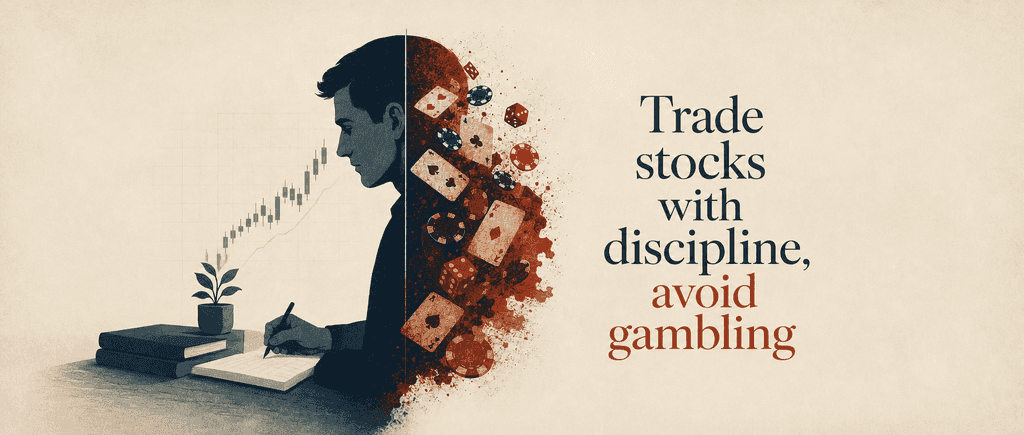
Trade stocks with discipline, avoid gambling
This plan is essential for aspiring investors who struggle with emotional decision-making and inconsistent results. It provides a structured path for transitioning from speculative gambling to a disciplined, professional trading methodology focused on risk management.

The Volatility Survival Guide
Market volatility often triggers biological survival instincts that override rational trading strategies. This guide is essential for traders looking to master their physiological responses and eliminate the cognitive biases that erode profitability.

The Maverick's Guide to High-Stakes Influence
In modern organizations, merit alone isn't enough to move the needle on bold ideas. This guide is designed for ambitious leaders and intrapreneurs who need to navigate political minefields and master the art of psychological persuasion to achieve results.

Bayesian Thinking for Smart Bets
In an era of information overload, the ability to filter noise and update your perspective is a competitive advantage. This plan is designed for professionals and decision-makers who want to replace gut feelings with a rigorous, logical framework for handling risk.




![[b1e04c3a-aedb-4f53-a97f-5c6a1e8ecf41:c0000] it's my honor as well as my privilege to welcome our life… p1-1](/_next/image?url=https%3A%2F%2Fd1y2du6z1jfm9e.cloudfront.net%2Fassets%2Fpodcast%2Fyellow.png&w=1024&q=50)
![[b1e04c3a-aedb-4f53-a97f-5c6a1e8ecf41:c0001] it's my honor as well as my privilege to welcome our life… p1-1](/_next/image?url=https%3A%2F%2Fd1y2du6z1jfm9e.cloudfront.net%2Fassets%2Fpodcast%2Fpurple.png&w=1024&q=50)
![[b1e04c3a-aedb-4f53-a97f-5c6a1e8ecf41:c0002] it's my honor as well as my privilege to welcome our life… p1-1](/_next/image?url=https%3A%2F%2Fd1y2du6z1jfm9e.cloudfront.net%2Fassets%2Fpodcast%2Fblue.png&w=1024&q=50)