1장
The Future of Work: Essential Skills for Success in a Rapidly Changing World
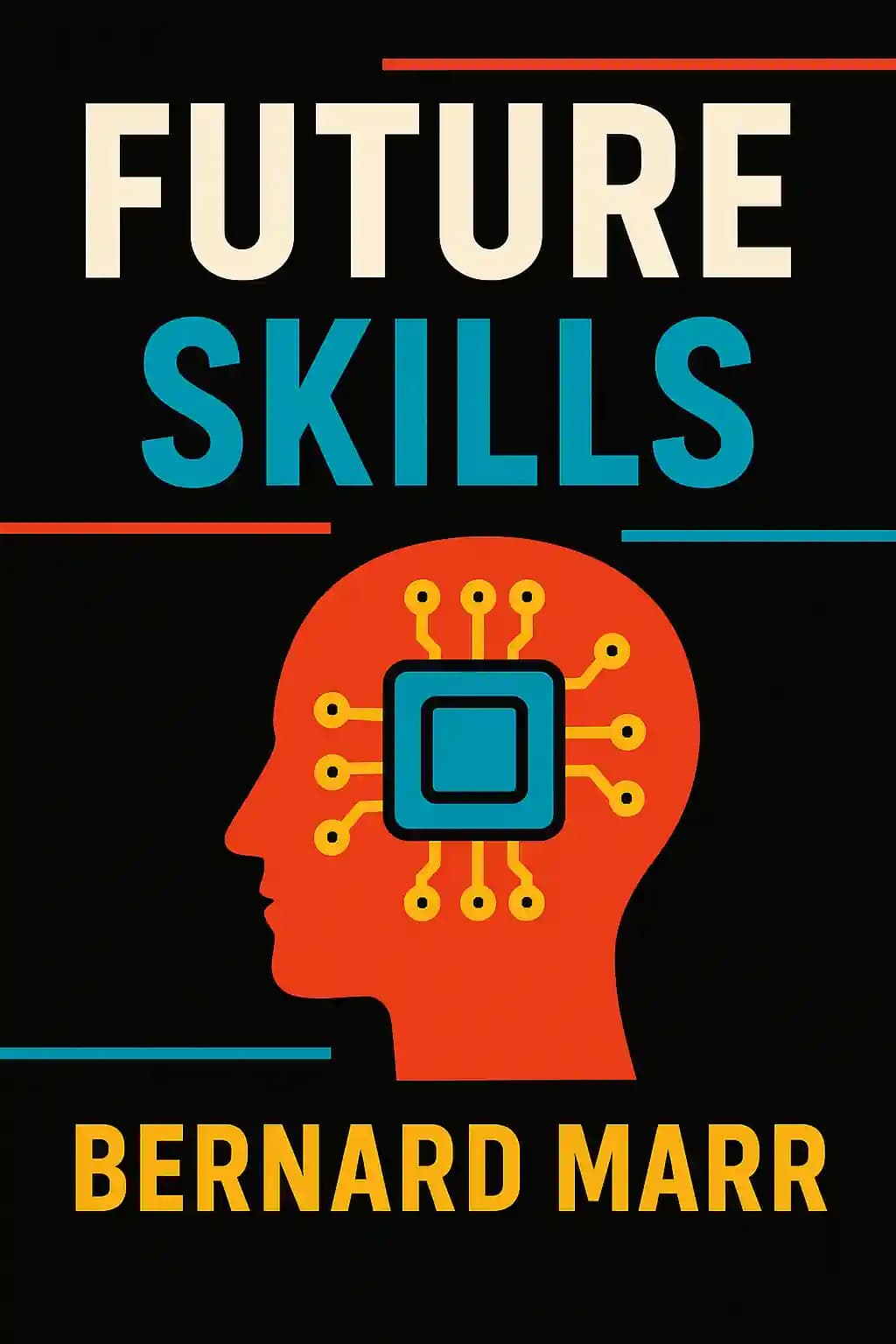
In a world where 85% of jobs available in 2030 haven't even been invented yet, how do we prepare for careers that don't exist? This question lies at the heart of Bernard Marr's "Future Skills," a guide that has become required reading in forward-thinking organizations and business schools worldwide. As we enter what experts call the fourth industrial revolution-characterized by automation, AI, and connected technologies-our relationship with work is being fundamentally reshaped. Rather than fearing this transformation, Marr presents a refreshingly optimistic vision: technology won't replace us but will make work more human by freeing us to focus on tasks where we naturally excel-creativity, empathy, critical thinking, and complex decision-making.
The book's popularity stems from its practical approach to skill development. Unlike many futurists who simply predict doom or utopia, Marr provides actionable strategies for developing the capabilities that will matter most. This explains why companies like Microsoft and Google have incorporated its frameworks into their professional development programs. For individuals wondering how to future-proof their careers amid rapid technological change, Marr offers a clear roadmap for navigating the shifting landscape of work with confidence rather than fear.
2장
Digital Literacy: Navigating the Technological Revolution
The accelerating pace of digital transformation means our technical skills quickly grow stale, making continual learning the new normal. What separates successful professionals from others isn't deep technical expertise but rather enthusiasm about technological possibilities and willingness to learn about them.
Digital literacy encompasses the skills needed to thrive in our increasingly digital world-from using devices and applications confidently to communicating through digital tools, handling data appropriately, staying safe online, and keeping current with emerging technologies. This matters because digital transformation represents the most significant workplace change most of us have experienced. My entire professional life is now digital-from routine administration to content creation, client consulting, and educational seminars.
No industry will escape this transformation. Everyday tasks across all sectors will increasingly involve digital tools, and intelligent machines will become part of every workplace. Consider AI as an example: I've worked with Synthesia to create a digital version of myself that can say anything in my voice just by typing text. This allows me to transform articles into videos without stepping in front of a camera-with potential for content in multiple languages.
Soon, various occupations will use AI tools for efficiency: architects generating optimal designs from specifications, marketers creating content at the touch of a button, security guards analyzing footage in real time. We don't all need to become software developers, but we must be comfortable with technology tools.
The digital skills gap demands immediate attention. According to surveys, 75% of employees expect their jobs to become more digitally demanding within five years, yet a fifth of businesses have no digital skills strategy. In the UK, a "catastrophic" digital skills shortage looms, while in the US, a third of workers lack digital skills despite 82% of middle-skills jobs being "digitally intensive."
To improve your digital literacy, start by assessing your current knowledge level. Government and institutional resources like the UK's Open University offer free courses to develop online skills. For next-level technology trends like AI and the metaverse, you don't need to become a tech expert-just stay aware of how these technologies might impact your work and life. Resources include WIRED magazine, tech podcasts, YouTube tutorials, and free online courses. Most importantly, adopt a "lifelong learner" mindset and approach new technologies positively.
3장
Data Literacy: Extracting Value from the World's Most Valuable Resource
We're living through a technological breakthrough age underpinned by data-the fuel powering this transformation. Just as literacy was essential in the past century, data literacy has become critical for the 21st century, with organizations increasingly seeking employees who can extract value from data.
Data literacy means having a basic ability to understand and use data-accessing appropriate information, working with data (creating, gathering, managing, securing it), finding meaning in numbers, communicating insights effectively, and questioning data validity and potential bias. Despite many people's fear of numbers, all employees-not just data scientists-must acquire these skills to thrive in today's workplace.
Data isn't just an important business asset-it's arguably the most valuable resource in the world, even more valuable than oil. The giants of the fourth industrial revolution (Google, Facebook, Amazon) are built from the ground up on data. Understanding data provides a foundation for learning about other technologies like AI, which relies on machines learning from massive datasets.
Data is exploding in both importance and volume. By 2020, the world contained an estimated 44 zettabytes of data, potentially growing to 175 zettabytes by 2025. To comprehend this scale: one zettabyte equals 1,000 exabytes, each exabyte equals 1,000 petabytes, each petabyte equals 1,000 terabytes, and each terabyte equals 1,000 gigabytes-that's 21 zeros! Almost everything we do generates data: phone interactions, social media activity, GPS location signals, security camera footage, contactless payments, streaming media-all creating an ever-growing data stream.
Even traditional businesses now view data as their most critical asset for making better decisions, understanding customers, and streamlining operations. This has created surging demand for data skills, with UK studies showing demand for data scientists alone rising 231% over five years. Yet 46% of UK employers struggle to recruit for data-related roles.
The good news: you don't need to be a data scientist to benefit from data literacy. Understanding some key concepts helps navigate the data landscape effectively. Data falls into two categories: quantitative (countable information like prices and sales figures) and qualitative (descriptive information like flavors and customer perceptions). Data may represent a snapshot in time (cross-sectional) or track changes over time (longitudinal).
Quality matters tremendously with data. Good data must be accurate, consistent, current, and as complete as possible. Raw data only becomes valuable through analysis that uncovers patterns, trends, and stories that inform decisions. Data's true power lies in answering pressing business questions and solving challenges-data for its own sake is pointless.
To improve your data literacy, start by advocating for a company data literacy program while taking initiative with available resources. Explore your company's existing data sets and business intelligence tools. For self-development, utilize online education platforms like Coursera, Udemy, edX, and resources from the Data Literacy Project. Take basic statistics and data visualization courses to understand fundamentals and effectively communicate insights.
4장
Technical Skills: The Evolving Expertise for Tomorrow's Workplace
Despite increasing digitization and workplace changes, technical skills remain essential for future success. These encompass both the practical skills needed to perform jobs effectively and the ability to work alongside technology. From coding and data science to profession-specific abilities like nursing, accounting, or carpentry, technical skills remain essential for quality work performance regardless of how technology augments these roles.
Technical skills extend far beyond technology and IT fields to encompass the specialized knowledge and abilities particular to your field. Whether you're an accountant, plumber, nurse, lawyer, teacher, hairstylist, or carpenter, technical skills are the specialized knowledge acquired through formal education, training, on-the-job learning, and experience. They may be digital, scientific, or practical and physical, involving specific equipment or tools.
These skills remain crucial because they're fundamental to job performance-an accountant without financial management skills won't succeed regardless of their soft skills. As technology advances rapidly and more tasks become automated, technical skills become more valuable, not less, though their specifics will evolve. The most in-demand jobs worldwide all require technical expertise.
However, jobs that remain will be transformed by technology-hairstylists using augmented reality mirrors, truck drivers working with autonomous vehicle technology, radiologists collaborating with AI-enabled scanners. Maintaining human technical expertise is essential for advancing industries and maximizing technology's potential.
Some broadly valuable technical skills for 21st-century work include customer relationship management, project management, social media management, content creation, product development, technical writing, and mechanical maintenance. For technology-specific roles, in-demand skills center around programming languages, AI and machine learning, data science, cybersecurity, cloud computing, 5G, IoT, software development, UX design, extended reality, robotics, quantum computing, and blockchain.
The rapid evolution of professional and technical skills presents both a challenge and opportunity. Those who maintain relevant technical expertise will be more desirable to employers, while businesses must invest in technical skills to drive success and stay competitive. For individuals, this means encouraging employer-sponsored training while taking personal responsibility through online courses, self-study materials, and learning directly from experts through mentoring or job shadowing.
5장
Digital Threat Awareness: Protecting Yourself in a Connected World
As our world becomes increasingly digital, criminal approaches have evolved accordingly, creating numerous threats to both personal and professional life-from credential theft to system hacking and digital addiction. Digital threat awareness means understanding the dangers of online activities and digital device use while having the tools to protect yourself and your organization.
This awareness is crucial as our lives become increasingly digital-from online banking and shopping to digital communications, news consumption, fitness tracking, food ordering, and healthcare management. Our expanding digital footprints span both personal and professional realms, with the boundaries between them blurring as more people work from home and use personal devices for work purposes.
Digital addiction encompasses various forms-social media, internet, phone, and gaming addictions. The statistics are alarming: approximately 210 million people worldwide suffer from social media addiction, with platforms deliberately designed to be addictive to maximize advertising revenue. American teens spend an average of nine hours daily on social media, while 50% of adults admit to using social media while driving. Smartphone dependency is equally concerning-Americans check their phones 262 times daily (every 5.5 minutes), with 80% reaching for phones within 10 minutes of waking.
Your personal data is a valuable commodity that companies monetize, often without your knowledge, simply through your use of their apps or services. Free apps typically collect and sell the most data-if you're not paying for the product, your data likely is the product. Companies like Cosmose AI purchase data from over 400,000 apps and 1 billion smartphones, then sell consumer behavior insights to major brands.
Password security remains critically important yet widely neglected. With over 15 billion stolen account credentials available on the dark web, hackers can easily access everything from social media to financial accounts. Modern password cracking uses sophisticated techniques including credential stuffing, phishing, brute force attacks, and password spraying.
Cybercriminals employ various sophisticated techniques to infiltrate systems and harvest sensitive information. These include data breaches (theft of data by malicious actors), phishing (spam messages prompting urgent action to steal credentials or deliver malware), malware (malicious code that gathers information or infects systems), ransomware (encrypting files and demanding payment for access), and IoT attacks (using unsecured smart devices to overwhelm target systems with fake traffic).
To defend against cyber threats, individuals must implement several protective measures: remain suspicious of emails (especially those creating urgency), never open attachments from untrusted sources, avoid clicking pop-ups, verify website security certificates before sharing information, keep all software updated (including smart devices), practice good password hygiene, download apps only from trusted sources, install firewalls and antivirus protection, regularly back up data, and avoid public Wi-Fi when possible or use VPNs.
6장
Critical Thinking: Navigating Information in a Complex World
Critical thinking has become increasingly valuable as automation handles more practical tasks. Often misunderstood as being negative, critical thinking is actually about objectivity and maintaining an open, inquisitive mind-qualities highly valued by employers. Beyond professional success, critical thinking protects against manipulation, fraud, and misinformation in everyday life.
Critical thinking transcends routine thought processes by analyzing issues objectively based on evidence rather than personal opinions or biases. It involves systematically observing problems, gathering relevant facts, recognizing biases (including one's own), identifying inconsistencies, asking probing questions, evaluating information importance, drawing evidence-based conclusions, considering consequences of various options, and making informed decisions.
Modern society presents several challenges that simultaneously threaten critical thinking while making it more essential than ever. While biases have always existed, increasing polarization and social media filter bubbles make them harder to recognize and overcome. Everyone is influenced by cognitive biases affecting beliefs and decisions-from obvious gender stereotyping to subtler forms like confirmation bias (focusing only on information supporting existing beliefs) and anchoring bias (overvaluing first information received).
Despite global cultural exchange making the world seem smaller, society is becoming increasingly divided into opposing camps with little ability to understand opposing viewpoints. Studies reveal stark misconceptions about political opponents-Democrats vastly overestimate Republican wealth (44% vs. actual 2%), while Republicans greatly overestimate LGBTQ+ representation among Democrats (38% vs. actual 6%).
Social media, where many (especially younger people) get their news, creates "filter bubbles" by serving content that reinforces existing beliefs. These platforms, designed to maximize attention, continually show users content aligned with their demonstrated preferences, potentially distorting reality by filtering out challenging perspectives.
Misinformation spreads rapidly online, with two-thirds of US adults encountering false information on social media. More troublingly, 56% of Facebook users can't recognize fake news that aligns with their beliefs. Deepfakes-AI-created fake images, videos, or audio-present a growing challenge to information integrity, fundamentally undermining trust in what we see and hear.
To develop critical thinking: always assess new information by questioning its completeness and evidence; consider information sources and their motivations; gather additional data to fill identified gaps; ask open-ended questions driven by curiosity; find reputable sources like established news sites and fact-checking organizations; avoid getting news primarily from social media; learn to spot fake news by examining language, emotion, and sources; recognize both external and internal biases; and form independent opinions after thorough assessment.
7장
Emotional Intelligence and Empathy: The Human Edge in a Digital World
Emotional intelligence remains crucial in increasingly digital workplaces because human-to-human relationships will always exist. EQ-the ability to be aware of, express, and control emotions while understanding others'-is arguably more important than IQ for predicting success, as demonstrated by insurance agents with high EQ selling policies worth twice as much as those with lower EQ.
Emotional intelligence is the ability to be aware of, express, and control our emotions while understanding and responding to others' emotions. Empathy-seeing the world from someone else's perspective-is a key component. EQ contrasts with cognitive intelligence (IQ), with many experts believing EQ is more important because IQ is too narrow to represent the spectrum of human abilities.
Machines are developing remarkable abilities to detect human emotions through various means: analyzing smells, monitoring voice patterns (AI has diagnosed PTSD in veterans through voice analysis), and even using wireless signals bounced off human bodies to detect emotions like anger and joy by measuring heart rate and breathing changes. Despite these advances, human emotional intelligence remains essential across all life domains.
Emotionally intelligent people excel at forming and sustaining meaningful relationships, demonstrating self-awareness, listening effectively, thinking before acting, managing stress better, diffusing negative emotions in others, resolving conflicts, having difficult conversations without hurting feelings, working collaboratively, providing excellent customer service, and being better leaders whose team members feel seen and heard.
While AI may eventually surpass humans at detecting emotions, human EQ remains essential for creating positive customer experiences and collaborative work environments. Technology can augment human EQ-like Google Glass helping children with autism interpret facial expressions-but complex decision-making still requires human emotional intelligence. EQ may become even more important in our digital age, helping us slow down in a world of instant gratification and combat the documented decline in empathy that began around 2000 when digital tools became prevalent.
To build EQ, start by truly listening to others, paying attention to both words and body language. Consciously practice empathy by regularly asking "How would I feel in their situation?"-a simple but powerful exercise often neglected in busy lives. Develop self-awareness by identifying and labeling your emotions, analyzing how they influence your behavior and decisions. This helps you respond thoughtfully rather than reactively. Practice mindfulness by taking moments to focus on your thoughts, feelings and sensations, especially during stressful times.
8장
Creativity and Collaboration: Shaping the Future Together
Creativity-the fundamental human ability to imagine different possibilities and bring ideas to life-has enabled our species' evolution and success. It's not just about fine arts but about transforming imaginative ideas into reality through both thinking and producing. Contrary to popular belief, creativity isn't a rare gift possessed by only a few "special" people; research shows excellence comes from training, motivation, encouragement, opportunity, and practice-not innate talent.
While creativity and innovation aren't identical, they're inextricably linked-innovation creates value through new or improved goods and services, but requires creativity to happen. The World Economic Forum ranks creativity as the third most essential skill for the fourth industrial revolution, behind only problem-solving and critical thinking. With 58 percent of employers expecting creativity to grow in importance, it's becoming increasingly vital as work itself transforms.
Daniel Pink argues in "A Whole New Mind" that left-brain linear thinking will eventually be replaced by right-brain skills like creativity and empathy. He envisions a "Conceptual Age" following the Information Age, where creativity drives competitive advantage. This shift is happening because machines are increasingly handling knowledge work that powered recent economic growth. As automation takes over more knowledge tasks, humans will transition to more thoughtful, innovative, and creative work.
To enhance creativity, ask challenging questions that imagine new possibilities. Build a diverse network of people with different experiences to expose yourself to fresh ideas. Travel to new places-even working from a different cafe can stimulate observation skills. Look for unexpected patterns between ideas, following Richard Branson's "Always Be Connecting the Dots" approach. Keep an ideas journal to capture interesting concepts and make surprising connections. Read widely and create quiet mental space through unplugged activities like walking without distractions. Make time for daydreaming instead of reaching for your phone during idle moments.
Collaboration has become essential for workplace success in meeting unprecedented challenges. While often used interchangeably with teamwork, collaboration involves collective thinking and shared responsibility, often without formal leadership. When someone is unavailable, others seamlessly cover their responsibilities. Collaboration requires emotional intelligence, mutual respect, and trust.
Good collaborators possess a constellation of interpersonal skills beyond mere technical expertise. They're active listeners who genuinely attend to others rather than waiting for their turn to speak. They generously share their time, knowledge, and encouragement. They demonstrate adaptability when plans inevitably change and create psychological safety through trustworthiness and transparency. This combination of emotional intelligence, generosity, and humility creates the foundation for effective collaboration in increasingly distributed and diverse workplace environments.
9장
Adaptability and Lifelong Learning: Thriving in Constant Change
Change has always been constant, but today's workplace changes are accelerating dramatically. New technologies, automation, rapidly evolving work patterns, and major disruptions from extreme weather to global pandemics require increasing mental resilience. Adaptability is our ability to adjust to new conditions, combining flexibility (attitude toward change) and versatility (ability to change). This perspective suggests we can control our reactions to change-being willing to change is a choice we can all make and develop.
Flexible people see opportunities rather than obstacles, remain open-minded to new ideas and perspectives, demonstrate curiosity and willingness to learn, persevere through difficulties, often display creativity and good decision-making skills, and typically possess strong interpersonal and emotional intelligence. By contrast, inflexible people tend to be close-minded, prioritize winning over compromise, and become defensive when their preferred methods are threatened.
Technology and automation will accelerate change, transforming jobs and creating new ones while eliminating others. According to McKinsey, up to 375 million people may need to switch occupations and learn new skills by 2030. This massive change, combined with unpredictable global events like pandemics and political instability, makes adaptability essential.
Adaptability provides mental resilience and practical ability to respond to unpredictable situations both at work and in everyday life. It helps us weather challenges from major life events to minor inconveniences by reducing the anxiety associated with change. Research shows adaptable people experience increased happiness and life satisfaction because they can find meaning and joy regardless of circumstances.
To become more adaptable: Be open-minded and consider multiple viewpoints; learn to "unlearn" old information and methods (which can boost adaptability by 40%); stay current with industry trends; implement small changes at home or work to experience how invigorating change can be; ask "what if" questions to prepare for potential changes; step outside your comfort zone; accept that trying new things may lead to failure; notice small changes around you; manage your response to sudden change; practice optimism by focusing on positive aspects and reframing obstacles as opportunities.
Curiosity and continual learning may be the single most important skill for everyone to cultivate regardless of age or industry. This fundamental trait introduces us to new people, information, and experiences while keeping life interesting and maintaining mental health. In a work context, it enables adaptation to change, keeps skills sharp, and helps navigate the transformations of the fourth industrial revolution.
Curiosity is the desire to learn and understand new things, which fuels continual learning-the ongoing, self-motivated pursuit of knowledge. While we're born naturally curious (as evidenced by children's constant "why" questions), traditional education often dampens this trait by valuing correct answers over questions. Fortunately, curiosity can be reignited through practical techniques.
Humility-being free from pride and arrogance-is essential to curiosity as it acknowledges we don't know everything. Contrary to misconception, humility doesn't indicate lack of confidence but rather inner strength that recognizes both strengths and weaknesses as opportunities for growth. This quality enables people to ask "stupid" questions without fear.
To cultivate curiosity: be honest about your weaknesses, practice acceptance without judgment, listen actively, ask for help when needed, and learn to sit with uncomfortable feelings. For a growth mindset, read Carol Dweck's book, reframe challenges as development opportunities, reward hard work over natural talent, use the power of "yet" in your language, be patient with learning processes, and practice humility.
10장
Looking After Yourself: The Foundation for Everything Else
In our rapidly changing world, looking after yourself physically and mentally has become essential. This isn't about achieving perfect work-life balance but finding fulfillment in both work and personal life. It requires conscious effort to prioritize self-care, maintain boundaries, and make time for what truly matters.
Looking after yourself fundamentally means finding balance-not necessarily equal time between work and personal life, but feeling fulfilled in both areas. This includes managing your workload without working excessive hours, spending quality time with loved ones, maintaining clear boundaries between work and personal life, prioritizing nutrition and exercise, and establishing healthy sleep routines.
Sara Milne Rowe's SHED Method-Sleep, Hydration, Exercise, and Diet-provides a framework for building positive routines that help us feel more in control. The method identifies five key energies: Body energy (the foundation, covering SHED basics); Mood energy (maintaining calm and positivity); Mind energy (boosting concentration and problem-solving); People energy (surrounding yourself with those who energize rather than drain you); and Purpose energy (connecting to what drives you beyond self-interest).
In our unpredictable, fast-changing world with blurred boundaries between work and home life, self-care skills are essential for performing well professionally, achieving personal goals, supporting loved ones, and feeling our best. Looking after yourself reduces stress (which affects 74% of people to overwhelming levels), improves physical and mental health, enhances relationships through greater presence, boosts work performance through better focus, and creates space for creativity by freeing mental capacity.
Physical wellness starts with regular activity (at least 150 minutes weekly), getting outside regularly, eating a balanced diet of whole foods, limiting alcohol, drinking more water, and maintaining a consistent sleep routine. For better sleep, avoid screens before bedtime, create a sleep-conducive environment, and use "do not disturb" modes on devices.
Mental health requires strong work-life boundaries, finding ways to unplug (reading, mindfulness, running), making time for hobbies, practicing present-moment awareness, talking about feelings, maintaining social connections, reframing negative thoughts, letting go of worry, writing letters to your future self during good times, embracing imperfection, and remembering that balance is an ongoing journey requiring continuous effort.
Maintaining balance requires saying no to non-priorities, delegating or outsourcing tasks when possible, eliminating time-wasting activities, treating time as a precious asset, setting and enforcing strong boundaries, creating dedicated workspaces at home, working smart rather than long, and speaking up when work expectations become unsustainable.
Looking across all twenty skills reveals common themes: humility in recognizing our strengths and weaknesses; optimism that adapting to transformation is achievable for everyone; self-confidence that anyone can improve these skills; resilience to navigate coming changes; and initiative to curate our own learning paths beyond traditional education. These themes inspire optimism rather than fear about humanity's future alongside machines.
To implement these skills effectively, start small rather than trying to master all 20 at once. Identify one to three priority skills most relevant to your work or interests and make them your focus for the year. Create a concrete learning action plan that might include books, online courses, finding mentors, and practicing techniques from this book. Remember that all these skills can be learned-embrace the power of "yet" rather than dismissing any as "not my thing."