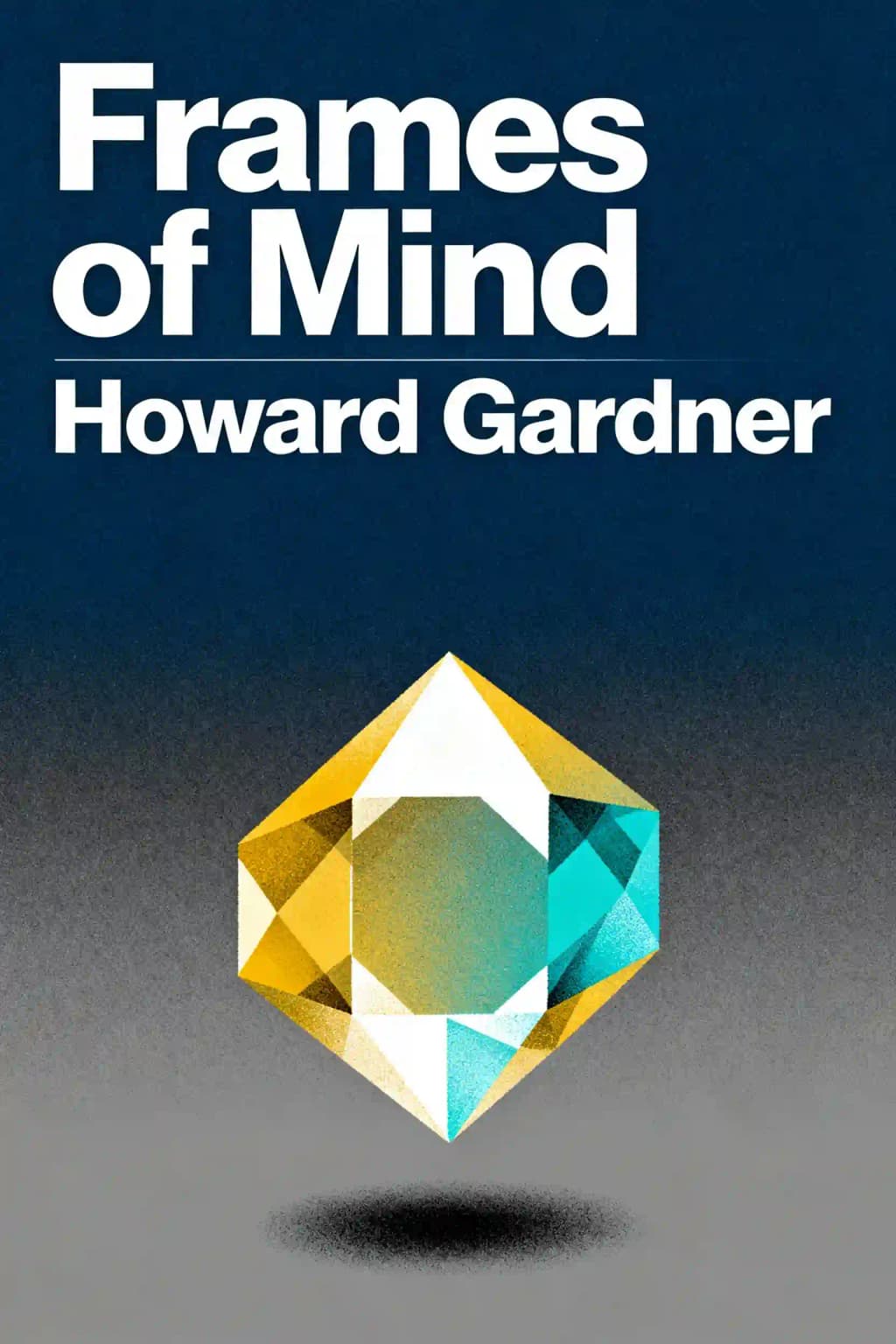
Gardner's revolutionary "Frames of Mind" shatters the myth of singular intelligence, proposing eight distinct types. This 1983 landmark sparked global educational reform, challenging traditional IQ tests and inspiring personalized learning approaches. How might recognizing your unique cognitive strengths transform your potential?
Howard Gardner, a pioneering psychologist and Harvard University professor, is renowned for his groundbreaking work in cognitive psychology and education, epitomized by his seminal book Frames of Mind: The Theory of Multiple Intelligences.
A leader in developmental psychology, Gardner revolutionized the understanding of human cognition by challenging the narrow IQ-based view of intelligence, proposing instead eight distinct intelligences spanning linguistic, musical, and interpersonal domains. His academic career at Harvard’s Graduate School of Education and role as co-founder of Harvard Project Zero underscore his authority on learning and creativity.
Gardner’s influential works, including Multiple Intelligences: New Horizons and The Disciplined Mind, further explore educational reform and ethical dimensions of intelligence. A frequent speaker at TED conferences and contributor to The New York Times, his ideas shape curricula worldwide.
Frames of Mind has sold over 1 million copies and been translated into 20+ languages, cementing Gardner’s status as a transformative figure in 21st-century education. He received the MacArthur “Genius” Fellowship and 31 honorary degrees for reshaping global pedagogical frameworks.
Frames of Mind by Howard Gardner introduces the groundbreaking theory that human intelligence comprises eight distinct types—including linguistic, logical-mathematical, musical, and interpersonal—rather than a single, measurable "IQ." It critiques traditional education systems for overemphasizing verbal and mathematical skills, advocating instead for personalized learning that nurtures diverse talents.
Educators, psychologists, and parents will benefit from Gardner’s insights into human potential. It’s also valuable for professionals in talent development or anyone interested in rethinking intelligence beyond standardized testing.
Yes. The book remains foundational for understanding personalized education and cognitive diversity. Its critique of IQ-driven systems aligns with modern trends toward inclusive, adaptable learning models, making it relevant for educators and policymakers.
Gardner identifies:
Gardner argues IQ tests are too narrow, measuring only linguistic and logical skills while ignoring other intelligences like creativity or empathy. He advocates for assessments that reflect diverse cognitive strengths.
Intelligence is defined as the ability to solve problems or create culturally valued products, emphasizing practical application over abstract testing. Gardner stresses its variability across cultures and potential for growth.
The book inspired student-centered teaching methods and curricula that nurture diverse talents. Schools now incorporate arts, physical activity, and social-emotional learning alongside traditional subjects.
Critics argue the intelligences lack empirical validation and overlap conceptually. Some claim it conflates skills with innate abilities, though educators still value its practical insights.
Its emphasis on diverse learning styles aligns with AI-driven personalized education and neurodiversity advocacy. The theory supports adapting workplaces and schools to individual cognitive profiles.
Unlike single-intelligence theories (e.g., The Bell Curve), Gardner’s work offers a holistic view of human potential. It complements growth mindset concepts popularized by Carol Dweck.
Yes. By identifying your dominant intelligences, you can leverage strengths in roles from creative fields (musical/spatial) to leadership (interpersonal). It also aids teams in balancing diverse skills.
저자의 목소리로 책을 느껴보세요
지식을 흥미롭고 예시가 풍부한 인사이트로 전환
핵심 아이디어를 빠르게 캡처하여 신속하게 학습
재미있고 매력적인 방식으로 책을 즐기세요
It is of the utmost importance that we recognize and nurture all of the varied human intelligences, and all of the combinations of intelligences.
We are all so different largely because we all have different combinations of intelligences.
Intelligence isn't fixed or singular—we all possess multiple pathways to competence and contribution.
The resulting "IQ" became treated as a fixed, innate quality.
Learning itself involves altering the strength of existing synaptic connections.
Frames of Mind의 핵심 아이디어를 이해하기 쉬운 포인트로 분해하여 혁신적인 팀이 어떻게 창조하고, 협력하고, 성장하는지 이해합니다.
Frames of Mind을 빠른 기억 단서로 압축하여 솔직함, 팀워크, 창의적 회복력의 핵심 원칙을 강조합니다.

생생한 스토리텔링을 통해 Frames of Mind을 경험하고, 혁신 교훈을 기억에 남고 적용할 수 있는 순간으로 바꿉니다.
무엇이든 물어보고, 목소리를 선택하고, 진정으로 공감되는 인사이트를 함께 만들어보세요.

샌프란시스코에서 컬럼비아 대학교 동문들이 만들었습니다
"Instead of endless scrolling, I just hit play on BeFreed. It saves me so much time."
"I never knew where to start with nonfiction—BeFreed’s book lists turned into podcasts gave me a clear path."
"Perfect balance between learning and entertainment. Finished ‘Thinking, Fast and Slow’ on my commute this week."
"Crazy how much I learned while walking the dog. BeFreed = small habits → big gains."
"Reading used to feel like a chore. Now it’s just part of my lifestyle."
"Feels effortless compared to reading. I’ve finished 6 books this month already."
"BeFreed turned my guilty doomscrolling into something that feels productive and inspiring."
"BeFreed turned my commute into learning time. 20-min podcasts are perfect for finishing books I never had time for."
"BeFreed replaced my podcast queue. Imagine Spotify for books — that’s it. 🙌"
"It is great for me to learn something from the book without reading it."
"The themed book list podcasts help me connect ideas across authors—like a guided audio journey."
"Makes me feel smarter every time before going to work"
샌프란시스코에서 컬럼비아 대학교 동문들이 만들었습니다

Frames of Mind 요약을 무료 PDF 또는 EPUB으로 받으세요. 인쇄하거나 오프라인에서 언제든 읽을 수 있습니다.
What if everything we thought we knew about intelligence was incomplete? In 1983, Howard Gardner challenged a century of psychological orthodoxy with a revolutionary idea: intelligence isn't a single capacity measured by IQ tests, but rather a collection of distinct abilities that develop independently. This insight-that humans possess multiple intelligences-resonated far beyond academia, transforming educational practices worldwide and offering a more hopeful vision of human potential. Why did this theory capture our collective imagination? Perhaps because it validates what we intuitively sense-that human capability is too rich and varied to be reduced to a single number. The concert pianist, the master carpenter, the brilliant negotiator, and the insightful therapist all demonstrate forms of intelligence equally valuable yet fundamentally different. What if we recognized and nurtured this diversity of gifts instead of privileging just one or two?