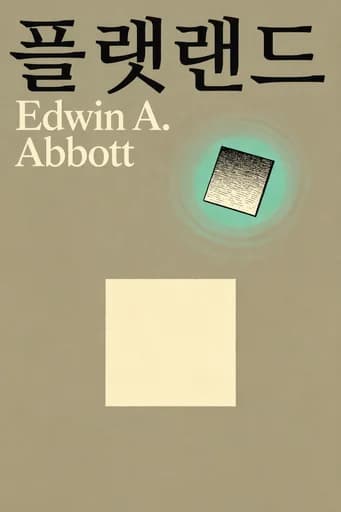
Flatland: By Edwin A. Abbott - Illustrated book cover

Flatland

By Edwin A. Abbott - Illustrated

Edwin A. Abbott
3.81 (78842 Reviews)

Flatland 개요

Enter a two-dimensional universe where squares, triangles, and lines navigate rigid social hierarchies. Einstein's relativity theories revitalized this 140-year-old mathematical satire that fetches $5,000 for first editions. What dimensional truths might we be missing in our own reality?

Flatland의 핵심 주제

  • spatial dimensionality
  • mathematical allegory
  • victorian social satire
  • geometric hierarchy
  • perception of reality

Flatland의 명언

  • I call our world Flatland, not because we call it so, but to make its nature clearer to you, my happy readers, who are privileged to live in Space.

  • Imagine a vast sheet of paper on which straight Lines, Figures, and other Plane Shapes move freely about, on or in the surface, but without the power of rising above or sinking below it, very much like shadows—only solid and with luminous edges—and you will then have a pretty correct notion of my Country and Countrymen.

  • Upward, not Northward.

  • Our society follows a strict geometric hierarchy that would make even the most class-conscious Victorian blush.

  • Unlike in your world, one's shape is immutable destiny.

Flatland의 등장인물

  • A SquareThe narrator, a professional man and gentleman
  • Edwin A. AbbottThe author of the novella
  • EinsteinScientist who studied the book's theories

저자 소개

Flatland의 저자 소개

Edwin Abbott Abbott (1838-1926) was an English schoolmaster, theologian, and Anglican priest best known for Flatland: A Romance of Many Dimensions, a pioneering work of mathematical fiction exploring higher dimensions through satirical storytelling.

Educated at St John's College, Cambridge, where he earned top honors in classics, mathematics, and theology, Abbott served as headmaster of the City of London School for 24 years before retiring in 1889 to focus on writing.

Published in 1884 under the pseudonym "A Square," Flatland used a two-dimensional world to critique Victorian class hierarchies and gender inequality while introducing dimensional geometry concepts. Abbott authored over forty books, including the influential Shakespearian Grammar (1870) and theological works like Philochristus (1878).

Though largely unrecognized during his lifetime, Flatland gained widespread popularity posthumously and has inspired multiple film adaptations, remaining a cornerstone of mathematical literature and science fiction.

Flatland 요약 다운로드

Flatland 요약을 무료 PDF 또는 EPUB으로 받으세요. 인쇄하거나 오프라인에서 언제든 읽을 수 있습니다.

이 책에 대한 FAQ

Flatland by Edwin A. Abbott is a satirical novella published in 1884 that tells the story of A Square, a geometric shape living in a two-dimensional world where social class is determined by the number of sides one possesses. The book explores mathematical concepts of dimensions while satirizing Victorian social hierarchies, gender roles, and rigid thinking. Through A Square's journey from Lineland (one dimension) to Spaceland (three dimensions), Abbott challenges readers to imagine realities beyond their immediate perception.

Edwin Abbott Abbott (1838-1926) was an English schoolmaster, theologian, and Anglican priest who authored over fifty books during his lifetime. He served as headmaster of the City of London School from 1865 to 1889, where he educated future Prime Minister H.H. Asquith. Despite not being a trained mathematician, Abbott wrote Flatland as a unique work of mathematical fiction that differed significantly from his other theological and educational writings. His diverse expertise in classics, mathematics, and theology informed the book's philosophical depth.

Flatland appeals to mathematics enthusiasts, science fiction fans, philosophy students, and anyone interested in social satire. The book is ideal for readers curious about dimensional geometry, those exploring perception and consciousness, and individuals who appreciate Victorian-era social criticism. It's particularly valuable for educators teaching mathematical concepts or critical thinking, as well as anyone seeking to challenge their assumptions about reality and expand their intellectual horizons. The novella's accessibility makes it suitable for both young adults and mature readers.

Flatland remains remarkably relevant despite being published in 1884, offering timeless insights about limited perspective, social hierarchies, and the dangers of intellectual rigidity. The book's mathematical concepts have gained renewed popularity with modern science fiction and discussions of higher dimensions. While its portrayal of women reflects problematic Victorian attitudes, this serves as a powerful satirical device critiquing gender inequality. The novella's brevity, imaginative world-building, and philosophical depth make it a worthwhile read that continues inspiring sequels, adaptations, and scholarly discussion.

Flatland's society is strictly organized by geometric shape, with women as straight lines at the bottom, followed by isosceles triangles (working class), equilateral triangles, squares, pentagons, hexagons, and higher polygons representing increasing nobility. The priestly Circles with countless sides occupy the highest rank. This rigid class system is maintained through the motto "Attend to your Configuration," with the ruling Circles enforcing oppressive policies, limiting education and freedom for lower classes and women, and executing dissenters. The hierarchy satirizes Victorian England's own class divisions and prejudices.

The Sphere is a three-dimensional being from Spaceland who visits A Square to reveal the existence of the third dimension. Representing enlightenment and expanded consciousness, the Sphere demonstrates how higher dimensions can perceive and manipulate lower ones, appearing and disappearing mysteriously in Flatland. The Sphere's role parallels religious revelation, reflecting Abbott's theological background by suggesting supernatural beings may interact with humans in ways we cannot fully comprehend. Ironically, the Sphere dismisses A Square's speculation about a fourth dimension, illustrating how even enlightened beings can be limited by their own dimensional perspective.

Flatland presents a scathing satire of Victorian gender inequality by depicting women as dangerous, uneducated straight lines who lack reason, memory, and aspirations beyond reproduction. This extreme portrayal intentionally exaggerates Victorian attitudes to expose their absurdity. The book criticizes rigid class systems, intellectual suppression, and institutional control through the Circles' totalitarian rule. Abbott's satirical treatment of women's "sharp points" and mandatory education restrictions mirrors real Victorian debates about women's rights and education. The Chromatic Revolution subplot further illustrates how those in power manipulate public opinion to maintain oppressive social orders.

A Square is imprisoned for seven years for preaching the Gospel of Three Dimensions after publicly sharing his revelations about Spaceland. After the Grand Council declares dimensional heresy a crime punishable by death or imprisonment, A Square's attempts to enlighten others—including his own grandson—fail completely. He writes his treatise from prison as a dejected apostle, unable to convert anyone to his expanded worldview. The tragic ending emphasizes how society suppresses revolutionary ideas and persecutes those who challenge established thinking. His imprisonment parallels historical figures martyred for advancing knowledge that threatened institutional power.

Lineland is a one-dimensional world that A Square visits in a dream, where inhabitants exist on an infinitely long line with only forward and backward movement possible. The Monarch of Lineland cannot comprehend A Square's explanations of a second dimension because concepts like "left" and "right" are meaningless in his reality. This encounter illustrates how beings limited by their dimensional perspective cannot visualize higher dimensions, foreshadowing A Square's own struggles understanding the third dimension. The Lineland episode demonstrates the relativity of perception and the difficulty of explaining realities beyond one's experiential framework.

Flatland teaches that perception is fundamentally limited by one's dimensional existence, making it nearly impossible to imagine realities beyond direct experience. The book illustrates how higher-dimensional beings can perceive the interior of lower-dimensional objects—just as the Sphere sees inside Flatland houses and inhabitants simultaneously. Abbott suggests we should remain open to realities we cannot sense or fully understand, whether additional spatial dimensions or spiritual realms. The progression from Lineland to Flatland to Spaceland implies infinite dimensional possibilities, challenging readers to avoid intellectual complacency and embrace conceptual humility.

Flatland's exploration of limited perspective remains powerfully relevant in today's polarized world where echo chambers and algorithmic bubbles restrict intellectual horizons. The book's warnings about institutional suppression of knowledge resonate amid contemporary debates about academic freedom and scientific communication. Its mathematical concepts have gained renewed significance with modern physics theories involving higher dimensions and string theory. The social satire remains applicable to ongoing discussions of class inequality, gender discrimination, and resistance to paradigm shifts. Flatland's message about expanding one's worldview speaks directly to 2025's challenges of tribalism and narrow thinking.

A Square learns that reality extends far beyond his two-dimensional perception, fundamentally transforming his understanding of existence. His experiences teach him intellectual humility—recognizing his former arrogance when he couldn't explain the second dimension to the Lineland Monarch. He discovers that institutional power often suppresses transformative knowledge to maintain control. Most tragically, A Square learns that enlightenment isolates—his revelations lead to imprisonment and his inability to convince even his own family. His journey illustrates both the liberation of expanded consciousness and the personal cost of challenging deeply entrenched worldviews.

나만의 학습 방법 탐색하기

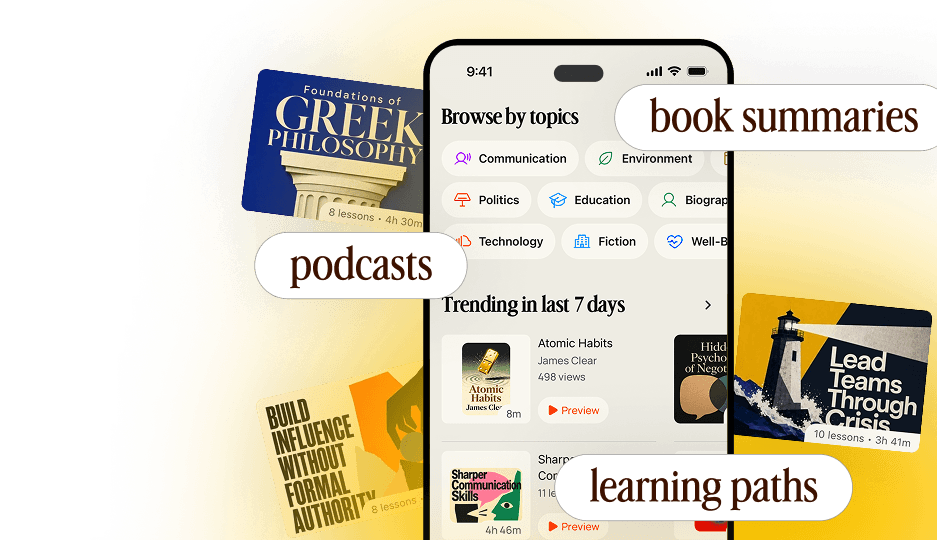
Flatland은 단순한 책이 아닙니다 — Fiction의 마스터클래스입니다. 당신에게 가장 잘 맞는 방식으로 교훈을 흡수할 수 있도록 5가지 고유한 학습 모드를 제공합니다. 깊이 생각하는 사람이든, 빠른 학습자이든, 이야기를 좋아하는 사람이든, 당신의 스타일에 맞는 모드가 있습니다.

빠른 요약 모드

Flatland 요약을 9분 만에 읽거나 듣기

Flatland의 핵심 아이디어를 이해하기 쉬운 포인트로 분해하여 혁신적인 팀이 어떻게 창조하고, 협력하고, 성장하는지 이해합니다.

play
00:00
00:00

재미있게 모드

Flatland의 교훈을 18분 스토리로

생생한 스토리텔링을 통해 Flatland을 경험하고, 혁신 교훈을 기억에 남고 적용할 수 있는 순간으로 바꿉니다.

play
00:00
00:00

개인화 모드

Flatland을 나만의 학습 스타일로 경험하기

무엇이든 묻고, 학습 스타일을 선택하고, 나에게 맞는 인사이트를 함께 만들어보세요.

Personalize Mode

샌프란시스코에서 컬럼비아 대학교 동문들이 만들었습니다

BeFreed는 1,000,000 호기심 넘치는 글로벌 커뮤니티를 하나로 연결합니다

"Instead of endless scrolling, I just hit play on BeFreed. It saves me so much time."

@Moemenn
platform
star
star
star
star
star

"I never knew where to start with nonfiction—BeFreed’s book lists turned into podcasts gave me a clear path."

@Chloe, Solo founder, LA
platform
comments
12
likes
117

"Perfect balance between learning and entertainment. Finished ‘Thinking, Fast and Slow’ on my commute this week."

@Raaaaaachelw
platform
star
star
star
star
star

"Crazy how much I learned while walking the dog. BeFreed = small habits → big gains."

@Matt, YC alum
platform
comments
12
likes
108

"Reading used to feel like a chore. Now it’s just part of my lifestyle."

@Erin, Investment Banking Associate , NYC
platform
comments
254
likes
17

"Feels effortless compared to reading. I’ve finished 6 books this month already."

@djmikemoore
platform
star
star
star
star
star

"BeFreed turned my guilty doomscrolling into something that feels productive and inspiring."

@Pitiful
platform
comments
96
likes
4.5K

"BeFreed turned my commute into learning time. 20-min podcasts are perfect for finishing books I never had time for."

@SofiaP
platform
star
star
star
star
star

"BeFreed replaced my podcast queue. Imagine Spotify for books — that’s it. 🙌"

@Jaded_Falcon
platform
comments
201
thumbsUp
16

"It is great for me to learn something from the book without reading it."

@OojasSalunke
platform
star
star
star
star
star

"The themed book list podcasts help me connect ideas across authors—like a guided audio journey."

@Leo, Law Student, UPenn
platform
comments
37
likes
483

"Makes me feel smarter every time before going to work"

@Cashflowbubu
platform
star
star
star
star
star

"Instead of endless scrolling, I just hit play on BeFreed. It saves me so much time."

@Moemenn
platform
star
star
star
star
star

"I never knew where to start with nonfiction—BeFreed’s book lists turned into podcasts gave me a clear path."

@Chloe, Solo founder, LA
platform
comments
12
likes
117

"Perfect balance between learning and entertainment. Finished ‘Thinking, Fast and Slow’ on my commute this week."

@Raaaaaachelw
platform
star
star
star
star
star

"Crazy how much I learned while walking the dog. BeFreed = small habits → big gains."

@Matt, YC alum
platform
comments
12
likes
108

"Reading used to feel like a chore. Now it’s just part of my lifestyle."

@Erin, Investment Banking Associate , NYC
platform
comments
254
likes
17

"Feels effortless compared to reading. I’ve finished 6 books this month already."

@djmikemoore
platform
star
star
star
star
star

"BeFreed turned my guilty doomscrolling into something that feels productive and inspiring."

@Pitiful
platform
comments
96
likes
4.5K

"BeFreed turned my commute into learning time. 20-min podcasts are perfect for finishing books I never had time for."

@SofiaP
platform
star
star
star
star
star

"BeFreed replaced my podcast queue. Imagine Spotify for books — that’s it. 🙌"

@Jaded_Falcon
platform
comments
201
thumbsUp
16

"It is great for me to learn something from the book without reading it."

@OojasSalunke
platform
star
star
star
star
star

"The themed book list podcasts help me connect ideas across authors—like a guided audio journey."

@Leo, Law Student, UPenn
platform
comments
37
likes
483

"Makes me feel smarter every time before going to work"

@Cashflowbubu
platform
star
star
star
star
star

"Instead of endless scrolling, I just hit play on BeFreed. It saves me so much time."

@Moemenn
platform
star
star
star
star
star

"I never knew where to start with nonfiction—BeFreed’s book lists turned into podcasts gave me a clear path."

@Chloe, Solo founder, LA
platform
comments
12
likes
117

"Perfect balance between learning and entertainment. Finished ‘Thinking, Fast and Slow’ on my commute this week."

@Raaaaaachelw
platform
star
star
star
star
star

"Crazy how much I learned while walking the dog. BeFreed = small habits → big gains."

@Matt, YC alum
platform
comments
12
likes
108

"Reading used to feel like a chore. Now it’s just part of my lifestyle."

@Erin, Investment Banking Associate , NYC
platform
comments
254
likes
17

"Feels effortless compared to reading. I’ve finished 6 books this month already."

@djmikemoore
platform
star
star
star
star
star

"BeFreed turned my guilty doomscrolling into something that feels productive and inspiring."

@Pitiful
platform
comments
96
likes
4.5K

"BeFreed turned my commute into learning time. 20-min podcasts are perfect for finishing books I never had time for."

@SofiaP
platform
star
star
star
star
star

"BeFreed replaced my podcast queue. Imagine Spotify for books — that’s it. 🙌"

@Jaded_Falcon
platform
comments
201
thumbsUp
16

"It is great for me to learn something from the book without reading it."

@OojasSalunke
platform
star
star
star
star
star

"The themed book list podcasts help me connect ideas across authors—like a guided audio journey."

@Leo, Law Student, UPenn
platform
comments
37
likes
483

"Makes me feel smarter every time before going to work"

@Cashflowbubu
platform
star
star
star
star
star

더 많은 이야기를 보시겠어요?

웹에서 사람들이 BeFreed에 대해 이야기하는 방법
1.5K Ratings4.7
지금 바로 학습 여정을 시작하세요