1장
A Teacher's Wild West: Elsie's Arizona Frontier Adventure
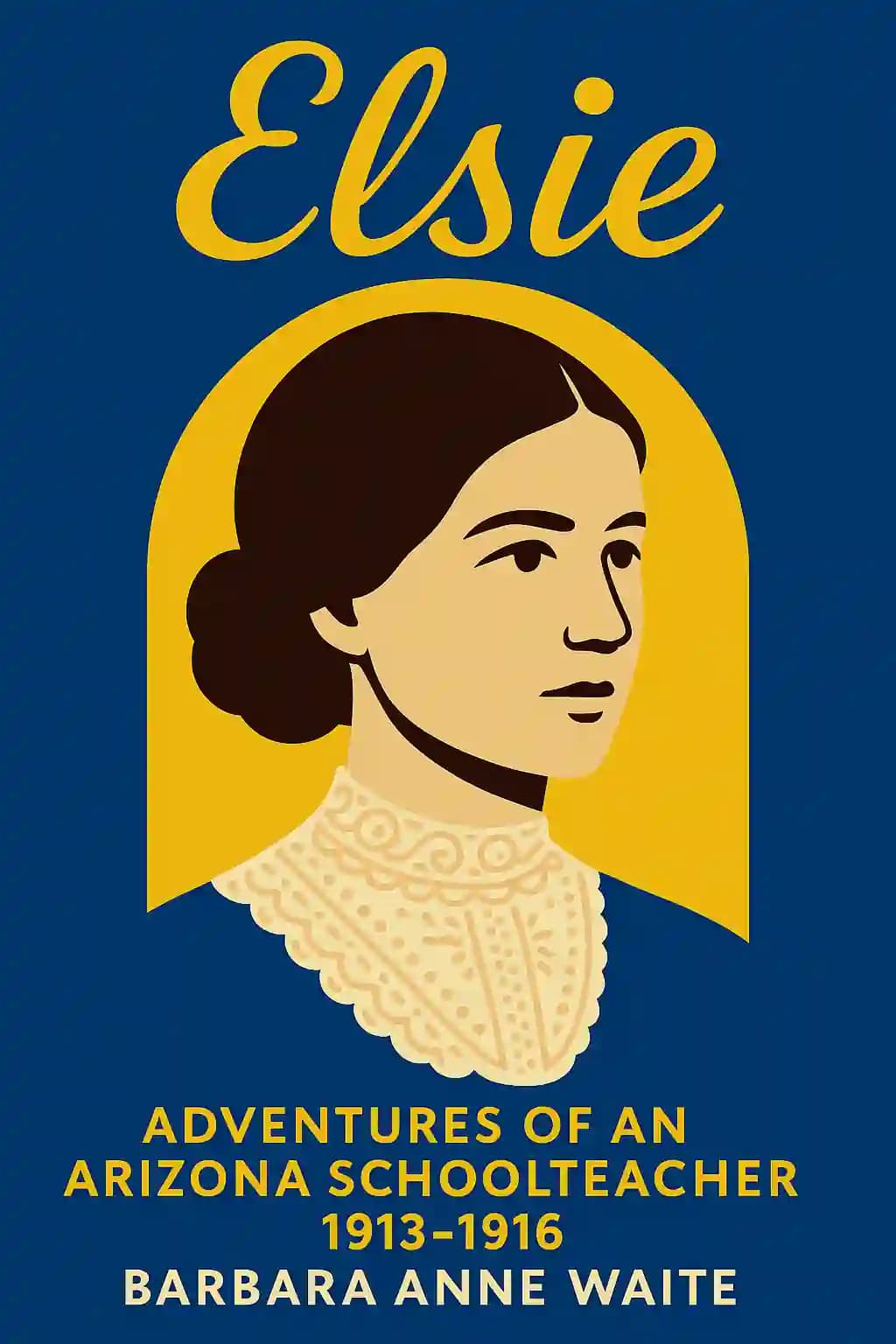
In the early 1900s, while most young women were settling into traditional domestic roles, Elsie Hayes packed her bags and headed for the untamed Arizona Territory. Her handwritten journals, discovered decades later by her granddaughter Barbara Anne Waite, reveal a spirited young educator who found both heartbreak and adventure in the rugged Southwest between 1913 and 1916. The book "Elsie: Adventures of an Arizona Schoolteacher" has become a treasured window into frontier education, with Ken Burns featuring excerpts in his documentary series on the National Parks. Michelle Obama once mentioned it as an inspiring example of women's contributions to American education, noting how Elsie's determination to bring knowledge to rural communities helped shape the nation. Beyond its historical significance, the book captures a pivotal moment when the American frontier was closing, automobiles were replacing horses, and a young woman's quest for independence collided with matters of the heart.
2장
From City Lights to Desert Stars: The Journey Begins
Elsie Hayes was no stranger to adventure when she boarded the train from Los Angeles to Arizona in 1913. Having grown up exploring California's Palomar Mountain, she possessed an outdoor spirit that would serve her well in the rugged terrain ahead. Alongside fellow teacher Marguerite Melick, Elsie embarked on a journey that would transform her from a city girl into a frontier educator.
The train ride itself foreshadowed the challenges to come. As they snaked through narrow mountain passes on tracks that seemed to defy gravity, Elsie's excitement only grew. The landscape outside their window gradually transformed-lush California greenery giving way to Arizona's dramatic red rocks and sprawling desert vistas. While Marguerite expressed occasional doubts about their decision, Elsie's letters home bubbled with enthusiasm.
"The curves are so sharp," she wrote to her family, "that from our window we can see the engine pulling us around the bend!" This sense of wonder permeated her early correspondence, revealing a young woman eager to embrace whatever lay ahead.
When they finally descended from Mingus Mountain into Verde Valley, the stark beauty of their new home took their breath away. Cornville, their destination, barely registered on maps-a tiny farming community nestled along Oak Creek. The settlement consisted of scattered homesteads, a one-room schoolhouse, and little else. No electricity, no running water, and certainly none of the conveniences they'd left behind in California.
The Girdner family, who would become their hosts and dear friends, greeted them warmly. Mrs. Girdner's practical frontier hospitality immediately made them feel welcome, though their accommodations were far from luxurious. Their new home was a canvas-covered wagon bed converted into modest living quarters-a far cry from their comfortable California homes, but to Elsie, it represented freedom and possibility.
"I believe I shall like it here very much," she wrote home that first night, her optimism undimmed by the primitive conditions. "The creek is beautiful beyond words, and the people seem so genuine." This ability to find beauty in simplicity would become Elsie's hallmark throughout her Arizona adventures.
3장
Frontier Classroom: Challenges and Triumphs
Teaching in a one-room schoolhouse presented challenges Elsie could never have prepared for in her formal education. Her classroom in Cornville housed children of all ages and abilities, from tiny first-graders to teenagers nearly her own age. Many of her students came from farming families who prioritized agricultural work over education, creating attendance challenges that tested her creativity and patience.
On her first day, Elsie faced a roomful of curious, skeptical faces. The children, accustomed to teachers who rarely stayed more than a term, regarded her with cautious interest. Would this city girl from California abandon them mid-year like so many before her?
Elsie quickly proved her mettle. Rather than imposing rigid city-style education, she adapted her methods to incorporate the children's rural experiences. When teaching mathematics, she used examples of crop yields and livestock. For literature, she organized dramatic performances of fairy tales, transforming her students into characters from Cinderella and other classics.
"Today we acted out Cinderella," she recorded in her diary. "Little Eva Girdner made the sweetest Cinderella imaginable, and the boys, though reluctant at first, threw themselves into their roles with surprising enthusiasm."
The schoolhouse itself presented physical challenges. During winter, Elsie arrived early each morning to light the wood stove, often breaking through ice in the water bucket. Summer brought suffocating heat and the constant battle against dust that settled on every surface. Yet she approached these hardships with good humor, writing home about how she'd become "quite the frontier woman," capable of building fires and managing without modern conveniences.
Her innovative teaching methods soon won over both students and parents. When she organized community performances featuring her students, the entire settlement turned out to watch. These events became social highlights for the isolated community, bringing together families who might otherwise have little contact.
Perhaps her greatest triumph came when Stanley Girdner, a boy known for his resistance to schooling, became engaged in learning through Elsie's patient encouragement. Years later, Stanley-by then an elderly man-would recall her influence with profound gratitude, crediting her with instilling his lifelong love of reading.
4장
Social Whirl in the Desert
Despite Cornville's isolation, Elsie's social calendar soon filled with surprising variety. Initial concerns about loneliness quickly dissipated as she discovered the rich community life that existed beneath the settlement's rustic surface. Weekend gatherings at neighboring farms, community dances, and impromptu picnics along Oak Creek created a vibrant social scene that Elsie embraced wholeheartedly.
Her diary entries from this period sparkle with descriptions of these gatherings. "Attended a delightful dance at the Hursts' last evening," she wrote. "The entire community gathered in their barn, which had been swept clean and decorated with autumn leaves. Mr. Ferguson played the fiddle while we danced until nearly midnight. I cannot recall when I've laughed so much!"
The young men of the area soon took notice of the vivacious new schoolteacher. Karl Hurst, son of a local farming family, became a frequent visitor to the schoolhouse, often finding reasons to assist with repairs or deliver messages. His quiet attention evolved into companionship that Elsie valued deeply, though she approached the relationship with characteristic thoughtfulness.
"Karl called again today," she confided to her diary. "He brought fresh apples from their orchard and stayed to help me prepare tomorrow's lessons. His knowledge of local history adds so much to our geography discussions. The children adore when he visits and shares stories of the early settlers."
Thanksgiving at the Hurst residence marked a turning point in their relationship. The warm family gathering, filled with abundant food and genuine affection, gave Elsie a glimpse of what life in this community could offer. "Never have I felt such belonging among people not my own family," she wrote afterward. "Mrs. Hurst treats me as a daughter already, and Karl's attentions grow more marked. I find myself looking forward to his visits with perhaps too much eagerness."
Even as her heart was drawn to Karl, Elsie maintained her independence and professional focus. When invited to explore Montezuma's Well and nearby caves, she joined excursions with enthusiasm, recording detailed observations of these natural wonders. Her adventurous spirit earned her respect in a community where practical skills and courage were highly valued.
Mrs. Girdner, ever the voice of frontier wisdom, gently reminded Elsie that a teacher's behavior remained under constant scrutiny. "Remember, dear," she advised, "in a place this small, you are never just yourself-you are always the teacher." This guidance helped Elsie navigate the complex social waters of a close-knit community while remaining true to her own values.
5장
Letters Home: Bridges Across Distance
Throughout her Arizona adventure, Elsie's connection to her beloved family remained her emotional anchor. Her correspondence home-detailed, affectionate, and remarkably well-preserved-provides the most vivid window into her experiences and inner life during these formative years.
Elsie wrote home religiously, sometimes daily. Her letters to her mother May Carrie, father Alonzo, and sisters Alice and Hylinda overflow with colorful descriptions, humorous anecdotes, and occasional wistfulness for family gatherings missed. These weren't mere status updates but literary creations in their own right, filled with sensory details and thoughtful reflections.
"Dearest Family," began a typical letter, "You should see Oak Creek at sunrise! The water catches the light in a way that makes it seem molten gold, and the cottonwoods along the banks have turned the most brilliant yellow. This morning I walked to school early just to witness this daily miracle and found myself wishing you could all be here to share it."
Her family's responses, equally cherished, sustained her through moments of homesickness. When Christmas packages arrived from California, Elsie described the joy of opening them with almost childlike enthusiasm: "I saved your package for Christmas morning and opened it slowly, savoring each carefully wrapped treasure. The candied fruits transported me instantly to our kitchen table, and the handkerchiefs Mother embroidered will be my most elegant possession in Cornville!"
These letters served as more than communication-they became Elsie's method of processing her experiences. When faced with difficult decisions or emotional confusion, the act of explaining her situation to her family helped clarify her own thoughts. Her mother's wise counsel, delivered across the miles, guided her through her growing feelings for Karl Hurst and later, her complex relationship with Jack Roberts.
The distance also allowed Elsie to share her most vulnerable thoughts. "I sometimes wonder," she confessed in one letter, "if I have made the right choice in coming so far from all I know and love. Then a student masters a difficult concept, or the sunset paints the mountains in colors I never imagined existed, and I know that this experience, however temporary, is shaping me in ways I couldn't have found at home."
When Elsie returned to California for summer breaks, these letters facilitated seamless reunions. Her family felt they had journeyed alongside her through every triumph and challenge, making her homecomings all the sweeter for the shared understanding they had maintained across the miles.
6장
The Heart's Wilderness: Karl and Conflicted Emotions
No aspect of Elsie's Arizona experience proved more transformative than her relationship with Karl Hurst. Their connection, which began as friendly neighborly interaction, gradually deepened into something that challenged Elsie's carefully laid plans and self-understanding.
Karl represented everything authentic about frontier life-hardworking, unpretentious, deeply connected to the land. His intelligence wasn't derived from formal education but from practical experience and natural curiosity. Elsie found herself increasingly drawn to his quiet strength and genuine character.
"Karl took me riding along the creek today," she wrote in her diary. "He knows every bend in the water, every bird's call, every plant that grows here. When he speaks of this land, his face transforms with a passion I find myself envying. To love a place so completely must be a profound experience."
Their courtship unfolded through shared experiences rather than formal dates. Karl introduced Elsie to hidden swimming holes along Oak Creek, taught her to identify edible plants, and shared family stories that stretched back to Arizona's earliest settlement days. In return, Elsie read poetry aloud during evening gatherings, introduced him to books he hadn't encountered, and shared her broader worldview.
As their relationship deepened, Elsie found herself wrestling with unexpected emotions. Her diary entries reveal her internal struggle: "I cannot make promises about a future here, yet I cannot imagine leaving without profound regret. Karl speaks increasingly of 'when we...' as though our paths continuing together is a foregone conclusion. My heart responds even as my mind raises objections."
Karl's ambition to further his education added complexity to their relationship. He began making plans to attend university, hoping to combine his practical knowledge with formal learning-a path Elsie enthusiastically encouraged. "He speaks of studying agriculture scientifically," she noted, "of bringing modern methods back to improve the family farm. His determination to grow beyond what he knows now while honoring his roots moves me deeply."
The relationship reached a pivotal moment when Karl accompanied Elsie to the train station for her summer return to California. Their parting, captured poignantly in her diary, marked a turning point: "He held my hands and looked at me with such intensity that words seemed unnecessary. 'I'll write every day,' he promised. 'And when I come to university in California, we'll begin our future.' I could only nod, my throat too tight for speech. As the train pulled away, I watched him standing straight and tall on the platform until he disappeared from view."
What Elsie could not have anticipated was how dramatically circumstances would change before they could reunite. The emotional complexity of their relationship would eventually be overshadowed by events beyond either of their control, leaving Elsie to navigate both grief and growth in their wake.
7장
Williams: New Horizons, New Heartaches
After a rejuvenating summer with her family in California, Elsie made a pivotal decision to accept a teaching position in Williams, Arizona-a larger town with a proper school building and multiple teachers. This move represented both professional advancement and a step toward reuniting with Karl, who had begun making arrangements to attend university in California.
Williams welcomed Elsie warmly. Unlike tiny Cornville, Williams boasted modern amenities-electricity in some buildings, organized social clubs, and a connection to the outside world via the railroad to the Grand Canyon. Her living situation improved dramatically as she settled into "The Dovecote," a charming residence she shared with fellow teachers Minna and Georgia.
"Williams feels almost cosmopolitan after Cornville," she wrote home. "We have actual sidewalks on some streets, and yesterday I attended a Women's Club meeting where current events were discussed with remarkable sophistication. My new classroom has real desks for each student-what luxury!"
Professionally, Elsie thrived in this more structured environment. Her innovative teaching methods, honed in Cornville's challenging conditions, impressed both colleagues and the school administration. She was assigned to teach third grade but also given responsibility for school-wide music instruction, recognizing her talent for engaging children through performance and song.
Just as Elsie was settling into her new life, Karl arrived for an unexpected visit. Their reunion, eagerly anticipated, took a heartbreaking turn. Karl's behavior had changed dramatically-his thoughts scattered, his manner alternating between intense focus on Elsie and disturbing disconnection. During his brief stay, it became painfully clear that something was seriously wrong.
"Karl spoke of strange conspiracies today," she confided to her diary, "insisting that people in town were watching him, that messages were being sent through the electrical lines. When I tried to reason with him, he became agitated, then suddenly calm again, speaking of our future as though nothing unusual had occurred. I am terrified for him."
Within weeks of his visit, Elsie received devastating news: Karl had suffered a mental breakdown and been committed to the state asylum. The diagnosis, described vaguely as "severe delusions," offered little comfort or explanation. His condition represented a tragedy not only for Karl and his family but for the future Elsie had begun to envision.
Her diary entries from this period reveal her struggle to process this turn of events: "How does one grieve for someone who still lives? Karl is somewhere in that institution, the same person I came to care for so deeply, yet fundamentally changed. I write letters he may never be able to read, preserving the connection even as I begin to accept it may never be restored."
Despite this heartbreak, Elsie's resilient spirit prevailed. She threw herself into her teaching duties and gradually expanded her social circle in Williams. The community embraced her, and her natural warmth and intelligence attracted new friendships that helped heal her wounded heart.
8장
Grand Canyon Adventures: Finding Perspective
Among the most transformative experiences of Elsie's Arizona years were her expeditions to the Grand Canyon. Located just 60 miles north of Williams, this natural wonder became a place of both adventure and spiritual renewal for her, particularly as she processed her grief over Karl's condition.
Her first canyon visit came as part of a school excursion. Traveling by automobile-still a novelty in 1914-Elsie and several colleagues made the journey along rough roads, arriving at the South Rim as the afternoon light painted the vast chasm in gold and purple. Her diary entry captures her awe: "No photograph or painting could prepare one for this reality. The immensity silences all trivial thoughts. Standing at the edge, I feel simultaneously insignificant and connected to something eternal."
This initial visit awakened a desire to experience the canyon more deeply. When the opportunity arose to join a more adventurous expedition with experienced guides, Elsie eagerly accepted despite warnings about the physical challenges involved. The group planned to descend partway into the canyon, camp overnight, and return the following day.
The descent tested Elsie's endurance and courage. Narrow trails with precipitous drops required careful navigation, and the physical exertion in the desert heat pushed her to her limits. Yet each difficult step revealed new perspectives on the canyon's magnificent geology, each turn offering vistas more breathtaking than the last.
"The layers of rock tell a story spanning millions of years," she wrote. "My own troubles, seen against this ancient backdrop, seem fleeting indeed. If these stone walls could speak, they would counsel patience and perspective."
An unexpected adventure occurred when Elsie's group became temporarily stranded at the edge of the canyon during a later visit. Vehicle trouble left them without transportation back to Williams, forcing an impromptu overnight camp under the stars. What could have been a frightening ordeal became, in Elsie's recounting, one of her most treasured memories.
"We built a small fire and gathered around it as darkness enveloped the canyon," she recorded. "Mr. Bass, our guide, shared tales of early explorers and the indigenous people who considered this place sacred. The night sky above us blazed with more stars than I knew existed, seeming close enough to touch. In that moment, I understood why people are drawn to wilderness-it strips away pretense and connects us to what matters most."
This night under the stars proved therapeutic for Elsie's wounded spirit. The vastness of the canyon and the ancient rhythms of nature provided perspective on her personal sorrows. She returned to Williams with renewed strength and a deeper appreciation for the wild beauty of her adopted state.
The Grand Canyon became her sanctuary, a place she would return to repeatedly during her remaining time in Arizona. Each visit deepened her connection to the landscape and reinforced her growing identity as someone shaped by the American West's magnificent spaces.
9장
Jack Roberts: Second Chances at Love
As Elsie gradually healed from the heartbreak of Karl's illness, a new relationship began to develop with Jack Roberts, a lawyer and respected community member in Williams. Unlike her immediate connection with Karl, Elsie's feelings for Jack evolved slowly, built on shared interests, stimulating conversation, and mutual respect.
Jack first appeared in Elsie's life through community events and mutual friends. His educated background and professional standing made him a different sort of companion than Karl had been. Where Karl's knowledge came from intimate connection with the land, Jack's worldview had been shaped by formal education and wider travel.
"Attended a lecture at the Women's Club this evening," Elsie noted in her diary. "Mr. Roberts gave a fascinating talk on Arizona's path to statehood. His ability to make political history engaging impressed everyone. Afterward, he asked thoughtful questions about my teaching methods-a refreshing change from the usual social pleasantries."
Their courtship progressed through shared cultural interests-attending lectures together, discussing books they both enjoyed, and participating in community improvement projects. Jack introduced Elsie to his circle of friends, mostly professionals and civic leaders who welcomed her intelligence and vivacity.
Elsie approached this relationship with greater caution and self-awareness than she had her connection with Karl. Her diary entries reveal her thoughtful assessment of both Jack's character and her own feelings: "Jack possesses qualities I deeply admire-intelligence, integrity, ambition tempered by kindness. He treats me as an intellectual equal and values my professional accomplishments. Yet I find myself comparing the quiet comfort of his company with the passionate connection I felt with Karl. Is this more measured response a sign of maturity or evidence that my heart remains partially closed?"
As their relationship deepened, Jack began to speak of marriage and a future together. His vision included returning to California, where he hoped to establish a law practice-a prospect that aligned well with Elsie's desire to eventually return near her family. This practical compatibility added weight to her consideration of his increasingly clear intentions.
Elsie's family, learning of Jack through her letters, responded with cautious enthusiasm. Her mother wrote: "He sounds like a fine gentleman who could provide stability and companionship. After the sadness you've endured, perhaps this steadier affection is exactly what you need." Her sister Alice was more direct: "Don't overthink this, Elsie. A good man who appreciates your mind and shares your values is rare indeed."
The pivotal moment in their relationship came during a picnic by a canyon stream. Jack's proposal, described in Elsie's diary, was both romantic and practical: "He spoke of building a life together, of his admiration for my spirit and intelligence. 'We could be partners in the truest sense,' he said, 'supporting each other's ambitions while creating something meaningful together.' When he produced a simple gold band, I felt tears spring to my eyes-not from overwhelming passion but from profound appreciation for this good man who sees me so clearly."
Elsie's acceptance of Jack's proposal marked a new chapter-one based on mature affection, shared values, and clear-eyed assessment of compatibility rather than the intoxicating but ultimately heartbreaking connection she had experienced with Karl.
10장
Farewell to the Frontier: Closing a Chapter
As the spring of 1916 unfolded, Elsie found herself preparing for multiple transitions-the end of the school year, her engagement to Jack, and her impending departure from the Arizona frontier that had shaped her so profoundly over the past three years.
The Williams community embraced the news of Elsie and Jack's engagement with enthusiasm. A whirlwind of celebrations followed-luncheons hosted by the Women's Club, surprise showers organized by fellow teachers, and formal congratulations from school officials and parents. These gatherings took on a bittersweet quality as they also served as farewells to a teacher who had earned deep respect and affection.
"Mrs. Sine's luncheon today was overwhelming," Elsie wrote. "The table was decorated with hearts and ribbons, and when the meal concluded, I was showered with rice-a premature celebration of the wedding to come! The genuine good wishes from women who began as colleagues and became dear friends brought tears to my eyes."
Her students' reactions to the news of her departure revealed the impact she had made in their young lives. Many expressed dismay at losing their beloved teacher, while others offered touchingly mature congratulations. One student, a previously reluctant learner who had blossomed under Elsie's guidance, presented her with a handmade card featuring a carefully drawn picture of her at the blackboard-"So you won't forget us," he explained solemnly.
As she packed her belongings and prepared for departure, Elsie found herself engaging in a mental inventory of all she had gained during her Arizona years. Beyond the professional experience that had transformed her from a novice teacher into a confident educator, she had acquired practical skills, independence, and resilience that would serve her throughout her life.
"I arrived in Arizona barely able to build a fire," she reflected in her final diary entry from Williams. "I leave knowing how to handle a team of horses, navigate by the stars, identify edible desert plants, and manage a classroom of children with widely varying needs and abilities. More importantly, I have learned that I am stronger and more adaptable than I ever imagined."
Her last days in Arizona included a pilgrimage back to Cornville, where her frontier adventure had begun. The Girdner family welcomed her warmly, and the children she had taught-noticeably taller and more mature-greeted her with enthusiasm. Oak Creek still flowed with the same mesmerizing beauty that had captured her heart three years earlier.
Standing by the creek one last time, Elsie experienced a moment of profound gratitude. "This place," she wrote, "with its stark beauty and genuine people, has been my greatest teacher. Whatever the future holds with Jack, I carry Arizona within me-its vastness, its challenges, and its unexpected grace."
11장
Legacy and Reflections: A Life Shaped by Arizona
Elsie and Jack did indeed build their life together in Southern California, eventually establishing an apple ranch on Palomar Mountain that became both their livelihood and legacy. They named it "Planwydd," honoring Jack's Welsh heritage, and transformed it into a thriving resort that welcomed guests for decades. Their partnership proved as complementary and supportive as Jack had envisioned, with Elsie's educational background and vibrant personality perfectly balancing his legal mind and steady temperament.
Throughout her long life, Elsie maintained that her Arizona years had been formative, providing the foundation for everything that followed. The resilience and adaptability she developed in frontier classrooms served her well through the challenges of building a business, raising a family, and navigating the dramatic changes of the twentieth century.
Her granddaughter Barbara, who would eventually compile and publish Elsie's writings, recalls how her grandmother's eyes would light up when sharing stories of Arizona adventures. "She spoke of Cornville and Williams as though she had just returned," Barbara noted. "The red rocks, the creek's music, the children's faces-all remained vivid in her mind decades later."
Elsie maintained correspondence with several Arizona connections throughout her life. Eva Girdner, once her tiny student in Cornville, exchanged Christmas cards with her former teacher well into adulthood. Occasional reunions with Williams colleagues provided opportunities to reminisce about their shared frontier experiences.
Karl Hurst's story had a less happy ending. Despite periods of improvement that raised hopes for his recovery, he remained institutionalized for many years. Elsie kept informed about his condition through mutual acquaintances but chose not to visit-a decision she questioned at times but ultimately believed was kindest for both of them.
The one-room schoolhouse where Elsie first taught in Cornville no longer stands, but the community still bears traces of the era she documented so vividly. Oak Creek continues to flow through the valley, now attracting tourists rather than settlers. The Williams school where she later taught has been replaced by more modern facilities, though photographs of early educators-including a smiling Elsie-hang in the district office as a reminder of educational pioneers.
Perhaps the most meaningful legacy of Elsie's Arizona adventure lies in the lives she touched. Stanley Girdner, interviewed in his nineties, credited "Miss Hayes" with instilling his lifelong love of reading. "She made books come alive," he recalled. "Because of her, I saw beyond our small valley and imagined possibilities I might never have considered."
Elsie herself would likely consider her greatest achievement to be the window she provided into a vanishing era. Her detailed accounts-preserved through letters, diaries, and later reminiscences-offer invaluable insights into frontier education, women's experiences in the early twentieth century, and the social dynamics of emerging Western communities.
Through her words, we glimpse a young woman who embraced adventure, faced hardship with humor and grace, and found her authentic self amid the stark beauty of the Arizona frontier. Her story reminds us that the most meaningful journeys often lead us far from familiar comforts into landscapes-both external and internal-that challenge, transform, and ultimately enrich our understanding of what it means to live fully and courageously.