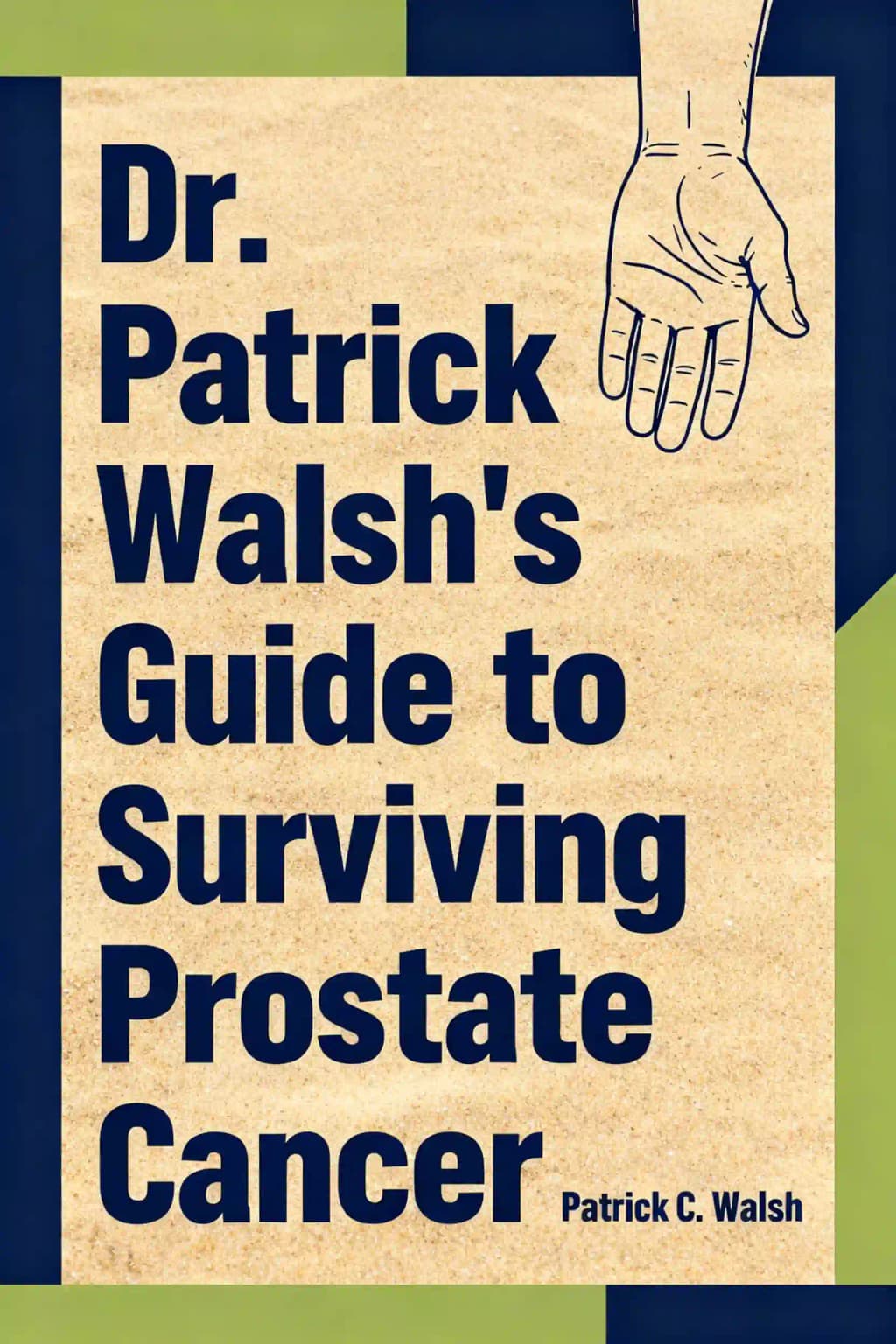
The definitive guide to conquering prostate cancer from America's top surgeon. Dr. Walsh's 480-page masterpiece - endorsed by Elizabeth Dole as "a must-read" - empowers patients with life-saving insights while addressing high-risk groups with compassion and scientific precision.
Patrick C. Walsh, author of Dr. Patrick Walsh’s Guide to Surviving Prostate Cancer, is a globally recognized urologist and prostate cancer expert. He is renowned for pioneering nerve-sparing radical prostatectomy, a surgical technique that dramatically reduces risks of impotence and incontinence.
A University Distinguished Service Professor Emeritus at Johns Hopkins University, he served as director of the Brady Urological Institute for three decades. During this time, his research revolutionized prostate cancer treatment.
Walsh’s authoritative works, including The Prostate: A Guide for Men and the Women Who Love Them and the seminal Campbell-Walsh Textbook of Urology (renamed in his honor), blend clinical expertise with patient-centered guidance. His insights stem from over 600 peer-reviewed articles and leadership roles at the National Academy of Sciences’ Institute of Medicine.
The Patrick C. Walsh Prostate Cancer Research Fund at Johns Hopkins continues advancing his legacy by funding innovative studies. His techniques remain the global standard, endorsed by institutions worldwide and credited with improving outcomes for millions of patients.
Dr. Patrick Walsh's Guide to Surviving Prostate Cancer is a comprehensive resource covering prostate cancer causes, diagnosis, treatments, and survivorship. Updated in its 5th edition, it emphasizes personalized care, lifestyle changes (like diet and exercise), and advances in genetic testing, imaging, and therapies for advanced stages. The book blends medical expertise with patient stories to empower informed decision-making.
This book is essential for men diagnosed with prostate cancer, their families, and caregivers. It’s particularly valuable for high-risk groups like African American men, LGBTQ+ individuals, and those seeking clarity on screening, treatment options, or post-treatment health. Medical professionals may also benefit from its patient-centered approach.
Yes. Written by a leading Johns Hopkins urologist, the book demystifies complex medical concepts, offers actionable advice, and addresses emotional challenges. Its updated chapters on genetics, survivorship, and advanced therapies make it a trusted, up-to-date guide for navigating prostate cancer.
Dr. Walsh explains that specific genetic mutations (e.g., BRCA1/2) can increase prostate cancer risk. He outlines who should consider genetic testing, such as men with family histories of cancer, and how results can guide screening and treatment strategies to personalize care.
The book advocates reducing alcohol intake, maintaining a healthy BMI, and increasing physical activity to lower inflammation and insulin resistance. These changes may slow disease progression and improve overall well-being during and after treatment.
African American men face higher prostate cancer risks and mortality rates. Dr. Walsh advises earlier screening (starting at age 40), tailored treatment plans, and proactive discussions with doctors about genetic and socioeconomic factors impacting outcomes.
A dedicated chapter addresses unique challenges for gay, bisexual, and transgender patients, including sexual health after treatment and inclusive care strategies. Co-authored with Dr. Channa Amarasekera, it highlights Johns Hopkins’ pioneering clinic for this community.
The 5th edition covers advanced diagnostic tools like MRI fusion biopsies and PSMA PET scans, which improve cancer detection and staging accuracy. These innovations help patients avoid unnecessary treatments and opt for targeted therapies.
The book’s survivorship chapter focuses on managing side effects (e.g., incontinence, erectile dysfunction), emotional well-being, and long-term health monitoring. It stresses that survivorship begins at diagnosis, not just post-treatment.
Recent breakthroughs include PARP inhibitors for genetically driven cancers, radiopharmaceuticals like Lutetium-177 PSMA, and immunotherapy options. These therapies offer hope for controlling metastatic disease and extending survival.
High consumption of red meat and saturated fats may increase risk, while plant-based diets rich in tomatoes (lycopene), cruciferous vegetables, and omega-3s could be protective. The book provides evidence-based dietary guidelines to support prostate health.
Some readers find the medical details overwhelming, though chapter summaries help navigate complexity. Critics note it focuses heavily on surgical perspectives (Dr. Walsh’s specialty), so patients are encouraged to consult multiple sources for balanced insights.
저자의 목소리로 책을 느껴보세요
지식을 흥미롭고 예시가 풍부한 인사이트로 전환
핵심 아이디어를 빠르게 캡처하여 신속하게 학습
재미있고 매력적인 방식으로 책을 즐기세요
Prostate cancer lacks the public conversation it deserves.
The prostate will eventually cause one of three problems.
Prostate cancer predominantly affects older men.
Prostate cancer develops silently, without warning signs.
About 25% of men with prostate cancer have PSA levels that don't trigger suspicion.
Dr. Patrick Walsh's Guide to Surviving Prostate Cancer의 핵심 아이디어를 이해하기 쉬운 포인트로 분해하여 혁신적인 팀이 어떻게 창조하고, 협력하고, 성장하는지 이해합니다.
Dr. Patrick Walsh's Guide to Surviving Prostate Cancer을 빠른 기억 단서로 압축하여 솔직함, 팀워크, 창의적 회복력의 핵심 원칙을 강조합니다.

생생한 스토리텔링을 통해 Dr. Patrick Walsh's Guide to Surviving Prostate Cancer을 경험하고, 혁신 교훈을 기억에 남고 적용할 수 있는 순간으로 바꿉니다.
무엇이든 물어보고, 목소리를 선택하고, 진정으로 공감되는 인사이트를 함께 만들어보세요.

샌프란시스코에서 컬럼비아 대학교 동문들이 만들었습니다
"Instead of endless scrolling, I just hit play on BeFreed. It saves me so much time."
"I never knew where to start with nonfiction—BeFreed’s book lists turned into podcasts gave me a clear path."
"Perfect balance between learning and entertainment. Finished ‘Thinking, Fast and Slow’ on my commute this week."
"Crazy how much I learned while walking the dog. BeFreed = small habits → big gains."
"Reading used to feel like a chore. Now it’s just part of my lifestyle."
"Feels effortless compared to reading. I’ve finished 6 books this month already."
"BeFreed turned my guilty doomscrolling into something that feels productive and inspiring."
"BeFreed turned my commute into learning time. 20-min podcasts are perfect for finishing books I never had time for."
"BeFreed replaced my podcast queue. Imagine Spotify for books — that’s it. 🙌"
"It is great for me to learn something from the book without reading it."
"The themed book list podcasts help me connect ideas across authors—like a guided audio journey."
"Makes me feel smarter every time before going to work"
샌프란시스코에서 컬럼비아 대학교 동문들이 만들었습니다

Dr. Patrick Walsh's Guide to Surviving Prostate Cancer 요약을 무료 PDF 또는 EPUB으로 받으세요. 인쇄하거나 오프라인에서 언제든 읽을 수 있습니다.
Imagine a disease that affects one in eight American men yet remains shrouded in embarrassment and avoidance. While Ryan Reynolds' publicized colonoscopy in 2022 sparked nationwide screening appointments for colon cancer, prostate cancer lacks similar public conversation despite its prevalence. This walnut-sized gland sits at what could be called a "miniature Grand Central Station" in male anatomy-where the urinary and reproductive systems intersect. Though not essential for life, the prostate's strategic location makes problems enormously consequential when they arise. For most men who live long enough, the prostate will eventually cause trouble through one of three conditions: cancer (the most common cancer in American men), benign prostatic hyperplasia (BPH) causing urinary difficulties, or prostatitis. What makes prostate cancer particularly dangerous is its silent progression-the disease develops without symptoms until it's advanced, which is precisely why screening is crucial. You can have a significant tumor and experience absolutely no symptoms whatsoever. Despite these sobering facts, there's tremendous hope. The field of prostate treatment has never been more promising, with research advancing our understanding of prevention, early intervention, and quality-of-life preservation. We're making remarkable progress in determining when cancer begins, how it spreads, and developing treatments with fewer side effects and quicker recovery.