1장
The Shadow Self: When Your Identity Becomes Someone Else's Weapon
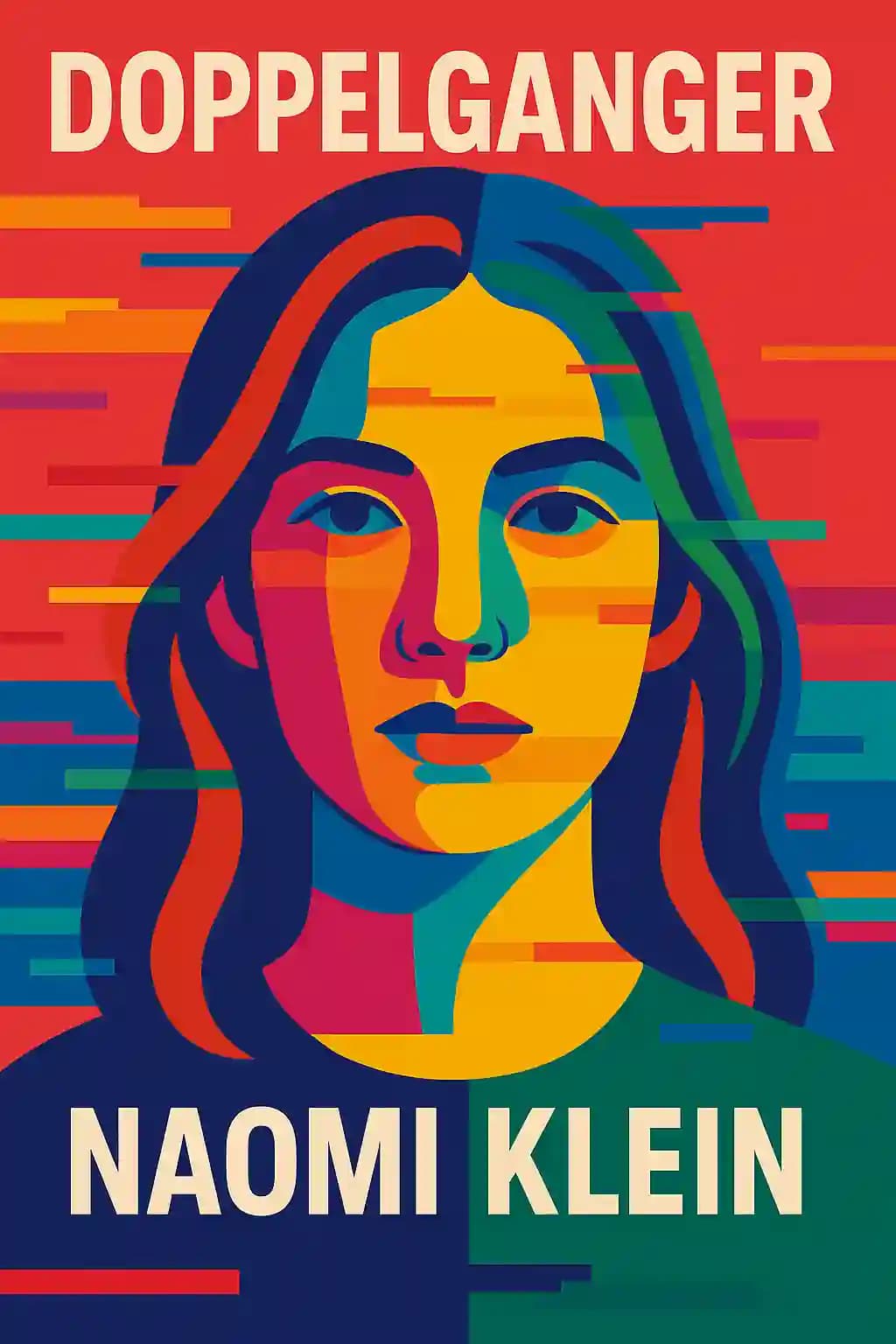
Imagine waking up one morning to discover your name, your reputation, and your ideas have been hijacked by someone who looks eerily similar to you but stands for everything you oppose. For Naomi Klein, this nightmare became reality when her "big-haired doppelganger" Naomi Wolf-once a respected feminist author-transformed into a purveyor of dangerous COVID-19 misinformation and right-wing talking points. This intellectual identity theft wasn't just annoying; it threatened Klein's life's work. What makes this book particularly compelling is how Klein uses her personal crisis as a lens to examine our broader "doppelganger culture"-a world where digital doubles, political mirror-worlds, and the commodification of identity have created profound disorientation. Named one of TIME's most anticipated books of 2023, Doppelganger has been praised by luminaries from Angela Davis to Bill McKibben for its "hallucinatory tour de force" quality in mapping our confounding information landscape.
2장
When Your Double Becomes Your Nemesis
Klein's doppelganger problem began innocuously enough-occasional mix-ups with Naomi Wolf in bathroom conversations or social media mentions. Both were Jewish authors with similar hair who wrote big-idea books in the 1990s that challenged established systems (Klein's No Logo examining corporate power and Wolf's Beauty Myth critiquing beauty standards). They shared similar progressive audiences and often appeared in the same media circles, leading to frequent cases of mistaken identity at literary events and speaking engagements.
But as Wolf's intellectual trajectory shifted, the similarities ended. While Klein continued her work on climate change and capitalism, Wolf began exploring increasingly fringe territory. She questioned Edward Snowden's motives, suggesting he might be a government plant. She claimed Ebola outbreaks were orchestrated for "mass lockdowns," despite no evidence. She promoted theories about ISIS beheadings being staged, drawing criticism from journalists who had covered the actual events. These weren't merely different opinions - they represented a fundamental departure from fact-based discourse.
The COVID-19 pandemic dramatically raised the stakes, transforming Wolf from someone who casually "hopped from one theory to another" into a focused purveyor of pandemic misinformation. Her claims grew increasingly extreme and dangerous. She argued that vaccine passports were actually a "tyrannical totalitarian platform" designed to usher in a "CCP-style social credit score." She claimed these systems could monitor private conversations inside homes and would create a "two-tiered society" where the unvaccinated would be systematically excluded. Wolf's rhetoric escalated to comparing public health measures to Nazi Germany, suggesting that vaccine requirements were equivalent to the yellow stars Jews were forced to wear.
For Klein, being confused with Wolf now carried serious consequences. Each misattribution meant being associated with dangerous falsehoods that could literally cost lives during a pandemic. The confusion became so pervasive that Twitter's algorithm began autocompleting Klein's name when users meant to type Wolf's, creating a technological feedback loop. Ironically, every attempt to correct these mistakes only reinforced the algorithm's confusion, as mentions of both names together strengthened their digital association.
Klein's personal reflection on this period reveals her own vulnerability to pandemic anxiety. "I realized I wasn't as immune to shock tactics as I once believed," she confesses. The pandemic isolated her with her neuroatypical son while ambulances regularly picked up neighbors, creating genuine fear and uncertainty. However, the crucial difference lay in their responses - Klein acknowledged and processed these fears, while Wolf amplified and weaponized them, transforming legitimate concerns into conspiracy theories that undermined public health efforts.
3장
The Branded Self: How Identity Became a Product
Klein's doppelganger problem forced her to confront an uncomfortable irony. Her first book, No Logo, was a critique of corporate branding and the commodification of identity. Now, she faced pressure to "defend her brand" against Wolf's "dilution" of it. This tension reveals how thoroughly we've internalized the logic of personal branding-even those who explicitly reject it. The very language used to discuss identity has become inseparable from marketing terminology: we "position" ourselves, "manage" our reputation, and "cultivate" our image.
In the late 1990s, management guru Tom Peters was initially mocked for suggesting everyone should develop a personal brand, an idea that seemed absurd before social media. His famous article "The Brand Called You" was dismissed as hyperbole, yet it proved prescient. Today, children as young as twelve strategically curate their social media presence, while professionals obsess over their LinkedIn profiles and "thought leadership" content. Despite her anti-branding stance, Klein admits she was deliberate about No Logo's sleek design and iconic red, white, and black cover, wanting to dress leftist ideas in capitalism's "shiny clothing" to reach a broader audience.
This contradiction reveals Klein's complex relationship with branding-critiquing it while simultaneously using its tools to make her anti-corporate message more effective. She recognizes that even resistance movements must package their ideas effectively to gain traction. The Occupy Wall Street movement, for instance, succeeded partly because of its memorable "We are the 99%" slogan and distinctive visual identity. Now, digital platforms have accelerated this process, creating what Klein calls "digital doubles" that threaten our sense of self.
These digital doubles take multiple forms: the conscious avatars we curate through filtered photos and calibrated posts, and the unconscious doppelgangers built by machines from our data trails. The latter aren't created by us but by external interpretations and predictions about us-digital golems cobbled together from bits of data. These algorithmic profiles can determine everything from our credit scores to job opportunities, often operating invisibly yet wielding significant power over our lives.
Klein feels nostalgic for her pre-digital youth when activities left virtually no trace-"we moved through the world like phantoms." Shopping at a record store, attending a protest, or hanging out with friends existed only in memory and perhaps a few physical photographs. The Faustian bargain of trading data for digital convenience was never properly explained, transforming us all into "data mine sites" with minimal transparency or accountability. Every click, purchase, and interaction becomes part of our digital shadow, feeding an vast ecosystem of prediction and manipulation that we barely comprehend.
The commodification of identity has reached such extremes that people now consciously perform their lives for digital consumption, turning everyday moments into content and treating personal growth as a marketable narrative. This transformation represents a fundamental shift in how we understand and experience selfhood in the digital age.
4장
Mirror World: Where Reality Gets Inverted
Klein's investigation of her doppelganger led her to discover what she calls the "Mirror World"-an uncanny parallel universe with alternative platforms like Gettr, Rumble, Parler, and GiveSendGo. These platforms serve as digital refuges for those banned from mainstream social media, creating entire ecosystems where alternative narratives thrive. In this mirror reality, facts are inverted, heroes become villains, and conspiracy theories flourish, supported by sophisticated networks of alternative media outlets and influencers.
Steve Bannon, Trump's former chief strategist, emerges as the master architect of this Mirror World. Klein explains that Bannon's greatest skill lies in constructing "reflective surfaces" that create mirror arguments and political agendas designed to repel his adversaries' claims. When Democrats talk about the "Big Lie," Bannon counters with the "Big Steal." When they discuss January 6th as an insurrection, he frames it as a "fedsurrection." This builds on Trump's signature "counterpunch" strategy of accusing opponents of his own flaws, only worse, creating a perpetual cycle of accusation and counter-accusation.
What makes Bannon particularly effective is his sophisticated understanding of how to exploit abandoned issues and grievances. When progressives dismiss concerns about vaccine side effects, election integrity, or lab leak theories as conspiracy theories, they create openings for Bannon to position himself as the champion of the ignored and skeptical. Klein calls this the "reverse marionette" effect-when issues become talking points in the Mirror World, they're often abandoned elsewhere, causing opposing sides to reflexively take opposite positions, regardless of merit.
Unlike progressives who often emphasize ideological purity and intersectional differences, Bannon strategically focuses on unifying issues for his audience: hating Biden, rejecting vaccines, bashing Big Tech, and opposing globalization. He deliberately avoids potentially divisive conservative topics like abortion or specific religious doctrine that might alienate potential converts. His signature move involves reaching out to anyone recently "exiled by the left," offering them platforms and treating them with exaggerated respect-as he did with Robert F. Kennedy Jr., Naomi Wolf, and various canceled academics and medical professionals who questioned COVID policies.
This "inclusive nationalism" strategy represents a sophisticated evolution of right-wing organizing, aiming to diversify the hard-right base by appealing to Black and Latino voters frustrated with pandemic measures, progressive gender politics, or perceived cultural decline. Bannon accomplishes this while simultaneously promoting militant preparedness through at-home target practice systems and tactical training, creating a movement that combines broad demographic appeal with the potential for organized resistance. His daily War Room podcast serves as both a gathering point and a command center, coordinating narratives and actions across the Mirror World's expanding territory.
5장
The Diagonal Alliance: When Wellness Meets Far-Right Politics
One of the most disturbing phenomena Klein documents is the "diagonal alliance" between wellness influencers and far-right propagandists. During COVID, she noticed how formerly progressive voters in her community were prioritizing anti-vaccine positions over lifelong political affiliations, revealing a disturbing comfort with "culling" vulnerable populations. This shift wasn't gradual - it often happened rapidly, with longtime liberal activists suddenly sharing conspiracy theories from far-right sources and defending positions they would have rejected months earlier.
Klein identifies the outsized role of "body people" in spreading COVID misinformation: trainers, yoga teachers, chiropractors, nutritionists, and wellness influencers who claimed special knowledge about bodies. These practitioners leveraged their existing authority over physical health to position themselves as experts on immunology and epidemiology. The Center for Countering Digital Hate's "Disinformation Dozen" list revealed that major spreaders of COVID conspiracies weren't mainstream right-wing figures but alternative health practitioners, including osteopaths, wellness entrepreneurs, and "natural health" advocates who collectively reached millions of followers.
Why were wellness practitioners particularly susceptible to COVID conspiracies? Klein draws on Barbara Ehrenreich's analysis that the wellness obsession emerged in the 1980s as a response to failed revolutionary movements. With collective dreams of justice crushed by neoliberalism, people turned inward to perfect their bodies-something they could control when they couldn't change the world. This individualistic focus created a perfect breeding ground for anti-collective health measures, with many wellness influencers promoting individual "natural immunity" over community-based prevention strategies.
This quest creates a form of doubling: there's you as you are now, and the idealized you that's always just out of reach. The wellness industry's emphasis on discipline and "putting in the work" often breeds contempt for less "perfect" bodies. During the pandemic, this morphed into hostility toward public health measures protecting vulnerable populations. Wellness influencers began promoting "natural immunity" through expensive supplements, cleanses, and lifestyle changes while dismissing masks and vaccines as "unnatural interventions."
Far from unlikely bedfellows, large parts of the modern wellness industry prove compatible with far-right notions of natural hierarchies, genetic superiority, and disposable people. The wellness industry's obsession with "optimization" inherently creates categories of "suboptimal" people deemed disposable-evidenced by anti-vaxxers calling themselves "purebloods" and dismissing COVID deaths among elderly and poor populations. This alliance manifested in concrete ways: wellness influencers sharing platforms with far-right figures, alternative health websites promoting conspiracy theories, and the emergence of "medical freedom" rallies that merged anti-vaccine activism with far-right political causes.
The convergence became particularly visible in social media algorithms, where following wellness influencers increasingly led users to far-right content through shared anti-establishment narratives. This digital pipeline helped normalize extreme positions within wellness communities, creating what Klein calls a "wellness-to-fascism pipeline" that continues to shape political alignments even after the height of the pandemic.
6장
Dumbpelgangers: When Concepts Lose Their Meaning
Klein introduces the term "dumbpelgangers" to describe how her double and others contaminate important terminology and render serious concepts ridiculous. She reflects deeply on whether her own influential work on shock doctrine inadvertently contributed to conspiracy theories, despite her careful academic framing of crises as opportunistically exploited rather than deliberately manufactured. This self-reflection reveals the complex relationship between legitimate critique and its potential misuse.
During COVID, Klein initially reported extensively on what she termed the "Screen New Deal" - documenting how major tech companies strategically rebranded surveillance technologies as essential "COVID-safe" solutions for everything from education to healthcare. However, she found herself forced to retreat from this important analysis when conspiracy theorists began weaponizing and distorting these legitimate critiques to serve their own narratives. Similarly, early pandemic hopes for fundamental structural change were systematically undermined when progressive concepts like the "Green New Deal" were hijacked by conspiracy theorists who twisted environmental policy proposals into fearful warnings about impending "climate lockdowns" and authoritarian control.
This systematic trivialization of serious concepts left Klein feeling "speechless," unable to deploy precise analytical terms like "ecofascism" without immediate association with her doppelganger's hyperbolic misuse. She observes a troubling pattern where movements may be winning rhetorical victories while losing material battles - pointing to how billionaires doubled their fortunes during the pandemic even as progressive movements succeeded in mainstreaming concepts like "systemic racism" and "climate emergency."
Klein draws a powerful parallel to Greta Thunberg's evolution from earnest climate activist to sharp critic of empty rhetoric. Thunberg, who initially responded to learning about the climate crisis by stopping speaking altogether, transformed from giving passionate speeches to world leaders to mockingly echoing their "blah, blah, blah" - perfectly capturing our era's profound disconnect between words and meaningful action. Klein connects this to her groundbreaking work in "No Logo" about the corporate co-optation of authentic movements - how revolutionary imagery and language were stripped of meaning to sell products while obscuring exploitative global supply chains.
This war on meaning has created a deeply cynical world where, as Klein argues, "nothing means anything anymore." This enables both right-wing conspiracy theories that completely detach from reality and performative progressive politics - exemplified by incidents like Prime Minister Trudeau joining climate protests against his own government's policies while continuing to expand oil pipelines. The result is a crisis of meaning where even the most precise language can be rendered meaningless through deliberate misuse and cynical performance.
7장
Autism and the Anti-Vax Connection
Klein bravely shares her experience as a parent of a neurodivergent child, explaining how this personal journey helped her understand the roots of the anti-vax movement. After her son's diagnosis at age four, Klein sought support from other parents navigating inadequate services and long waitlists. The healthcare system's limitations became starkly apparent - waiting times for specialists often stretched beyond a year, while early intervention services were chronically underfunded. While she found some helpful fellow travelers, she also discovered a disturbing industry of "magical cures" including vitamin injections, extreme diets, immersive therapies, and sound wave treatments. These treatments, often costing thousands of dollars, prey on parents' desperation for answers and solutions.
Online, she encountered self-described "Autism Warrior Parents" fighting "the autism" in their children, some promoting dangerous "treatments" like having children drink chlorine dioxide (industrial bleach). These communities, while offering superficial support, often perpetuated harmful narratives about "recovering" or "curing" autism. Klein documents how social media amplified these dangerous ideas, with Facebook groups and YouTube channels dedicated to unproven treatments gaining thousands of followers. She explores how parents can view their children as extensions or "doubles" of themselves rather than autonomous beings. In our era of personal branding, children become "spin-offs" or "brand extensions" of their parents, showcased on social media through carefully curated posts and milestone updates.
This mindset underlies many culture war battles over children's education, health, and identity-reflecting a fundamental question about whether children exist to fulfill parental expectations or to develop as individuals with their own paths. Klein examines specific cases where parents' desires for "normal" children led to harmful interventions, including extreme behavioral modification programs and questionable medical procedures. She notes this controlling impulse particularly affects parents of disabled or neurodivergent children, who may experience grief over the loss of their imagined "child-double."
The vaccine-autism myth persists because it provides parents something external to blame rather than accepting genetic factors or parental age. Klein traces this myth's origins to Andrew Wakefield's now-discredited 1998 study and shows how it evolved through social media echo chambers and celebrity endorsements. She draws direct connections between anti-vax movements around autism and later COVID vaccine resistance, noting that many of the same techniques, communicators, and conspiracy theories were simply repurposed. The same networks that spread autism misinformation became ready-made channels for COVID vaccine skepticism.
She connects these movements to ancient folklore about "changelings"-fairy doppelgangers who supposedly replaced stolen human babies-which autism researcher Lorna Wing identified as early cultural representations of autism. These legends, found across European cultures, often recommended tormenting the "changeling" to drive it away, reflecting the disturbing real-world abuse of disabled children throughout history. Klein draws parallels between these historical beliefs and modern pseudoscientific treatments, showing how the desire to "recover" a "normal" child has persisted across centuries, merely changing form with each era's medical and cultural understanding.
8장
The Conspiracy Is Capitalism
Klein astutely observes the paradoxical treatment of those who analyze power structures - how critics of corporate and capitalist systems are often dismissed as conspiracy theorists, a deliberate rhetorical strategy to delegitimize anti-capitalist perspectives. She draws a crucial distinction between understanding systemic forces (such as capitalism's inherent drive for perpetual growth and market expansion) and believing in shadowy cabals orchestrating world events. This systemic framework provides analytical stability, helping explain numerous phenomena from the commodification of personal identity to the individualization of public health responses during the COVID-19 pandemic, where collective responsibility was transformed into personal choice.
Klein's analysis of her former colleague Naomi Wolf reveals how the absence of structural critique can lead to conspiratorial thinking. Wolf, emerging from liberal feminism that sought individual advancement within existing systems rather than systemic change, lacks the analytical tools to understand institutional power. Without this framework, Wolf's worldview deteriorated into seeing malevolent individuals (Anthony Fauci, Bill Gates, Klaus Schwab) as primary agents of harm, rather than understanding how systems shape individual actions.
The author acknowledges that genuine conspiracies do exist within capitalism's framework, but these serve profit maximization rather than elaborate evil schemes. She provides extensive documentation: CIA operations against democratically elected leaders in Chile, Guatemala, and Iran who threatened corporate interests; corporate malfeasance like Flint, Michigan's water contamination; BP's Deepwater Horizon disaster cover-up; Volkswagen's emissions testing fraud; and Exxon's decades-long climate change disinformation campaign. These real conspiracies follow capitalism's profit-seeking logic rather than QAnon's fantastical narratives of satanic cabals.
Klein develops the concept of "Shadow Lands" - the hidden infrastructure of global capitalism where exploited workers in Bangladesh's garment factories, Amazon's warehouses, and immigrant detention centers maintain the illusion of friction-free consumption for privileged consumers. This concealment of human suffering, she argues, creates fertile ground for conspiratorial thinking as people sense hidden truths behind their comfortable lives but lack the analytical framework to understand systemic exploitation.
The impunity enjoyed by political and economic elites generates widespread rage that fuels conspiracy theories. Klein points to specific examples: Henry Kissinger's continued respectability despite his role in bombing campaigns and coups, the lack of accountability for 2008's financial crisis architects, and the rehabilitation of George W. Bush's public image despite the Iraq War's devastating consequences. She empathetically understands QAnon followers' yearning for a "great awakening" where wrongdoers face justice, describing it as a "sensational fantasy of justice" that, while naive, offers emotional satisfaction compared to watching former presidents share candy at state funerals while their war crimes go unpunished. This desire for accountability, though misdirected, reflects genuine frustration with systemic impunity.
9장
Unselfing: Finding a Way Forward
Our current crisis stems from performing, partitioning, and projecting-the dance of avoidance that prevents us from seeing our true doppelganger: what Daisy Hildyard calls our "second body" that's enmeshed with global suffering and environmental destruction. We avoid because we don't want to participate in mass extinction, wear garments made by exploited bodies, eat foods marred by suffering, or live on stolen land. It's all unbearable, so we erect walls and get lost in avatars rather than confront our shadows.
To stop averting our gaze requires unselfing-learning we're not the center of the universe. Climate scientists like David Bowman and Charlie Veron describe their life journeys as de-centering themselves to truly see other life-forms. Veron, after losing his daughter to drowning, aspires to "feel like coral or a fish"-what philosopher Iris Murdoch called "unselfing."
The climate crisis can be understood as both excess carbon and excess self-the energy required to perform and perfect ourselves. Our doppelgangers teach us we're not as unique as we imagine, offering not horror but connection. We have kin everywhere if we guard our self-boundaries less jealously.
In the face of fascist threats, fiercely defending our identity borders serves us poorly. We must loosen our grip on "proprietary pain" and reach toward connection with anyone who shares a desire to confront forces of annihilation. When we organize collectively toward shared goals, we discover a new sense of power flowing from alliance.
We need systems that light up our better, more caring selves rather than our competitive instincts. Capitalism has failed us, but alternative models exist in roads not taken-from the Jewish Labor Bund's commitment to multiethnic worker alliances to Rosa Luxemburg's democratic socialism as the alternative to barbarism.
Klein concludes with a powerful personal revelation. In 1991, as a twenty-year-old college student, she interviewed the twenty-eight-year-old Wolf about "The Beauty Myth." Klein was transfixed by Wolf's magnetism and confidence-a young woman writing a Big Book about Big Ideas that commanded international attention. This represented a possible future Klein hadn't imagined for herself.
Years later, Klein realizes Wolf played a formative role in her development as a writer, showing her what a young woman author could achieve. Klein even admits her first author photo for No Logo unconsciously mimicked Wolf's earlier press photo. Yet she rejects the notion that this early influence demands lifelong loyalty, concluding that identity is fluid and constantly shifting. "I'm not named after Ruth, the loyal one," Klein writes. "I'm named after Naomi, the one who did what it took to survive."