Renowned physician Paul Offit exposes the dangerous myths behind alternative medicine, challenging celebrities like Oz and McCarthy. All proceeds benefit children's healthcare, while his provocative question - "Is there such thing as alternative medicine, or just medicine that works and medicine that doesn't?" - has sparked national debate.
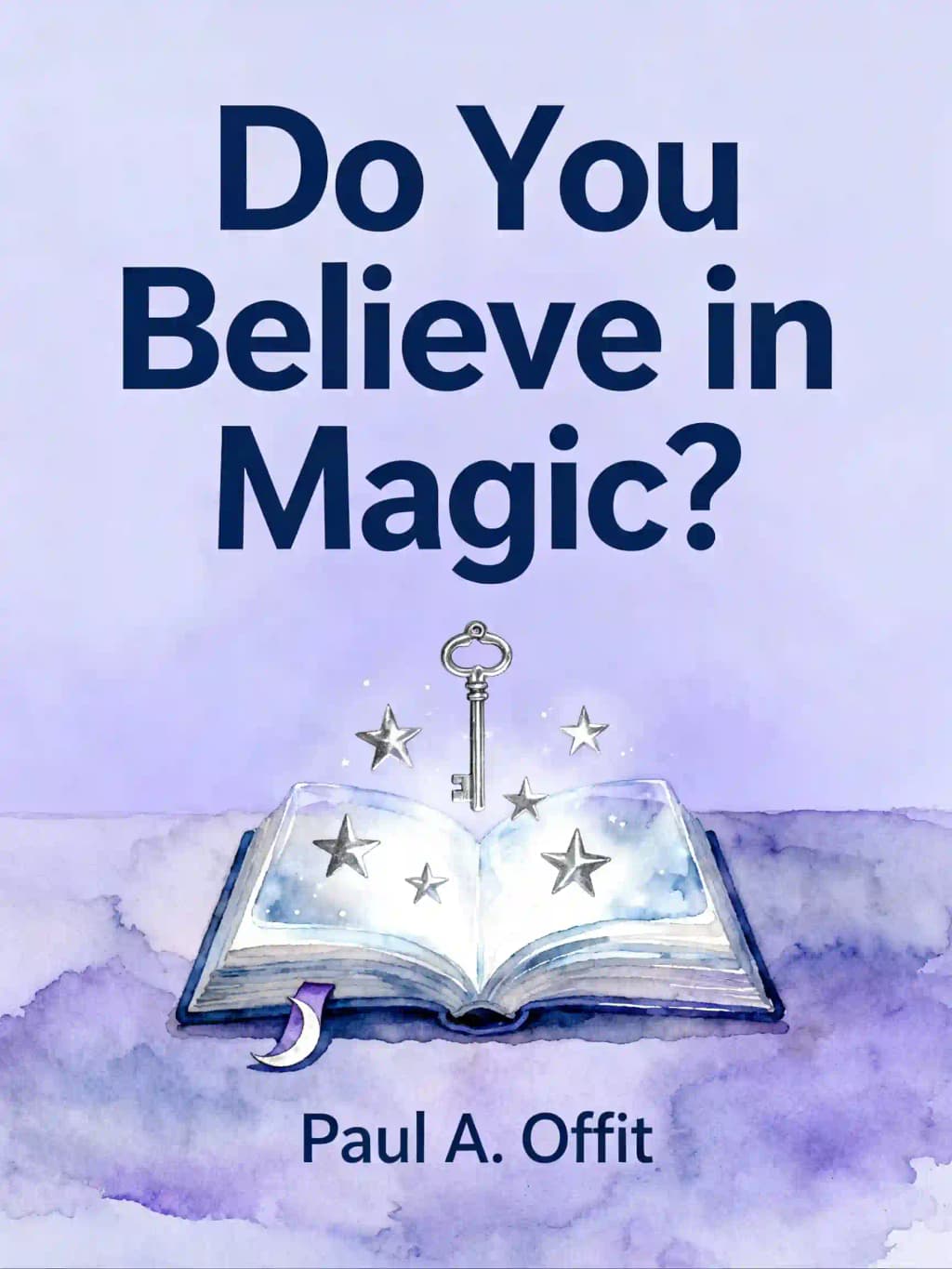
Paul A. Offit, MD, is a renowned immunologist, virologist, and bestselling author of Do You Believe in Magic?: The Sense and Nonsense of Alternative Medicine.
A pediatrician specializing in infectious diseases, Offit serves as director of the Vaccine Education Center at Children’s Hospital of Philadelphia and the Maurice R. Hilleman Professor of Vaccinology at the University of Pennsylvania.
His expertise stems from co-inventing the rotavirus vaccine, which saves thousands of lives annually, and advising the FDA and CDC on immunization policies. The book critiques unproven medical practices, reflecting Offit’s career-long advocacy for science-based medicine.
His other influential works include Autism’s False Prophets, which exposes vaccine misinformation, and Deadly Choices, analyzing the anti-vaccine movement.
A frequent media commentator, Offit has been featured in major outlets and received accolades like the Defensor Scientiae Award. His rotavirus vaccine is estimated to prevent over 500,000 global childhood deaths each year.
Do You Believe in Magic? critiques the unregulated alternative medicine industry, debunking myths about vitamins, supplements, and natural therapies. Dr. Paul Offit, an infectious disease expert, argues that many alternative treatments lack scientific evidence, pose health risks, and exploit vulnerable individuals through misleading marketing. The book examines historical health hoaxes, placebo effects, and real-world consequences of unproven remedies.
This book is essential for skeptics of alternative medicine, healthcare professionals, and anyone seeking evidence-based insights into supplements and natural therapies. It’s also valuable for readers interested in understanding the psychology behind why people embrace unproven treatments despite risks.
Offit highlights lax regulation, profit-driven marketing, and dangerous practices like megavitamin therapies and untested herbal remedies. He cites cases where alternative treatments caused severe harm, such as liver failure from kombucha tea or fatal allergic reactions to acupuncture.
The book acknowledges placebo-driven improvements in mood or pain perception but warns against mistaking temporary relief for cures. Offit argues alternative practitioners often misattribute positive outcomes to their treatments rather than natural healing processes or psychological factors.
These lines encapsulate Offit’s argument against separating “natural” remedies from evidence-based standards.
The book criticizes celebrities like Oprah Winfrey and Dr. Oz for promoting unproven therapies, arguing their influence overshadows scientific consensus. Offit notes these endorsements often prioritize profit over patient safety.
Offit analyzes past frauds like laetrile (a fake cancer treatment) and 19th-century “snake oil” salesmen. These examples illustrate recurring patterns of pseudoscientific claims and public susceptibility to quick fixes.
Unlike texts advocating integrative health, Offit’s work systematically dismantles alternative medicine’s credibility using clinical studies and case reports. It serves as a counterpoint to works like The Secret or You Are the Placebo.
The book calls for stricter FDA oversight, requiring manufacturers to prove safety and efficacy before marketing. Offit also advocates clearer labeling to distinguish evidence-backed drugs from untested supplements.
With misinformation spreading rapidly online, Offit’s critique remains vital for navigating wellness trends like “biohacking” or unregulated longevity supplements. The book equips readers to identify pseudoscience in modern health fads.
Some reviewers argue Offit oversimplifies cultural reasons people seek alternatives and understates cases where conventional medicine fails patients. However, most praise his rigorous analysis of systemic industry flaws.
As a vaccine developer and pediatrician, Offit combines clinical experience with accessible explanations of immunology and pharmacology. His credentials add weight to warnings about unproven therapies.
These steps help readers avoid costly or dangerous alternative medicine pitfalls.
저자의 목소리로 책을 느껴보세요
지식을 흥미롭고 예시가 풍부한 인사이트로 전환
핵심 아이디어를 빠르게 캡처하여 신속하게 학습
재미있고 매력적인 방식으로 책을 즐기세요
belief in natural healing trumps scientific evidence.
medicine was ineffective.
regression through medical history
clear instructions for life's complexities
vitamins were 'antioxidants' that fought harmful 'free radicals'.
Do You Believe in Magic?의 핵심 아이디어를 이해하기 쉬운 포인트로 분해하여 혁신적인 팀이 어떻게 창조하고, 협력하고, 성장하는지 이해합니다.
Do You Believe in Magic?을 빠른 기억 단서로 압축하여 솔직함, 팀워크, 창의적 회복력의 핵심 원칙을 강조합니다.

생생한 스토리텔링을 통해 Do You Believe in Magic?을 경험하고, 혁신 교훈을 기억에 남고 적용할 수 있는 순간으로 바꿉니다.
무엇이든 물어보고, 목소리를 선택하고, 진정으로 공감되는 인사이트를 함께 만들어보세요.

샌프란시스코에서 컬럼비아 대학교 동문들이 만들었습니다
"Instead of endless scrolling, I just hit play on BeFreed. It saves me so much time."
"I never knew where to start with nonfiction—BeFreed’s book lists turned into podcasts gave me a clear path."
"Perfect balance between learning and entertainment. Finished ‘Thinking, Fast and Slow’ on my commute this week."
"Crazy how much I learned while walking the dog. BeFreed = small habits → big gains."
"Reading used to feel like a chore. Now it’s just part of my lifestyle."
"Feels effortless compared to reading. I’ve finished 6 books this month already."
"BeFreed turned my guilty doomscrolling into something that feels productive and inspiring."
"BeFreed turned my commute into learning time. 20-min podcasts are perfect for finishing books I never had time for."
"BeFreed replaced my podcast queue. Imagine Spotify for books — that’s it. 🙌"
"It is great for me to learn something from the book without reading it."
"The themed book list podcasts help me connect ideas across authors—like a guided audio journey."
"Makes me feel smarter every time before going to work"
샌프란시스코에서 컬럼비아 대학교 동문들이 만들었습니다

Do You Believe in Magic? 요약을 무료 PDF 또는 EPUB으로 받으세요. 인쇄하거나 오프라인에서 언제든 읽을 수 있습니다.
Why would a brilliant man like Steve Jobs, diagnosed with treatable pancreatic cancer, delay surgery for nine months to pursue acupuncture and herbs - a decision that likely cost him his life? This pattern repeats across society, with half of Americans spending $34 billion annually on alternative treatments despite mounting evidence questioning their effectiveness. The allure is powerful: natural remedies feel safer than pharmaceuticals, ancient wisdom seems superior to modern science, and personalized attention from alternative practitioners contrasts with rushed conventional doctor visits. But this seduction can be deadly when belief in natural healing trumps scientific evidence. The tension between evidence-based medicine and alternative therapies reflects our deepest anxieties about health, technology, and trust - a conflict that plays out in doctor's offices, courtrooms, and personal health decisions every day.