1장
A Dance with Darkness: Finding Love Among Nightmares
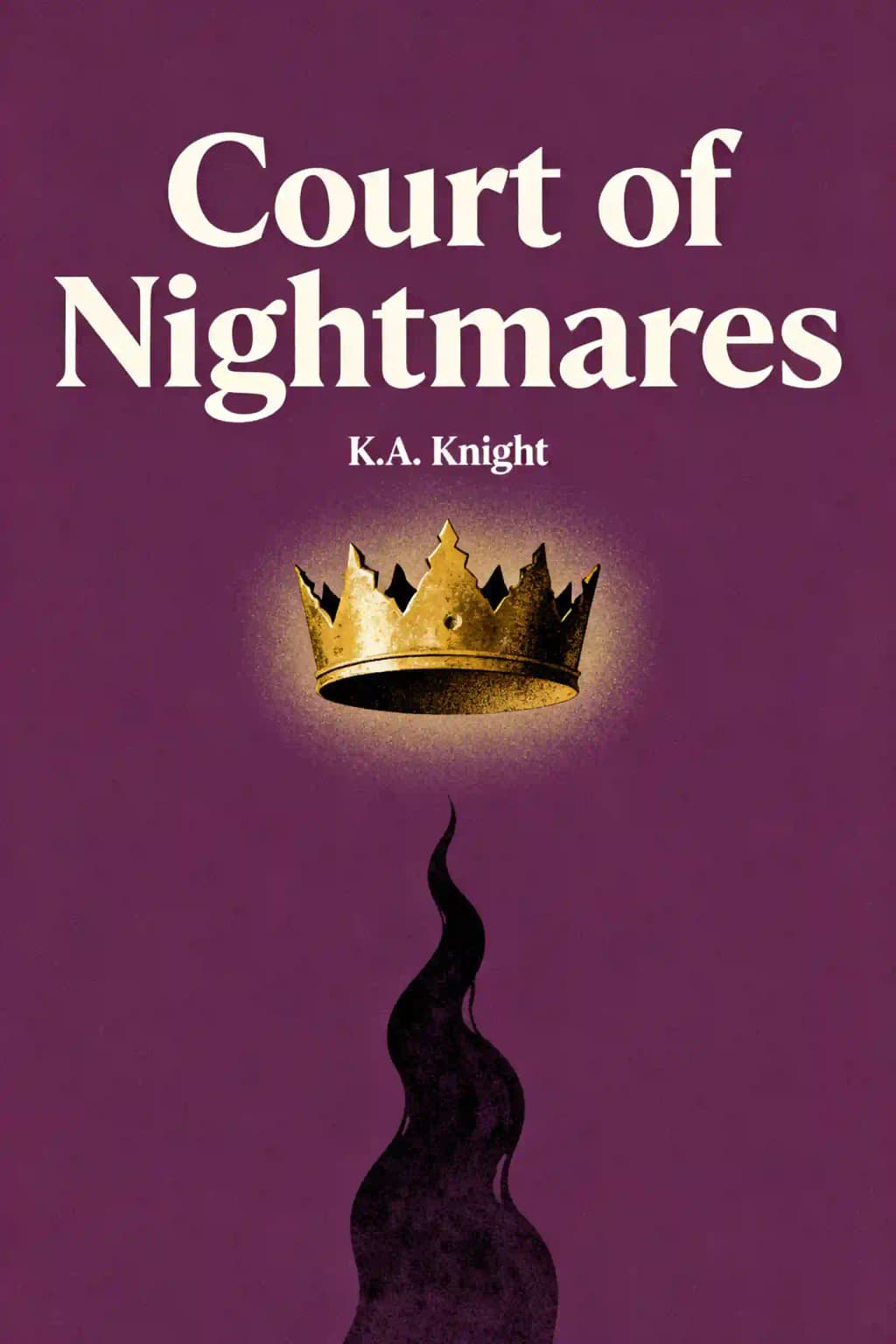
When K.A. Knight's "Court of Nightmares" first hit shelves, it created an immediate sensation in the dark fantasy romance community. The book quickly became a TikTok phenomenon, with readers creating elaborate costume tributes to Althea and her seven kings. What makes this novel particularly fascinating is how it subverts traditional vampire romance tropes-instead of a helpless human falling for a powerful vampire, we get a vampire heroine who becomes more powerful than any of her predecessors. Even Taylor Swift reportedly called it "deliciously twisted" during a private book club discussion. Beyond its viral popularity, the novel has sparked important conversations about agency, consent, and the nature of healthy relationships despite its dark themes. Let's dive into this world where monsters become saviors and nightmares offer salvation.
2장
From Rejected Mate to Powerful Queen
Heartbreak can transform you into a monster if you let it-and Althea embraces this transformation completely. Born a vampyr but not yet changed, she anxiously awaits her sixteenth birthday when she'll either die or become a full sangui. Her best friend Simon, who has already undergone his transformation, reassures her she'll survive the painful change. Despite her mother's ominous prediction that she would die young, Althea indeed survives her changing ceremony, though she keeps secret what she experienced in the darkness during her transformation.
Two years later, Althea faces her presentation at the Vermilion Court, where she hopes to find her destined mate. When she approaches the king, they lock eyes and she feels the unmistakable bond-he is her mate. But instead of joy, he responds with disgust, publicly rejecting her and their bond, drinking from another female before her very eyes. The rejection is catastrophic; the bond snaps, leaving her in excruciating agony. Humiliated beyond repair, Althea flees the court with as much dignity as she can muster.
The broken bond begins killing her slowly. Unable to feed from vampyrs due to the corrupted mating bond, she's forced to drain humans completely, which warps her mind and transforms her into something monstrous. For a year, she exists as a predator, half-dead and weak, leaving a trail of corpses as she runs from her past. She develops a mutation that forces her to experience her victims' memories when she drinks their blood. Eventually, she's captured and brought before the mysterious Court of Nightmares-seven masked kings who judge vampyrs for their crimes.
Rather than fighting her fate, Althea accepts their judgment, asking only to die standing. After examining her memories, the kings express sympathy for her suffering, noting that the humans she killed were actually evil themselves. As Nathair, King of the Serpents, extracts her heart, Althea welcomes death with relief, finally free from her torment. But death is only the beginning of her story.
3장
Rebirth and the Court of Nightmares
Death proves surprisingly peaceful for Althea as she finds herself in a foggy liminal space where her mother appears to her. Rather than welcoming her to the afterlife, her mother explains that Althea is between worlds and has a choice to make. She reveals that if Althea returns to life, she'll be free of the corrupted mating bond that tormented her, as it died when she did. Though returning means facing greater challenges, her mother believes Althea has an important destiny as "the nightmare... the saviour."
Choosing life over peaceful death, Althea bursts back to consciousness, her body healing and free from pain. The masked judges are shocked by her resurrection and notice she bears the same mark on her chest that they have. They welcome her as "Althea, the risen blood queen" to the Court of Nightmares.
As she adjusts to her new life, Althea discovers the true nature of the court and its seven kings: Nathair, the serpent king with a forked tongue; Conall, who controls shadows; Reve, a dream walker with striking black and white hair; Osis, who guards the passage between life and death; Azul, who can communicate with ghosts; Lycus, who transforms into a giant spider; and Zale, who becomes a massive black dog with a flaming tail. Each possesses unique powers and monstrous forms, yet they treat Althea with reverence and care.
Through feeding from them, Althea establishes telepathic connections with each king and discovers her own developing powers-control over blood and the ability to enter others' minds. She learns that the judges don't kill unless necessary, never feed from the unwilling, and remain apart from society, judging those vampyrs who have committed atrocities. As she grows closer to each king, their relationships deepen into passionate connections, with each claiming her in their own way.
4장
The Divine Mission and Ancient Powers
In a profound dream encounter, Althea meets Modatheth, the first vampyr, who reveals she is his descendant. He explains that vampyrs were originally meant to be protectors, not monsters, and gifts her his power through burning flames. As he dies, transferring his essence to her, he tasks her with cleansing their race of corruption. This divine mission becomes clearer when the god of death himself answers their ritual call, granting permission for their mission to hunt evil within the vampire courts.
Althea discovers her remarkable abilities include manipulating blood, entering minds, and channeling her kings' powers through their blood bond. She can make victims' blood turn against them, cutting them open from within or ripping all blood from their bodies. These powers grow stronger as she feeds from her kings and practices combining their abilities with her own.
The Court of Nightmares begins recruiting other creatures of the night to join their cause-a stuttering wendigo, a shapeshifter, a mischievous puk, a blue-skinned mermaid with blood-red eyes, a bloodthirsty pixie, a hesitant chimera, a skeletal unicorn with fangs, a cyclops, and even a magnificent purple and black dragon. With these allies, they have enough members to qualify as an official court.
As Althea grows into her role as queen, she learns the tragic backstories of each of her kings. Nathair was once a cruel king who became worse than his murderous father. Azul endured centuries of torture by a court mistress. Lycus killed his brother and king after discovering they raped village girls. Conall was forced to kill a human woman he cared for on his king's orders. Osis lost his mother to betrayal by a woman he loved. Zale survived when his friends were slaughtered by werewolves, only to be shunned by his court for surviving. Reve carries the burden of walking through others' nightmares. Through understanding their pain, Althea helps heal their wounds while they support her growth into her full power.
5장
Confronting the Past and Finding Family
When Althea unexpectedly reunites with Simon, her brother in all but blood, their emotional encounter in the palace gardens shatters years of separation. The sight of him - older now, with shadows under his eyes that speak of sleepless nights - stops her in her tracks. His initial fury manifests in clenched fists and accusations that pierce her heart: "A note, Althea? After twenty years, you left me nothing but a note?" Yet beneath his anger lies decades of worry and love that cannot be extinguished.
Their reconciliation unfolds gradually over cups of tea in the kings' private solar, where Simon's tears finally fall as Althea explains everything. With the kings' blessing, she reveals her death at the hands of her mate, her divine resurrection, and her sacred mission to purge corruption from the vampire courts. Simon listens with growing understanding, his merchant's mind quickly grasping the political implications while his brother's heart accepts her choices. His promise to help comes without hesitation, and his natural charm soon wins over the kings - particularly Marcus, who delights in Simon's dry wit and strategic mind.
Through Simon's position as a merchant dealing with multiple courts, a darker picture emerges of the vampire nobility's descent into depravity. He describes blood farms hidden in plain sight, systematic torture of servants, and a web of blackmail that keeps potential whistleblowers silent. The Principes court - where Azul endured months of torture - has become particularly notorious for its cruelty. They decide to begin their cleansing there, leaving Althea's former mate's court for last. "Let him feel the noose tightening," Simon suggests with grim satisfaction. "Let him watch as each court falls and wonder when you're coming for him."
The discovery of her mother's letter comes during a late-night exploration of the palace library. Hidden within an ancient tome of vampire law, the yellowed parchment reveals a love story Althea never knew. Her mother writes of secret meetings in moonlit gardens, of a forbidden love between a noble and a warrior, and of the sacrifice of keeping their mating bond hidden to protect their daughter. The letter's cryptic reference to her father - "He has always been your shadow, my love, watching over you though you cannot see him" - takes on new meaning when Druig confronts her.
The revelation occurs during a heated council meeting about court reform. Druig, who served for decades as her former court's second-in-command, stops her with a touch that carries the unmistakable spark of blood kinship. In a private moment afterward, he explains how he orchestrated his position as enforcer to stay close, watching over both Althea and her mother while maintaining distance to shield them from political enemies. His confession brings understanding to countless small moments from her childhood - his subtle protection, his careful guidance, the pride in his eyes she never fully understood until now.
6장
Judgment and Cleansing of the Courts
The Court of Nightmares begins its divine mission by infiltrating the Principes Court-a modern white complex with a blood-red moat and glass dome. Inside, they discover a nightmarish display of torture, sex, and blood. Naked performers covered in fang marks entertain, people in cages drip blood to creatures below, and stages showcase various tortures while slaves in collars serve their masters.
Following protocol to gain entry, Althea makes a display of her power, drawing the king's attention. During their interaction, they encounter Cassandra, a cruel woman who was Azul's former abuser. When she requests "the right of tasting" Azul, Althea is trapped by court customs-refusing would give the king reason to kill them all. With Azul's silent reassurance that he trusts her, Althea reluctantly releases him to Cassandra's torture.
As Cassandra tortures Azul on a table, Althea wages a power battle with the king while Reve shields Azul's mind from the pain. Finally unleashing her full power, she reveals herself as a queen come to judge them. She binds the king to his throne and commands her men to transform and "kill them all." During the massacre, Azul takes his revenge by simply ripping out Cassandra's heart. They judge the remaining court members through their blood, executing the guilty and freeing the innocent.
This pattern continues as they cleanse the corrupt courts one by one, culminating in a grand ball at the Court of Nightmares where they invite representatives from all vampire courts. During this event, Althea establishes her dominance immediately by reclining provocatively on a sofa while her mates feed from her, deliberately making the guests wait as they indulge. When she finally greets them with bloodied lips and flashing fangs, she welcomes them to the Court of Nightmares.
The ball becomes the setting for their final judgment. After several displays of power and confrontations, Althea reveals their true nature: "We are the blood kings and queen. We are the law." She explains that they are the judges chosen by the gods to cleanse their race of corruption, as the council has failed to uphold justice. Using her godly power through vines that touch every person in the room, she judges them all at once, eliminating the corrupt while sparing the innocent and redeemable.
7장
The Bond of Blood and Love
Throughout their journey, Althea forms deep, passionate connections with each of her seven kings. These relationships transcend mere physical attraction, becoming profound bonds of mutual healing, respect, and love. Unlike her rejected mate bond that nearly killed her, these chosen connections strengthen her and bring her joy.
With Nathair, she finds a powerful equal who kneels before no one except her. Their encounters are often intense and primal, breaking centuries-old beds with the force of their passion. He guides her through court politics and shares the burden of leadership.
Conall offers her the comfort of shadows and protection, teaching her to harness darkness as a tool rather than something to fear. Their bond allows her to walk in both shadow and light, embracing all aspects of herself.
Reve creates dream worlds for her alone, places of beauty and escape that he's never shared with anyone else. As a dream walker who has seen countless nightmares, he finds peace in her arms and the ability to create beautiful dreams again.
Osis, despite his past betrayal, opens his heart completely to her. He shows her the realm between life and death and teaches her that love is worth the risk of pain. His tiger form becomes both protector and companion.
Azul, scarred by centuries of torture, finds healing in Althea's acceptance. She sees beyond his physical scars to the beautiful soul within, giving him the confidence to show his face again and reclaim his power.
Lycus transforms from a guilt-ridden warrior to a proud protector under her love. His spider form, once a source of shame, becomes a symbol of his unique strength as he weaves webs spelling her name across the forest.
Zale's hellhound nature, long suppressed by fear, finds acceptance in Althea's embrace. She helps him reconcile his two sides, allowing his beast to protect rather than destroy.
Together, these bonds form something unprecedented-not a traditional mating but something stronger and more complete. As Althea realizes, "I was always destined to be theirs, and now I am." Their connection allows them to share thoughts, feelings, and even powers, creating a formidable force united by love rather than obligation.
8장
A New Dawn for the Vampire Race
After the final judgment at the ball, eight gods appear before the Court of Nightmares. They commend Althea and her kings for their actions in saving the vampyr race, confirming they'll keep them in their roles to prevent future problems. "Protect your race, make sure they follow the laws, and keep them humble and good. Otherwise, we will be back," the goddess warns before they vanish.
With divine approval, the Court of Nightmares establishes itself as the ultimate authority over vampire kind, working in the shadows to maintain balance and justice. Althea's father takes his place as the new king of her former court, creating a powerful alliance between their courts.
The monsters who joined their cause find a home at the Court of Nightmares, some choosing to stay permanently while others come and go as needed. Tide, the mermaid-siren hybrid, explains their choice: "We have found friendship here, safety, and a place to belong. That is rare to find."
The court itself transforms from a place of pain and death to one filled with love and life. Previously closed rooms stand open, with laughter and friendship echoing through halls where darkness once reigned. Simon and his werewolf partner become regular visitors, bridging the gap between different supernatural communities.
In the epilogue, Althea watches her family from the doorway, wine glass in hand, soaking in their happiness as they laugh and play in their library. This room that once felt empty is now filled with life and love. Though some still call them nightmares, they've found happiness together, and that's what matters. Althea has transformed from an orphan girl to a queen, finding her mates, her destiny, and her forever. With her blood kings, her judges by her side, she can face whatever comes next.
9장
The Power of Chosen Family
Perhaps the most profound theme running through "Court of Nightmares" is the healing power of chosen family. Each character begins profoundly broken in their own way - Althea rejected by her own kind and slowly dying from a curse, Nathair haunted by centuries of cruelty he inflicted as the Shadow King, Azul bearing the physical and emotional scars of torture in the Fae dungeons, Lycus carrying the crushing weight of his twin brother's betrayal, Conall living with the guilt of being forced to execute his first love, Osis nursing wounds from centuries of romantic manipulation, Zale marked as an outcast for surviving what killed his people, and Reve shouldering the burden of countless others' darkest nightmares.
Together, they create something extraordinary from their collective brokenness. Rather than trying to hide their damaged parts, they learn to embrace them. They accept each other's monstrous sides - Nathair's shadow magic, Azul's rage, Lycus's beast form, Conall's death magic, Osis's violent protective instincts, Zale's otherworldly nature, and Reve's nightmare-walking. Their love for each other encompasses not just their light but their darkness, not despite these elements but because they make each person whole.
Simon's inclusion in this family circle powerfully reinforces this theme of chosen bonds transcending traditional relationships. Though he shares no romantic connection with Althea or the kings, he finds his place among them as trusted advisor and friend, eventually bringing his werewolf mate Kane into their extended family. The monsters who seek sanctuary in their court - from the shadow-wrapped banshee to the many-armed swamp creature - similarly find acceptance and belonging, regardless of their frightening appearances or dark natures.
The Court of Nightmares evolves beyond its original purpose as a place of judgment - it becomes a sanctuary for the misunderstood, the rejected, and the different. In a world that rigidly upholds conformity and traditional power structures, they dare to create their own rules and their own definition of family. Their bonds are forged through choice, trust, and mutual understanding rather than blood or obligation. Even their enemies often find themselves transformed by the court's accepting nature, with several former antagonists eventually joining their unconventional family.
As Althea reflects in the final pages, watching her family share a meal in their garden - Nathair teaching magic to young monsters, Azul and Lycus playfully sparring, Conall tending to his death flowers, Osis and Zale planning new security measures, and Reve peaceful for once: "Though some call us nightmares, we're happy, and that's what matters. We've built something beautiful from our broken pieces." In the end, that's the true power of the Court of Nightmares - not their ability to judge or execute, but their capacity to love fiercely, protect loyally, and create a family where everyone belongs, monsters and all. Their story proves that family isn't about perfect people; it's about imperfect people choosing to stand by each other despite - or because of - their flaws.
10장
Embracing the Darkness Within
At its heart, "Court of Nightmares" is about embracing the darkness within ourselves rather than fighting against it. Althea's journey begins with her violent transformation from a sheltered noble to a creature of the night - a transformation marked by rejection, fear, and subsequent descent into monstrous behavior. Her initial rampage, feeding on humans and leaving a trail of bodies across the shadow-laden streets of Victorian London, serves as both her lowest point and the catalyst for her eventual redemption. This period of darkness, while horrific, plants the seeds for understanding the complex nature of power and morality.
When she encounters the seven kings of the Court of Nightmares, each embodies a different aspect of darkness that society fears. Nathair, with his serpentine nature, moves with deadly grace and can poison with a touch, yet uses these abilities to track those who prey on children. Conall manipulates shadows themselves, becoming one with the darkness to protect those who walk in light. Reve walks through nightmares, experiencing others' worst fears, but uses this power to free victims from their mental prisons. Osis's intimate connection with death allows him to speak with the departed, bringing closure to the living and justice to the dead. Azul's ghostly powers let him move through walls and possess the wicked, while Lycus's spider form weaves webs of both silk and justice. Zale, perhaps the most fearsome, transforms into a hellhound whose very presence strikes terror into the guilty.
The integration of these dark powers into their identities represents a crucial philosophical shift. Rather than suppressing their monstrous aspects, they've learned to channel them purposefully. This acceptance transforms what could be tools of terror into instruments of justice. Through their guidance, Althea discovers that her own darkness - her ability to manipulate blood, her connection to death, and her fierce protective instincts - can become her greatest strengths.
This philosophy manifests in their approach to justice as well. Unlike the corrupt vampire courts that revel in unnecessary cruelty and political machinations, the Court of Nightmares operates with precise purpose. They become vigilantes of the supernatural world, using their darker natures to hunt those who truly deserve punishment. Their judgments are harsh but fair, targeting those who abuse power rather than those who simply possess it.
The story's progression shows Althea's evolution from fearing her nature to mastering it. She learns to control her blood manipulation, using it not just for violence but for healing. Her connection to death becomes a way to honor the fallen and protect the living. Her protective instincts, once leading to blind rage, transform into calculated strength. By the final chapters, she embodies the perfect balance - a creature of darkness who serves the light, capable of both terrible justice and profound mercy.
By the end, Althea has fully embraced all aspects of herself - her power, her darkness, her capacity for both compassion and necessary violence. She stands as living proof that accepting one's darker nature doesn't mean surrendering to it, but rather mastering it for a greater purpose. The nightmare has indeed become the savior, demonstrating that true strength lies not in denying our shadows, but in learning to dance with them.