1장
The Art of Deception: A Journey Through America's Greatest Con
In 1980, a film producer approached Frank Abagnale Jr. about turning his extraordinary life story into a movie. "Check with the FBI," Abagnale told him. "They'll verify everything." Twenty-two years later, Steven Spielberg's "Catch Me If You Can" starring Leonardo DiCaprio brought Abagnale's audacious exploits to worldwide attention. But the film only scratched the surface of one of the most remarkable crime sprees in American history. Between ages 16 and 21, Abagnale successfully posed as an airline pilot, pediatrician, attorney, college professor, and security guard-all without formal education beyond tenth grade. He cashed over $2.5 million in fraudulent checks across 26 countries, becoming so notorious that he earned a place on the FBI's Most Wanted list. What makes his story particularly fascinating isn't just the brazen nature of his crimes, but how they reveal the vulnerabilities in systems we trust daily and the psychology of deception that allowed a teenager to fool professionals across multiple industries.
2장
The Making of a Con Artist
Frank Abagnale Jr. grew up in an affluent New York suburb, the son of a successful businessman father and French-Algerian mother. His comfortable childhood shattered when his parents divorced when he was twelve. The bitter custody battle became a pivotal moment in young Frank's development-he chose to live with his father, who used him as a pawn in attempts to win back his mother.
"My parents' divorce was the catalyst for my life of crime," Abagnale later reflected. "It fractured my moral compass at a critical age."
His criminal career began innocently enough at fifteen when his father gave him a credit card for gas expenses. Frank quickly discovered he could purchase tires and accessories on the card, then sell them back to the stations for cash. This small-scale fraud escalated until he'd racked up $3,400 in fraudulent charges against his own father. When confronted, Frank confessed it was all to impress girls-a motivation that would drive many of his future schemes.
After spending a year in a Catholic Charities school for troubled boys, Frank returned home to find his once-successful father reduced to working as a postal clerk after losing his business. The sight of his father in uniform depressed him deeply. At sixteen, with just $200 in his checking account and a suitcase of clothes, Frank left home for New York City.
Within days of arriving, he realized his age limited his employment prospects. His first transformation was simple but significant-altering his driver's license to show he was 26 instead of 16. Even with this deception, the best job offer was $2.75 an hour as a truck driver's helper. The gap between his meager earnings and his desired lifestyle drove him to write bad checks, first at banks, then hotels and stores. He quit his job and supported himself entirely through check fraud, becoming what professionals called a "paperhanger."
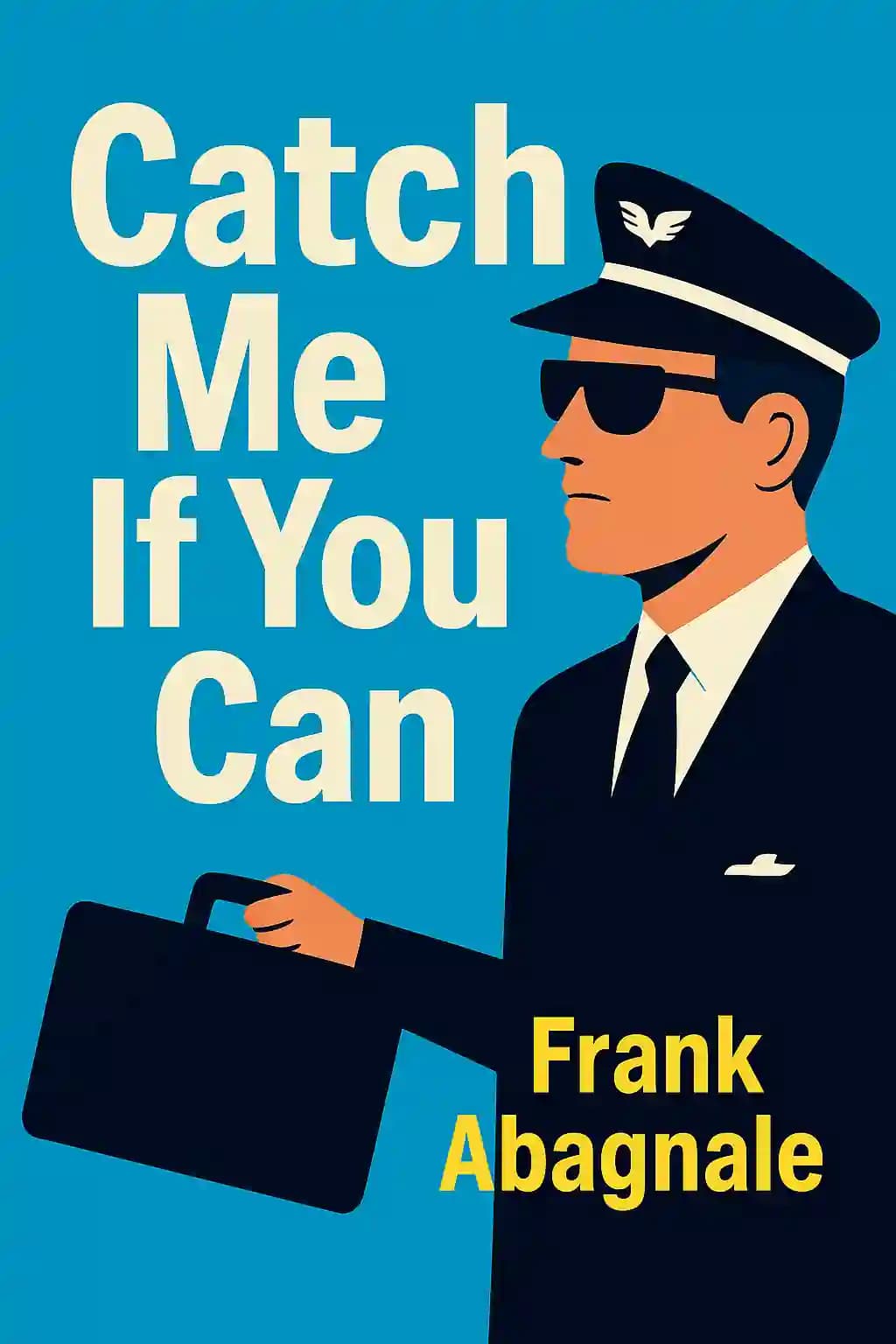
When New York became too hot, Frank needed a new scheme that would work anywhere. The answer appeared when he spotted an Eastern Airlines flight crew exiting the Commodore Hotel-their uniforms commanded instant respect and trust. Looking up at the Pan Am building, he made a decision that would define his criminal career: he would become an airline pilot who couldn't actually fly.
3장
The Perfect Disguise
There's something magical about a uniform that marks you as someone with rare skills or achievements. In his perfectly tailored Pan Am pilot's uniform with three gold stripes and official-looking credentials, Frank commanded instant respect wherever he went. Men looked at him enviously, women smiled invitingly, airport police nodded courteously, and airline personnel greeted him warmly.
"The uniform became my addiction," Frank later admitted. "Whenever I felt lonely or worthless, I'd put it on and seek crowds. I was instantly transformed into someone important."
Creating this disguise required remarkable ingenuity. Frank called Pan Am's purchasing department posing as a co-pilot who'd had his uniform stolen. The helpful employee directed him to their uniform supplier, where he was fitted for a first officer's uniform complete with gold stripes. For the official Pan Am wings and hat emblem, he visited the airline's stores department at Kennedy Airport, claiming his two-year-old had taken his off his uniform. The clerk laughed, saying they replaced more wings for kids and girlfriends than for pilots.
But Frank knew a uniform alone wasn't enough. He needed to sound authentic. His first attempt to blend in nearly failed when a TWA co-pilot asked what "equipment" he flew, and Frank answered "General Electric"-clearly the wrong response. Realizing he needed to learn airline terminology, he spent days gathering information by calling airlines posing as a student journalist. He created a fictional background for himself as an Embry-Riddle Aeronautical University graduate with Eastern Airlines experience.
He began frequenting La Guardia Airport (avoiding Kennedy where Pan Am operated) to eavesdrop on airline conversations. Pilots and crew members readily accepted him and often invited him to join them. He dated several stewardesses, using these relationships to mine professional knowledge-learning about flight manuals, travel expenses, and airline operations while maintaining his cover.
Frank's meticulous attention to detail extended to his fake credentials. He discovered an advertisement from a Milwaukee company that made silver replica pilot licenses mounted on plaques. He ordered one with his fake information including the highest "air transport rating" for DC-9s, 727s and 707s. When the impressive plaque arrived with the FAA administrator's signature, he took it to a small Brooklyn print shop to have it reduced to wallet size and laminated it himself.
His Pan Am ID card came from a Madison Avenue company where he posed as "Frank Williams" from expanding Carib Air of Puerto Rico. He convinced the salesman he needed sample ID cards for 200 employees, and they photographed him for a professional sample card with his fake details.
4장
Flying High on Deception
Frank's most audacious scheme was "Operation Deadhead"-his plan to fly for free by posing as a pilot. At La Guardia, he approached Eastern's operations office requesting to deadhead to Miami. The clerk readily provided a pink form which Frank completed with his fake credentials. Though momentarily panicked when the clerk called the FAA tower, he was soon directed to board Flight 602.
He confidently handed his pink slip to the stewardess and entered the cockpit, introducing himself to the three-man crew. The flight engineer showed him to the jump seat that folded down from the cabin door. Though nervous throughout the flight, he easily passed himself off as a Pan Am pilot of eight years flying 707s. He even made a date with a stewardess for that night in Miami.
This pattern continued for two years, with Frank deadheading across the country, cashing $100 checks at airline-affiliated hotels, and moving on before the checks bounced. The system worked perfectly-airlines never verified his credentials, hotels billed Pan Am directly, and police were too overwhelmed with other check fraud cases to pursue him effectively. He kept a detailed notebook of airline terminology, crew names, and technical data to perfect his impersonation.
Frank's charade faced its greatest test on National Flight 106 from New Orleans to Miami, when Captain Wright suddenly asked to see his Pan Am ID and FAA license. Despite scrutinizing his forgeries, the captain seemed satisfied, though Frank remained nervous the entire flight. In Miami, sheriff's deputies were waiting to escort him downtown for questioning. An FBI agent later arrived and, remarkably, accepted his story after calling pilots and stewardesses whose names Frank provided as references.
Having narrowly escaped, Frank immediately fled to Atlanta on a Delta flight under a new name. After spending a month with an Eastern stewardess, he decided to settle at River Bend, an upscale singles complex in Atlanta. When filling out the rental application, he impulsively listed his occupation as "medical doctor" instead of airline pilot, worried that someone might verify his Pan Am employment.
5장
The Accidental Doctor
Frank told the curious apartment manager he was a pediatrician on leave from his California practice to audit research at Emory and make investments. His six months' rent paid in advance-twenty-four $100 bills-quickly sealed the deal. River Bend proved perfect-parties every night and casual acceptance from neighbors who called him "Doc." He deflected medical questions by emphasizing his pediatric specialty or claiming he wasn't licensed in Georgia.
His comfortable charade was threatened when Dr. Willis Granger, chief resident pediatrician at Smithers Pediatric Institute, moved in below him. During their first meeting, Frank nervously claimed Columbia University medical training and an internship at Harbor Childrens Hospital in Los Angeles. Though he considered fleeing, he decided to stay and avoid Granger-an impossible task given the doctor's gregarious nature.
To maintain his cover, Frank spent weeks studying pediatric texts at the Atlanta library. Eventually feeling confident enough, he accepted Granger's invitation to lunch at his hospital. There he met countless staff members and began dating Brenda Strong, a nurse. He visited frequently afterward, using the hospital's medical library to further his knowledge while earning respect for his "dedication" to keeping current in his field.
His fraudulent role became comfortable, even enjoyable. He loved being greeted respectfully as "Dr. Williams" throughout the hospital corridors. His deception faced its greatest test when hospital administrator John Colter desperately asked him to serve as resident supervisor for the midnight shift for ten days. Despite Frank's protests about lacking a Georgia license, Colter arranged a perfunctory interview with five doctors who granted him temporary credentials without asking a single substantive medical question.
To pull off this monumental bluff supervising seven interns and forty nurses, Frank adopted the persona of a carefree, rule-breaking doctor who approached everything with humor. With Brenda voluntarily joining his shift, he began his first night as the hospital's resident supervisor.
"My wise-cracking, irreverent approach became my signature style," Frank recalled. "I let the interns handle most cases while I observed, asking their opinions before authorizing their treatment plans."
This hands-off approach made him immensely popular-the interns felt he was treating them like real doctors. He avoided medical emergencies whenever possible, and when forced to respond, he'd question the interns about their diagnosis and treatment plan, then simply authorize them to proceed.
To maintain his facade, Frank kept a pocket medical dictionary hidden in an empty linen closet on the seventh floor, where he'd retreat to look up unfamiliar terms. When faced with examining newborns, he cleverly had a nurse demonstrate the proper technique, then mimicked her actions.
After eleven months of this dangerous charade, Frank realized a child could die because of his deception. Fortunately, Colter informed him they'd found a replacement. As he left the hospital for good, the elderly janitor Jason confronted him, puzzled by his frequent visits to the empty linen closet. "Doctor, what did you do in that linen closet? I won't tell nobody, I swear!" Frank laughed and hugged him, claiming he was "contemplating his navel." But he knew the janitor never believed him.
6장
The Lawyer Who Never Went to Law School
A week after leaving the hospital, Frank relocated to another southern state capital where an airline stewardess named Diane lived. To her, he was Robert F. Conrad, a Pan Am pilot with an unused law degree. His carefully crafted persona included detailed stories about international flights and legal education. At a cocktail party in her upscale neighborhood, she proudly introduced him to Jason Wilcox, an assistant state's attorney, casually mentioning Frank's supposed dual career background in aviation and law.
When Wilcox inquired about his legal education, Frank confidently claimed Harvard Law School, class of 1964. He skillfully explained his career choice, noting that airline pilots earned $22,000 annually while most young attorneys made less than half that amount. The lifestyle advantages - traveling the world versus being stuck in an office - made it an easy decision, he claimed. When Wilcox discovered Frank was temporarily "furloughed" from Pan Am due to industry cutbacks, he saw an opportunity. He suggested Frank take the state bar exam and join the attorney general's staff, promising to personally recommend him.
Recognizing he needed authentic-looking credentials, Frank meticulously planned his next moves. He wrote to Harvard requesting their law school catalog, which provided crucial details about course names and numbering systems. Using Diane's college transcript as a template, he spent three days creating a masterful forgery using professional graphic arts supplies, including an exacto knife, press-on lettering, and a high-quality paper stock. The result was indistinguishable from genuine Harvard documentation.
After submitting his counterfeit credentials to the state bar examiner's office, he was granted permission to take the bar exam. His first two attempts ended in failure, but the state's practice of returning marked tests proved invaluable. Frank studied these intensively, memorizing correct answers and legal principles, eventually passing on his third attempt. He was officially licensed to practice law in the state, despite never having completed high school or taken a single law class.
Wilcox fulfilled his promise, helping Frank secure a $12,800 position as an assistant attorney general in the corporate law division. His supervisor, Phillip Rigby, embodied old southern aristocracy and immediately took a dislike to Frank, whom he dismissed as a "Catholic Yankee." Rigby limited Frank's responsibilities to basic research and filing, inadvertently protecting Frank from exposure in courtroom proceedings. Frank maintained an impressive facade - wearing different designer suits daily, driving a leased midnight-blue Jaguar XKE, and residing in an exclusive lakeside apartment, all funded by his remaining $20,000 in fraudulent earnings. His polished appearance even earned compliments from a senior judge during his rare court appearances.
His carefully constructed world began unraveling when he met a genuine Harvard Law graduate through his church's legal aid program. The alumnus asked specific questions about professors, campus buildings, and traditions that Frank couldn't answer convincingly. Sensing he was being investigated, Frank orchestrated a quick exit. He resigned his position citing personal reasons, fabricated a story about a family death in New York to his girlfriend Gloria, and disappeared in a newly purchased orange Plymouth Barracuda, leaving behind yet another life built on deception.
7장
Master of the Banking System
Frank's most lucrative schemes involved exploiting the American banking system's vulnerabilities. He noticed that when presenting personal checks, tellers primarily focused on the check number in the upper right corner. The higher that number, the more readily acceptable the check became-as if a high check number indicated a long-established, trustworthy account.
He'd open an account with $200 at one bank, receive his starter checks numbered 1-200, then alter check #1 to appear as #3100 and change the Federal Reserve routing numbers. When he presented this doctored check to another nearby bank to open a savings account, tellers would see the high check number and assume he had a well-established account. After waiting the required clearing period, he'd withdraw most of the money before his fraudulent check was routed to a distant clearing house and eventually returned unpaid.
Frank perfected this routing numbers racket with Pan Am expense checks too, deliberately sending East Coast checks to West Coast clearing houses and vice versa. This gave him at least a week's head start before detection.
"I modified the American banking system to suit myself," Frank later wrote, "siphoning money from bank vaults like a raccoon drains an egg."
His expertise reached new heights when he met Monique Lavalier, an Air France stewardess whose father owned a small printing shop in Paris. When Frank saw her father's operation, he immediately recognized an opportunity to improve his Pan Am check scam using a genuine Pan Am payroll check he'd acquired as a template.
Her father and brothers, despite not speaking English, eagerly agreed to print 10,000 Pan Am checks for him at $200 per thousand-substantially less than the fictional $350 per thousand Frank claimed Pan Am was paying in New York. He provided a legitimate $1,000 cashier's check as deposit, posing as a Pan Am representative offering them American business opportunities. The resulting checks were perfect-gorgeous blue replicas with the Pan Am-Pan Am-Pan Am watermark and global map, perforated and printed on IBM card stock.
With an IBM electric typewriter, Frank made checks to himself that were virtually indistinguishable from genuine Pan Am payroll checks. When he presented one at a Paris bank, the teller actually called Chase Manhattan to verify it-and it cleared! Frank was astonished at his own success, suspecting that Pan Am itself might actually be honoring these checks since they appeared completely legitimate.
8장
The Escape Artist
Frank's luck finally ran out when two Massachusetts state troopers recognized and arrested him at Boston's Logan Airport. Despite his protests and fake identification, they took him into custody, convinced he was indeed Frank Abagnale, the notorious impostor they'd been seeking for years.
At Boston's county jail, Frank met Aloyius James "Bailout" Bailey, a bail bondsman who agreed to post his $5,000 bond for just $500 plus a $100 bonus. After Bailey secured his release and drove him to the airport, FBI Agent O'Riley arrived at the jail only to discover Frank had escaped. Instead of fleeing Boston, Frank boldly executed another scheme-donning a bank security guard uniform, he placed an "out of order" sign on a night deposit box and collected over $62,800 in deposits. When two state troopers encountered him struggling with the heavy deposit bag, they helpfully assisted him in loading it into his getaway vehicle.
Frank fled to Miami, then Istanbul, but not before calling to reveal where most of the non-cash deposits could be found and sending Bailey a $5,000 cashier's check to honor his debt. His adventures continued across Europe until he was eventually arrested in France, where he served six months in the brutal Perpignan Prison before being extradited to Sweden for another six-month sentence.
After his Swedish imprisonment, Frank was extradited to the United States and confined to the Federal Detention Center in Atlanta. There, he executed perhaps his most audacious escape. With help from his girlfriend Jean Sebring, he created fake FBI credentials for "Agent Sean O'Riley" with phone numbers that connected to pay phones in an Atlanta shopping mall.
Frank approached a prison guard, revealed his "true identity" as a prison inspector, and showed him a business card. The guard and Lieutenant Combs were delighted to learn their suspicions were correct. Frank convinced them he needed to meet FBI Agent O'Riley outside. When Combs called the fake office number, Jean answered professionally as a receptionist and Frank pretended to have an urgent conversation with O'Riley about sensitive information. Combs not only believed the charade but personally escorted Frank out of the prison to meet "O'Riley" waiting in a red-over-white Buick.
Jean, disguised in a man's hat and coat, was behind the wheel. They sped away jubilantly, and Frank took a bus to New York while she moved to Montana. Prison officials, embarrassed by the deception, falsely reported Frank had escaped forcibly.
9장
Redemption and Legacy
Frank's freedom was short-lived. Less than a month after his Atlanta escape, two New York detectives spotted and arrested him. He faced hundreds of charges from all fifty states, but his lawyer negotiated a plea deal where he admitted guilt to "all crimes, known and unknown" in exchange for serving concurrent sentences. He received ten years on seven fraud counts (to run concurrently) plus two consecutive years for escape.
After serving four years at the Federal Correction Institution in Petersburg, Virginia, Frank was paroled to Houston, Texas. There he faced the harsh reality confronting ex-convicts-employment discrimination and a hostile parole officer who predicted his quick return to prison. He found work at a pizza parlor but was fired when they discovered his criminal past. This pattern repeated at a supermarket chain where he rose to night manager before being terminated.
Contemplating a return to crime out of frustration, Frank was saved by two developments: assignment to a more reasonable parole officer and a moment of clarity while working as a movie projectionist. He realized he was wasting his talents and approached his parole officer with a plan to use his expertise in forgery and fraud to help businesses protect themselves against the very crimes he had once committed.
Frank began approaching banks to offer fraud-prevention lectures with a simple proposition: "If you think my lecture is worthless, you owe me nothing." His insights quickly gained demand. Within months, he was regularly consulting for banks, hotels, airlines and other businesses.
Today, Frank Abagnale is a respected authority on counterfeiting and document security, having worked with the FBI's Financial Crimes Unit for over forty years. He teaches at the FBI Academy, lectures worldwide, and has founded a secure-documents corporation in Washington, D.C. He has been happily married for over forty years and raised three sons.
When asked about his identity during his criminal years versus now, he states simply: "The Frank Abagnale I was was an egotistical, unethical, unscrupulous criminal. The Frank Abagnale I am today is a good father and a good husband."
Frank's remarkable transformation from America's most notorious con artist to one of its leading fraud prevention experts demonstrates that redemption is possible even after the most extraordinary criminal career. His story continues to fascinate because it reveals not just the vulnerabilities in our systems of trust, but also the remarkable adaptability of the human spirit-for both deception and, ultimately, redemption.