1장
The Science of Capturing Attention in a Distracted World
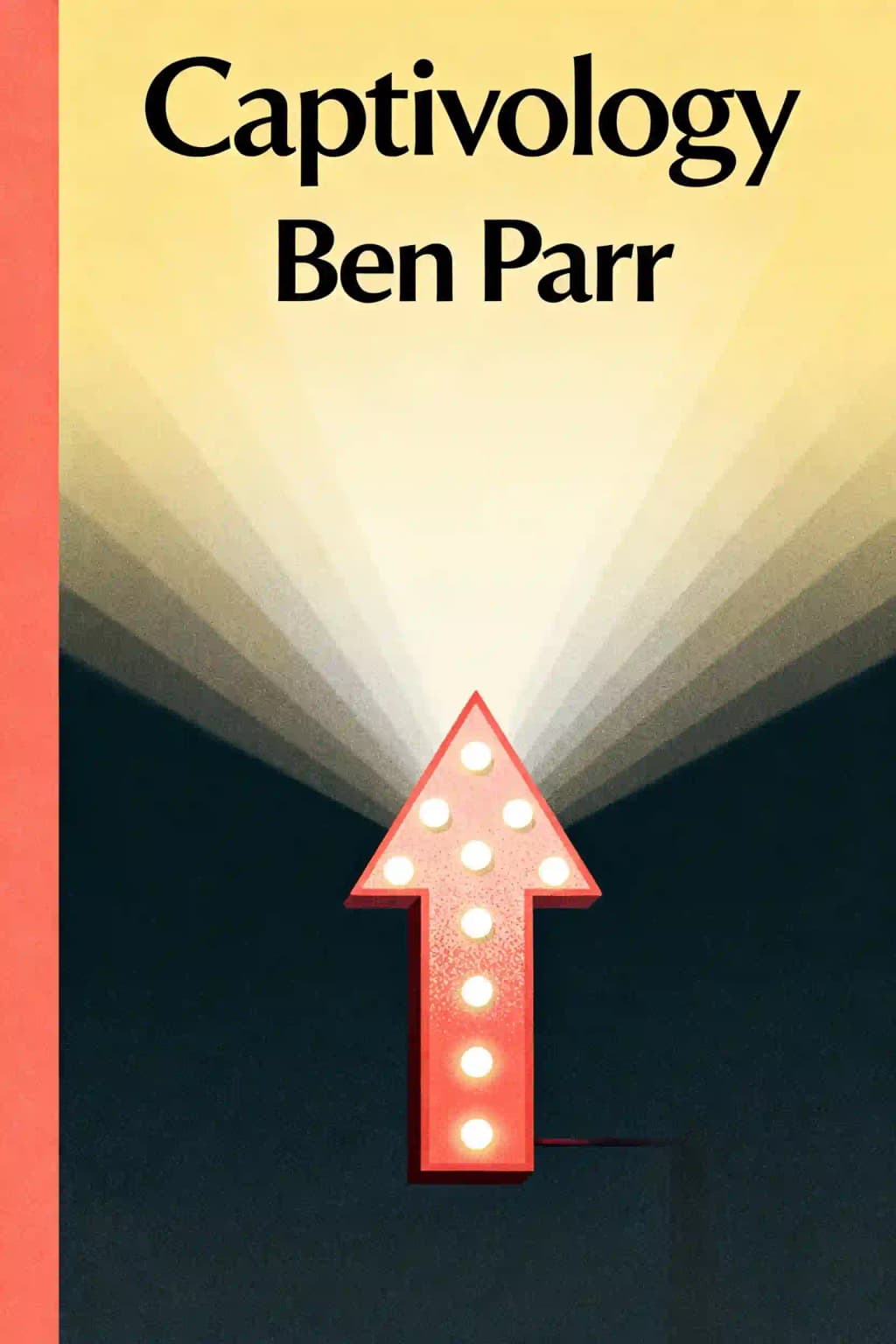
Have you ever wondered why you can't resist checking your phone 110 times a day? Or why some YouTube videos go viral while others languish in obscurity? In a world where the average person consumes 174 newspapers worth of information daily-quadruple what we processed in 1986-attention has become our scarcest resource. Ben Parr's "Captivology" offers a fascinating exploration of the psychology behind what captures our attention and why. The book has garnered praise from industry titans like Sheryl Sandberg and Ashton Kutcher, who calls it "required reading for anyone who wants to win in a world where attention is the ultimate currency." Drawing from cognitive psychology, behavioral economics, and interviews with attention masters ranging from Steven Soderbergh to Shigeru Miyamoto, Parr reveals the hidden mechanisms that determine what we notice, what we ignore, and why mastering attention is the key to success in our information-saturated age.
2장
Building a Bonfire: The Three Stages of Attention
Imagine attention as a bonfire. First comes the spark of immediate attention-our unconscious, instinctive reaction to stimuli that lasts mere seconds. This is followed by the kindling of short attention-our conscious focus on something specific. Finally, there's the sustained flame of long attention-our enduring interest in ideas, products, or people over extended periods.
Immediate attention serves as our first line of defense against threats-a bottom-up, automatic process driven by stimuli rather than consciousness. We're hardwired to detect changes in our environment, particularly involving people and animals (potential threats) over plants or inanimate objects. This explains why Dr. Stephanie Krauth's research team captured widespread attention by titling their scholarly paper on hookworm eggs "An In-Depth Analysis of a Piece of Sh*t"-the unexpected language triggered our automatic attention system.
Short attention involves conscious focus-when we deliberately allocate concentration toward something, often triggered by novelty. Our focus on novelty is driven by dopamine, which controls motivation rather than pleasure. University of Michigan researchers found that blocking dopamine in rats didn't stop them from "liking" something but eliminated their "wanting" it. This explains why we're motivated to explore new things. Short attention is managed by working memory, with a decision-making "central executive" that determines which memories become long-term.
Long attention represents our sustained interest over extended periods. Beyonce's surprise 2013 album exemplifies this power-with zero marketing, it sold 80,000 copies in three hours because she had "put in years of hard work and hit tracks to get to the point where people pay attention." Most "overnight successes" actually take years of development-Pinterest existed three years before becoming a sensation, Angry Birds was Rovio's fifty-second game, and Psy had topped South Korean charts for a decade before "Gangnam Style." Long attention relies on familiarity rather than novelty, drawing from our long-term memories to guide interests.
Nintendo's legendary game designer Shigeru Miyamoto created Mario with all three attention stages in mind. For immediate attention, Mario's distinctive appearance emerged from technical constraints-with only 16x16 pixels available, Miyamoto gave him a big nose, mustache, red cap, and colorful overalls to make him instantly recognizable. For short attention, Mario games feature novel gameplay mechanics with achievable goals and immediate rewards that trigger dopamine release. For long attention, Mario was designed as an "everyman" rather than a superhero, making him relatable to everyone while maintaining familiar elements across decades.
3장
The Automaticity Trigger: How Our Senses Direct Attention
Have you ever noticed how a flash of red immediately draws your eye? Or how you can hear your name mentioned across a crowded room? These reactions exemplify the Automaticity Trigger-how sensory cues automatically direct our attention before we're even conscious of them.
Nature demonstrates this principle perfectly through the bee orchid (Ophrys apifera), which attracts male long-horned bees by mimicking female bees-not just in appearance with its furry protrusion and pink-lavender petals, but also in scent by replicating female bee pheromones. This deception, called pseudocopulation, tricks male bees into attempting to mate with the flower, thereby spreading pollen between orchids.
The Automaticity Trigger works through two mechanisms: contrast (when something visually stands out) and association (when a sensory cue triggers a mental connection). Color dramatically influences attention, as demonstrated when female hitchhikers in different colored shirts tried to get rides. For female drivers, yellow (9.6%) and red (9%) shirts got the most stops. For male drivers, red dominated with 20.77% stopping-one in five men-likely due to unconscious romantic associations.
Colors affect us psychologically through their associations. Blue lighting in Nara, Japan reduced crime by 9% and eliminated train station suicides completely. Studies show blue and green decrease anxiety while red and yellow increase it. But these associations vary culturally-red symbolizes romance in the West but purity in India and good luck in China. Brand perception shifts dramatically with color choice: white, pink and yellow convey sincerity; red, orange and black signal excitement; blue and red suggest competence; black, purple and pink read as sophisticated; and brown overwhelmingly communicates ruggedness.
Symbols grab attention through our unconscious associations. When the critical OpenSSL vulnerability was discovered, Codenomicon brilliantly branded it "Heartbleed" with a striking blood-red heart logo dripping with blood droplets. This simple yet evocative symbol captured worldwide attention more effectively than any technical explanation could. A Duke University study showed subjects briefly exposed to Apple's logo generated 33% more creative uses for a brick than those shown IBM's logo, demonstrating how symbols prime our thinking.
Even touch influences attention. Research shows that holding a hot object can generate positive feelings about others. Students who held hot coffee rated a hypothetical person as having a warmer personality than those who held cold coffee. Similarly, those who held warm packs were more likely to choose gifts for friends rather than personal rewards.
Our auditory system serves as a 360-degree detection system for threats, constantly processing sounds around us. The "cocktail party effect" allows us to focus on specific conversations in noisy environments, though we'll still notice certain salient sounds like our name even when focusing elsewhere. During WWII, the top-secret "Ghost Army" used elaborate sound deception to fool German forces by creating soundscapes of troop movements, bridge-building, and tanks that were audible fifteen miles away.
4장
The Framing Trigger: Why Context Shapes Perception
Have you ever wondered why the same message can resonate with one audience and fall flat with another? The answer lies in the Framing Trigger-how our frames of reference (mental structures built from experience) influence where we direct our attention.
While stimuli can trigger attention automatically, most attention is goal-driven-we consciously choose where to focus based on our objectives. These choices determine everything from who we date to which ideas we embrace. Our frames are influenced by past experiences, biology, culture, interests, opinions, and current moods-providing context for all our choices and reactions.
Our frames of reference resist change due to what Parr calls the "inertia of ideas." Just as physical objects resist changes to their motion, our beliefs solidify over time and become increasingly difficult to alter. This mental inertia exists because constantly revising our worldview would be exhausting. While sometimes beneficial-we don't need to reconsider whether Earth is round each time someone claims otherwise-it also explains why harmful beliefs like racism persist. A University of Chicago study demonstrated this by sending identical resumes with either traditionally Caucasian or African-American names, finding the "white" names received 50% more callbacks despite identical qualifications.
The story of Joshua Bell versus street violinist Susan Keser perfectly illustrates how adaptation to audience frames of reference affects attention. Despite being a world-renowned violinist, Bell attracted only seven people during his 43-minute subway performance, while Keser regularly draws crowds of 40-80 listeners. The difference? Keser understands her audience's frame of reference. She avoids playing during stressful rush hours, positions herself in long corridors where people have time to engage with her music, and adapts her repertoire to include both classical pieces and popular songs depending on the audience.
Politicians masterfully use agenda setting to capture attention by carefully selecting language that frames issues to their advantage. Republican pollster Frank Luntz exemplifies this approach, recommending politicians say "Washington" instead of "government" when criticizing federal policies, and rebranding the "estate tax" as the "death tax"-a simple word change that increased public opposition by 10%. As Luntz says, "It's not what you say, it's what people hear."
Scarcity powerfully reframes how we perceive value. When Hostess Brands announced bankruptcy in 2012, Twinkie sales skyrocketed despite no change in the product itself. This demonstrates how scarcity triggers our fear of missing out and aversion to loss, instantly changing our frame of reference and capturing our attention. Research shows the reason for scarcity matters: items limited by production constraints are perceived as more valuable and unique than those limited by popularity.
5장
The Disruption Trigger: Breaking Expectations to Capture Attention
On Black Friday 2011, when retailers were competing fiercely with discounts, outdoor clothing company Patagonia took a radically different approach. They published a full-page New York Times ad boldly stating "DON'T BUY THIS JACKET," asking consumers to buy less for environmental reasons and detailing the ecological cost of manufacturing their products. This anti-consumerist message on the year's biggest shopping day captured tremendous attention, resulting in press coverage across major publications and, ironically, a 40 percent sales increase over the next two years.
The Disruption Trigger works through expectancy violation theory: when someone or something disrupts our unconscious predictions, we pay greater attention and assign positive or negative value to that disruption. This trigger operates through three key elements: surprise, simplicity, and significance.
Surprise captures attention when something unexpected happens-like clowns entering a coffee shop. Scott Goldthorp, a sixth-grade teacher, revolutionized statistics lessons by having students paint their hands and make handprints while standing and jumping. Students measured the differences, created graphs, and calculated statistical measures from their data. This interactive approach initially confused students who expected traditional math instruction but ultimately engaged them deeply. Research confirms that surprising or bizarre information sticks in memory better than common information-but only when contrasted with ordinary content.
Simplicity trumps complexity when capturing attention. When Apple product manager Mike Evangelist prepared complex mockups for DVD burning software, Steve Jobs simply drew a rectangle on the whiteboard and said, "Here's the new application. It's got one window. You drag your video into the window. Then you click the button that says burn. That's it." This became iDVD. The iPhone had just one button instead of hundreds. Tumblr had a policy of not adding features without removing others. Research shows that more information doesn't lead to better decisions-quality matters more than quantity.
Significance means making your disruption meaningful to your audience. YouTube strategist Rachel Lightfoot Melby explains that viewers decide whether to continue watching in the first fifteen seconds. While catchy titles grab attention, content must meet expectations or viewers quickly lose interest. When disruptions don't align with audience values, they backfire spectacularly. Motrin's ad suggesting baby slings were a fashion statement rather than a parenting choice outraged mothers. Quiznos' use of rodent-like creatures to sell sandwiches disgusted potential customers.
Old Spice's "The Man Your Man Could Smell Like" campaign exemplifies the perfect disruption. After losing market share to Axe, Old Spice initially tried copying Axe's sexualized ads but failed because the attempt felt inauthentic. Wieden+Kennedy then created a campaign featuring Isaiah Mustafa that incorporated all three S's: surprise (constant expectation violations), simplicity (clear message), and significance (appealing to desires to be cool and interesting). The result was over 50 million YouTube views and a 55% sales increase in three months.
6장
The Reward Trigger: Motivation, Pleasure, and Attention
Our addiction to smartphones reveals how rewards drive attention. The average person checks their phone 110 times daily because notifications activate our brain's reward mechanism. But this mechanism is more complex than simply feeling pleasure-it involves two systems: "wanting" (motivation powered by dopamine) and "liking" (pleasure powered by opioids).
When choosing between a jigsaw puzzle and a smartphone, we gravitate toward the phone because it triggers dopamine release more frequently through constant notifications and novel information. Our reward system is optimized for novelty. Research from Johns Hopkins University demonstrated how rewards capture attention even after they're gone. Participants trained to find red or green shapes for monetary rewards continued focusing on those colors in later trials with no rewards. The higher the previous rewards, the stronger the attentional bias.
Extrinsic rewards can powerfully capture attention, but their effectiveness is often short-lived. Scopely's outlandish recruitment package-eleven thousand dollars wrapped in bacon, custom tuxedos, and spear guns-netted them over a thousand resumes and convinced Silicon Valley engineers to relocate. While traditional extrinsic rewards like bonuses work briefly, they require constant renewal to maintain attention. Research shows surprising rewards activate our pleasure centers more intensely-the less predictable a reward, the more attention-grabbing it becomes.
The method of delivering rewards dramatically affects their impact. Brian Wong's company Kiip specializes in "post-action rewards"-unexpected bonuses given after achievements rather than promised incentives. When users complete goals in mobile apps and receive surprise rewards like free Gatorade, they respond much more positively than to pre-announced incentives. Kiip found post-action rewards had 20% redemption rates versus less than 15% for incentives.
Intrinsic rewards drive long-term attention. Terry Fox's Marathon of Hope exemplifies how intrinsic motivation sustains attention-unlike extrinsic rewards that require constant renewal, intrinsic rewards come from internal satisfaction and joy. When we're intrinsically motivated, we pursue activities for their own sake. While individual motivations vary, researchers have identified common intrinsic motivators: autonomy (self-direction), mastery (improvement), and purpose (understanding why).
Imagery powerfully activates our "wanting mechanism" that drives attention. The Thai Health Promotion Foundation demonstrated this with their "Smoking Kid" campaign, where children approached smokers asking for a light. This vivid visual cue triggered the wanting response ("I want to be healthy") more effectively than statistics, increasing calls to the smoking cessation hotline by 40%. Dr. Kent Berridge explains that vividly imagining rewards directly activates our reward system. Research showed that students who visualized words remembered them 45% better than non-visualized words.
7장
The Reputation Trigger: Why We Trust Experts, Authorities, and Crowds
When J.K. Rowling's crime novel "The Cuckoo's Calling" was published under the pseudonym Robert Galbraith, it received excellent reviews but sold poorly. When her identity was revealed, sales skyrocketed 156,866 percent overnight. This demonstrates the power of reputation as an attentional shortcut-we use reputations to decide where to direct our limited attention.
Research by Dr. Duncan Watts showed that quality matters less than popularity in predicting success. In his experiment with unknown bands, songs that gained early downloads continued gaining at accelerating rates, demonstrating that "what other people think is popular" is the best predictor of popularity. The Reputation Trigger leverages reputable sources to direct attention, either by establishing yourself as an expert or by receiving endorsements from trusted figures.
Our reliance on reputation is neurologically profound. Dr. Greg Berns found that when students received financial advice from an economist, their decision-making brain centers virtually shut down-they offloaded the cognitive work to the expert. Psychologist Robert Cialdini calls this "directed deference," our tendency to follow authority figures without question. We're conditioned to respect authorities because defying them often leads to punishment while compliance brings rewards.
Experts command our trust more than any other authority figures. While only 53% of Americans trusted their government in 2012 (dropping 16% after Snowden's NSA revelations), and just 43% trust CEOs, about 67% trust academics and experts. This trust runs so deep that merely wearing a white lab coat improves attention. In experiments, students wearing what they believed was a doctor's coat made half as many errors as casually dressed peers. The association with expertise, not just the garment itself, improved cognitive performance.
The crowd's judgment directly impacts business success. Studies show a one-star increase on Yelp boosts revenue 5-9%, while a half-star increase improves a restaurant's chances of selling out by 49%. Sony learned this lesson through format wars-losing with Betamax despite superior quality, then winning with Blu-Ray by securing widespread adoption through strategic partnerships. We follow crowds not just for wisdom but due to social pressure. In Asch's conformity experiments, participants agreed with obviously wrong answers when facing group consensus.
Ben & Jerry's exemplifies how to build an attention-commanding reputation through three essential elements: consistency, personality, and time. Despite corporate acquisition by Unilever, they've maintained their identity by donating 7.5% of pre-tax profits to charity, implementing employee profit-sharing, opposing growth hormones in cows, and committing to fair trade and GMO-free ingredients. This consistency has earned them 7.5 million Facebook fans and continuous sales growth.
8장
The Mystery Trigger: Harnessing Our Compulsion for Completion
Russell Birdwell, a former Hearst newspaper writer turned publicity mastermind, revolutionized attention-grabbing through mystery. Working with producer David O. Selznick, Birdwell orchestrated the legendary "Search for Scarlett" campaign for Gone with the Wind, turning the casting process into a national obsession that generated thousands of articles and endless public speculation. After auditioning over 1,500 women across America, the role ultimately went to Vivien Leigh, with the prolonged mystery helping make the film one of the highest-grossing ever.
Mystery isn't just about crime novels or whodunits-it's about anything we don't yet understand, a puzzle needing solution or storyline requiring completion. This universal appeal explains why Netflix users often binge-watch series, with over 60% watching multiple episodes in single sittings. We possess what Parr calls the "compulsion for completion"-an obsessive need to resolve unsolved mysteries, riddles, and puzzles.
The Zeigarnik effect, named after psychologist Bluma Zeigarnik who observed waiters perfectly remembering unfinished orders but forgetting completed ones, explains this phenomenon. Her experiments showed subjects had 90% better recall of interrupted tasks versus completed ones. This effect powers cliff-hangers in shows like Lost, making us desperate to complete unresolved storylines.
Great mysteries require four essential elements: suspense that keeps us wondering what happens next; emotional buy-in that makes us care about the outcome; unexpected plot twists that disrupt our expectations; and cliff-hangers that ensure we return for more. Without suspense and emotional investment, the Zeigarnik effect never activates.
PR executive Justine Sacco's infamous tweet before boarding a flight to South Africa created unprecedented suspense on Twitter. By the time she landed, #HasJustineLandedYet had generated over 100,000 tweets and she was promptly fired by IAC. Unlike Steve Martin, who quickly deleted a similarly controversial tweet and apologized, Sacco's 11-hour flight created a perfect suspense window. Without internet access, she couldn't perform damage control while speculation built.
For mysteries to effectively capture attention, we must care about their outcome. Despite generally disliking uncertainty (uncertainty reduction theory), we paradoxically enjoy the emotional rush of suspense. Studies show our appreciation increases with suspense levels, even when we know the eventual outcome. Research demonstrated that suspenseful commercials generate significantly higher emotional responses-fear scores of 80 and hope scores near 60, compared to non-suspenseful ads that barely reached 10 for hope.
Plot twists activate our dopamine reward systems and heighten emotional intensity. March Madness captivates millions of Americans each year, generating $12 billion in bracket pools and costing businesses up to $2 billion in lost productivity. The NCAA basketball tournament embodies all elements of great mystery-suspense over close games, cliff-hangers between matchups, and most importantly, upsets that function as plot twists, violating expectations and delighting audiences.
9장
The Acknowledgment Trigger: Recognition, Validation, and Empathy
Kina Grannis, a talented musician with a silky voice, transformed her career by understanding the power of acknowledgment. After entering Doritos' "Crash the Super Bowl" contest, she connected with online communities by creating "Gotta Digg," a tribute song showing she understood the Digg community. By being "as human as possible" and engaging authentically with fans, she built enough support to win the contest, debuting her music to 98 million Super Bowl viewers.
While animals seek attention, humans uniquely need acknowledgment-our deep need to be recognized, validated, and understood by others. This acknowledgment encompasses recognition (knowing we exist), validation (affirming our importance), and empathy (understanding our feelings). Our desire for these three needs intensifies as we develop connections with people, products, or ideas, and when met, they form the foundation of trust that commands our attention.
Our innate desire for recognition explains why 30% of adults daydream about fame and 40% believe they'll achieve it someday. For children ages 10-12, fame ranks as their top future goal. Dr. Dara Greenwood's research reveals people with greater "belongingness" needs are drawn to fame-even fantasizing about it improves self-perception. Recognition isn't about seeking the spotlight but gaining awareness for substance. PR legend Dick Guttman explains, "Popularity is gained by what people do to earn it." Celebrities like George Clooney use recognition to highlight their work rather than themselves, creating sustained rather than fleeting attention.
BuzzFeed's viral success stems largely from validation. CEO Jonah Peretti explains that emotion drives sharing more than intellect. Articles like "38 Things Minnesotans Are Too Nice to Brag About" spread virally because they validate people's identities. BuzzFeed strategically creates content validating various identities-from immigrant experiences to 90s nostalgia-understanding that people naturally direct attention toward anything affirming their uniqueness. Social media has created what Parr calls a "validation society" where we crave likes and comments as affirmation.
When five-year-old cancer survivor Miles Scott wished to be Batkid, Make-A-Wish expected a few hundred volunteers. Instead, twelve thousand people showed up in San Francisco, with hundreds of thousands more participating online. Even President Obama congratulated Miles. Why did Batkid capture attention while countless other causes fade into obscurity? The answer is empathy-"the deepest human need is to be understood." We instinctively connect with identifiable victims like Miles, placing ourselves in their shoes. Dr. Deborah Small's research proves this "identifiable victim effect"-students donated 142% more when shown a story about "Rokia," a starving girl in Mali, versus statistical appeals about millions suffering. Remarkably, adding statistics to Rokia's story actually decreased donations.
Japanese pop group AKB48 has achieved unprecedented success by mastering parasocial relationships with fans. They cultivate deep connections through variety show appearances where performers' personalities shine and make fans feel special with direct camera engagement. Their "akushu-kai" (handshake meetings) provide brief but meaningful moments of reciprocal attention between idols and fans. Most brilliantly, AKB48 employs the "sousenkyo" (general election) system where fans who purchase singles receive ballots to vote for which performers appear in the next release, engaging 2.6 million voters (over 2% of Japan's population) in 2013.
10장
The Mastery of Attention: Creating Your Own Bonfire
In 1993, entrepreneur Mark Achler became president of Kinesoft, a small company with technology called Exodus that could port Sega and Nintendo games to Windows 95. To stand out at the first E3 conference, they sent 81 beautifully crafted, calligraphy-written wedding invitations to gaming CEOs announcing the "marriage" of Sega/Nintendo with Windows 95. This creative approach secured 71 meetings (87% success rate) by triggering automatic attention through distinctive visual cues (Automaticity), leveraging cultural importance of wedding invitations (Framing), and violating expectations of typical meeting requests (Disruption). When publishers saw Exodus in action, they recognized the potential rewards (Reward Trigger) and partnered with Kinesoft. The technology eventually caught Microsoft's attention, leading to the creation of DirectX.
The seven captivation triggers-Automaticity, Framing, Disruption, Reward, Reputation, Mystery, and Acknowledgment-provide a comprehensive toolkit for capturing and maintaining attention. Each trigger activates different psychological mechanisms and works best at different stages of the attention process. Automaticity and Disruption excel at capturing immediate attention, while Framing and Reward help maintain short attention. Reputation, Mystery, and Acknowledgment are particularly effective at building long-term attention.
The masters of attention like Bill Gates, Shigeru Miyamoto, and Sheryl Sandberg share a common trait: they focus attention on their projects and causes rather than themselves. You won't find Daniel Day-Lewis or Adele in tabloid headlines because they direct attention toward their work, not their personal lives. Susan Cain calls this a "passion-based approach" to capturing attention-as an introvert, she never seeks the spotlight but finds ways to bring attention to causes she cares about.
In our attention-scarce world, understanding these triggers isn't just about getting noticed-it's about creating meaningful connections. The most effective attention-grabbers don't just disrupt or surprise; they provide genuine value and acknowledge their audiences as human beings worthy of respect. By combining these triggers thoughtfully, you can build your own bonfire of attention that not only ignites quickly but burns steadily over time.
Remember that attention itself is neutral-it's what you do with it that matters. As attention expert Herbert Simon noted, "What information consumes is the attention of its recipients. Hence a wealth of information creates a poverty of attention." In a world of information abundance, those who understand the science of attention will always have the advantage.