1장
From Battlefield to Cabinet: Lessons in Leadership
In late November 2016, a call from Vice President-elect Pence changed the trajectory of Jim Mattis's life. Despite being only three and a half years retired from the Marines-well short of the seven-year requirement for civilian Defense leadership-Mattis was summoned to meet with President-elect Trump about becoming Secretary of Defense. During his flight to Bedminster, he reflected on America's global leadership role through the lens of a flight attendant's safety briefing: "Put your own mask on first, then help others." This metaphor would guide his approach to American leadership on the world stage.
The meeting with Trump lasted just forty minutes, covering differences on NATO and interrogation techniques, yet ended with Trump calling him "the real deal." When later asked if he could handle the immense responsibilities of the position, Mattis's answer was simple: yes-not from ambition but from a sense of duty. This sense of duty had defined Mattis's career since his near-death experience as a twenty-year-old, sliding uncontrollably down an icy ridge near the Columbia River. That brush with mortality crystallized why he wanted to join the Marines: to spend his life among those who faced life's challenges head-on, more interested in living fully than in longevity.
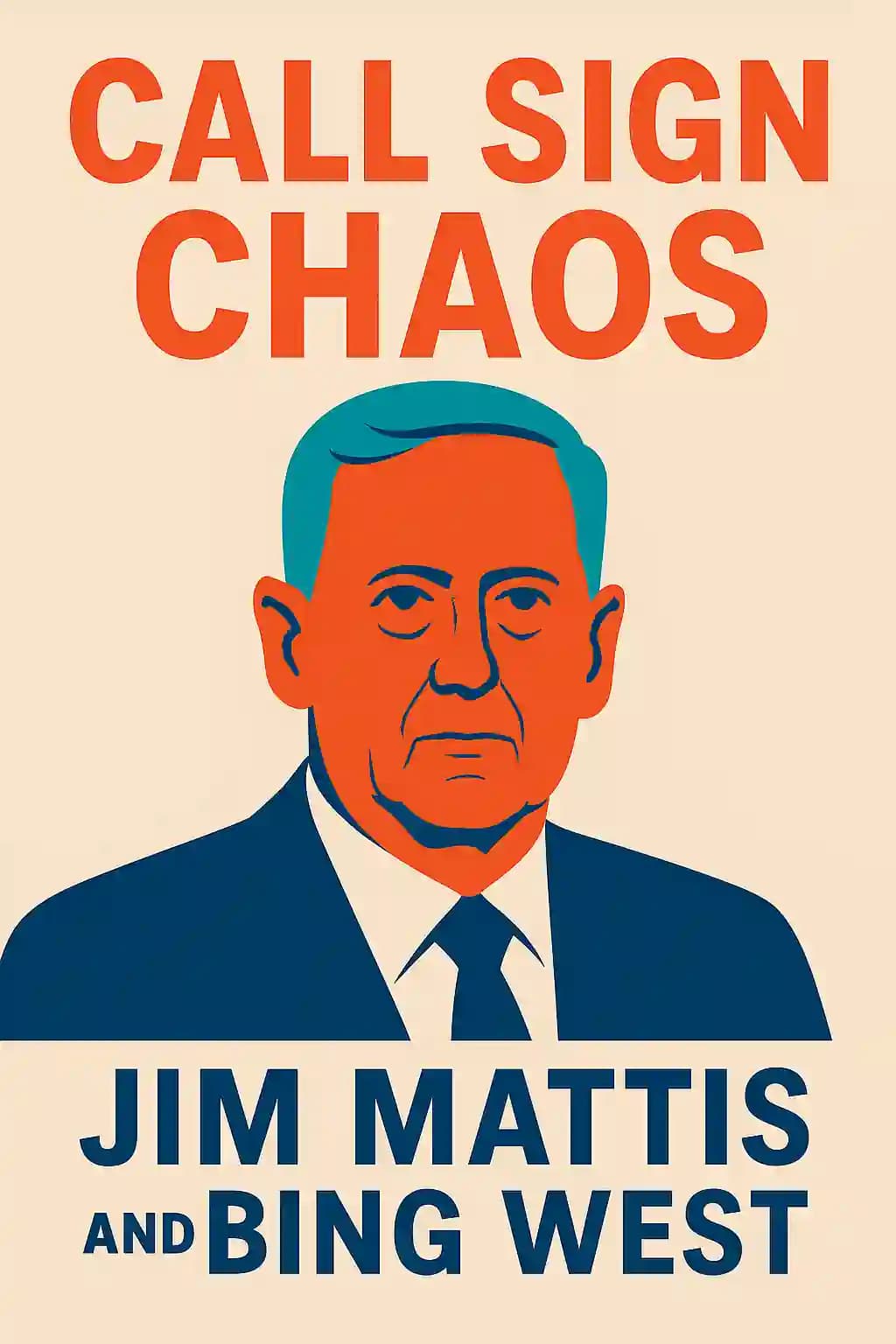
Nicknamed "Warrior Monk" for his scholarly approach and lifelong bachelorhood, Mattis became one of the most respected military leaders in modern American history. His memoir, "Call Sign Chaos," topped bestseller lists and earned praise from figures across the political spectrum, from Barack Obama to Donald Trump. But what makes this book particularly valuable isn't just Mattis's remarkable career-it's the leadership philosophy that guided him through four decades of military service and ultimately to the highest civilian defense position in the nation.
2장
The Formative Years: Building a Marine
Growing up in Richland, Washington-a middle-class town transformed by the Manhattan Project-Mattis developed an early love for books and adventure. His parents, a seafaring father and mother who served in Army intelligence during WWII, raised him to explore ideas and the world freely. Rather than watching television, young Mattis devoured Hemingway and Fitzgerald, and began hitchhiking at thirteen with his parents' blessing.
These wanderings occasionally led to trouble. In Montana, he lost a fight against three locals before spending the night in jail, courtesy of a sheriff who sent him to hop a freight train the next morning. During college, weekend jail time for underage drinking taught him a lesson from fellow inmate Porter Wagner: "You can look at stars or mud"-you always control your response to circumstances, even when you can't control the circumstances themselves.
After three years of college and summer officer training, Mattis was commissioned as a second lieutenant in 1972. At Basic School in Quantico, he embraced the Marine Corps' unique approach-every officer, regardless of eventual specialty, first trains as an infantry officer. This creates a unified culture where everyone understands that everything relates back to the rifleman engaging the enemy.
His first assignment with the 2nd Battalion, 4th Marine Regiment in Okinawa immersed him in the post-Vietnam military culture, where combat-experienced leaders readily shared knowledge while the ranks included both troublemakers and dedicated Marines. When a malcontent threatened to kill him during jungle training, Mattis confronted him directly rather than filing charges, then handed him to First Sergeant Mata, who promptly removed him through "expeditious discharge." This experience taught Mattis that maintaining high standards was essential-the Marine Corps refused to lower its bar, recognizing that rejection from the group was a powerful deterrent to bad behavior.
Through deployments to thirteen countries on six ships in his first dozen years, Mattis learned the irreplaceable value of allies-from Korean Marines teaching jungle warfare to New Zealanders demonstrating their Maori warrior spirit. His leadership philosophy developed around three Cs, beginning with competence: master your job completely, identify and improve your weaknesses, and be honest about mistakes while learning from them.
3장
Recruit for Attitude, Train for Skill
When Mattis took over a struggling recruiting station covering Oregon, Idaho, parts of Washington, Hawaii and Guam, he immediately visited all thirty-eight recruiters across thousands of miles. He established clear expectations: each recruiter needed to enlist four quality recruits monthly who could graduate boot camp. The key insight was his emphasis that this was "our mission, not my mission"-he would provide support while they took ownership.
Rather than micromanaging, Mattis practiced "command and feedback" instead of "command and control"-clearly stating intent while unleashing initiative. He spent most months coaching recruiters in the field while his operations officer and small staff implemented his vision. They maintained high standards but allowed case-by-case waivers for promising candidates who had made mistakes but showed character.
Mattis wrote detailed, personalized fitness reports for each recruiter rather than using templates, ensuring those giving 100% received earned promotions. When one recruiter refused to work the required hours, Mattis ended his career-partial commitment undermines the mission and elite status.
Through this experience, Mattis learned to delegate to the lowest capable level, ensure clear mission understanding, maintain ethical standards, and decentralize decision-making. As President Eisenhower said, "Leadership is persuasion and conciliation and education and patience. It's long, slow, tough work."
4장
The Crucible of Combat: Desert Storm and Beyond
By 1990, after eighteen years in the Corps, Mattis had become a "totus porcus" (whole hog) Marine, reaching the rank of lieutenant colonel. He was humbled to command the 1st Battalion of the 7th Marine Regiment (1/7), a unit with a legendary history that had been led by the renowned Chesty Puller during World War II and by Ray Davis, who earned the Medal of Honor during the "Frozen Chosin" Reservoir fight in Korea.
When Iraq invaded Kuwait, Mattis quickly assembled his under-strength battalion. A fellow commander, Nick Pratt, generously sent his 125 best performers to fill critical gaps-teaching Mattis to never advantage yourself at the expense of comrades. Within two weeks, they deployed to Saudi Arabia's blistering desert, where they spent five months first defending the kingdom, then preparing to force Saddam out of Kuwait.
Preparing troops who hadn't experienced combat required intensive training that created muscle memory and disciplined minds. Through constant rehearsals and imaging techniques, Mattis ensured every grunt had mentally fought a dozen battles before firing his first bullet in actual combat. As George Washington noted, "Men who are familiarized to danger meet it without shrinking."
To gather critical battlefield information without disrupting commanders engaged in combat, Mattis implemented "focused telescopes"-a technique he'd studied from military leaders like Frederick the Great and Rommel. He designated trusted officers as "Juliets" who would circulate among his dispersed elements, providing dispassionate information that bypassed normal reporting channels.
The ground attack launched before dawn on February 24, 1991. Mattis's battalion breached the first Iraqi obstacle belt in eleven minutes-twice as fast as their best training time. By the third day, they charged toward Kuwait International Airport through thick smoke from burning oil rigs. When ambushed near a quarry, their support troops-corpsmen, cooks, engineers and clerks who had trained as infantry-responded effectively, knocking out enemy vehicles in just twelve minutes.
After the Gulf War, Mattis faced the painful duty of cutting the Marine Corps from 189,000 to 172,000 due to budget pressures-forcing out 9% of serving Marines regardless of their wishes. Having to let go veterans with four to twenty-four years of faithful service was especially difficult. These were the same sergeants who had bailed him out in combat, now loading U-Haul trailers and heading down the road.
5장
The Power of Reading and Intellectual Preparation
At forty-three, Mattis attended the National War College, a pivotal moment in his career that reflected the military's deep commitment to developing thoughtful, educated leaders. His passion for reading, however, began much earlier. As a young lieutenant stationed in Okinawa, a wise sergeant major handed him a book about a Roman centurion, offering the simple but profound advice to "do your homework first." This moment would shape Mattis's approach to military leadership for decades to come.
Reading, Mattis firmly believes, serves as a timeless bridge between generations of warriors. It's not merely about absorbing information, but engaging in a profound "conversation" with history's greatest military minds. These authors have distilled lifetimes of battlefield experience, strategic thinking, and hard-won wisdom into pages that future leaders can access. With over 10,000 years of documented military history available, Mattis considers it both professionally negligent and ethically irresponsible not to learn from these accumulated experiences. He particularly scorns the excuse of being "too busy to read," warning that commanders who neglect this intellectual preparation will inevitably pay for their ignorance with the lives of their troops.
His personal library grew to include thousands of carefully chosen volumes, spanning ancient to modern warfare. From Marcus Aurelius's philosophical reflections on leadership to Julius Caesar's tactical insights, from Grant's and Sherman's Civil War memoirs to E.B. Sledge's raw accounts of Pacific combat, Mattis drew from diverse sources to inform his military judgment. He particularly valued works that offered different perspectives on similar challenges, allowing him to identify enduring principles of warfare and leadership.
This intellectual foundation proved invaluable throughout his career, but especially when facing modern warfare's complexities. His extensive reading helped him understand insurgencies, cultural dynamics, and strategic thinking that would become crucial in Afghanistan after 9/11. Mattis often found that historical parallels illuminated contemporary challenges, allowing him to avoid past mistakes and adapt historical lessons to modern contexts. He maintained that reading provides leaders with the equivalent of centuries of experience, lighting the dark path ahead by understanding the trails blazed by others in the past.
The depth of his reading was reflected in his decision-making style, which combined historical awareness with practical military experience. Whether planning operations or advising on strategy, Mattis could draw upon a vast repository of historical examples, strategic concepts, and leadership lessons that helped him navigate complex military and political landscapes.
6장
Operation Enduring Freedom: The Deepest Amphibious Assault in History
At six in the morning on September 11, 2001, driving to work at Camp Pendleton, Mattis heard over the radio that one of the Twin Towers had been hit. "They got through" was his first thought, certain it was Osama bin Laden. Before reaching his parking space, his mind shifted to hunting them down in Afghanistan.
When General Tommy Franks initially rejected Marine assistance in landlocked Afghanistan, Mattis recognized this as outdated thinking-Marines didn't need beaches to deploy from ships, as they had long-range helicopters and transport aircraft. Appointed commander of Naval Task Force 58, Mattis drastically cut his staff using "skip-echelon" techniques, keeping just thirty-two people instead of the doctrinal two hundred.
By late November, Mattis stood on a helicopter carrier's deck watching Marines board massive CH-53 helicopters for a four-hour flight into Afghanistan. The operation achieved the deepest amphibious assault from the sea in history, taking just twenty-eight days from conception to execution. Within an hour of landing at "Rhino" base, 170 Marines had secured defensive positions without accident. By dawn, four hundred more Marines with gun trucks had landed.
The next day, the Taliban launched an armored convoy against them from Lashkar Gah, but Navy F-14s and Marine Cobra gunships destroyed them before they got close. A White House correspondent for The New York Times later wrote that the insertion "fundamentally changed the equation for the enemy from one of grim hope to hopelessness."
By mid-December, the battleground shifted to Tora Bora mountains, where bin Laden had retreated with two thousand dedicated Al Qaeda fighters. Mattis prepared to deploy Special Ops teams and Marine rifle platoons to block escape routes through the snow-covered sixteen-thousand-foot peaks into Pakistan. Despite his increasingly urgent pleas, CENTCOM didn't respond to his proposal. Instead, General Franks sent in Afghan tribal fighters loyal to northern warlords, who proved incapable of closing with the desperate Al Qaeda fighters. By Christmas, intelligence confirmed bin Laden had escaped to Pakistan.
In his memoir, General Franks explained he didn't want to "repeat the Soviets' mistakes" by "blundering around those mountains and gorges with armor battalions chasing a lightly armed enemy." But Mattis didn't have armor-he had fast-moving light infantry and Special Forces, all heliborne, reinforced by agile wheeled light armored vehicles. By 2005, a New York Times correspondent would write that "the Bush administration later concluded that the refusal of Centcom to dispatch the Marines...was the gravest error of the war."
7장
The Iraq War and the Challenge of Counterinsurgency
In 2003, Mattis led the 1st Marine Division during the invasion of Iraq. His refrain during the march to Baghdad was "speed and chivalry," emphasizing both rapid advance and ethical treatment of civilians and prisoners. After the fall of Baghdad, however, the mission shifted dramatically. Without clear policy guidance, Mattis knew they needed to provide security for the population and train Iraqi forces, but lacked clarity on economic recovery plans or political direction.
When ordered back to Iraq's Anbar Province in 2004, Mattis faced an emerging insurgency fueled by religion and supported by Sunnis who'd lost power during the invasion. His challenge was killing insurgents while convincing the population to reject their cause. He composed a one-page letter to all hands emphasizing that the fight would be long, drawing on Hippocrates' oath: "First, do no harm."
Mattis established pre-deployment training including rudimentary Arabic, counterinsurgency reading, Vietnam Marine veterans sharing techniques, and Los Angeles police officers teaching community policing. His commander's intent was clear: make common cause with Iraqis, provide security until Iraqi forces could assume the mission, diminish frustrations causing anti-coalition sentiment, and defeat non-compliant elements through focused force.
The situation in Fallujah proved particularly challenging. After an initial offensive was halted for political reasons, a "Fallujah Brigade" arrangement was created that essentially handed control to former Baathist generals and insurgents. As Mattis had feared, this proved disastrous. The day after their withdrawal, Al Qaeda posted a video of Zarqawi beheading American Nicholas Berg somewhere in Fallujah's Jolan market.
Mattis felt he had let his men down, failing to prevent both the initial attack and the subsequent halt order. But he continued to focus on the mission, telling his troops: "Be polite, be professional-but have a plan to kill everyone you meet." This seemingly contradictory guidance captured the complex nature of counterinsurgency operations.
8장
Transforming the Military for Future Challenges
After three years of combat in Afghanistan and Iraq, Mattis was assigned as the Commandant's deputy for "combat development" at Marine Corps Combat Development Command in Quantico. His mission was to use combat experience to prepare troops for current Middle East fighting while remaining ready for other potential adversaries.
Mattis placed renewed emphasis on elementary tactics, recalling "brilliance in the basics." Like basketball players who've rehearsed plays until they're second nature, every squad needed a repertoire of well-drilled tactics requiring few commands when engaging the enemy.
At Camp Pendleton, they converted an abandoned tomato-packing plant into a Middle Eastern town simulator with noise, smells, screams, detonations, casualties, and ethical dilemmas. They hired Arab Americans who screamed in Arabic, used holograms, fake blood-anything to rattle and disorient squads until repeated exposure built swifter-acting units with growing confidence.
Beyond simulators, they developed the Combat Hunter program to enhance tactical cunning, assembling an eclectic group of experts: an LA police detective taught counter-IED techniques, an African big-game hunter demonstrated how to spot ambush signs, a football coach stressed building a playbook of tactical maneuvers, and a former Rhodesian Selous Scout showed tracking skills.
While institutionalizing lessons from current wars was critical, Mattis also looked to the future. Eventually anti-jihadist wars would end, but other nations were rising that could pose existential threats. He recognized that America's Achilles' heel was overconfidence in uninterrupted communications, which would certainly be broken in future wars. Only a decentralized command system could unleash a unit's full potential.
9장
The Strategic Level: NATO and Global Challenges
In spring 2007, Secretary Gates summoned Mattis to the Pentagon and selected him for a fourth star to command U.S. Joint Forces Command while concurrently serving as NATO's Supreme Allied Commander for Transformation. Despite having no background in NATO, Mattis had learned the value of allies in the field and was guided by the conviction that nations with allies thrive while those without them die.
To prepare for this new role where policy and military factors intersected, Mattis consulted first-rate minds on military transformation, read twenty-two books, and sought guidance from strategic leaders including Generals Powell and Zinni and statesmen like Kissinger and Shultz. He was struck that most of his mentors were retired, revealing a lack of strategic thinking in active circles.
Working with officers from across NATO and forty partner nations, Mattis found the exasperatingly slow decision cycles of twenty-six democracies challenging. To drive transformation, he gathered their best strategic thinkers to define specific military threats facing the alliance. After months of collaborative work, they produced "Multiple Futures"-a document identifying future threats and security trends. In 2009, they already foresaw Russia emerging as a new threat.
Recognizing his limitations as a non-European urging change, Mattis questioned why an American should lead NATO transformation. After discussions with Admiral Mike Mullen and Secretary Gates, he recommended that France take over the post, believing their strategic thinking and willingness to intervene militarily made them ideal.
10장
CENTCOM and the Arc of Crisis
In June 2010, after General Stan McChrystal was fired, Mattis was chosen to fill the vacancy at U.S. Central Command. Taking command of CENTCOM closed a thirty-year circle in his Middle East service. His area of responsibility encompassed twenty countries in the "arc of crisis" from Egypt to Central Asia, directing 250,000 troops while supporting diplomats and engaging with political leaders.
The CENTCOM region was a powder keg of oil wealth, poverty, unresponsive governance, and violent strains of Islam gaining regional traction. Mattis struggled to identify a sustainable vision for American efforts, seeing what they didn't want (Israel attacked, Iran with nuclear weapons) but lacking clarity on the desired end state.
His overarching concern was the growing terrorist threat from two groups: Iranian-supported Shiite terrorists and Sunni jihadists like Al Qaeda. While they'd shredded Al Qaeda's leadership, the Iranian-backed Shiite militias remained virtually unscathed thanks to Tehran's steady support.
By 2010, after seven years of blood and treasure, Iraq had achieved fragile stability. Large-scale combat had ended, Al Qaeda was on the run, and the Sunni-Shiite civil war had died down. The critical question was what to do next-pulling out abruptly would risk renewed civil war and terrorist resurgence, as intelligence reports warned.
At a dinner with Vice President Biden, Mattis warned that Iraqi Prime Minister Maliki was "devious" and "set on disenfranchising the Sunnis," arguing they needed to slowly remove the "training wheels," not suddenly pull them off. Despite polite listening from Biden, Mattis sensed the die was already cast. Biden confidently declared, "Maliki wants us to stick around, because he does not see a future in Iraq otherwise. I'll bet you my vice presidency."
When President Obama announced the complete withdrawal, he claimed they were leaving behind a "sovereign, stable, and self-reliant Iraq"-words never used by Pentagon, State Department, or intelligence reports. Soon Maliki imprisoned Sunnis, drove their representatives from government, and withheld funds from Sunni districts. By summer 2014, ISIS swept across western Iraq, establishing its caliphate-all predicted and preventable.
11장
America's Role in the World
Throughout his career, Mattis never fought in a solely American formation. He believes it should be a source of pride that America's "empire" has been one of ideas and ideals sufficient to draw like-minded nations to our side. The World War II generation understood that our freedom is inextricably tied to global stability.
History shows nations with allies thrive while those without wither. By drawing like-minded nations into trusted networks, we best promote our values and protect our nation at the lowest cost. During his 712 days as Secretary of Defense, Mattis drafted a new defense strategy, gained bipartisan budget support, adopted unpredictable deployment schedules, accelerated ISIS's defeat, and reassured allies.
When his strategic advice, especially about keeping faith with allies, no longer resonated with the Trump administration, Mattis resigned. His resignation letter emphasized the importance of alliances and partnerships, stating his core belief that "our strength as a nation is inextricably linked to the strength of our unique and comprehensive system of alliances."
What concerns Mattis most today is not external adversaries but America's internal divisiveness. We are dividing into hostile tribes fueled by emotion and mutual disdain instead of finding common ground. Our democracy is an experiment that can be reversed. Mattis believes in vigorous debate grounded in democratic principles and mutual respect, but tribalism need not disrupt our experiment.
Our motto "E pluribus unum"-out of many, one-was adopted to avoid becoming a nation of immigrants divided into tribes. For future generations, we must keep this faith. As Mattis wrote in his letter to all hands before deploying to Iraq: "Our Country needs us in the struggle... Our enemies are watching, betting their lives and their plans on America not having the courage to continue this fight." That sentiment applies not just to military conflicts abroad, but to the preservation of American democracy at home.