1장
Beyond Broken: Rebuilding Your Body for Lifelong Strength
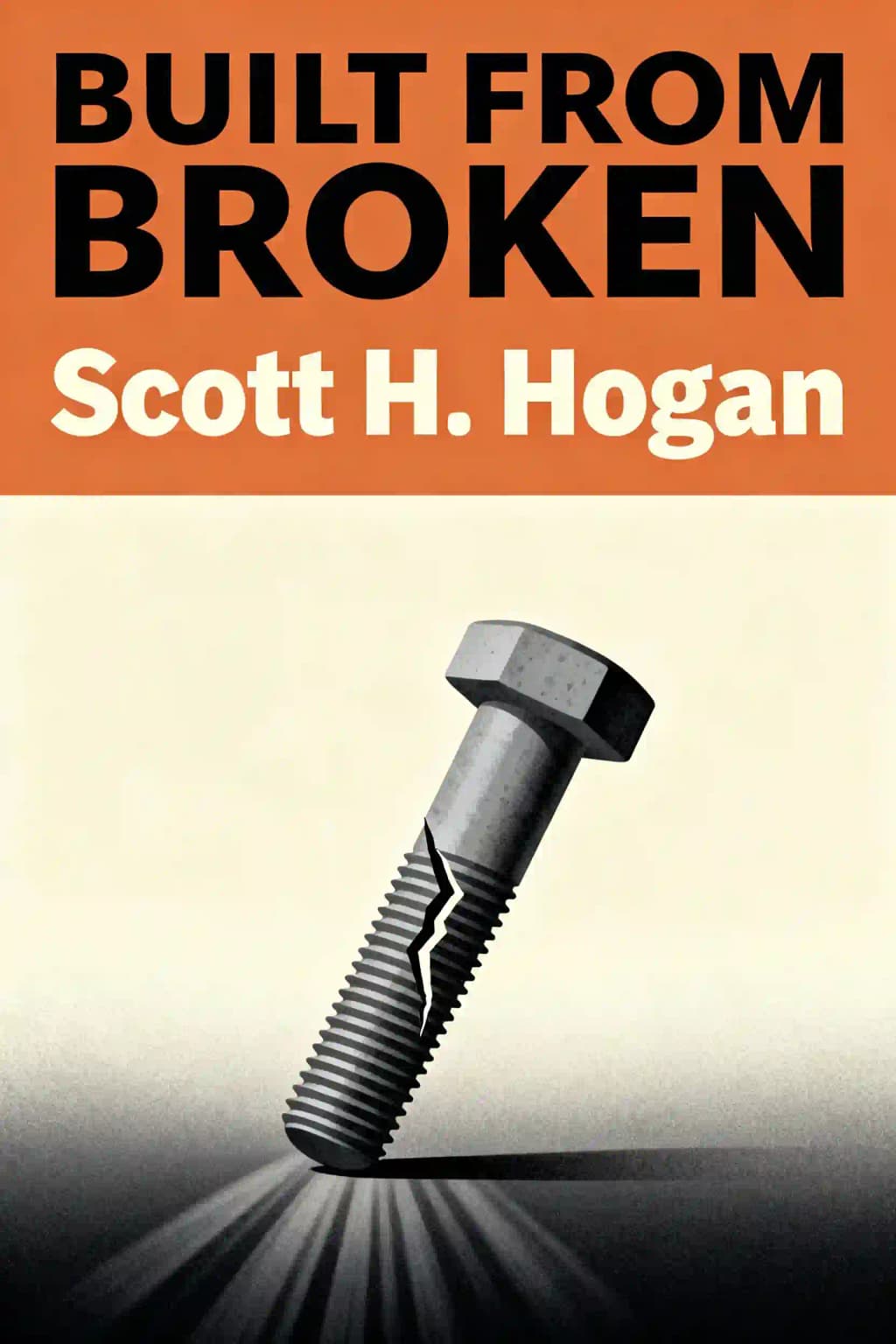
Have you ever wondered why your fitness journey feels like an endless cycle of progress and pain? Scott H. Hogan's "Built from Broken" offers a revolutionary perspective that has made it a favorite among professional athletes and physical therapists alike. This isn't just another fitness book-it's a complete paradigm shift that has helped thousands transform their chronic pain into unprecedented strength. As Joe Rogan noted on his podcast, "This approach changes everything about how we think about training after 30." The book has gained a cult following among those who've tried everything else, with readers reporting life-changing results where traditional physical therapy and conventional fitness advice failed them.
2장
The Broken-Down Reality of Modern Fitness
Almost everyone falls somewhere on a spectrum of physical dysfunction-either broken down with debilitating pain, beat up with nagging injuries, or bottlenecked with joint problems preventing progress. The common denominator? Joint dysfunction. This isn't limited to the elderly or athletes - office workers, manual laborers, and even fitness enthusiasts frequently experience issues ranging from chronic shoulder impingement to persistent lower back pain.
What makes "Built from Broken" revolutionary is its counterintuitive premise: your injuries and setbacks aren't obstacles to overcome-they're the actual building blocks for creating a stronger body. This isn't about working around limitations; it's about transforming them into foundations for greater strength. For instance, a person with knee pain might discover that addressing hip mobility and strengthening supporting muscles not only resolves the knee issue but creates a more resilient lower body overall.
Traditional fitness approaches often create as many problems as they solve. Bodybuilding splits that neglect stabilizing muscles leave shoulders vulnerable to impingement. Progressive strength programs that ignore individual limitations can exacerbate existing imbalances. Exercise regimens that fail to consider connective tissue recovery cycles - which typically require 48-72 hours between sessions - contribute to the epidemic of joint pain affecting one-third of American adults. Common examples include pushing through shoulder pain during bench presses, ignoring knee tracking issues in squats, or maintaining poor posture during deadlifts.
The solution isn't avoiding resistance training-it's embracing it in a fundamentally different way. Through mechanotransduction, your body converts load-bearing activity into structural changes and healing mechanisms. This biological process responds to specific types of loading patterns - compression, tension, and shear forces - by triggering cellular responses that strengthen bones, tendons, and ligaments. The impact is proportional to the load, making weight training not just beneficial but essential for resolving joint pain and building resilience. For example, controlled loading of tendons through eccentric exercises can stimulate collagen remodeling and improve tissue strength over time.
Modern research has shown that appropriate resistance training can actually reverse many common joint issues. Studies demonstrate that targeted strength work can reduce arthritis symptoms by up to 40%, improve bone density in aging populations, and significantly decrease the risk of future injuries. The key lies in understanding how to apply these principles systematically while respecting individual biomechanics and recovery needs.
3장
Load Training: The Overlooked Key to Joint Health
Consider the remarkable story of Janine Shepherd, an Olympic-bound cross-country skier who suffered a devastating accident leaving her with a broken neck, back, and partial paraplegia. Despite doctors' predictions, she not only survived but eventually learned to walk again and became a pilot. Her story exemplifies how accepting limitations while focusing on the next logical step forward can lead to extraordinary recovery.
Load training (resistance training) represents that next logical step for most people suffering from joint pain. While many turn to stretching, foam rolling, or massage, research consistently shows that increasing connective tissue load tolerance through resistance training is the only true fix for tendon breakdown and joint dysfunction.
This isn't just about feeling better-it's about survival. Studies show low muscle strength independently predicts higher mortality risk, especially in adults over 50. Research from Penn State found people 65+ who lifted weights had a 46% lower death rate over 15 years, and even after adjusting for other health factors, still maintained a 19% lower mortality rate.
What's particularly encouraging is that seniors who've never trained before can build significant muscle and strength comparable to lifelong athletes. The decline commonly attributed to aging is actually due to reduced neuromuscular activity, not age itself.
4장
Why Traditional Training Approaches Fail
Despite resistance training's well-documented benefits, many lifters develop chronic pain and injuries because conventional approaches create more problems than they solve. Traditional bodybuilding splits isolate muscles rather than training movement patterns, neglecting crucial stabilizer muscles and creating systemic imbalances. Most programs dedicate just one day to legs despite lower body training producing the greatest metabolic response and protecting against common pain points like lower back issues, knee problems, and hip dysfunction.
The widespread dogma of constantly increasing weight on compound lifts ignores individual mobility limitations and recovery needs. This "progressive overload at all costs" mentality often leads to compromised form, compensation patterns, and eventual injury. Most programs focus exclusively on muscle hypertrophy and strength gains while neglecting joint health and connective tissue regeneration cycles, which typically require 48-72 hours for full recovery.
Common training splits like "chest day" and "back day" artificially segment the body into parts, ignoring how human movement actually works. This approach can create strength discrepancies between pushing and pulling movements, lead to postural issues, and compromise shoulder health. Additionally, traditional programs often overemphasize mirror muscles while neglecting posterior chain development, creating both aesthetic and functional imbalances.
What if we flipped this approach entirely? Instead of adding a few half-hearted corrective exercises at the end of a workout, what if we built entire programs around fixing weak links? By prioritizing corrective exercise and movement quality, you can still develop impressive strength and muscle while addressing underlying issues. This approach delivers multiple benefits: injury prevention through better movement patterns, increased mental stimulation from varied exercise selection, intense metabolic response from full-body integration, greater total-body improvements through balanced programming, and more enjoyable training sessions.
This corrective-first methodology doesn't mean abandoning traditional strength work - rather, it means approaching it more intelligently. By establishing proper movement foundations, addressing mobility restrictions, and strengthening stabilizer muscles first, you create a robust platform for future strength and muscle gains while significantly reducing injury risk.
5장
Understanding the Five Primary Causes of Joint Pain
Joint pain affects approximately one-third of American adults, with prevalence increasing dramatically over time. The five primary causes typically work in combination, creating feedback loops that worsen conditions:
1. Poor posture creates muscle imbalances, joint stress, and compressed nerves leading to pain and degenerative conditions. Both static posture (how you hold yourself when still) and dynamic posture (alignment during movement) must be addressed through targeted strength and mobility training.
2. Movement quality and variation encompasses neuromuscular coordination, joint proprioception, and fatigue management. Research shows multisport athletes have 70% fewer injuries than single-sport specialists, demonstrating the importance of movement variation.
3. Muscle imbalances create a "pain compensation cycle" where one issue leads to another in a continuous loop. Despite popular belief, research shows static stretching has "no significant effect" on fixing these imbalances and may actually impair performance or increase injury risk.
4. Tendinopathy-the breakdown of tendons connecting muscle to bone-is often the first structure to break down from overuse. Contrary to common belief, inflammation is part of the body's healing process, and treatments focused solely on blocking it miss the underlying problem.
5. Arthritis, aging, and collagen degradation affect 23% of American adults but shouldn't prevent fitness pursuits. Experts agree that staying active is the most important management strategy, as movement "lubes the joint" and reduces discomfort.
Load training is the only therapeutic intervention that addresses all five primary causes of joint pain. While joint pain is complex, with causes often mixed and influenced by previous injuries and neural sensitivity, there's much you can do to manage pain naturally and fortify your joints for a lifetime of strong, functional movement.
6장
The Complex Anatomy of Pain
Pain serves as a protective messenger signaling "There's a problem here!" It's not just a tissue-specific sensation but involves complex neurological wiring and psychological components. Pain also creates lasting movement adaptations to prevent future injuries-like automatically pivoting your foot when entering a car after a knee sprain.
Pain experts recognize two primary types: nociceptive pain (from direct tissue damage) and neuropathic pain (from nervous system dysfunction). A third type, centralized pain, occurs when the nervous system amplifies pain signals long after tissue healing.
Neuroplasticity-the brain's ability to form new connections-can work against you with pain. Prolonged inflammation leads to pain sensitization through structural changes including new nerve endings and neural connections. This sensitization makes previously non-painful stimuli feel painful and can spread beyond the original injury site.
Pain also diminishes strength through cortical inhibition, where neurons controlling muscles around the injured area are suppressed. The psychological component of pain can lead to catastrophizing-an exaggerated fear response that worsens outcomes regardless of the actual pain level.
Instead of focusing solely on pain relief, which leaves underlying problems untreated, we need to address four key areas: modulating inflammation, resolving tendinopathy, improving synovial fluid health, and protecting collagen health.
7장
Beyond Pain Relief: Addressing Root Causes
1. Modulating Inflammation
Inflammation serves critical immune functions but must be properly managed. Long-term NSAID use paradoxically increases chronic inflammation by down-regulating the body's natural inflammatory management. Better approaches include reducing carbohydrates, following an anti-inflammatory diet, exercising regularly, prioritizing sleep, practicing yoga, using saunas, applying cold therapy for acute flare-ups, and taking evidence-based supplements.
2. Resolving Tendinopathy
Dr. Jill Cook's groundbreaking research challenged conventional wisdom by consistently finding tendon degeneration without inflammation present. Her continuum model shows that tendon injuries have a noninflammatory pathology, explaining why traditional treatments like rest, ice, and NSAIDs prove ineffective.
Tendinopathy develops when tendons can't adequately recover from applied loads. Everyone has their own "load tolerance set point"-training slightly beyond this point improves fitness, while repeatedly exceeding it causes degeneration.
The continuum model identifies four phases: reactive tendinopathy (reversible swelling), tendon disrepair (collagen matrix breakdown), degenerative tendinopathy (permanent damage), and reactive on disrepair/degeneration (when healing tissue becomes aggravated). Progressive load training is the only effective treatment, following the EdUReP model: Education about causes, brief Unloading, Reloading with gradual resistance exercise, and Prevention through continued corrective exercise.
3. Improving Synovial Fluid Health
Just as the Tin Man needed oil for his frozen joints, our bodies need synovial fluid for proper joint function. Movement is essential for joint lubrication-high-repetition exercises with deliberate tempo pump joint capsules full of cushioning fluid.
When synovial fluid becomes imbalanced-either too thin, too viscous, or inflammatory-joint pain results. This creates a dangerous feedback loop: reduced fluid causes grinding and inflammation, leading to less movement, which further reduces fluid levels.
4. Protecting Collagen Health
Collagen, the second most abundant substance in the human body after water, provides structural support for organs and soft tissues. As we age, collagen production decreases significantly-by 50% by age 60-contributing to aging joints, saggy skin, and muscle tissue loss.
Collagen synthesis occurs in four distinct stages: biosynthesis (production of raw material), cross-linking (connecting molecules to form fibrils), fibril formation (bundling into chains), and collagenolysis (breakdown). Up to 15% of newly synthesized collagen is immediately broken down, making this a key leverage point for improving joint health.
8장
Training Your Collagen for Optimal Joint Health
Research contradicts the common belief that high-repetition training with light loads is best for joint health. Studies show that while muscles respond to various training modalities, tendons primarily adapt to high-magnitude loading with long strain durations. Heavy resistance training with slow repetitions produces superior tendon adaptations compared to plyometrics or light loads.
Three primary muscle contraction types affect connective tissues differently: eccentric contractions (muscles lengthening under load), concentric contractions (muscles shortening), and isometric contractions (generating force without changing muscle length).
Isometric training provides impressive benefits including quick pain reduction with low injury risk, increased muscle strength through reduced cortical inhibition, greater motor unit recruitment, less required training time, improved bone density, and cardiovascular benefits.
Eccentric training emphasizes slowing the lowering phase of exercises to challenge muscles' elongation capacity, build strength, and optimize collagen formation. Research shows eccentric training can reduce hamstring injury rates in soccer players by up to 70% and aid tendinopathy healing.
Heavy Slow Resistance Training (HSR) combines eccentric and concentric contractions with heavy resistance and slow repetition speeds. This method builds tendon load tolerance, increases collagen turnover, and relieves pain more efficiently than eccentric-only training.
Contrary to conventional wisdom that connective tissues turn over much more slowly than muscle cells, a 2019 study found that tendons, ligaments, cartilage, and bone tissue have protein synthesis rates within the same range as skeletal muscle (1-2% per day). This suggests connective tissues-even cartilage-are more adaptable than previously thought.
9장
Movement: The Original Mobility Medicine
In industrialized societies, tendon and ligament ruptures are becoming increasingly common, while they remain relatively rare in developing countries where people engage in lifelong physical labor and regular exercise.
We live in a time when movement is optional, with most modern conveniences reducing our need to move. While exercise helps build muscle and improve health, non-exercise movement-what you do throughout the day-has a more powerful impact because your body adapts to what you do most often.
The varied, incidental movements that used to be part of everyday life cannot be replaced by short exercise sessions. Just as trees in the Biosphere 2 experiment snapped under their own weight due to lack of "stress wood" that normally forms in response to wind forces, humans need varied movement patterns rather than isolation exercises or repetitive training to build true resilience.
Navy SEAL candidates demonstrate remarkable physical resilience, not because they're genetically superior, but because they've prepared their bodies through years of varied, progressive training. Contrary to conventional wisdom that suggests reducing training volume to avoid injury, sports scientist Tim Gabbett's research reveals the "injury prevention paradox"-that high-volume training actually has a protective effect against injury.
The acute:chronic workload ratio (ACWR) measures the difference between short-term physical demands and long-term training loads. Spikes in this ratio are associated with 5-7 times greater injury rates, suggesting athletes should match their preparative training to competition demands.
Walking is one of the most proven yet underrated therapies for back pain. Research shows it's as effective as conventional treatments like heat, cold, and massage, reducing pain through multiple mechanisms including increasing natural opioid circulation, reducing pain sensitivity, stimulating synovial fluid production, and improving lumbar function.
10장
Science-Backed Mobility Training
Mobility training has become trendy in fitness, but much of this practice may be wasted effort. While limited mobility can cause problems, research shows that muscle and strength imbalances are more likely to cause injuries than flexibility issues.
Mobility and flexibility are related but distinct concepts. Flexibility is a muscle's ability to stretch passively through a range of motion-like touching your toes while standing with straight legs. Mobility is a joint's ability to move actively through its range-like hinging at the hips to pick up a weight efficiently.
Research consistently undermines traditional stretching's purported benefits. A 2011 metastudy found stretching has "no significant effect" on injury prevention. Prolonged static stretching before exercise actually decreases muscular force potential.
Even when stretching does increase range of motion, it's likely due to increased tolerance to stretching discomfort rather than actual tissue changes. More effective warm-ups include isometric holds, agility drills, and balance training.
Muscle imbalances often represent protective tension rather than actual shortness problems. When your nervous system detects instability or weakness in your core or hips, it restricts movement to protect you from injury.
Rather than blindly stretching all muscles, effective mobility training follows four key principles: make it goal-specific based on your activities and needs; prioritize stability over mobility (especially core stability before extremity mobility); straighten before strengthening by addressing postural faults; and mobilize in multiple planes (sagittal, frontal, and transverse) with emphasis on often-neglected rotational movements.
11장
Corrective Routines for Lasting Relief
Proper posture is defined as alignment of the body along three weight-bearing joints (ankle, knee, and hip) in "neutral position"-where the body balances around an imaginary vertical line from head to feet.
Postural faults rarely occur in isolation-the body compensates for one fault by compromising another joint. For example, forward head protrusion often results from upper back rounding (kyphosis), which stems from low back overextension (lordosis), which typically comes from tight hips caused by movement habits and muscle imbalances.
Research on walking posture reveals substantial benefits beyond just reducing neck and back stress-it also has significant psychological benefits. Walking with upright posture decreases blood pressure, reduces pain, and improves psychological metrics including stress levels and confidence.
The morning mobility routine is one of the most impactful strategies for improving pain levels and joint mobility. Most people are sedentary for 7-9 hours during sleep, then potentially another 8 hours during the day without meaningful movement.
The tight muscle quick fix is a brief routine that takes just minutes to complete, designed to loosen stiff body parts that often prevent exercise. The four-step process includes manual therapy, isometric contraction, antagonist activation, and dynamic stretch.
12장
Preventing the Big Three: Back, Shoulder, and Knee Pain
The joint-by-joint concept explains how each joint in the body has both stability and mobility components but tends to favor one over the other. Moving up the kinetic chain from feet to shoulders, the primary function alternates: feet (stability), ankles (mobility), knees (stability), hips (mobility), lumbar spine (stability), thoracic spine (mobility), scapulothoracic (stability), and glenohumeral (mobility).
Low back pain generates more search volume than all other body parts combined. The lumbar spine's primary function is stability-supporting upper body weight during standing, bending, and twisting while protecting the spinal cord.
Four key prevention strategies include: activating your glutes to prevent "gluteal amnesia"; mobilizing the joints surrounding your low back (hips and thoracic spine) rather than stretching the low back itself; learning proper hip hinging to protect the spine during bending movements; and building the transverse abdominis muscle, which stabilizes the pelvis like a natural weightlifting belt.
Shoulders are the body's most mobile joints, but this mobility creates vulnerability to dysfunction. Unlike hips that rely on bony structure for stability, shoulders depend on muscles and connective tissue, making them inherently less stable.
Knee pain often stems from poor joint positioning during movement. Common faults include knees moving too far forward, collapsing inward (valgus/"knock knees"), or pushing outward (varus/"bowlegged"). In proper movement, the patella should slide easily in its femoral groove, but improper tracking causes friction against cartilage or excessive tendon strain.
13장
Strategic Injury Recovery: Beyond RICE
Traditional medical approaches to injury often focus on symptoms rather than causes, settling for "good enough" instead of full recovery. Rest presents a delicate balance: too little aggravates injuries, while too much risks losing connective tissue strength, muscle mass, and aerobic capacity.
Modern therapists favor active recovery because passive rest leads to fitness loss, muscle atrophy, connective tissue shortening, neuromuscular coordination changes, and weakened bones-creating cycles of injury and reinjury.
For decades, RICE (rest, ice, compression, elevation) was the gold standard for acute injury care. Despite providing immediate relief, research now shows each element has serious flaws: rest prevents beneficial mechanotransduction; ice blocks inflammation necessary for healing; compression lacks significant evidence supporting healing benefits; and elevation helps with immediate symptoms but has limited scientific backing.
A 2020 article in the British Journal of Sports Medicine proposed replacing RICE with PEACE and LOVE for soft-tissue injuries: Protection, Elevation, Avoid anti-inflammatories, Compression, Education, Load, Optimism, Vascularization, and Exercise.
Most injuries stem from two underlying factors: muscle imbalances and long periods of slow tissue degeneration. Even seemingly traumatic injuries follow this pattern. For effective injury prevention, focus on two core concepts: reduce chronic stressors by adjusting lifestyle, posture, and movement habits; and increase load tolerance by gradually building your body's capacity to handle heavy loads through full ranges of motion.
14장
The Built from Broken Training Program
The ideal training approach combines weekly undulating periodization for sets and rep schemes with weekly "themes" borrowed from block periodization, plus elements of linear progression moderated by sensible adjustments to volume and intensity.
The Built from Broken periodization schedule follows a four-week cycle: Week 1 focuses on connective tissue remodeling with prolonged repetition speeds; Week 2 emphasizes hypertrophy using moderate speeds and higher volume; Week 3 targets strength with fewer reps and maximum power production; and Week 4 serves as a deload week focusing on endurance and recovery.
While four training sessions per week delivers optimal results, the program accommodates those with limited time through two-day and three-day options. For those new to resistance training or recovering from injury, starting with fewer sessions is actually advantageous as it allows more connective tissue healing time.
The program notably excludes three traditional powerlifting exercises: barbell bench press, barbell squat, and barbell deadlift. While acknowledging these as highly productive strength-building movements, they're omitted because they're responsible for the majority of workout-related injuries for people with pre-existing joint issues.
Success in fitness is sequential, not simultaneous. This "domino effect" requires starting with fundamentals and mastering each step before moving to the next, rather than skipping ahead due to ego or impatience. Building core stability, mobility, and connective tissue resilience creates a foundation for exponential progress toward strength and pain-free movement.
The final transformation comes when you transition from micromanagement to macromanagement-from tracking every detail to developing an intuitive understanding of your body's needs. Josh Waitzkin's concept of "numbers to leave numbers" describes how technical information becomes intuitive intelligence. Like chess players who stop counting piece values and develop feel, fitness practitioners can internalize principles until they become second nature.