"Built to Last" reveals how visionary companies outperform competitors through enduring principles. Translated into 17 languages with 55 months on Business Week's bestseller list, it's influenced organizations beyond business - from churches to governments. What timeless secret makes these companies thrive while others fail?
저자의 목소리로 책을 느껴보세요
지식을 흥미롭고 예시가 풍부한 인사이트로 전환
핵심 아이디어를 빠르게 캡처하여 신속하게 학습
재미있고 매력적인 방식으로 책을 즐기세요
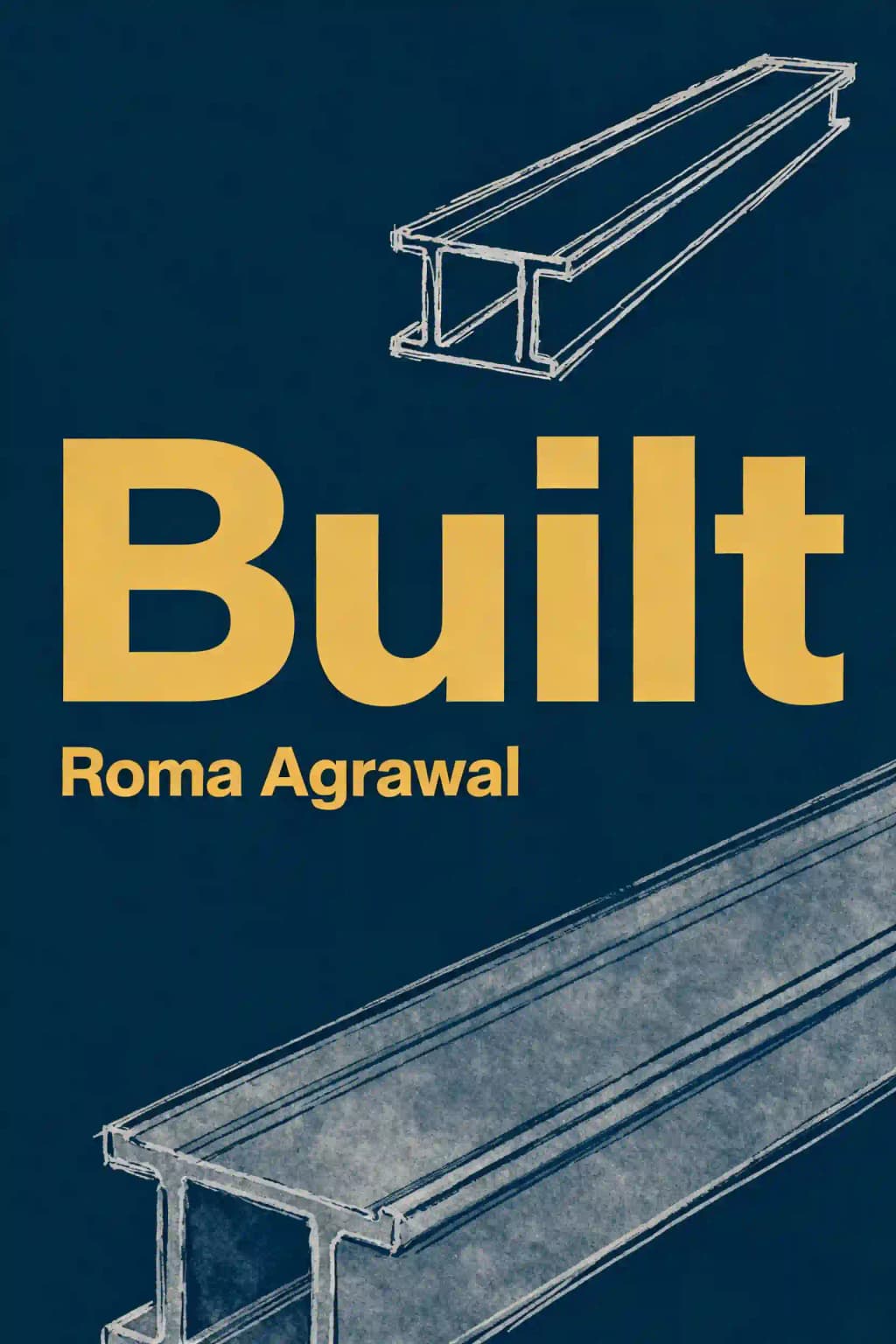
Ever bent a carrot into a U-shape and watched it snap? That simple kitchen moment reveals the same physics keeping skyscrapers standing. The carrot splits at the bottom because tension forces overwhelm it-the exact challenge engineers face when designing every beam, bridge, and building around you. When a beam flexes under load, its top compresses while its bottom stretches. This is why steel beams are I-shaped, with most material concentrated at top and bottom where forces are strongest. It's elegant efficiency: maximum strength with minimum material. For spanning great distances, engineers turn to triangles-nature's most stable shape. Unlike squares that collapse when pushed, triangles lock in place, which is why bridges like the Golden Gate use networks of triangular trusses. But gravity is the easy part. Wind presents far more complex challenges. Modern skyscrapers rely on central cores running vertically through buildings, channeling wind forces down to foundations like a tree's trunk. Some buildings, like London's Gherkin, wear their skeletons on the outside-diamond-patterned steel exoskeletons protecting from wind. Here's what most people don't realize: buildings actually move. The engineering challenge isn't preventing movement but controlling how fast structures sway and for how long. It's like turbulence on an airplane-not the movement itself but the acceleration that makes us queasy. When traditional stiffening isn't enough, engineers install giant pendulums at the top of buildings to counteract movement. During 2015's Typhoon Soudelor, Taipei 101's massive 660-tonne steel pendulum swung a full meter while winds reached 170km/h, yet the building remained undamaged. Earthquakes present even greater challenges. The Torre Mayor skyscraper in Mexico City uses 96 hydraulic dampers arranged in X-shapes throughout its height, allowing it to withstand a 7.6 magnitude earthquake without occupants even noticing-the ultimate testament to invisible engineering excellence.
Built의 핵심 아이디어를 이해하기 쉬운 포인트로 분해하여 혁신적인 팀이 어떻게 창조하고, 협력하고, 성장하는지 이해합니다.
Built을 빠른 기억 단서로 압축하여 솔직함, 팀워크, 창의적 회복력의 핵심 원칙을 강조합니다.

생생한 스토리텔링을 통해 Built을 경험하고, 혁신 교훈을 기억에 남고 적용할 수 있는 순간으로 바꿉니다.
무엇이든 물어보고, 목소리를 선택하고, 진정으로 공감되는 인사이트를 함께 만들어보세요.

샌프란시스코에서 컬럼비아 대학교 동문들이 만들었습니다
"Instead of endless scrolling, I just hit play on BeFreed. It saves me so much time."
"I never knew where to start with nonfiction—BeFreed’s book lists turned into podcasts gave me a clear path."
"Perfect balance between learning and entertainment. Finished ‘Thinking, Fast and Slow’ on my commute this week."
"Crazy how much I learned while walking the dog. BeFreed = small habits → big gains."
"Reading used to feel like a chore. Now it’s just part of my lifestyle."
"Feels effortless compared to reading. I’ve finished 6 books this month already."
"BeFreed turned my guilty doomscrolling into something that feels productive and inspiring."
"BeFreed turned my commute into learning time. 20-min podcasts are perfect for finishing books I never had time for."
"BeFreed replaced my podcast queue. Imagine Spotify for books — that’s it. 🙌"
"It is great for me to learn something from the book without reading it."
"The themed book list podcasts help me connect ideas across authors—like a guided audio journey."
"Makes me feel smarter every time before going to work"
샌프란시스코에서 컬럼비아 대학교 동문들이 만들었습니다

Built 요약을 무료 PDF 또는 EPUB으로 받으세요. 인쇄하거나 오프라인에서 언제든 읽을 수 있습니다.
